Works for:
based on ingredients and %- Cleansing
Doesn't work for:
based on ingredients and %- Exfoliation
Can it cause trouble?
- Irritation risk: high
- Comedogenic risk ingredients: 0
Key actives

Cleansing
What does the product description say?
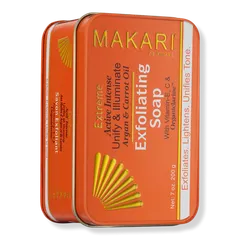
Reveal a brighter, even-toned complexion with this exfoliating cleansing bar.
Source: Ulta
This product works by removing dirt and oil from the surface of the skin. It uses a combination of mild cleansing agents (sodium cocoate, sodium palmate) and should be able to cleanse the skin gently. Still keep in mind that any cleansing can disrupt the skin barrier, and most people do not need to cleanse their skin more than once per day.
Works as a cleansing agent
Works as a cleansing agent. Helps water and oil mix together
Exfoliation
What does the product description say?
Reveal a brighter, even-toned complexion with this exfoliating cleansing bar.
Source: Ulta
This product might help exfoliate the skin with retinyl palmitate, but This ingredient is not the most effective.
Three steps removed from the active form of vitamin A - retinoic acid. To have an effect in the skin, it first needs to be converted twice to become the retinoic acid. This means it is less potent than retinol, but could also be less irritating. Once converted to the retinoic acid in the skin, it helps against all signs of aging, improves skin cell turnover and helps fight blemishes and clogged pores. However, in many cosmetic formulations, it is used in a concentration that is too low to have the full effect
How honest is this product?
| Promise | Can it deliver? |
|---|---|
| Cleansing | |
| Exfoliation |
Total Promises Fulfilled score: 75/100.
We receive a small commission for purchases made through these links at no cost for you. Thank you for your support! Learn more
Potential irritants
Comedogenic ingredients
No comedogenic ingredients detected
User reviews (0)
Averages from community submissions.
No reviews yet for this product.
Be the first to share your experience!
Tried this product?
Help capture what the ingredient list can't—texture, finish, pilling, scent, and more. Answer what you can, skip the rest.
Takes ~30 seconds.
Reviews are shown in aggregate. No personal details.
Key Actives
Three steps removed from the active form of vitamin A - retinoic acid. To have an effect in the skin, it first needs to be converted twice to become the retinoic acid. This means it is less potent than retinol, but could also be less irritating. Once converted to the retinoic acid in the skin, it helps against all signs of aging, improves skin cell turnover and helps fight blemishes and clogged pores. However, in many cosmetic formulations, it is used in a concentration that is too low to have the full effect
An emollient that helps soften the upper layer of the skin. Might have some weak anti-oxidant properties
Beta-arbutin. Can help to reduce hyperpigmentation and has an anti-oxidant effect when used in high enough concentration. Is less effective compared to alpha-arbutin
Works as a cleansing agent. Helps water and oil mix together
One of the best moisturizing ingredients. Naturally present in skin. It attracts water to the upper layer of the skin working as a humectant
Potential irritants
Three steps removed from the active form of vitamin A - retinoic acid. To have an effect in the skin, it first needs to be converted twice to become the retinoic acid. This means it is less potent than retinol, but could also be less irritating. Once converted to the retinoic acid in the skin, it helps against all signs of aging, improves skin cell turnover and helps fight blemishes and clogged pores. However, in many cosmetic formulations, it is used in a concentration that is too low to have the full effect
An aromatic blend of unspecified and possibly irritating ingredients
A fragrance. Potential allergen and can be irritating
A preservative. Can be used to mask unpleasant smell. Can be irritating
A common frangrance that can easily irritate skin, especially if exposed to air, light or heat
A plant extract that can help lighten the skin and calm down inflammation. Might be helpful in neutralizing free radicals
An emollient that helps soften the upper layer of the skin. Might have some weak anti-oxidant properties
Beta-arbutin. Can help to reduce hyperpigmentation and has an anti-oxidant effect when used in high enough concentration. Is less effective compared to alpha-arbutin
Comedogenic ingredients
We couldn't find any comedogenic ingredients in this product
All ingredients
One of the best moisturizing ingredients. Naturally present in skin. It attracts water to the upper layer of the skin working as a humectant
Three steps removed from the active form of vitamin A - retinoic acid. To have an effect in the skin, it first needs to be converted twice to become the retinoic acid. This means it is less potent than retinol, but could also be less irritating. Once converted to the retinoic acid in the skin, it helps against all signs of aging, improves skin cell turnover and helps fight blemishes and clogged pores. However, in many cosmetic formulations, it is used in a concentration that is too low to have the full effect
A plant extract that can help lighten the skin and calm down inflammation. Might be helpful in neutralizing free radicals
An emollient that helps soften the upper layer of the skin. Might have some weak anti-oxidant properties
A plant oil that might help neutralize free radicals and have an anti-bacterial effect
Used to stabilize mixtures of oil and water, and create thicker, gel-like product textures
Beta-arbutin. Can help to reduce hyperpigmentation and has an anti-oxidant effect when used in high enough concentration. Is less effective compared to alpha-arbutin
An aromatic blend of unspecified and possibly irritating ingredients
A fragrance. Potential allergen and can be irritating
A preservative. Can be used to mask unpleasant smell. Can be irritating
A common frangrance that can easily irritate skin, especially if exposed to air, light or heat
Ingredient list view
Sodium palmate, Sodium cocoate, Water, Glycerin, Unknown, Retinyl palmitate, Glycyrrhiza glabra root extract, Argania spinosa kernel oil, Daucus carota sativa seed oil, Sodium chloride, Arbutin, Prunus armeniaca kernel extract, Sodium hydroxide, Parfum, Tetrasodium edta, Bht, Alpha-isomethyl ionone, Benzyl alcohol, Benzyl salicylate, Citronellol, Coumarin, Geraniol, Limonene, Linalool, Ci 14700, Ci 19140, Ci 15510