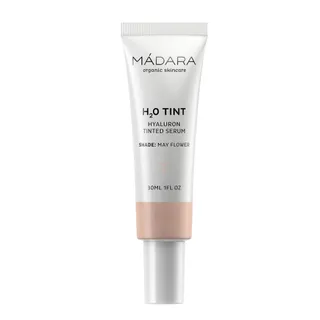
Madara Cosmetics H20 Hyaluron Tinted Serum | Certified Natural Make-Up
Works for
MoisturizingSimmondsia chinensis seed oil, Lauroyl lysine + 19 moreWorks
“An ultra-lightweight, certified natural Hyaluron Tinted Serum from Madara with Hyaluronic Acid for lasting hydration and light-reflecting minerals for a soft-focus glow.”
This product can help improve hydration of the skin with the two types of ingredients.
The first type is called “humectants”:
these ingredients help attract water.
When humectants are on the surface of the skin, they “pull in” the moisture from the outside environment, or from
within deeper layers of the skin. The following ingredients in this product do the job:
anhydroxylitol, glycerin.
This product also contains ingredients called “occlusives”. They help reduce the speed with which our skin loses moisture to the outside environment. These ingredients also help soften the upper layer of the skin, so it feels less tight and nicer to the touch. The following ingredients in this product do the job: simmondsia chinensis seed oil, squalane.
Can it cause trouble?
Irritancy4 strong irritants: Aroma, Citronellol + 2 more — patch-test recommendedHigh risk
Comedogenic1 ingredient rated 2 or more on the 0–5 pore-clogging scale1 flagged

User reviews
Be the first — your take helps the next person decide.
Ingredients
Filter by role to see what each ingredient is doing.
Aloe barbadensis leaf juice~23–34%
- Irritation risk
- Medium
Traditionally used to treat sunburns, dermatitis and inflammation, but evidence for its effectiveness is lacking. The extract can contain humectants that help attract water into the skin
More about Aloe barbadensis leaf juiceDicaprylyl carbonate~3.2–4.8%
- Irritation risk
- Low
Helps products spread more easily and works as an emollient to soften skin
More about Dicaprylyl carbonateSimmondsia chinensis seed oil~4.8–7.2%
- Irritation risk
- Medium
Softens the upper layer of skin and helps restore the healthy skin barrier. Has shown to help calm down inflammation in skin. It is a stable oil, meaning that it retains its properties even when exposed to air.
More about Simmondsia chinensis seed oilLauroyl lysine~3.8–5.7%
- Irritation risk
- Low
Helps soften the upper layer of the skin and creates a nice product texture
More about Lauroyl lysineGlycerin~2.8–4.2%
- Irritation risk
- Low
One of the best moisturizing ingredients. Naturally present in skin. It attracts water to the upper layer of the skin working as a humectant
More about GlycerinPentylene glycol~2.1–3.1%
- Irritation risk
- Medium
Used to preserve products, dissolve other ingredients and create a nice product texture
More about Pentylene glycolSodium pca~1.5–2.2%
- Irritation risk
- Low
Naturally present in skin and helps to attract water to its upper layer
More about Sodium pcaPolyglyceryl-6 stearate~1.3–1.9%
- Irritation risk
- Low
Helps soften the upper layer of the skin
More about Polyglyceryl-6 stearateWater~1–1.5%
Silica~1.2–1.8%
Xylitylglucoside~0.55–1.3%
- Irritation risk
- Low
Helps attract water to the upper layer of the skin and repair the skin barrier function
More about XylitylglucosideLactic acid~0.5–1.15%
- Irritation risk
- Medium
An exfoliating and moisturizing alpha-hydroxy acid (AHA). Typically causes less irritation than other AHAs, for example, glycolic acid. At high concentrations (about 15%), lactic acid can help reduce lines and wrinkles. Recent studies show that lactic acid can support the "good" bacteria living on skin's surface (healthy skin microbiome)
More about Lactic acidAnhydroxylitol~0.45–1.05%
- Irritation risk
- Low
Helps attract water to the upper layer of the skin and repair the skin barrir function
More about AnhydroxylitolPolyglyceryl-6 behenate~0.45–1%
Hydrolyzed rhodophyceae extract~0.4–0.95%
- Irritation risk
- Low
- Comedogenicity
- 3/5
Xylitol~0.4–0.9%
- Irritation risk
- Low
Helps attract water to the upper layer of the skin and repair the skin barrier function
More about XylitolSqualane~0.45–1.1%
- Irritation risk
- Low
An oil naturally present in skin. Works as an emollient to soften the skin and form a protective layer on its surface without a greasy feeling.
More about SqualaneXanthan gum~0.4–0.9%
- Irritation risk
- Low
Used to create a thicker product consistency
More about Xanthan gumPullulan~0.4–0.9%
- Irritation risk
- High
Creates a thin drying film on the skin resulting in a short-term tightening effect
More about PullulanAroma~0.35–0.75%
Octyldodecanol~0.35–0.8%
- Irritation risk
- Low
An emollient that helps to soften the skin and create a pleasant product texture and stabilize the formulation
More about OctyldodecanolAscorbyl palmitate~0.3–0.7%
- Irritation risk
- Medium
Being a lipid soluble form of vitamin C, it is more stable and can penetrate the skin better than L-Ascorbic acid. It is effective in protecting the skin from free radicals, as well as evening the skin tone, but is less effective in stimulating collagen production compared to L-Ascorbic acid.
More about Ascorbyl palmitateTocopherol~0.3–0.7%
- Irritation risk
- Low
Pure form of vitamin E. Can help moisturise and protect the skin from free radicals. Often used to help stabilise other ingredients or the formula itself
More about TocopherolIrvingia gabonensis kernel butter~0.2–0.8%
- Irritation risk
- Low
Sorbitol~0.2–0.75%
- Irritation risk
- Low
Helps attract water to the upper layer of the skin and improves the product texture
More about SorbitolHydrolyzed hyaluronic acid~0.2–0.75%
- Irritation risk
- Low
One of the best moisturizing ingredients. Attracts water into the upper layer of the skin. A version of it is naturally present in skin
More about Hydrolyzed hyaluronic acidSodium hyaluronate~0.2–0.75%
- Irritation risk
- Low
One of the best moisturizing ingredients. Attracts water into the upper layer of the skin
More about Sodium hyaluronateSodium phytate~0.2–0.8%
Hydrogenated coco-glycerides~0.35–0.8%
- Irritation risk
- Medium
Helps oil and water mix together while creating a nice finish on the skin
More about Hydrogenated coco-glyceridesSpirodela polyrhiza extract~0.2–0.8%
- Irritation risk
- Low
Acacia senegal gum~0.35–0.85%
- Irritation risk
- Medium
Helps mask the small of other ingredients and improve the product texture
More about Acacia senegal gumTrehalose~0.2–0.75%
- Irritation risk
- Low
A sugar that attracts water to the upper layer of the skin
More about TrehaloseOryza sativa bran oil~0.35–0.8%
- Irritation risk
- Low
Helps soften the upper layer of the skin and might have some anti-oxidant properties
More about Oryza sativa bran oilVegetable oil~0.35–0.8%
- Irritation risk
- Low
An oil from a mixture of different vegetables. Helps soften the upper layer of the skin
More about Vegetable oilHelianthus annuus seed wax~0.35–0.8%
- Irritation risk
- Low
Helps soften the upper layer of the skin and support skin's barrier function while creating a thicker product consistency
More about Helianthus annuus seed waxOryza sativa bran wax~0.2–0.8%
- Irritation risk
- Low
Rhus succedanea fruit wax~0.2–0.8%
- Irritation risk
- Low
Citronellol~0.2–0.75%
Limonene~0.2–0.75%
- Irritation risk
- High
A common frangrance that can easily irritate skin, especially if exposed to air, light or heat
More about LimoneneLinalool~0.2–0.75%
Terpineol~0.2–0.7%
- Irritation risk
- Low
Linalyl acetate~0.2–0.8%
- Irritation risk
- Low
Mica~0.3–0.75%
- Irritation risk
- Low
Creates an illusion of smoother and more radiant skin tone. Adds shimmer to the skin by reflecting light
More about MicaTin oxide~0.4–0.9%
- Irritation risk
- Low
A colorant that can add a pearl-like appearance to the formulation
More about Tin oxideTitanium dioxide~0.3–0.75%
- Irritation risk
- Low
Works as a UV filter when used in high concentrations. It is photostable and is effective mostly against the UVB light, with some protection in the UVA range. In small concentrations, used for its ability to improve the color of cosmetic products. Is usually well tolerated by the skin
More about Titanium dioxideCi 77163~0.2–0.75%
Iron oxides~0.15–0.65%
- Irritation risk
- Low
An umbrella term for the following three colorants: CI 77491, CI 77492, CI 77499. They might be able to offer some protection against visible light, but the degree of the protection is not clear
More about Iron oxidesIron oxides~0.15–0.65%
- Irritation risk
- Low
An umbrella term for the following three colorants: CI 77491, CI 77492, CI 77499. They might be able to offer some protection against visible light, but the degree of the protection is not clear
More about Iron oxidesIron oxides~0.15–0.6%
- Irritation risk
- Low
An umbrella term for the following three colorants: CI 77491, CI 77492, CI 77499. They might be able to offer some protection against visible light, but the degree of the protection is not clear
More about Iron oxidesIngredient list view
Aloe barbadensis leaf juice, Dicaprylyl carbonate, Simmondsia chinensis seed oil, Lauroyl lysine, Glycerin, Pentylene glycol, Sodium pca, Polyglyceryl-6 stearate, Water, Silica, Xylitylglucoside, Lactic acid, Anhydroxylitol, Polyglyceryl-6 behenate, Hydrolyzed rhodophyceae extract, Xylitol, Squalane, Xanthan gum, Pullulan, Aroma, Octyldodecanol, Ascorbyl palmitate, Tocopherol, Irvingia gabonensis kernel butter, Sorbitol, Hydrolyzed hyaluronic acid, Sodium hyaluronate, Sodium phytate, Hydrogenated coco-glycerides, Spirodela polyrhiza extract, Acacia senegal gum, Trehalose, Oryza sativa bran oil, Vegetable oil, Helianthus annuus seed wax, Oryza sativa bran wax, Rhus succedanea fruit wax, Citronellol, Limonene, Linalool, Terpineol, Linalyl acetate, Mica, Tin oxide, Titanium dioxide, Ci 77163, Iron oxides, Iron oxides, Iron oxides
Compare prices
Retailers ranked by price — lowest first.
Affiliate links · As an Amazon Associate, WIMJ earns from qualifying purchases.
Worth comparing, line by line.
Match % combines shared ingredients, the first five ingredients, shared actives and hero ingredients, irritancy (lower counts in the alternative's favour), texture and body area. Only products in the same routine step are compared.
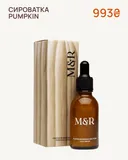
| Madara CosmeticsH20 Hyaluron Tinted Serum | Certified Natural Make-UpYOUR PRODUCT | Madara CosmeticsHyaluron Tinted Serum | Moon&RunePumpkin Face Bifido-Elixir | G.M. CollinHYDRAMUCINE OPTIMAL SERUM | |
|---|---|---|---|---|
| Match | — | 63% | 44% | 42% |
| Price | — | $2.25 | — | $68.96 |
| Shared key ingredients | — | 14 of 15 | 5 of 15 | 8 of 15 |
| Key difference | — | — | Panthenol | Urea |
| Irritancy | High | High | Medium | Medium |
| Drying alcohol | — | — | — | — |
| View product | Shop | Shop | Shop |


More alternatives: Bloomeffects Tulip Dew DropsSollalla Ultimate Hydrate Hyaluronic Serum
Product summary
"MADARA - H20 Hyaluron Tinted Serum | Certified Natural Make-Up" could be helpful for: Moisturizing, but its actives are not the most effective or are not well-studied.
Ingredient callouts
- This product contains acids (lactic acid 0.50% - 1.10%). Their concentration is low, and they will not have a strong exfoliating effect. Instead, they work to support the skin natural acid mantle and to attract water (as humectants). Lactic acid is particularly good in attracting water to the upper layer of the skin and improving the skin barrier.
- Humectants (trehalose 0.20% - 0.75%, sodium hyaluronate 0.20% - 0.75%, hydrolyzed hyaluronic acid 0.20% - 0.75%, anhydroxylitol 0.45% - 1.05%, xylitylglucoside 0.55% - 1.30%, sodium pca 1.50% - 2.20% and glycerin 2.80% - 4.20%). These ingredients help attract water to the upper layer of the skin and improve the skin hydration.
Price
The product retails for 30.95£ in the United Kingdom.
For a detailed price comparison: click here.
Sources cited in this review
Every concentration estimate and effectiveness label is anchored to one of these 12 studies and safety reviews.
- 1
- 2Epidermal and dermal effects of topical lactic acidncbi.nlm.nih.gov
- 3Dual Effects of Alpha-Hydroxy Acids on the Skinpdfs.semanticscholar.org
- 4Vitamin E in dermatologyncbi.nlm.nih.gov
- 5Vitamin E and Skin Healthlpi.oregonstate.edu
- 6Efficacy of a New Topical Nano-hyaluronic Acid in Humansncbi.nlm.nih.gov

Affiliate links · As an Amazon Associate, WIMJ earns from qualifying purchases.