Works for:
based on ingredients and %- Moisturizing
Can it cause trouble?
- Irritation risk: high
- Comedogenic risk ingredients: 5
Key actives
Works for
Moisturizing
What does the product description say?
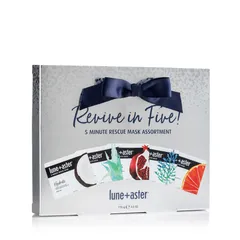
Revive skin in minutes with this five-piece, nutrient-rich sheet mask set that includes individually wrapped hydrating, soothing, detoxifying, firming and ultra-nourishing Rescue Masks .
Source: Bluemercury
This product can help improve hydration of the skin with the two types of ingredients.
The first type is called “humectants”:
these ingredients help attract water.
When humectants are on the surface of the skin, they “pull in” the moisture from the outside environment, or from
within deeper layers of the skin. The following ingredients in this product do the job:
algae extract, glycerin.
This product also contains ingredients called “occlusives”. They help reduce the speed with which our skin loses moisture to the outside environment. These ingredients also help soften the upper layer of the skin, so it feels less tight and nicer to the touch. The following ingredients in this product do the job: cocos nucifera oil, dimethicone.
Plant extract that helps the skin to attract water and make it more smooth for touch. Also shows promise of anti-aging properties, but research is not extensive yet
A good emollient. Contains various ingredients including vitamins and fatty acids that could work in the skin to neutralize free radicals and minimize moisture loss - if enough of these compounds is able to penetrate the skin in an active form.
One of the best moisturizing ingredients. Attracts water into the upper layer of the skin. Naturally present in skin. Typically has large molecule size unless advertised otherwise on the product label. Helps support skin's barrier function and may help to reduce inflammation
Seaweed extract that might help to attract water to the upper layer of the skin and have some anti-oxidant properties
An emollient that helps soften the skin and could be helpful in repairing its barrier function
A type of silicone that can decrease loss of moisture from the skin surface. It helps create a nice product texture
Softens the upper layer of skin and helps restore the healthy skin barrier. Has shown to help calm down inflammation in skin. It is a stable oil, meaning that it retains its properties even when exposed to air.
One of the best moisturizing ingredients. Attracts water into the upper layer of the skin
A sugar that attracts water to the upper layer of the skin
A seaweed extract that helps attract water to the upper layer of the skin and might have an anti-oxidant effect
An emollient that helps soften the upper layer of the skin. Might have some weak anti-oxidant properties
An emollient. Found to be as effective as a moisturizer for dry skin as mineral oil. Could be comedogenic
A silicone that helps to reduce water loss from the surface of the skin. Can temporarily "fill in" lines and wrinkles, absorb oil, and create a nice product finish
One of the best moisturizing ingredients. Naturally present in skin. It attracts water to the upper layer of the skin working as a humectant
A plant extract that helps attract water to the upper layer of the skin. It might be helpful in neutralizing free radicals in skin, but is less potent than the extract from the seeds
A brown algae (sea weed) extract. It might be able to help neutralize free radicals and attract water to the upper layer of the skin
An emollient that helps soften the skin but is not effective for restoring its barrier function. Might be helpful to calm down inflammation
An algae extract. Might help to attract water to the upper layer of the skin and have an anti-oxidant effect
Used to create a nice product texture and help delivery of other ingredients. Might be somewhat helpful in attracting water to the upper layer of the skin
A great emollient. Contains vitamin E (tocopherol) which may give it some anti-oxidant properties. Can contain volatile compounds and can be irritating
Traditionally used to treat sunburns, dermatitis and inflammation, but evidence for its effectiveness is lacking. The extract can contain humectants that help attract water into the skin
Might be somewhat helpful in reducing hyperpigmentation and neutralizing free radicals but its typical concentration in a product is too low for having an effect
Can contain potent anti-oxidant compounds (abbreviated ECG, GCG, EGC, and EGCG) that might help protect the skin from free radicals. Can help calm down inflammation and has some anti-bacterial properties. Unfortunately, these antioxidants are unstable and lose their effectiveness very quickly in products. The concentration of the antioxidant compounds in the extract also tends to be low to be effective in topical formulation
How honest is this product?
| Promise | Can it deliver? |
|---|---|
| Moisturizing |
Total Promises Fulfilled score: 75/100.
Potential irritants
Comedogenic ingredients
User reviews (0)
Averages from community submissions.
No reviews yet for this product.
Be the first to share your experience!
Tried this product?
Help capture what the ingredient list can't—texture, finish, pilling, scent, and more. Answer what you can, skip the rest.
Takes ~30 seconds.
Reviews are shown in aggregate. No personal details.
Key Actives
Can contain potent anti-oxidant compounds (abbreviated ECG, GCG, EGC, and EGCG) that might help protect the skin from free radicals. Can help calm down inflammation and has some anti-bacterial properties. Unfortunately, these antioxidants are unstable and lose their effectiveness very quickly in products. The concentration of the antioxidant compounds in the extract also tends to be low to be effective in topical formulation
Can contain potent anti-oxidant compounds (abbreviated ECG, GCG, EGC, and EGCG) that might help protect the skin from free radicals. Can help calm down inflammation and has some anti-bacterial properties. Unfortunately, these antioxidants are unstable and lose their effectiveness very quickly in products. The concentration of the antioxidant compounds in the extract also tends to be low to be effective in topical formulation
One of the best moisturizing ingredients. Attracts water into the upper layer of the skin. Naturally present in skin. Typically has large molecule size unless advertised otherwise on the product label. Helps support skin's barrier function and may help to reduce inflammation
An emollient that helps soften the upper layer of the skin. Might have some weak anti-oxidant properties
Plant extract that helps the skin to attract water and make it more smooth for touch. Also shows promise of anti-aging properties, but research is not extensive yet
A great emollient. Contains vitamin E (tocopherol) which may give it some anti-oxidant properties. Can contain volatile compounds and can be irritating
A good emollient. Contains various ingredients including vitamins and fatty acids that could work in the skin to neutralize free radicals and minimize moisture loss - if enough of these compounds is able to penetrate the skin in an active form.
A silicone that helps to reduce water loss from the surface of the skin. Can temporarily "fill in" lines and wrinkles, absorb oil, and create a nice product finish
A silicone that helps to reduce water loss from the surface of the skin. Can temporarily "fill in" lines and wrinkles, absorb oil, and create a nice product finish
A seaweed extract that helps attract water to the upper layer of the skin and might have an anti-oxidant effect
A sugar that attracts water to the upper layer of the skin
An emollient. Found to be as effective as a moisturizer for dry skin as mineral oil. Could be comedogenic
An emollient that helps soften the skin and could be helpful in repairing its barrier function
Softens the upper layer of skin and helps restore the healthy skin barrier. Has shown to help calm down inflammation in skin. It is a stable oil, meaning that it retains its properties even when exposed to air.
One of the best moisturizing ingredients. Attracts water into the upper layer of the skin
A type of silicone that can decrease loss of moisture from the skin surface. It helps create a nice product texture
A sugar that attracts water to the upper layer of the skin
A sugar that attracts water to the upper layer of the skin
One of the best moisturizing ingredients. Attracts water into the upper layer of the skin
A sugar that attracts water to the upper layer of the skin
Seaweed extract that might help to attract water to the upper layer of the skin and have some anti-oxidant properties
A type of silicone that can decrease loss of moisture from the skin surface. It helps create a nice product texture
A sugar that attracts water to the upper layer of the skin
One of the best moisturizing ingredients. Naturally present in skin. It attracts water to the upper layer of the skin working as a humectant
A type of silicone that can decrease loss of moisture from the skin surface. It helps create a nice product texture
Potential irritants
Produces temporary toning effect. Can help dissolve other ingredients or preserve products
An aromatic blend of unspecified and possibly irritating ingredients
Plant extract that can have healing and anti-inflammatory properties. It is a potential allergen and can be irritating
Could have anti-inflammatory effect on skin, but can be irritating as well. Can be added to products for its smell
A good emollient. Contains various ingredients including vitamins and fatty acids that could work in the skin to neutralize free radicals and minimize moisture loss - if enough of these compounds is able to penetrate the skin in an active form.
A plant extract that can help calm down inflammation in skin. Can, however, itself be irritating
A plant extract that can help neutralize free radicals in skin. It contains a compound salicin that can theoretically be converted into salicylic acid that, in turn, helps reduce inflammation in skin, but the evidence of effectiveness in skin is lacking and the extract is usually not used in a concentration that would enable an exfoliating effect
Used as a fragrance. Might have some anti-oxidant and anti-microbial properties
Can be drying and contribute to skin irritation. Used in formulars to dissolve other ingredients, create a thinner product consistency or for its antibacterial properties
A fruit extract that is used to add a fragrance to the product. It might have some antioxidant properties
An emollient that helps soften the skin and could be helpful in repairing its barrier function
An emollient that helps soften the upper layer of the skin. Might have some weak anti-oxidant properties
Softens the upper layer of skin and helps restore the healthy skin barrier. Has shown to help calm down inflammation in skin. It is a stable oil, meaning that it retains its properties even when exposed to air.
A great emollient. Contains vitamin E (tocopherol) which may give it some anti-oxidant properties. Can contain volatile compounds and can be irritating
An emollient that helps soften the skin but is not effective for restoring its barrier function. Might be helpful to calm down inflammation
Maintains the texture of skincare products. Allows the product to spread evenly. Helps oil and water mix together
Traditionally used to treat sunburns, dermatitis and inflammation, but evidence for its effectiveness is lacking. The extract can contain humectants that help attract water into the skin
A more stable but less bio-available form of vitamin E compared to Tocopherol. Might help moisturize and protect the skin from free radicals, but mostly used in low concentrations to stabilize other ingredients.
Might be somewhat helpful in reducing hyperpigmentation and neutralizing free radicals but its typical concentration in a product is too low for having an effect
A fruit extract that might have some anti-oxidant properties but evidence of effectiveness in skin is lacking
A plant extract that helps attract water to the upper layer of the skin. It might be helpful in neutralizing free radicals in skin, but is less potent than the extract from the seeds
A plant extract that can have some anti-oxidant effect in skin
A plant extract that might help neutralize free radicals in skin
A plant extract that might have some anti-oxidant effect in skin, but evidence is lacking
A plant extract tha can have anti-oxidant properties, but evidence of effectiveness in skin is lacking
A plant extract that might help neutralize free radicals in skin, but research on its effectiveness is lacking
Comedogenic ingredients
An emollient. Found to be as effective as a moisturizer for dry skin as mineral oil. Could be comedogenic
Plant extract that helps the skin to attract water and make it more smooth for touch. Also shows promise of anti-aging properties, but research is not extensive yet
Seaweed extract that might help to attract water to the upper layer of the skin and have some anti-oxidant properties
An algae extract. Might help to attract water to the upper layer of the skin and have an anti-oxidant effect
All ingredients
An emollient. Found to be as effective as a moisturizer for dry skin as mineral oil. Could be comedogenic
An emollient that helps soften the skin and could be helpful in repairing its barrier function
An emollient that helps soften the upper layer of the skin. Might have some weak anti-oxidant properties
Plant extract that helps the skin to attract water and make it more smooth for touch. Also shows promise of anti-aging properties, but research is not extensive yet
One of the best moisturizing ingredients. Attracts water into the upper layer of the skin. Naturally present in skin. Typically has large molecule size unless advertised otherwise on the product label. Helps support skin's barrier function and may help to reduce inflammation
Softens the upper layer of skin and helps restore the healthy skin barrier. Has shown to help calm down inflammation in skin. It is a stable oil, meaning that it retains its properties even when exposed to air.
A great emollient. Contains vitamin E (tocopherol) which may give it some anti-oxidant properties. Can contain volatile compounds and can be irritating
One of the best moisturizing ingredients. Attracts water into the upper layer of the skin
An emollient that helps soften the skin but is not effective for restoring its barrier function. Might be helpful to calm down inflammation
A type of silicone that can decrease loss of moisture from the skin surface. It helps create a nice product texture
Maintains the texture of skincare products. Allows the product to spread evenly. Helps oil and water mix together
Helps create a thicker or gel-like product texture. It is not a surfactant but can be used in gentle cleansing formulations
Produces temporary toning effect. Can help dissolve other ingredients or preserve products
A preservative. It helps prevent bacterial growth in cosmetic products
An aromatic blend of unspecified and possibly irritating ingredients
Traditionally used to treat sunburns, dermatitis and inflammation, but evidence for its effectiveness is lacking. The extract can contain humectants that help attract water into the skin
Plant extract that can have healing and anti-inflammatory properties. It is a potential allergen and can be irritating
A more stable but less bio-available form of vitamin E compared to Tocopherol. Might help moisturize and protect the skin from free radicals, but mostly used in low concentrations to stabilize other ingredients.
Might be somewhat helpful in reducing hyperpigmentation and neutralizing free radicals but its typical concentration in a product is too low for having an effect
A fruit extract that might have some anti-oxidant properties but evidence of effectiveness in skin is lacking
Could have anti-inflammatory effect on skin, but can be irritating as well. Can be added to products for its smell
Dissolves other ingredients. It does not have additional skin benefits compared to plain water
A good emollient. Contains various ingredients including vitamins and fatty acids that could work in the skin to neutralize free radicals and minimize moisture loss - if enough of these compounds is able to penetrate the skin in an active form.
Maintains the texture of skincare products. Allows the product to spread evenly. Helps oil and water mix together
Helps create a thicker or gel-like product texture. It is not a surfactant but can be used in gentle cleansing formulations
Used to create a nice product texture and help delivery of other ingredients. Might be somewhat helpful in attracting water to the upper layer of the skin
A silicone that helps to reduce water loss from the surface of the skin. Can temporarily "fill in" lines and wrinkles, absorb oil, and create a nice product finish
Produces temporary toning effect. Can help dissolve other ingredients or preserve products
A preservative. It helps prevent bacterial growth in cosmetic products
An aromatic blend of unspecified and possibly irritating ingredients
A plant extract that can help calm down inflammation in skin. Can, however, itself be irritating
Can contain potent anti-oxidant compounds (abbreviated ECG, GCG, EGC, and EGCG) that might help protect the skin from free radicals. Can help calm down inflammation and has some anti-bacterial properties. Unfortunately, these antioxidants are unstable and lose their effectiveness very quickly in products. The concentration of the antioxidant compounds in the extract also tends to be low to be effective in topical formulation
A plant extract that helps attract water to the upper layer of the skin. It might be helpful in neutralizing free radicals in skin, but is less potent than the extract from the seeds
A plant extract that can help neutralize free radicals in skin. It contains a compound salicin that can theoretically be converted into salicylic acid that, in turn, helps reduce inflammation in skin, but the evidence of effectiveness in skin is lacking and the extract is usually not used in a concentration that would enable an exfoliating effect
Used as a fragrance. Might have some anti-oxidant and anti-microbial properties
One of the best moisturizing ingredients. Attracts water into the upper layer of the skin
Maintains the texture of skincare products. Allows the product to spread evenly. Helps oil and water mix together
Helps create a thicker or gel-like product texture. It is not a surfactant but can be used in gentle cleansing formulations
Used to create a nice product texture and help delivery of other ingredients. Might be somewhat helpful in attracting water to the upper layer of the skin
A silicone that helps to reduce water loss from the surface of the skin. Can temporarily "fill in" lines and wrinkles, absorb oil, and create a nice product finish
Produces temporary toning effect. Can help dissolve other ingredients or preserve products
A preservative. It helps prevent bacterial growth in cosmetic products
An aromatic blend of unspecified and possibly irritating ingredients
Seaweed extract that might help to attract water to the upper layer of the skin and have some anti-oxidant properties
An algae extract. Might help to attract water to the upper layer of the skin and have an anti-oxidant effect
A brown algae (sea weed) extract. It might be able to help neutralize free radicals and attract water to the upper layer of the skin
A seaweed extract that helps attract water to the upper layer of the skin and might have an anti-oxidant effect
Used to create a nice product texture and help delivery of other ingredients. Might be somewhat helpful in attracting water to the upper layer of the skin
A type of silicone that can decrease loss of moisture from the skin surface. It helps create a nice product texture
Maintains the texture of skincare products. Allows the product to spread evenly. Helps oil and water mix together
Helps create a thicker or gel-like product texture. It is not a surfactant but can be used in gentle cleansing formulations
A preservative. It helps prevent bacterial growth in cosmetic products
Can be drying and contribute to skin irritation. Used in formulars to dissolve other ingredients, create a thinner product consistency or for its antibacterial properties
An aromatic blend of unspecified and possibly irritating ingredients
A fruit extract that is used to add a fragrance to the product. It might have some antioxidant properties
A plant extract that can have some anti-oxidant effect in skin
A plant extract that might help neutralize free radicals in skin
Can contain potent anti-oxidant compounds (abbreviated ECG, GCG, EGC, and EGCG) that might help protect the skin from free radicals. Can help calm down inflammation and has some anti-bacterial properties. Unfortunately, these antioxidants are unstable and lose their effectiveness very quickly in products. The concentration of the antioxidant compounds in the extract also tends to be low to be effective in topical formulation
A plant extract that might have some anti-oxidant effect in skin, but evidence is lacking
A plant extract tha can have anti-oxidant properties, but evidence of effectiveness in skin is lacking
A plant extract that might help neutralize free radicals in skin, but research on its effectiveness is lacking
One of the best moisturizing ingredients. Naturally present in skin. It attracts water to the upper layer of the skin working as a humectant
Used to create a nice product texture and help delivery of other ingredients. Might be somewhat helpful in attracting water to the upper layer of the skin
A type of silicone that can decrease loss of moisture from the skin surface. It helps create a nice product texture
Maintains the texture of skincare products. Allows the product to spread evenly. Helps oil and water mix together
Helps create a thicker or gel-like product texture. It is not a surfactant but can be used in gentle cleansing formulations
Can be drying and contribute to skin irritation. Used in formulars to dissolve other ingredients, create a thinner product consistency or for its antibacterial properties
A preservative. It helps prevent bacterial growth in cosmetic products
An aromatic blend of unspecified and possibly irritating ingredients
Ingredient list view
Water, Glycereth-26, Trehalose, Cocos nucifera oil, Persea gratissima oil, Argania spinosa kernel oil, Algae extract, Hyaluronic acid, Simmondsia chinensis seed oil, Rosa canina fruit oil, Sodium hyaluronate, Olea europaea fruit oil, Ethylhexylglycerin, Phenyl trimethicone, Acrylates/c10-30 alkyl acrylate crosspolymer, Carbomer, Disodium edta, Tromethamine, Alcohol denat., Peg-60 hydrogenated castor oil, Phenoxyethanol, Parfum, Water, Glycereth-26, Trehalose, Aloe barbadensis leaf extract, Chamomilla recutita extract, Tocopheryl acetate, Cucumis sativus fruit extract, Rubus idaeus fruit extract, Chrysanthemum parthenium extract, Sea water, Hippophae rhamnoides oil, 1,2-hexanediol, Ethylhexylglycerin, Acrylates/c10-30 alkyl acrylate crosspolymer, Carbomer, Disodium edta, Butylene glycol, Dimethicone, Tromethamine, Alcohol denat., Peg-60 hydrogenated castor oil, Phenoxyethanol, Parfum, Water, Glycereth-26, Trehalose, Hamamelis virginiana leaf extract, Citrus paradisi fruit extract, Camellia sinensis leaf extract, Vitis vinifera fruit extract, Fragaria chiloensis fruit extract, Salix alba bark extract, Rosmarinus officinalis flower extract, Sodium hyaluronate, 1,2-hexanediol, Ethylhexylglycerin, Acrylates/c10-30 alkyl acrylate crosspolymer, Carbomer, Disodium edta, Butylene glycol, Dimethicone, Tromethamine, Alcohol denat., Peg-60 hydrogenated castor oil, Phenoxyethanol, Parfum, Water, Glycereth-26, Trehalose, Hizikia fusiforme extract, Laminaria japonica extract, Spirulina platensis extract, Sargassum fulvellum extract, Undaria pinnatifida extract, Enteromorpha compressa extract, Gelidium cartilagineum extract, Ethylhexylglycerin, 1,2-hexanediol, Butylene glycol, Phenyl trimethicone, Acrylates/c10-30 alkyl acrylate crosspolymer, Glycereth-25 pca isostearate, Carbomer, Tromethamine, Phenoxyethanol, Alcohol, Disodium edta, Parfum, Water, Glycereth-26, Trehalose, Punica granatum fruit extract, Euterpe oleracea fruit extract, Rubus fruticosus fruit extract, Broussonetia kazinoki root extract, Camellia sinensis leaf extract, Terminalia ferdinandiana fruit extract, Vaccinium angustifolium fruit extract, Fragaria vesca fruit extract, Glycerin, Butylene glycol, 1,2-hexanediol, Phenyl trimethicone, Ethylhexylglycerin, Tromethamine, Acrylates/c10-30 alkyl acrylate crosspolymer, Carbomer, Alcohol, Phenoxyethanol, Glycereth-25 pca isostearate, Disodium edta, Parfum
- Safety Assessment of Glycerin Ethoxylates as Used in Cosmetics
- Natural vegetable fats in the prevention of irritant contact dermatitis
- Efficacy of a New Topical Nano-hyaluronic Acid in Humans
- Physiochemical properties and application of hyaluronic acid: a systematic review
- Hyaluronic acid: A key molecule in skin aging
- Hyaluronan (Hyaluronic Acid): a natural moisturizer for skin care
- Use of “natural” oils for moisturization: Review of olive, coconut, and sunflower seed oil
- Safety Assessment of Tromethamine as Used in Cosmetics
- The influence of alkane chain length on the skin irritation potential of 1,2-alkanediols
- Dimethicone as a protective ingredient in topical medications
- Final Report on the Safety Assessment of Dimethicone Copolyol
- Safety Assessment of Vitis Vinifera (Grape)-Derived Ingredients as Used in Cosmetics
- Efficacy and Safety of White Willow Bark (Salix alba) Extract
- An evaluation of the effect of a topical product containing salicin on the visible signs of human skin aging
- Spirulina for Skin Care: A Bright Blue Future
- Total Oxidant Scavenging Capacity of Euterpe oleracea Mart. (Açaí) Seeds and Identification of Their Polyphenolic Compounds
- Euterpe oleracea, Matricaria chamomilla, and Camellia sinensis as promising ingredients for development of skin care formulations
- The chemotherapeutic potential of Terminalia ferdinandiana: Phytochemistry and bioactivity
- Anti-Inflammatory and Neuroactive Properties of Selected Fruit Extracts
- Glycerol and the skin: holistic approach to its origin and functions