Works for
MoisturizingGlycerin, Ricinus communis seed oil + 8 moreWorks
“A moisturizing eye patch delivers hydration to the skin and helps reduce the apperance of dark circles.”
This product can help improve hydration of the skin with the two types of ingredients.
The first type is called “humectants”:
these ingredients help attract water.
When humectants are on the surface of the skin, they “pull in” the moisture from the outside environment, or from
within deeper layers of the skin. The following ingredients in this product do the job:
glycerin, hydrolyzed collagen.
This product also contains ingredients called “occlusives”. They help reduce the speed with which our skin loses moisture to the outside environment. These ingredients also help soften the upper layer of the skin, so it feels less tight and nicer to the touch. The following ingredients in this product do the job: ricinus communis seed oil, hydrolyzed collagen.
Anti-agingTocopherol, Retinyl palmitateNot delivered
“Formulated with Aloe Vera extract that helps reduce the puffiness and appearance of fine lines around the eye areas.”
This product does not contain ingredients that are able to reduce fine lines and wrinkles or help with skin elasticity, but it can improve the look of the skin temporarily through moisturization. Well-moisturized skin might also be able to repair the sun damage better.
This ingredient tartaric acid might be able to help neutralize free radicals in skin and help it fight off some of the sun damage.
Anti-oxidationSide benefit · Tartaric acid, Tocopheryl acetate + 1 moreMay help
This product contains antioxidants (tartaric acid) that can help neutralize free radicals in skin to lessen the damage it gets from the UV light (sun). There is some human evidence for this effect in skin, though it is smaller or less consistent than the evidence for the best antioxidants.
Can it cause trouble?
Irritancy1 strong irritant: Retinyl palmitateMedium risk
ComedogenicClean of flagged comedogenic ingredientsNone flagged
User reviews
Be the first — your take helps the next person decide.
Ingredients
Filter by role to see what each ingredient is doing.
Water~40–60%
Glycerin~3.8–5.7%
- Irritation risk
- Low
One of the best moisturizing ingredients. Naturally present in skin. It attracts water to the upper layer of the skin working as a humectant
More about GlycerinSorbitol~3.4–5.1%
- Irritation risk
- Low
Helps attract water to the upper layer of the skin and improves the product texture
More about SorbitolSodium polyacrylate~2.7–4.1%
- Irritation risk
- Low
Used to create a gel-like product texture, as well as to stabilize emulsions
More about Sodium polyacrylateRicinus communis seed oil~2.1–3.1%
- Irritation risk
- Medium
A plant oil that can help soften the skin. It might be helpful in calming down inflammation, but solid research is lacking. Is often used in lip products to create the needed product consistency
More about Ricinus communis seed oilTriethylhexanoin~1.4–2.1%
- Irritation risk
- Medium
Helps soften the upper layer of the skin
More about TriethylhexanoinCellulose gum~1.4–2.1%
- Irritation risk
- Low
Used to create thicker product consistency and stabilize emulsions
More about Cellulose gumKaolin~1.3–2%
- Irritation risk
- Low
A type of clay that consists mainly of aluminum silicate. Helps absorb oil and creates a thicker product consistency. Can be used to add a white color
More about KaolinPolyacrylic acid~1–1.5%
- Irritation risk
- Low
Tartaric acid~0.55–1.35%
- Irritation risk
- Medium
An AHA (alpha-hydroxy acid). It oxidizes quickly which makes it less effective in skincare formulations. It can support skin's barrier and moisture levels
More about Tartaric acidPhenoxyethanol~0.45–1%
- Irritation risk
- Low
A preservative. It helps prevent bacterial growth in cosmetic products
More about PhenoxyethanolAluminum glycinate~0.4–0.9%
- Irritation risk
- Low
Disodium edta~0.35–0.75%
Titanium dioxide~0.45–1.1%
- Irritation risk
- Low
Works as a UV filter when used in high concentrations. It is photostable and is effective mostly against the UVB light, with some protection in the UVA range. In small concentrations, used for its ability to improve the color of cosmetic products. Is usually well tolerated by the skin
More about Titanium dioxideAllantoin~0.15–0.6%
- Irritation risk
- Low
Helps calm down inflammation in skin and can help reduce itching. Helps to repair the skin barrier and keep skin hydrated
More about AllantoinSodium benzoate~0.1–0.45%
Aloe barbadensis leaf extract~0.15–0.65%
- Irritation risk
- Medium
Traditionally used to treat sunburns, dermatitis and inflammation, but evidence for its effectiveness is lacking. The extract can contain humectants that help attract water into the skin
More about Aloe barbadensis leaf extractIsopropyl alcohol~0.1–0.35%
- Irritation risk
- High
A drying alcohol. Can increase skin's sensitivity and cause dryness and irritation
More about Isopropyl alcoholTocopheryl acetate~0.1–0.35%
- Irritation risk
- Medium
A more stable but less bio-available form of vitamin E compared to Tocopherol. Might help moisturize and protect the skin from free radicals, but mostly used in low concentrations to stabilize other ingredients.
More about Tocopheryl acetateRetinyl palmitate~0.05–0.2%
- Irritation risk
- High
Three steps removed from the active form of vitamin A - retinoic acid. To have an effect in the skin, it first needs to be converted twice to become the retinoic acid. This means it is less potent than retinol, but could also be less irritating. Once converted to the retinoic acid in the skin, it helps against all signs of aging, improves skin cell turnover and helps fight blemishes and clogged pores. However, in many cosmetic formulations, it is used in a concentration that is too low to have the full effect
More about Retinyl palmitateButylene glycol~0.05–0.2%
- Irritation risk
- Low
Used to create a nice product texture and help delivery of other ingredients. Might be somewhat helpful in attracting water to the upper layer of the skin
More about Butylene glycol1,2-hexanediol~0.05–0.15%
Hydrolyzed collagen~0.05–0.2%
- Irritation risk
- Low
A typically plant-derived compound that is supposed mimic human collagen. Cannot penetrate the skin barrier so is not particularly useful in skincare products beyond attracting water to the upper layer of the skin
More about Hydrolyzed collagenTocopherol~0.01–0.05%
- Irritation risk
- Low
Pure form of vitamin E. Can help moisturise and protect the skin from free radicals. Often used to help stabilise other ingredients or the formula itself
More about TocopherolIngredient list view
Water, Glycerin, Sorbitol, Sodium polyacrylate, Ricinus communis seed oil, Triethylhexanoin, Cellulose gum, Kaolin, Polyacrylic acid, Tartaric acid, Phenoxyethanol, Aluminum glycinate, Disodium edta, Titanium dioxide, Allantoin, Sodium benzoate, Aloe barbadensis leaf extract, Isopropyl alcohol, Tocopheryl acetate, Retinyl palmitate, Butylene glycol, 1,2-hexanediol, Hydrolyzed collagen, Tocopherol
Compare prices
Retailers ranked by price — lowest first.

Worth comparing, line by line.
Match % combines shared ingredients, the first five ingredients, shared actives and hero ingredients, irritancy (lower counts in the alternative's favour), texture and body area. Only products in the same routine step are compared.
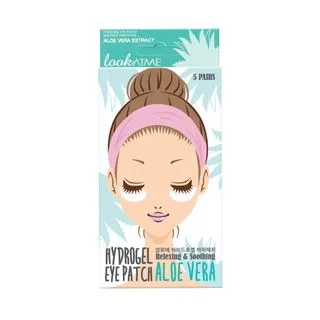
| lookATMEHydro Gel Eye Patch Aloe VeraYOUR PRODUCT | HydroPeptidePolyPeptide Collagel+ Eye Masks | MandomLucido Ageing Care Eye Patch | the Torriden StoreCellmazing Firming Patch | |
|---|---|---|---|---|
| Match | — | 47% | 45% | 44% |
| Price | $5.80 | $40.50+$34.70 | $11.62+$5.82 | $33.30+$27.50 |
| Shared key ingredients | — | 8 of 9 | 5 of 9 | 5 of 9 |
| Key difference | — | Niacinamide | Niacinamide | Hexapeptide-2 |
| Irritancy | Medium | Medium | Low | Low |
| Drying alcohol | Contains drying alcohol | — | — | — |
| View product | Shop | Shop | Shop |


More alternatives: Aceology HYDRO GLOW & VITALIZING RETINOL EYE MASK SINGLEThe ORCHID Skin Orchid Elastic Under Youth Eye Patch 2pcs
Product summary
"lookATME - Hydro Gel Eye Patch Aloe Vera" could be helpful for: Moisturizing, but its actives are not the most effective or are not well-studied.
Ingredient callouts
- this product includes a form of Retinoids (vitamin A) - retinyl palmitate 0.05% - 0.20%, but this type of vitamin A is not very effective. It could in theory help with fine lines and wrinkles, but the effect is most likely minimal.
- Humectants (hydrolyzed collagen 0.05% - 0.20% and glycerin 3.80% - 5.70%). These ingredients help attract water to the upper layer of the skin and improve the skin hydration.
Price
The product retails for 4.03$ in the United States.
For a detailed price comparison: click here.
Sources cited in this review
Every concentration estimate and effectiveness label is anchored to one of these 13 studies and safety reviews.
- 1
- 2
- 3
- 4
- 5
- 6

Affiliate links · As an Amazon Associate, WIMJ earns from qualifying purchases.