Works for
1 of 1 advertised claim delivered
Moisturizing13 ingredients credited for this claimGood support
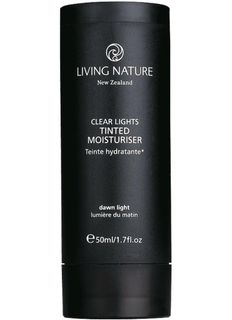
“Tinted Moisturiser”
This product can help improve hydration of the skin with the two types of ingredients.
The first type is called “humectants”:
these ingredients help attract water.
When humectants are on the surface of the skin, they “pull in” the moisture from the outside environment, or from
within deeper layers of the skin. The following ingredients in this product do the job:
glycerin, honey.
This product also contains ingredients called “occlusives”. They help reduce the speed with which our skin loses moisture to the outside environment. These ingredients also help soften the upper layer of the skin, so it feels less tight and nicer to the touch. The following ingredients in this product do the job: simmondsia chinensis seed oil, jojoba esters.
Can it cause trouble?
Irritancy8 strong irritants: Rosa damascena extract, Citrus grandis seed extract + 6 more — patch-test recommendedHigh risk
Comedogenic3 ingredients rated 2 or more on the 0–5 pore-clogging scale3 flagged
User reviews
Be the first — your take helps the next person decide.
Ingredients
Filter by role to see what each ingredient is doing.
Water~45–55%
Jojoba esters~6.4–7.8%
- Irritation risk
- Medium
An emollient made of jojoba oil. Helps soften the skin and support its barrier function
More about Jojoba estersMacadamia ternifolia seed oil~4.9–6%
- Irritation risk
- Medium
Plant oil from nuts that helps soften the upper layer of the skin. Contains a high concentration of oleic acid that can weaken skin's barrier function and increase water-loss while enhancing penetration of other ingredients
More about Macadamia ternifolia seed oilSimmondsia chinensis seed oil~3.6–4.4%
- Irritation risk
- Medium
Softens the upper layer of skin and helps restore the healthy skin barrier. Has shown to help calm down inflammation in skin. It is a stable oil, meaning that it retains its properties even when exposed to air.
More about Simmondsia chinensis seed oilTitanium dioxide~3.5–4.3%
- Irritation risk
- Low
Works as a UV filter when used in high concentrations. It is photostable and is effective mostly against the UVB light, with some protection in the UVA range. In small concentrations, used for its ability to improve the color of cosmetic products. Is usually well tolerated by the skin
More about Titanium dioxideCi 77891~2.4–2.9%
- Irritation risk
- Low
Persea gratissima oil~1.8–2.2%
- Irritation risk
- Medium
An emollient that helps soften the skin and could be helpful in repairing its barrier function
More about Persea gratissima oilCetearyl wheat straw glycosides~1.6–1.9%
- Irritation risk
- Medium
Helps water and oil mix together. Avoid if sensitive to gluten
More about Cetearyl wheat straw glycosidesCetearyl alcohol~1.4–1.7%
- Irritation risk
- Low
- Comedogenicity
- 2/5
A non-drying alcohol. Works as an emollient. Helps water and oil mix together and creates a nice product texture
More about Cetearyl alcoholTriticum vulgare germ oil~1.1–1.3%
- Irritation risk
- Low
- Comedogenicity
- 3/5
A good emoillient. Contains vitamin E which can help neutralise free radicals, however the oil is unstable. Avoid if you have gluten or wheat sensitivity (including food allergies).
More about Triticum vulgare germ oilRosa damascena extract~0.75–1.15%
- Irritation risk
- High
Oil of a very fragrant pink rose used as fragrance in cosmetics. Extensive research has shown it has mixed benefits. In the pro column, inhaling this flower’s scent seems to have relaxing properties and the plant’s petals contain skin-soothing and antioxidant compounds that can benefit skin. On the flipside, the numerous chemicals that create this rose’s distinctive fragrance pose a risk of causing skin aggravation.
More about Rosa damascena extractGlycerin~0.65–1%
- Irritation risk
- Low
One of the best moisturizing ingredients. Naturally present in skin. It attracts water to the upper layer of the skin working as a humectant
More about GlycerinMica~0.7–1%
- Irritation risk
- Low
Creates an illusion of smoother and more radiant skin tone. Adds shimmer to the skin by reflecting light
More about MicaZinc oxide~0.95–1.15%
- Irritation risk
- Low
A broad spectrum sunblock (protects from both UVA and UVB rays). Is suitable for most sensitive skins. In small concentrations, can be used as a colorant
More about Zinc oxideCi 77947~0.55–0.8%
- Irritation risk
- Low
Butyrospermum parkii butter~0.55–0.8%
- Irritation risk
- Low
- Comedogenicity
- 3/5
A great moisturising ingredient that softens the skin and reduces water loss from its upper layer. It also can be helpful in protecting skin from free radicals
More about Butyrospermum parkii butterMel~0.5–0.75%
- Irritation risk
- Low
Helps to soften the upper layer of the skin and attract water to it
More about MelLeptospermum scoparium branch/leaf oil~0.45–0.65%
- Irritation risk
- Low
Honey~0.35–0.65%
- Irritation risk
- Low
Helps attract water to the skin and might have some anti-bacterial properties. Can be an allergen
More about HoneyCitrus grandis seed extract~0.3–0.55%
- Irritation risk
- High
Sclerotium gum~0.3–0.6%
- Irritation risk
- Low
Used to create gel-like formulas and stabilize emulsions
More about Sclerotium gumStearic acid~0.5–0.75%
- Irritation risk
- Low
Helps oil and water mix together and works as an emollient
More about Stearic acidCetyl alcohol~0.4–0.65%
- Irritation risk
- Low
A non-drying alcohol that works to soften the skin and stabilize product formulations helping oil and water mix together
More about Cetyl alcoholIron oxides~0.3–0.55%
- Irritation risk
- Low
An umbrella term for the following three colorants: CI 77491, CI 77492, CI 77499. They might be able to offer some protection against visible light, but the degree of the protection is not clear
More about Iron oxidesTalc~0.45–0.7%
Pelargonium graveolens oil~0.3–0.55%
Geranium maculatum oil~0.3–0.55%
Tocopherol~0.3–0.55%
- Irritation risk
- Low
Pure form of vitamin E. Can help moisturise and protect the skin from free radicals. Often used to help stabilise other ingredients or the formula itself
More about TocopherolLeptospermum scoparium branch/leaf oil~0.25–0.45%
- Irritation risk
- Low
Melaleuca alternifolia leaf oil~0.2–0.35%
- Irritation risk
- High
An essential oil that can be irritating. Has some anti-bacterial properties
More about Melaleuca alternifolia leaf oilCitronellol~0.15–0.25%
Geraniol~0.1–0.2%
Linalool~0.1–0.2%
Ingredient list view
Water, Jojoba esters, Macadamia ternifolia seed oil, Simmondsia chinensis seed oil, Titanium dioxide, Ci 77891, Persea gratissima oil, Cetearyl wheat straw glycosides, Cetearyl alcohol, Triticum vulgare germ oil, Rosa damascena extract, Glycerin, Mica, Zinc oxide, Ci 77947, Butyrospermum parkii butter, Mel, Leptospermum scoparium branch/leaf oil, Honey, Citrus grandis seed extract, Sclerotium gum, Stearic acid, Cetyl alcohol, Iron oxides, Talc, Pelargonium graveolens oil, Geranium maculatum oil, Tocopherol, Leptospermum scoparium branch/leaf oil, Unknown, Melaleuca alternifolia leaf oil, Citronellol, Geraniol, Linalool
Compare prices
Retailers ranked by price — lowest first.
Affiliate links · prices updated regularly · As an Amazon Associate, WIMJ earns from qualifying purchases.
Sources cited in this review
Every concentration estimate and effectiveness label is anchored to one of these 10 studies and safety reviews.
- 1
- 2
- 3A review of inorganic UV filters zinc oxide and titanium dioxideonlinelibrary.wiley.com
- 4
- 5
- 6

Affiliate links · As an Amazon Associate, WIMJ earns from qualifying purchases.