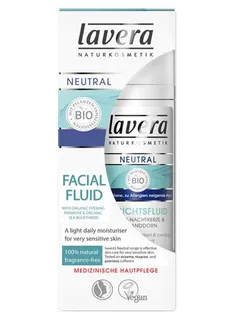
Works for
MoisturizingOlea europaea fruit oil, Glycerin + 16 moreWorks
“Skin is moisturised and skin irritations are reduced .”
This product can help improve hydration of the skin with the two types of ingredients.
The first type is called “humectants”:
these ingredients help attract water.
When humectants are on the surface of the skin, they “pull in” the moisture from the outside environment, or from
within deeper layers of the skin. The following ingredients in this product do the job:
glycerin, sodium hyaluronate.
This product also contains ingredients called “occlusives”. They help reduce the speed with which our skin loses moisture to the outside environment. These ingredients also help soften the upper layer of the skin, so it feels less tight and nicer to the touch. The following ingredients in this product do the job: caprylic/capric triglyceride, chondrus crispus extract.
Can it cause trouble?
Irritancy1 strong irritant: AlcoholMedium risk
Comedogenic2 ingredients rated 2 or more on the 0–5 pore-clogging scale2 flagged
User reviews
Be the first — your take helps the next person decide.
Ingredients
Filter by role to see what each ingredient is doing.
Water~45–55%
Olea europaea fruit oil~6.5–8%
- Irritation risk
- Medium
An emollient that helps soften the skin but is not effective for restoring its barrier function. Might be helpful to calm down inflammation
More about Olea europaea fruit oilAlcohol~4.7–5.8%
- Irritation risk
- High
Can be drying and contribute to skin irritation. Used in formulars to dissolve other ingredients, create a thinner product consistency or for its antibacterial properties
More about AlcoholGlycerin~3.3–4%
- Irritation risk
- Low
One of the best moisturizing ingredients. Naturally present in skin. It attracts water to the upper layer of the skin working as a humectant
More about GlycerinTricaprylin~2.6–3.2%
- Irritation risk
- Low
An emollient that helps soften the skin. Can increase penetration of other ingredients
More about TricaprylinCaprylic/capric triglyceride~2.2–2.6%
- Irritation risk
- Medium
A good mix of fatty acids that forms a protective layer on the skin. Improves the shelf life of products. Derived from coconut and glycerin
More about Caprylic/capric triglycerideHydrogenated palm glycerides~1.8–2.2%
- Irritation risk
- Low
An emollient that softens the skin
More about Hydrogenated palm glyceridesSqualane~1.7–2.1%
- Irritation risk
- Low
An oil naturally present in skin. Works as an emollient to soften the skin and form a protective layer on its surface without a greasy feeling.
More about SqualaneSimmondsia chinensis seed oil~1.4–1.7%
- Irritation risk
- Medium
Softens the upper layer of skin and helps restore the healthy skin barrier. Has shown to help calm down inflammation in skin. It is a stable oil, meaning that it retains its properties even when exposed to air.
More about Simmondsia chinensis seed oilShorea stenoptera seed butter~1.1–1.3%
- Irritation risk
- Low
Helps soften the upper layer of the skin and can be helpful in restoring the skin barrier function
More about Shorea stenoptera seed butterLevulinic acid~0.75–1.15%
Xanthan gum~0.65–1%
- Irritation risk
- Low
Used to create a thicker product consistency
More about Xanthan gumTocopheryl acetate~0.6–0.95%
- Irritation risk
- Medium
A more stable but less bio-available form of vitamin E compared to Tocopherol. Might help moisturize and protect the skin from free radicals, but mostly used in low concentrations to stabilize other ingredients.
More about Tocopheryl acetateOenothera biennis oil~0.6–0.95%
- Irritation risk
- Medium
Helps soften the upper layer of the skin and can support skin barrier function
More about Oenothera biennis oilChondrus crispus extract~0.55–0.85%
- Irritation risk
- Low
- Comedogenicity
- 3/5
Red algae extract that helps attract water to the upper layer of the skin and create a nicer product consistency
More about Chondrus crispus extractDipotassium glycyrrhizate~0.5–0.8%
- Irritation risk
- Low
A salt derived from licorice. Works as an emollient to soften the upper layer of the skin and can help calm down inflammation. Might be helpful for skin lightening
More about Dipotassium glycyrrhizateHippophae rhamnoides fruit extract~0.5–0.75%
- Irritation risk
- Medium
A plant extract that might help neutralize free radicals in skin, but research on its effectiveness is lacking
More about Hippophae rhamnoides fruit extractHippophae rhamnoides kernel extract~0.4–0.6%
- Irritation risk
- Low
Tocopherol~0.3–0.6%
- Irritation risk
- Low
Pure form of vitamin E. Can help moisturise and protect the skin from free radicals. Often used to help stabilise other ingredients or the formula itself
More about TocopherolButyrospermum parkii butter~0.35–0.65%
- Irritation risk
- Low
- Comedogenicity
- 3/5
A great moisturising ingredient that softens the skin and reduces water loss from its upper layer. It also can be helpful in protecting skin from free radicals
More about Butyrospermum parkii butterBrassica campestris sterols~0.3–0.55%
- Irritation risk
- Low
Help soften the upper layer of the skin
More about Brassica campestris sterolsLecithin~0.3–0.5%
- Irritation risk
- Low
Used mostly for creating emulsions - helping oil and water mix together. Helps soften the upper layer of the skin
More about LecithinLysolecithin~0.2–0.4%
- Irritation risk
- Low
Lecithin derivative. It helps oil and water mix together and can enhance penetration of other ingredients. It helps soften the upper layer of the skin
More about LysolecithinHydrogenated lecithin~0.2–0.35%
- Irritation risk
- Low
Helps to retain moisture by creating a protective barrier on the skin. Rich in fatty acids. Improves product texture and helps with the penetration of other ingredients.
More about Hydrogenated lecithinHelianthus annuus seed oil~0.2–0.35%
- Irritation risk
- Low
A great emollient due to its high linoleic acid content. One of the most effective plant oils in helping skin hydration and repairing skin barrier function
More about Helianthus annuus seed oilSodium hyaluronate~0.15–0.25%
- Irritation risk
- Low
One of the best moisturizing ingredients. Attracts water into the upper layer of the skin
More about Sodium hyaluronateAscorbyl palmitate~0.1–0.15%
- Irritation risk
- Medium
Being a lipid soluble form of vitamin C, it is more stable and can penetrate the skin better than L-Ascorbic acid. It is effective in protecting the skin from free radicals, as well as evening the skin tone, but is less effective in stimulating collagen production compared to L-Ascorbic acid.
More about Ascorbyl palmitateIngredient list view
Water, Olea europaea fruit oil, Alcohol, Glycerin, Tricaprylin, Caprylic/capric triglyceride, Hydrogenated palm glycerides, Squalane, Simmondsia chinensis seed oil, Shorea stenoptera seed butter, Levulinic acid, Xanthan gum, Tocopheryl acetate, Oenothera biennis oil, Chondrus crispus extract, Dipotassium glycyrrhizate, Hippophae rhamnoides fruit extract, Hippophae rhamnoides kernel extract, Tocopherol, Butyrospermum parkii butter, Brassica campestris sterols, Lecithin, Lysolecithin, Hydrogenated lecithin, Helianthus annuus seed oil, Sodium hyaluronate, Ascorbyl palmitate
Compare prices
Retailers ranked by price — lowest first.
Affiliate links · As an Amazon Associate, WIMJ earns from qualifying purchases.
Worth comparing, line by line.
Match % combines shared ingredients, the first five ingredients, shared actives and hero ingredients, irritancy (lower counts in the alternative's favour), texture and body area. Only products in the same routine step are compared.
| LaveraNeutral Facial FluidYOUR PRODUCT | Sanitas SkincareSensitive Skin Moisturizer | CetaphilRedness Relieving Night Moisturizer | EucerinAtoControl Face Care Cream | |
|---|---|---|---|---|
| Match | — | 35% | 34% | 34% |
| Price | $41.62 | $65.00+$23.38 | $9.59−$32.03 | $18.11−$23.51 |
| Shared key ingredients | — | 6 of 12 | 6 of 12 | 6 of 12 |
| Key difference | — | Niacinamide | Niacinamide | Phytosphingosine |
| Irritancy | Medium | Low | Low | Low |
| Drying alcohol | Contains drying alcohol | — | — | — |
| View product | Shop | Shop | Shop |


More alternatives: Apothaka Skincare Comforting moisturiserNatio Glow 24/7 Hydrating Water Cream
Sources cited in this review
Every concentration estimate and effectiveness label is anchored to one of these 13 studies and safety reviews.
- 1Use of “natural” oils for moisturization: Review of olive, coconut, and sunflower seed oilonlinelibrary.wiley.com
- 2
- 3
- 4
- 5Abundance of active ingredients in sea-buckthorn oilncbi.nlm.nih.gov
- 6Vitamin E in dermatologyncbi.nlm.nih.gov

Affiliate links · As an Amazon Associate, WIMJ earns from qualifying purchases.