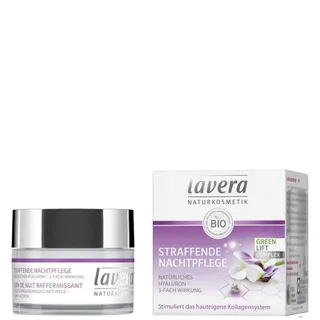
Works for
MoisturizingCeramide np, Olea europaea fruit oil + 18 moreWorks well
“Firming Night Cream Karanja”
This product can help improve hydration of the skin with the two types of ingredients.
The first type is called “humectants”:
these ingredients help attract water.
When humectants are on the surface of the skin, they “pull in” the moisture from the outside environment, or from
within deeper layers of the skin. The following ingredients in this product do the job:
glycerin, sodium hyaluronate.
This product also contains ingredients called “occlusives”. They help reduce the speed with which our skin loses moisture to the outside environment. These ingredients also help soften the upper layer of the skin, so it feels less tight and nicer to the touch. The following ingredients in this product do the job: helianthus annuus seed oil, ricinus communis seed oil.
The following ingredients in this product are especially good for supporting the skin barrier and helping with the hydration level: ceramide np
Anti-agingDipalmitoyl hydroxyproline, Camellia sinensis leaf extract + 3 moreNot delivered
“The formula with natural hyaluronic acid reduces wrinkles during sleep, relaxes the facial features and tightens the skin.”
This product does not contain ingredients that are able to reduce fine lines and wrinkles or help with skin elasticity, but it can improve the look of the skin temporarily through moisturization. Well-moisturized skin might also be able to repair the sun damage better.These ingredients - camellia sinensis leaf extract, dipalmitoyl hydroxyproline - could be helpful for preventing or repairing signs of aging in theory, but there is no evidence that it actually works.
This ingredient camellia sinensis leaf extract might be able to help neutralize free radicals in skin and help it fight off some of the sun damage.
Anti-oxidationSide benefit · Camellia sinensis leaf extract, Dipalmitoyl hydroxyproline + 5 moreMay help
This product contains antioxidants (camellia sinensis leaf extract) that can help neutralize free radicals in skin to lessen the damage it gets from the UV light (sun). There is some human evidence for this effect in skin, though it is smaller or less consistent than the evidence for the best antioxidants.
Can it cause trouble?
Irritancy9 strong irritants: Alcohol, Parfum + 7 more — patch-test recommendedHigh risk
Comedogenic2 ingredients rated 2 or more on the 0–5 pore-clogging scale2 flagged

User reviews
Be the first — your take helps the next person decide.
Ingredients
Filter by role to see what each ingredient is doing.
Water~45–55%
Olea europaea fruit oil~5.4–6.6%
- Irritation risk
- Medium
An emollient that helps soften the skin but is not effective for restoring its barrier function. Might be helpful to calm down inflammation
More about Olea europaea fruit oilAlcohol~4.2–5.2%
- Irritation risk
- High
Can be drying and contribute to skin irritation. Used in formulars to dissolve other ingredients, create a thinner product consistency or for its antibacterial properties
More about AlcoholGlycerin~3–3.7%
- Irritation risk
- Low
One of the best moisturizing ingredients. Naturally present in skin. It attracts water to the upper layer of the skin working as a humectant
More about GlycerinPongamia glabra seed oil~2.3–2.9%
- Irritation risk
- Low
A plant oil that helps soften the upper layer of the skin
More about Pongamia glabra seed oilCetyl alcohol~2–2.4%
- Irritation risk
- Low
A non-drying alcohol that works to soften the skin and stabilize product formulations helping oil and water mix together
More about Cetyl alcoholCetearyl alcohol~1.7–2%
- Irritation risk
- Low
- Comedogenicity
- 2/5
A non-drying alcohol. Works as an emollient. Helps water and oil mix together and creates a nice product texture
More about Cetearyl alcoholGlyceryl stearate citrate~1.5–1.8%
- Irritation risk
- Low
Helps oil and water mix together while softening the upper layer of the skin
More about Glyceryl stearate citrateParfum~1.2–1.4%
- Irritation risk
- High
An aromatic blend of unspecified and possibly irritating ingredients
More about ParfumSodium lactate~0.95–1.15%
- Irritation risk
- Medium
Helps attract water to the upper layer of the skin. Is often used to adjust the pH level of the product
More about Sodium lactateHydrogenated lecithin~0.7–1.1%
- Irritation risk
- Low
Helps to retain moisture by creating a protective barrier on the skin. Rich in fatty acids. Improves product texture and helps with the penetration of other ingredients.
More about Hydrogenated lecithinDipalmitoyl hydroxyproline~0.6–0.9%
- Irritation risk
- Low
Is claimed to stimulate collagen and elastin production, as well as work as an anti-oxidant. There is however not enough evidence for its effectiveness
More about Dipalmitoyl hydroxyprolineHydrogenated palm glycerides~0.6–0.9%
- Irritation risk
- Low
An emollient that softens the skin
More about Hydrogenated palm glyceridesSodium hyaluronate~0.5–0.8%
- Irritation risk
- Low
One of the best moisturizing ingredients. Attracts water into the upper layer of the skin
More about Sodium hyaluronateCamellia sinensis leaf extract~0.5–0.75%
- Irritation risk
- Low
Can contain potent anti-oxidant compounds (abbreviated ECG, GCG, EGC, and EGCG) that might help protect the skin from free radicals. Can help calm down inflammation and has some anti-bacterial properties. Unfortunately, these antioxidants are unstable and lose their effectiveness very quickly in products. The concentration of the antioxidant compounds in the extract also tends to be low to be effective in topical formulation
More about Camellia sinensis leaf extractHippophae rhamnoides fruit extract~0.45–0.7%
- Irritation risk
- Medium
A plant extract that might help neutralize free radicals in skin, but research on its effectiveness is lacking
More about Hippophae rhamnoides fruit extractSimmondsia chinensis seed oil~0.5–0.8%
- Irritation risk
- Medium
Softens the upper layer of skin and helps restore the healthy skin barrier. Has shown to help calm down inflammation in skin. It is a stable oil, meaning that it retains its properties even when exposed to air.
More about Simmondsia chinensis seed oilButyrospermum parkii butter~0.5–0.7%
- Irritation risk
- Low
- Comedogenicity
- 3/5
A great moisturising ingredient that softens the skin and reduces water loss from its upper layer. It also can be helpful in protecting skin from free radicals
More about Butyrospermum parkii butterPrunus amygdalus dulcis seed~0.35–0.65%
- Irritation risk
- Low
Helps soften the upper layer of the skin
More about Prunus amygdalus dulcis seedRicinus communis seed oil~0.4–0.6%
- Irritation risk
- Medium
A plant oil that can help soften the skin. It might be helpful in calming down inflammation, but solid research is lacking. Is often used in lip products to create the needed product consistency
More about Ricinus communis seed oilCeramide np~0.4–0.6%
- Irritation risk
- Low
A type of lipid similar to ceramides naturally present in skin. Helps to soften the upper layer of the skin and supports the skin barrier function to keep it hydrated. Can help to prevent inflammation in skin
More about Ceramide npBrassica campestris sterols~0.35–0.6%
- Irritation risk
- Low
Help soften the upper layer of the skin
More about Brassica campestris sterolsXanthan gum~0.3–0.55%
- Irritation risk
- Low
Used to create a thicker product consistency
More about Xanthan gumPotassium cetyl phosphate~0.3–0.55%
- Irritation risk
- Medium
Helps oil and water mix together
More about Potassium cetyl phosphateHydrogenated castor oil~0.3–0.6%
- Irritation risk
- Medium
A plant oil that can help soften the skin. It might be helpful in calming down inflammation, but solid research is lacking. Is often used in lip products to create the needed product consistency
More about Hydrogenated castor oilTocopherol~0.25–0.5%
- Irritation risk
- Low
Pure form of vitamin E. Can help moisturise and protect the skin from free radicals. Often used to help stabilise other ingredients or the formula itself
More about TocopherolTocopheryl acetate~0.25–0.45%
- Irritation risk
- Medium
A more stable but less bio-available form of vitamin E compared to Tocopherol. Might help moisturize and protect the skin from free radicals, but mostly used in low concentrations to stabilize other ingredients.
More about Tocopheryl acetateAscorbyl palmitate~0.2–0.4%
- Irritation risk
- Medium
Being a lipid soluble form of vitamin C, it is more stable and can penetrate the skin better than L-Ascorbic acid. It is effective in protecting the skin from free radicals, as well as evening the skin tone, but is less effective in stimulating collagen production compared to L-Ascorbic acid.
More about Ascorbyl palmitateHelianthus annuus seed oil~0.25–0.45%
- Irritation risk
- Low
A great emollient due to its high linoleic acid content. One of the most effective plant oils in helping skin hydration and repairing skin barrier function
More about Helianthus annuus seed oilLinalool~0.15–0.3%
Limonene~0.15–0.25%
- Irritation risk
- High
A common frangrance that can easily irritate skin, especially if exposed to air, light or heat
More about LimoneneBenzyl salicylate~0.1–0.2%
Geraniol~0.1–0.2%
Citral~0.1–0.15%
Citronellol~0.05–0.1%
Coumarin~0.05–0.1%
Ingredient list view
Water, Olea europaea fruit oil, Alcohol, Glycerin, Pongamia glabra seed oil, Cetyl alcohol, Cetearyl alcohol, Glyceryl stearate citrate, Parfum, Sodium lactate, Hydrogenated lecithin, Dipalmitoyl hydroxyproline, Hydrogenated palm glycerides, Sodium hyaluronate, Camellia sinensis leaf extract, Hippophae rhamnoides fruit extract, Simmondsia chinensis seed oil, Butyrospermum parkii butter, Prunus amygdalus dulcis seed, Ricinus communis seed oil, Ceramide np, Brassica campestris sterols, Xanthan gum, Potassium cetyl phosphate, Hydrogenated castor oil, Tocopherol, Tocopheryl acetate, Ascorbyl palmitate, Helianthus annuus seed oil, Linalool, Limonene, Benzyl salicylate, Geraniol, Citral, Citronellol, Coumarin
Compare prices
Retailers ranked by price — lowest first.
Affiliate links · As an Amazon Associate, WIMJ earns from qualifying purchases.
Worth comparing, line by line.
Match % combines shared ingredients, the first five ingredients, shared actives and hero ingredients, irritancy (lower counts in the alternative's favour), texture and body area. Only products in the same routine step are compared.
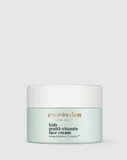
| LaveraFirming Night Cream KaranjaYOUR PRODUCT | OLIVARRIERComfort Barrier Cream | AlverdeVital+ Night Cream | EveredenKids Multi-Vitamin Face Cream Melon Juice | |
|---|---|---|---|---|
| Match | — | 62% | 62% | 61% |
| Price | — | $12.48 | $5.99 | $9.00 |
| Shared key ingredients | — | 7 of 11 | 5 of 11 | 7 of 11 |
| Key difference | — | Phytosphingosine | Agran Oil | Niacinamide |
| Irritancy | High | Medium | High | Medium |
| Drying alcohol | Contains drying alcohol | — | Contains drying alcohol | — |
| View product | Shop | Shop | Shop |


More alternatives: PURE'AM AUTHENTIC BARRIER CREAM BALMDeviant Skincare Peptide + Growth Factor Advanced Restore Cream
Product summary
Judging from the ingredient list, "Lavera - Firming Night Cream Karanja" works well for improving skin hydration The formulation is based on a combination of good humectants and emollients. Both are needed to increase the skin hydration level. Humectants in this product (glycerin, sodium hyaluronate and sodium lactate) help to increase the water content in the upper layer of the skin. (These ingredients do so by "capturing" water molecules from the outside air or from within the deeper layers of the skin). Ceramide np, helianthus annuus seed oil, ricinus communis seed oil, brassica campestris sterols and cetearyl alcohol in this product help decrease the water evoporation from the skin, so that it stays hydrated for longer. These ingredients also soften the skin and take away the feeling of tightness and dryness.
Ingredient callouts
- As a plus, this moisturizer also contains Ceramides (ceramide np 0.40% - 0.60%). Ceramides are a type of lipids that our skin produces itself. They are a building block of the skin's barrier. Ceramides used in skincare are synthetic or extracted from plants. They work well for softening the skin surface and "patch holes" in the skin's barrier.
Irritation risk
There are quite a few common irritants in this product, including ingredients without particular skin benefits. We would not recommend it for sensitive skin. We assess the overall irritancy of this moisturizer to be high. For a detailed overview of all potential irritants: click here
You can see the detailed formula review with the breakdown of all actives in the product and the full ingredient list with estimated concentrations in the tables below.
Price
The product retails from 18.99$ up to 24.99$ in the United States, for 36.90CA$ in Canada and for 23.95£ in the United Kingdom.
For a detailed price comparison: click here.
Sources cited in this review
Every concentration estimate and effectiveness label is anchored to one of these 18 studies and safety reviews.
- 1Use of “natural” oils for moisturization: Review of olive, coconut, and sunflower seed oilonlinelibrary.wiley.com
- 2
- 3
- 4Hyaluronic acid: A key molecule in skin agingncbi.nlm.nih.gov
- 5
- 6Abundance of active ingredients in sea-buckthorn oilncbi.nlm.nih.gov

Affiliate links · As an Amazon Associate, WIMJ earns from qualifying purchases.