Works for
1 of 1 advertised claim delivered
Moisturizing12 ingredients credited for this claimGood support
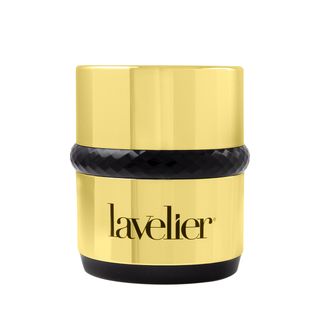
“Lavelier Moisture Allure Cream is a lush daily moisturizer that helps replenish and restore the look of dry, fatigued skin.”
This product contains good ingredients to attract water to the upper layer of the skin. These ingredients are called "humectants": betaine, glycerin.
When humectants are on the surface of the skin, they “pull in” the moisture from the outside environment, or from within deeper layers of the skin. If the air is dry, humectants can speed up the moisture loss from the skin. This is why it is a good idea to use another product on top of this one to help "seal in" the moisture (look for ingredients like dimethicone, squalane, oils and butters).
Anti-agingNot advertised by the brand · 2 ingredients credited for this claimModerate support
This product contains retinyl palmitate. This ingredient might be able to help reduce and prevent fine lines and wrinkles, improve skin elasticity and firmness, but there is not enough evidence that it actually works.
Evens skin toneNot advertised by the brand · 2 ingredients credited for this claimModerate support
The following ingredient (ingredients) in this product might be helpful, but there is no evidence to confirm that it actually works: retinyl palmitate.
Anti-oxidationNot advertised by the brand · 1 ingredient credited for this claimModerate support
This product contains antioxidants (camellia sinensis leaf extract) that might be able to help neutralize free radicals in skin to lessen the damage it gets from the UV light (sun). There is not enough evidence to confirm their effectiveness in skin though.
Can it cause trouble?
Irritancy2 strong irritants: Retinyl palmitate, ParfumMedium risk
ComedogenicClean of flagged comedogenic ingredientsNone flagged
User reviews
Be the first — your take helps the next person decide.
Ingredients
Filter by role to see what each ingredient is doing.
Water~40–60%
Glycerin~4.2–6.3%
- Irritation risk
- Low
One of the best moisturizing ingredients. Naturally present in skin. It attracts water to the upper layer of the skin working as a humectant
More about GlycerinCyclopentasiloxane~3.7–5.6%
- Irritation risk
- Low
A silicone that helps improve the product texture and spreadability. Can absorb oil creating a short-term mattifying effect on the skin
More about CyclopentasiloxaneCyclohexasiloxane~2.8–4.2%
- Irritation risk
- Low
A silicone that serves as an emollient. Helps create a nice non-greasy feels
More about CyclohexasiloxaneDicaprylyl carbonate~2.1–3.2%
- Irritation risk
- Low
Helps products spread more easily and works as an emollient to soften skin
More about Dicaprylyl carbonateGlyceryl stearate~1.7–2.6%
- Irritation risk
- Low
An emollient that softens the skin and forms a protective layer on its surface. Helps water and oil mix together
More about Glyceryl stearateCetearyl olivate~1.4–2.2%
Sorbitan olivate~1.3–1.9%
Betaine~1–1.6%
- Irritation risk
- Low
Helps attract water to the upper layer of the skin and improves the product texture
More about BetaineHydrolyzed oat protein~0.85–1.25%
- Irritation risk
- Low
Helps attract water to the upper layer of the skin
More about Hydrolyzed oat proteinCarbomer~0.5–1.2%
- Irritation risk
- Low
Helps create a thicker or gel-like product texture. It is not a surfactant but can be used in gentle cleansing formulations
More about CarbomerAminomethyl propanol~0.45–1%
Phenoxyethanol~0.4–0.9%
- Irritation risk
- Low
A preservative. It helps prevent bacterial growth in cosmetic products
More about PhenoxyethanolChlorphenesin~0.16–0.32%
Caprylyl glycol~0.3–0.75%
- Irritation risk
- Medium
Helps preserve products and creates a nice product texture
More about Caprylyl glycolAloe barbadensis leaf extract~0.3–0.75%
- Irritation risk
- Medium
Traditionally used to treat sunburns, dermatitis and inflammation, but evidence for its effectiveness is lacking. The extract can contain humectants that help attract water into the skin
More about Aloe barbadensis leaf extractCamellia sinensis leaf extract~0.15–0.6%
- Irritation risk
- Low
Can contain potent anti-oxidant compounds (abbreviated ECG, GCG, EGC, and EGCG) that might help protect the skin from free radicals. Can help calm down inflammation and has some anti-bacterial properties. Unfortunately, these antioxidants are unstable and lose their effectiveness very quickly in products. The concentration of the antioxidant compounds in the extract also tends to be low to be effective in topical formulation
More about Camellia sinensis leaf extractRetinyl palmitate~0.1–0.5%
- Irritation risk
- High
Three steps removed from the active form of vitamin A - retinoic acid. To have an effect in the skin, it first needs to be converted twice to become the retinoic acid. This means it is less potent than retinol, but could also be less irritating. Once converted to the retinoic acid in the skin, it helps against all signs of aging, improves skin cell turnover and helps fight blemishes and clogged pores. However, in many cosmetic formulations, it is used in a concentration that is too low to have the full effect
More about Retinyl palmitateO-cymen-5-ol~0.05–0.1%
Parfum~0.1–0.3%
- Irritation risk
- High
An aromatic blend of unspecified and possibly irritating ingredients
More about ParfumTetrasodium glutamate diacetate~0.1–0.3%
- Irritation risk
- Low
Helps stabilize the product formulation
More about Tetrasodium glutamate diacetateCalcium gluconate~0.1–0.35%
- Irritation risk
- Low
Helps attract water to the upper layer of the skin and helps to improve appearance of the product
More about Calcium gluconateMagnesium gluconate~0.05–0.2%
- Irritation risk
- Low
A mineral that might be able to support skin hydration, but convincing research on its effectiveness in topical skincare is lacking
More about Magnesium gluconateHydrolyzed corallina officinalis~0.05–0.15%
- Irritation risk
- Low
Ingredient list view
Water, Glycerin, Cyclopentasiloxane, Cyclohexasiloxane, Dicaprylyl carbonate, Glyceryl stearate, Cetearyl olivate, Sorbitan olivate, Betaine, Hydrolyzed oat protein, Carbomer, Aminomethyl propanol, Phenoxyethanol, Chlorphenesin, Caprylyl glycol, Aloe barbadensis leaf extract, Camellia sinensis leaf extract, Retinyl palmitate, O-cymen-5-ol, Parfum, Tetrasodium glutamate diacetate, Calcium gluconate, Magnesium gluconate, Hydrolyzed corallina officinalis
Compare prices
Retailers ranked by price — lowest first.

Affiliate links · prices updated regularly
Sources cited in this review
Every concentration estimate and effectiveness label is anchored to one of these 3 studies and safety reviews.
- 1
- 2
- 3Allergic contact dermatitis caused by isopropyl methylphenol, a new haptenonlinelibrary.wiley.com

Affiliate links · As an Amazon Associate, WIMJ earns from qualifying purchases.