Works for
1 of 3 advertised claims delivered
Moisturizing20 ingredients credited for this claimGood support
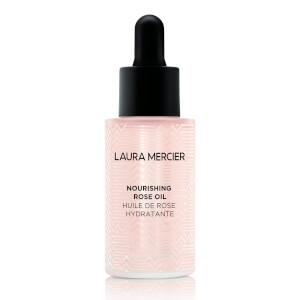
“Nourishing Rose Oil”
This product can help improve hydration of the skin with the two types of ingredients.
The first type is called “humectants”:
these ingredients help attract water.
When humectants are on the surface of the skin, they “pull in” the moisture from the outside environment, or from
within deeper layers of the skin. The following ingredients in this product do the job:
glycerin.
This product also contains ingredients called “occlusives”. They help reduce the speed with which our skin loses moisture to the outside environment. These ingredients also help soften the upper layer of the skin, so it feels less tight and nicer to the touch. The following ingredients in this product do the job: cocos nucifera oil, helianthus annuus seed oil.
Anti-aging2 ingredients credited for this claimWeak support
“Laura Mercier Nourishing Rose Oil instantly Moisturizes Skin – 96% of consumers said this product makes skin feel instantly moisturized* Moisturizes Over Time – 90% of consumers agreed skin is moisturized over time* Skin Essentials Ingredient Complex To help skin achieve its optimal state, Laura hand selected three key ingredients that are incorporated into every product in the Skin Essentials line.”
Effective ingredients missing or their concentration is too low.
Evens skin toneNo ingredient credited for this claimNo support
“Dryness, Dullness, and Uneven Texture Formulation.”
Effective ingredients missing or their concentration is too low
Can it cause trouble?
Irritancy10 strong irritants: Gardenia taitensis flower extract, Rosa gallica flower extract + 8 more — patch-test recommendedHigh risk
Comedogenic2 ingredients rated 2 or more on the 0–5 pore-clogging scale2 flagged
User reviews
Be the first — your take helps the next person decide.
Ingredients
Filter by role to see what each ingredient is doing.
Pentaerythrityl tetraisostearate~22–34%
- Irritation risk
- Medium
Used to create a thicker product consistency
More about Pentaerythrityl tetraisostearateCocos nucifera oil~4.1–6.2%
- Irritation risk
- Low
- Comedogenicity
- 3/5
An emollient. Found to be as effective as a moisturizer for dry skin as mineral oil. Could be comedogenic
More about Cocos nucifera oilNeopentyl glycol diheptanoate~4.7–7%
- Irritation risk
- Low
Helps soften the upper layer of the skin and create a nice product consistency
More about Neopentyl glycol diheptanoateDicaprylyl carbonate~3.7–5.6%
- Irritation risk
- Low
Helps products spread more easily and works as an emollient to soften skin
More about Dicaprylyl carbonateSqualane~2.9–4.4%
- Irritation risk
- Low
An oil naturally present in skin. Works as an emollient to soften the skin and form a protective layer on its surface without a greasy feeling.
More about SqualaneDiisostearyl malate~2–3%
- Irritation risk
- Medium
Helps to soften the upper layer of the skin
More about Diisostearyl malateHelianthus annuus seed oil~1.7–2.5%
- Irritation risk
- Low
A great emollient due to its high linoleic acid content. One of the most effective plant oils in helping skin hydration and repairing skin barrier function
More about Helianthus annuus seed oilCarthamus tinctorius seed oil~1.3–1.9%
- Irritation risk
- Low
An emollient that helps soften the skin and might help calm down inflammation
More about Carthamus tinctorius seed oilSimmondsia chinensis seed oil~1.2–1.8%
- Irritation risk
- Medium
Softens the upper layer of skin and helps restore the healthy skin barrier. Has shown to help calm down inflammation in skin. It is a stable oil, meaning that it retains its properties even when exposed to air.
More about Simmondsia chinensis seed oilEthylhexyl olivate~0.8–1.2%
- Irritation risk
- Low
Helps soften the upper layer of the skin
More about Ethylhexyl olivatePolyglyceryl-2 diisostearate~0.5–1.1%
Limnanthes alba seed oil~0.45–1.05%
- Irritation risk
- Low
This oil's cmposition is closest to rapeseed oil. It is a very stable oil and serves as an emoillient
More about Limnanthes alba seed oilGardenia taitensis flower extract~0.35–0.8%
Lithospermum erythrorhizon root extract~0.3–0.75%
- Irritation risk
- High
A plant extract that might help neutralize free radicals in skin. Can be used for its fragrance
More about Lithospermum erythrorhizon root extractBorago officinalis seed oil~0.35–0.8%
- Irritation risk
- Low
A plant oil that is effective in reducing irritation in skin, restore the barrier function and support its hydration
More about Borago officinalis seed oilRosa canina fruit oil~0.35–0.8%
- Irritation risk
- Medium
A great emollient. Contains vitamin E (tocopherol) which may give it some anti-oxidant properties. Can contain volatile compounds and can be irritating
More about Rosa canina fruit oilMacadamia ternifolia seed oil~0.35–0.8%
- Irritation risk
- Medium
Plant oil from nuts that helps soften the upper layer of the skin. Contains a high concentration of oleic acid that can weaken skin's barrier function and increase water-loss while enhancing penetration of other ingredients
More about Macadamia ternifolia seed oilAleurites moluccanus seed oil~0.15–0.65%
- Irritation risk
- Low
Helps soften the upper layer of the skin
More about Aleurites moluccanus seed oilVitis vinifera seed oil~0.2–0.75%
- Irritation risk
- Medium
A great emollient that can also have anti-oxidant properties
More about Vitis vinifera seed oilRhus verniciflua peel wax~0.15–0.55%
- Irritation risk
- Low
Rosa gallica flower extract~0.1–0.5%
- Irritation risk
- High
Porphyridium cruentum extract~0.15–0.55%
- Irritation risk
- Low
- Comedogenicity
- 3/5
A red algae extract. Can help attract water to the upper layer of the skin and might have an antioxidant effect
More about Porphyridium cruentum extractRosa damascena flower oil~0.1–0.45%
- Irritation risk
- High
Used as a fragrance. Can be irritating
More about Rosa damascena flower oilCaprylic/capric triglyceride~0.15–0.65%
- Irritation risk
- Medium
A good mix of fatty acids that forms a protective layer on the skin. Improves the shelf life of products. Derived from coconut and glycerin
More about Caprylic/capric triglycerideTocopheryl acetate~0.1–0.5%
- Irritation risk
- Medium
A more stable but less bio-available form of vitamin E compared to Tocopherol. Might help moisturize and protect the skin from free radicals, but mostly used in low concentrations to stabilize other ingredients.
More about Tocopheryl acetateBenzophenone-3~0.3–0.7%
- Irritation risk
- High
Same as oxybenzone. Protects in the UVB and short UVA range. In small concentrations, used to stabilize product formulation. Can be irritating. Is shown to be harmful to coral reefs - consider avoiding bathing in coral reef areas when wearing a product with this ingredient. It can penetrate the skin and get absorbed into bloodstream faster than other popular filters available in the US. The study that produced this finding did not address any potential health effects of the absorption
More about Benzophenone-3Ethylhexyl methoxycinnamate~0.3–0.7%
- Irritation risk
- High
Octinoxate. When used in higher concentrations, works as a sunscreen protecting the skin from UVB rays. When used in lower concentration, helps to preserve the product formulation. Is shown to be harmful to coral reefs - consider avoiding bathing in coral reef areas when wearing a product with this ingredient. It can be irritating
More about Ethylhexyl methoxycinnamateTocopherol~0.1–0.5%
- Irritation risk
- Low
Pure form of vitamin E. Can help moisturise and protect the skin from free radicals. Often used to help stabilise other ingredients or the formula itself
More about TocopherolSea water~0.1–0.45%
- Irritation risk
- Low
Dissolves other ingredients. It does not have additional skin benefits compared to plain water
More about Sea waterMaris aqua~0.15–0.5%
Sea water~0.15–0.5%
- Irritation risk
- Low
Dissolves other ingredients. It does not have additional skin benefits compared to plain water
More about Sea waterWater~0.1–0.5%
Glycerin~0.15–0.6%
- Irritation risk
- Low
One of the best moisturizing ingredients. Naturally present in skin. It attracts water to the upper layer of the skin working as a humectant
More about GlycerinPropanediol~0.15–0.55%
- Irritation risk
- Low
Acts as a solvent for other ingredients. Speeds up the absorption of other ingredients into the skin
More about PropanediolBht~0.1–0.45%
Parfum~0.1–0.4%
- Irritation risk
- High
An aromatic blend of unspecified and possibly irritating ingredients
More about ParfumHydroxycitronellal~0.1–0.4%
- Irritation risk
- High
A fragrance. A likely allergen and can be irritating
More about HydroxycitronellalAlpha-isomethyl ionone~0.1–0.4%
- Irritation risk
- High
A fragrance. Potential allergen and can be irritating
More about Alpha-isomethyl iononeBenzyl salicylate~0.05–0.3%
Linalool~0.05–0.25%
Limonene~0.1–0.3%
- Irritation risk
- High
A common frangrance that can easily irritate skin, especially if exposed to air, light or heat
More about LimonenePhenoxyethanol~0.1–0.35%
- Irritation risk
- Low
A preservative. It helps prevent bacterial growth in cosmetic products
More about PhenoxyethanolPotassium sorbate~0.05–0.3%
Sorbic acid~0.05–0.25%
Ingredient list view
Pentaerythrityl tetraisostearate, Cocos nucifera oil, Neopentyl glycol diheptanoate, Dicaprylyl carbonate, Squalane, Diisostearyl malate, Helianthus annuus seed oil, Carthamus tinctorius seed oil, Simmondsia chinensis seed oil, Ethylhexyl olivate, Polyglyceryl-2 diisostearate, Limnanthes alba seed oil, Gardenia taitensis flower extract, Lithospermum erythrorhizon root extract, Borago officinalis seed oil, Rosa canina fruit oil, Macadamia ternifolia seed oil, Aleurites moluccanus seed oil, Vitis vinifera seed oil, Rhus verniciflua peel wax, Rosa gallica flower extract, Porphyridium cruentum extract, Rosa damascena flower oil, Caprylic/capric triglyceride, Tocopheryl acetate, Benzophenone-3, Ethylhexyl methoxycinnamate, Tocopherol, Sea water, Maris aqua, Sea water, Water, Glycerin, Propanediol, Bht, Parfum, Hydroxycitronellal, Alpha-isomethyl ionone, Benzyl salicylate, Linalool, Limonene, Phenoxyethanol, Potassium sorbate, Sorbic acid
Compare prices
Retailers ranked by price — lowest first.

Sources cited in this review
Every concentration estimate and effectiveness label is anchored to one of these 15 studies and safety reviews.
- 1
- 2
- 3
- 4Effect of topically applied lipids on surfactant-irritated skinonlinelibrary.wiley.com
- 5
- 6

Affiliate links · As an Amazon Associate, WIMJ earns from qualifying purchases.