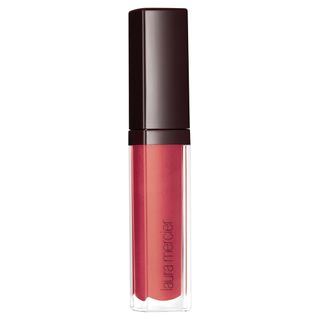
Works for
2 of 2 advertised claims delivered
Moisturizing17 ingredients credited for this claimStrong support
“This high-shine, perfectly pigmented balm gloss offers 24 hours of plush moisture and improves lip hydration over time.”
This product can help soften the skin and reduce its moisture loss with emollients and occlusives: carthamus tinctorius seed oil, glycine soja oil.
Keep in mind that this product does not contain effective ingredients to attract water to the upper layer of the skin. This is why an additional product with humectants like glycerin or hyaluronic acid can be helpful (apply it before this product for the best results).
The following ingredients in this product are especially good for supporting the skin barrier and helping with the hydration level: palmitoyl oligopeptide
Anti-aging4 ingredients credited for this claimModerate support
“Formulated with the Laura Mercier Lip Complex, its unique blend of anti-aging and moisturizing anti-oxidants and plumping ingredients create a smooth, non-sticky finish that does not feather or bleed.”
This product contains palmitoyl oligopeptide. This ingredient might be able to help reduce and prevent fine lines and wrinkles, improve skin elasticity and firmness, but there is not enough evidence that it actually works.
Can it cause trouble?
Irritancy4 strong irritants: Rosa damascena extract, Aroma + 2 more — patch-test recommendedHigh risk
Comedogenic28 ingredients rated 2 or more on the 0–5 pore-clogging scale28 flagged
User reviews
Be the first — your take helps the next person decide.
Ingredients
Filter by role to see what each ingredient is doing.
Copal~22–33%
- Irritation risk
- Low
Rosa damascena extract~5.4–8.2%
- Irritation risk
- High
Oil of a very fragrant pink rose used as fragrance in cosmetics. Extensive research has shown it has mixed benefits. In the pro column, inhaling this flower’s scent seems to have relaxing properties and the plant’s petals contain skin-soothing and antioxidant compounds that can benefit skin. On the flipside, the numerous chemicals that create this rose’s distinctive fragrance pose a risk of causing skin aggravation.
More about Rosa damascena extractHydrogenated polyisobutene~4.4–6.5%
- Irritation risk
- Low
Used to improve the product consistency and soften the upper layer of the skin
More about Hydrogenated polyisobuteneLanolin oil~3.5–5.3%
- Irritation risk
- Low
Sebum of wool-bearing animals (most commonly sheep). Helps soften the upper layer of the skin and reduce the skin water loss. In rare cases could be an allergen. Not suitable for vegans
More about Lanolin oilPolyethylene~2.7–4.1%
Hydrogenated castor oil~2–3%
- Irritation risk
- Medium
A plant oil that can help soften the skin. It might be helpful in calming down inflammation, but solid research is lacking. Is often used in lip products to create the needed product consistency
More about Hydrogenated castor oilAroma~1.5–2.2%
Parfum~1.1–1.7%
- Irritation risk
- High
An aromatic blend of unspecified and possibly irritating ingredients
More about ParfumDisteardimonium hectorite~0.95–1.45%
- Irritation risk
- Low
A type of clay that is used to thicken the product consistency
More about Disteardimonium hectoriteSimmondsia chinensis seed oil~0.9–1.3%
- Irritation risk
- Medium
Softens the upper layer of skin and helps restore the healthy skin barrier. Has shown to help calm down inflammation in skin. It is a stable oil, meaning that it retains its properties even when exposed to air.
More about Simmondsia chinensis seed oilPropylene carbonate~0.5–1.2%
- Irritation risk
- Low
Is used to dissolve other ingredients and create nice product texture
More about Propylene carbonateBoron nitride~0.45–1.1%
- Irritation risk
- Low
Helps to absord oil and evenly disperse other ingredients (for example, pigment) in product formulation
More about Boron nitrideButyrospermum parkii butter~0.45–1.05%
- Irritation risk
- Low
- Comedogenicity
- 3/5
A great moisturising ingredient that softens the skin and reduces water loss from its upper layer. It also can be helpful in protecting skin from free radicals
More about Butyrospermum parkii butterRetinyl palmitate~0.3–0.75%
- Irritation risk
- High
Three steps removed from the active form of vitamin A - retinoic acid. To have an effect in the skin, it first needs to be converted twice to become the retinoic acid. This means it is less potent than retinol, but could also be less irritating. Once converted to the retinoic acid in the skin, it helps against all signs of aging, improves skin cell turnover and helps fight blemishes and clogged pores. However, in many cosmetic formulations, it is used in a concentration that is too low to have the full effect
More about Retinyl palmitateOenothera biennis oil~0.4–0.9%
- Irritation risk
- Medium
Helps soften the upper layer of the skin and can support skin barrier function
More about Oenothera biennis oilVitis vinifera seed oil~0.35–0.85%
- Irritation risk
- Medium
A great emollient that can also have anti-oxidant properties
More about Vitis vinifera seed oilTocopheryl acetate~0.4–0.9%
- Irritation risk
- Medium
A more stable but less bio-available form of vitamin E compared to Tocopherol. Might help moisturize and protect the skin from free radicals, but mostly used in low concentrations to stabilize other ingredients.
More about Tocopheryl acetateGlycine soja oil~0.3–0.75%
- Irritation risk
- Medium
- Comedogenicity
- 2/5
A good emollient that helps soften the skin and helps repair its barrier function. It can clog pores if used in high concentrations.
More about Glycine soja oilCarthamus tinctorius seed oil~0.3–0.75%
- Irritation risk
- Low
An emollient that helps soften the skin and might help calm down inflammation
More about Carthamus tinctorius seed oilEthylhexyl palmitate~0.3–0.7%
- Irritation risk
- Low
- Comedogenicity
- 3/5
An emollient that helps soften the skin and create a nice product texture
More about Ethylhexyl palmitateAloe barbadensis leaf extract~0.3–0.7%
- Irritation risk
- Medium
Traditionally used to treat sunburns, dermatitis and inflammation, but evidence for its effectiveness is lacking. The extract can contain humectants that help attract water into the skin
More about Aloe barbadensis leaf extractTribehenin~0.2–0.75%
- Irritation risk
- Low
Used to create a thicker product consistency and soften the upper layer of the skin
More about TribeheninSorbitan isostearate~0.15–0.6%
- Irritation risk
- Low
Helps oil and water mix together
More about Sorbitan isostearateCamellia sinensis leaf extract~0.2–0.8%
- Irritation risk
- Low
Can contain potent anti-oxidant compounds (abbreviated ECG, GCG, EGC, and EGCG) that might help protect the skin from free radicals. Can help calm down inflammation and has some anti-bacterial properties. Unfortunately, these antioxidants are unstable and lose their effectiveness very quickly in products. The concentration of the antioxidant compounds in the extract also tends to be low to be effective in topical formulation
More about Camellia sinensis leaf extractPalmitoyl oligopeptide~0.2–0.75%
- Irritation risk
- Low
A type of peptide. Peptides are excellent moisturizers and might be able support collagen production reducing fine lines and wrinkles
More about Palmitoyl oligopeptideMica~0.15–0.7%
- Irritation risk
- Low
Creates an illusion of smoother and more radiant skin tone. Adds shimmer to the skin by reflecting light
More about MicaCi 77891~0.15–0.5%
- Irritation risk
- Low
Titanium dioxide~0.2–0.7%
- Irritation risk
- Low
Works as a UV filter when used in high concentrations. It is photostable and is effective mostly against the UVB light, with some protection in the UVA range. In small concentrations, used for its ability to improve the color of cosmetic products. Is usually well tolerated by the skin
More about Titanium dioxideTin oxide~0.3–0.75%
- Irritation risk
- Low
A colorant that can add a pearl-like appearance to the formulation
More about Tin oxideCi 77491~0.15–0.55%
- Irritation risk
- Low
A red colorant made of iron oxide. Typically is not irritating
More about Ci 77491Iron oxides~0.15–0.5%
- Irritation risk
- Low
An umbrella term for the following three colorants: CI 77491, CI 77492, CI 77499. They might be able to offer some protection against visible light, but the degree of the protection is not clear
More about Iron oxidesCi 77492~0.15–0.55%
Iron oxides~0.15–0.5%
- Irritation risk
- Low
An umbrella term for the following three colorants: CI 77491, CI 77492, CI 77499. They might be able to offer some protection against visible light, but the degree of the protection is not clear
More about Iron oxidesCi 77499~0.15–0.55%
Iron oxides~0.15–0.5%
- Irritation risk
- Low
An umbrella term for the following three colorants: CI 77491, CI 77492, CI 77499. They might be able to offer some protection against visible light, but the degree of the protection is not clear
More about Iron oxidesCi 15850~0.15–0.55%
Ci 19140~0.15–0.55%
Ci 15850~0.15–0.55%
Ci 75470~0.15–0.55%
Ci 45410~0.15–0.55%
Ci 15985~0.15–0.55%
Ci 19140~0.15–0.55%
Ci 42090~0.15–0.55%
Blue 1 lake~0.15–0.55%
Hydrogenated polyisobutene~0.15–0.7%
- Irritation risk
- Low
Used to improve the product consistency and soften the upper layer of the skin
More about Hydrogenated polyisobuteneLanolin oil~0.2–0.7%
- Irritation risk
- Low
Sebum of wool-bearing animals (most commonly sheep). Helps soften the upper layer of the skin and reduce the skin water loss. In rare cases could be an allergen. Not suitable for vegans
More about Lanolin oilPolyethylene~0.35–0.85%
Polyethylene terephthalate~0.2–0.8%
- Irritation risk
- Low
Hydrogenated castor oil~0.2–0.75%
- Irritation risk
- Medium
A plant oil that can help soften the skin. It might be helpful in calming down inflammation, but solid research is lacking. Is often used in lip products to create the needed product consistency
More about Hydrogenated castor oilParfum~0.15–0.5%
- Irritation risk
- High
An aromatic blend of unspecified and possibly irritating ingredients
More about ParfumAroma~0.15–0.55%
Disteardimonium hectorite~0.15–0.55%
- Irritation risk
- Low
A type of clay that is used to thicken the product consistency
More about Disteardimonium hectoriteSimmondsia chinensis seed oil~0.2–0.75%
- Irritation risk
- Medium
Softens the upper layer of skin and helps restore the healthy skin barrier. Has shown to help calm down inflammation in skin. It is a stable oil, meaning that it retains its properties even when exposed to air.
More about Simmondsia chinensis seed oilAcrylates copolymer~0.15–0.7%
- Irritation risk
- Medium
Used to stabilize product formulation, help create an even product layer over skin (for example, in sunscreen) and create a thicker product consistency
More about Acrylates copolymerPropylene carbonate~0.15–0.65%
- Irritation risk
- Low
Is used to dissolve other ingredients and create nice product texture
More about Propylene carbonateTocopheryl acetate~0.2–0.75%
- Irritation risk
- Medium
A more stable but less bio-available form of vitamin E compared to Tocopherol. Might help moisturize and protect the skin from free radicals, but mostly used in low concentrations to stabilize other ingredients.
More about Tocopheryl acetateVitis vinifera seed oil~0.2–0.7%
- Irritation risk
- Medium
A great emollient that can also have anti-oxidant properties
More about Vitis vinifera seed oilRetinyl palmitate~0.15–0.5%
- Irritation risk
- High
Three steps removed from the active form of vitamin A - retinoic acid. To have an effect in the skin, it first needs to be converted twice to become the retinoic acid. This means it is less potent than retinol, but could also be less irritating. Once converted to the retinoic acid in the skin, it helps against all signs of aging, improves skin cell turnover and helps fight blemishes and clogged pores. However, in many cosmetic formulations, it is used in a concentration that is too low to have the full effect
More about Retinyl palmitateOenothera biennis oil~0.2–0.7%
- Irritation risk
- Medium
Helps soften the upper layer of the skin and can support skin barrier function
More about Oenothera biennis oilButyrospermum parkii butter~0.2–0.75%
- Irritation risk
- Low
- Comedogenicity
- 3/5
A great moisturising ingredient that softens the skin and reduces water loss from its upper layer. It also can be helpful in protecting skin from free radicals
More about Butyrospermum parkii butterBoron nitride~0.15–0.6%
- Irritation risk
- Low
Helps to absord oil and evenly disperse other ingredients (for example, pigment) in product formulation
More about Boron nitrideGlycine soja oil~0.15–0.65%
- Irritation risk
- Medium
- Comedogenicity
- 2/5
A good emollient that helps soften the skin and helps repair its barrier function. It can clog pores if used in high concentrations.
More about Glycine soja oilCarthamus tinctorius seed oil~0.2–0.7%
- Irritation risk
- Low
An emollient that helps soften the skin and might help calm down inflammation
More about Carthamus tinctorius seed oilEthylhexyl palmitate~0.2–0.7%
- Irritation risk
- Low
- Comedogenicity
- 3/5
An emollient that helps soften the skin and create a nice product texture
More about Ethylhexyl palmitateAloe barbadensis leaf extract~0.2–0.75%
- Irritation risk
- Medium
Traditionally used to treat sunburns, dermatitis and inflammation, but evidence for its effectiveness is lacking. The extract can contain humectants that help attract water into the skin
More about Aloe barbadensis leaf extractTribehenin~0.2–0.7%
- Irritation risk
- Low
Used to create a thicker product consistency and soften the upper layer of the skin
More about TribeheninSorbitan isostearate~0.15–0.6%
- Irritation risk
- Low
Helps oil and water mix together
More about Sorbitan isostearateCamellia sinensis leaf extract~0.2–0.8%
- Irritation risk
- Low
Can contain potent anti-oxidant compounds (abbreviated ECG, GCG, EGC, and EGCG) that might help protect the skin from free radicals. Can help calm down inflammation and has some anti-bacterial properties. Unfortunately, these antioxidants are unstable and lose their effectiveness very quickly in products. The concentration of the antioxidant compounds in the extract also tends to be low to be effective in topical formulation
More about Camellia sinensis leaf extractPalmitoyl oligopeptide~0.2–0.75%
- Irritation risk
- Low
A type of peptide. Peptides are excellent moisturizers and might be able support collagen production reducing fine lines and wrinkles
More about Palmitoyl oligopeptideMica~0.15–0.7%
- Irritation risk
- Low
Creates an illusion of smoother and more radiant skin tone. Adds shimmer to the skin by reflecting light
More about MicaTitanium dioxide~0.2–0.7%
- Irritation risk
- Low
Works as a UV filter when used in high concentrations. It is photostable and is effective mostly against the UVB light, with some protection in the UVA range. In small concentrations, used for its ability to improve the color of cosmetic products. Is usually well tolerated by the skin
More about Titanium dioxideCi 77891~0.15–0.5%
- Irritation risk
- Low
Ci 15850~0.15–0.55%
Blue 1 lake~0.15–0.55%
Ci 42090~0.15–0.55%
Ci 19140~0.15–0.55%
Gold~0.15–0.55%
Platinum~0.2–0.75%
- Irritation risk
- Low
Hydrogenated polyisobutene~0.15–0.7%
- Irritation risk
- Low
Used to improve the product consistency and soften the upper layer of the skin
More about Hydrogenated polyisobuteneLanolin oil~0.2–0.7%
- Irritation risk
- Low
Sebum of wool-bearing animals (most commonly sheep). Helps soften the upper layer of the skin and reduce the skin water loss. In rare cases could be an allergen. Not suitable for vegans
More about Lanolin oilPolyethylene~0.35–0.85%
Hydrogenated castor oil~0.2–0.75%
- Irritation risk
- Medium
A plant oil that can help soften the skin. It might be helpful in calming down inflammation, but solid research is lacking. Is often used in lip products to create the needed product consistency
More about Hydrogenated castor oilCalcium sodium borosilicate~0.15–0.65%
Aroma~0.15–0.55%
Parfum~0.15–0.5%
- Irritation risk
- High
An aromatic blend of unspecified and possibly irritating ingredients
More about ParfumSilica~0.3–0.75%
Disteardimonium hectorite~0.15–0.55%
- Irritation risk
- Low
A type of clay that is used to thicken the product consistency
More about Disteardimonium hectoriteSimmondsia chinensis seed oil~0.2–0.75%
- Irritation risk
- Medium
Softens the upper layer of skin and helps restore the healthy skin barrier. Has shown to help calm down inflammation in skin. It is a stable oil, meaning that it retains its properties even when exposed to air.
More about Simmondsia chinensis seed oilCalcium aluminum borosilicate~0.15–0.65%
Propylene carbonate~0.15–0.65%
- Irritation risk
- Low
Is used to dissolve other ingredients and create nice product texture
More about Propylene carbonateBoron nitride~0.15–0.6%
- Irritation risk
- Low
Helps to absord oil and evenly disperse other ingredients (for example, pigment) in product formulation
More about Boron nitrideButyrospermum parkii butter~0.2–0.75%
- Irritation risk
- Low
- Comedogenicity
- 3/5
A great moisturising ingredient that softens the skin and reduces water loss from its upper layer. It also can be helpful in protecting skin from free radicals
More about Butyrospermum parkii butterRetinyl palmitate~0.15–0.5%
- Irritation risk
- High
Three steps removed from the active form of vitamin A - retinoic acid. To have an effect in the skin, it first needs to be converted twice to become the retinoic acid. This means it is less potent than retinol, but could also be less irritating. Once converted to the retinoic acid in the skin, it helps against all signs of aging, improves skin cell turnover and helps fight blemishes and clogged pores. However, in many cosmetic formulations, it is used in a concentration that is too low to have the full effect
More about Retinyl palmitateOenothera biennis oil~0.2–0.7%
- Irritation risk
- Medium
Helps soften the upper layer of the skin and can support skin barrier function
More about Oenothera biennis oilVitis vinifera seed oil~0.2–0.7%
- Irritation risk
- Medium
A great emollient that can also have anti-oxidant properties
More about Vitis vinifera seed oilTocopheryl acetate~0.2–0.75%
- Irritation risk
- Medium
A more stable but less bio-available form of vitamin E compared to Tocopherol. Might help moisturize and protect the skin from free radicals, but mostly used in low concentrations to stabilize other ingredients.
More about Tocopheryl acetateGlycine soja oil~0.15–0.65%
- Irritation risk
- Medium
- Comedogenicity
- 2/5
A good emollient that helps soften the skin and helps repair its barrier function. It can clog pores if used in high concentrations.
More about Glycine soja oilCarthamus tinctorius seed oil~0.2–0.7%
- Irritation risk
- Low
An emollient that helps soften the skin and might help calm down inflammation
More about Carthamus tinctorius seed oilEthylhexyl palmitate~0.2–0.7%
- Irritation risk
- Low
- Comedogenicity
- 3/5
An emollient that helps soften the skin and create a nice product texture
More about Ethylhexyl palmitateAloe barbadensis leaf extract~0.2–0.75%
- Irritation risk
- Medium
Traditionally used to treat sunburns, dermatitis and inflammation, but evidence for its effectiveness is lacking. The extract can contain humectants that help attract water into the skin
More about Aloe barbadensis leaf extractTribehenin~0.2–0.7%
- Irritation risk
- Low
Used to create a thicker product consistency and soften the upper layer of the skin
More about TribeheninSorbitan isostearate~0.15–0.6%
- Irritation risk
- Low
Helps oil and water mix together
More about Sorbitan isostearateCamellia sinensis leaf extract~0.2–0.8%
- Irritation risk
- Low
Can contain potent anti-oxidant compounds (abbreviated ECG, GCG, EGC, and EGCG) that might help protect the skin from free radicals. Can help calm down inflammation and has some anti-bacterial properties. Unfortunately, these antioxidants are unstable and lose their effectiveness very quickly in products. The concentration of the antioxidant compounds in the extract also tends to be low to be effective in topical formulation
More about Camellia sinensis leaf extractPalmitoyl oligopeptide~0.2–0.75%
- Irritation risk
- Low
A type of peptide. Peptides are excellent moisturizers and might be able support collagen production reducing fine lines and wrinkles
More about Palmitoyl oligopeptideMica~0.15–0.7%
- Irritation risk
- Low
Creates an illusion of smoother and more radiant skin tone. Adds shimmer to the skin by reflecting light
More about MicaCi 77891~0.15–0.5%
- Irritation risk
- Low
Titanium dioxide~0.2–0.7%
- Irritation risk
- Low
Works as a UV filter when used in high concentrations. It is photostable and is effective mostly against the UVB light, with some protection in the UVA range. In small concentrations, used for its ability to improve the color of cosmetic products. Is usually well tolerated by the skin
More about Titanium dioxideTin oxide~0.3–0.75%
- Irritation risk
- Low
A colorant that can add a pearl-like appearance to the formulation
More about Tin oxideCi 77491~0.15–0.55%
- Irritation risk
- Low
A red colorant made of iron oxide. Typically is not irritating
More about Ci 77491Iron oxides~0.15–0.5%
- Irritation risk
- Low
An umbrella term for the following three colorants: CI 77491, CI 77492, CI 77499. They might be able to offer some protection against visible light, but the degree of the protection is not clear
More about Iron oxidesCi 77492~0.15–0.55%
Iron oxides~0.15–0.5%
- Irritation risk
- Low
An umbrella term for the following three colorants: CI 77491, CI 77492, CI 77499. They might be able to offer some protection against visible light, but the degree of the protection is not clear
More about Iron oxidesCi 77499~0.15–0.55%
Iron oxides~0.15–0.5%
- Irritation risk
- Low
An umbrella term for the following three colorants: CI 77491, CI 77492, CI 77499. They might be able to offer some protection against visible light, but the degree of the protection is not clear
More about Iron oxidesCi 15850~0.15–0.55%
Ci 19140~0.15–0.55%
Ci 15850~0.15–0.55%
Ci 75470~0.15–0.55%
Ci 45410~0.15–0.55%
Ci 15985~0.15–0.55%
Ci 19140~0.15–0.55%
Ci 42090~0.15–0.55%
Blue 1 lake~0.15–0.55%
Polybutene~0.15–0.6%
Isopropyl palmitate~0.15–0.65%
- Irritation risk
- Medium
- Comedogenicity
- 3/5
Helps soften the upper layer of the skin and create a thicker product consistency
More about Isopropyl palmitateParaffinum liquidum~0.15–0.7%
- Irritation risk
- Low
Mineral oil. One of the most effective and well studied occlusive and emollient moisturizing ingredients. Helps reduce moisture loss in skin and repair skin barrier function
More about Paraffinum liquidumCarthamus tinctorius seed oil~0.2–0.7%
- Irritation risk
- Low
An emollient that helps soften the skin and might help calm down inflammation
More about Carthamus tinctorius seed oilAroma~0.15–0.55%
Parfum~0.15–0.5%
- Irritation risk
- High
An aromatic blend of unspecified and possibly irritating ingredients
More about ParfumAloe barbadensis leaf extract~0.2–0.75%
- Irritation risk
- Medium
Traditionally used to treat sunburns, dermatitis and inflammation, but evidence for its effectiveness is lacking. The extract can contain humectants that help attract water into the skin
More about Aloe barbadensis leaf extractTocopheryl acetate~0.2–0.75%
- Irritation risk
- Medium
A more stable but less bio-available form of vitamin E compared to Tocopherol. Might help moisturize and protect the skin from free radicals, but mostly used in low concentrations to stabilize other ingredients.
More about Tocopheryl acetateHydrogenated polyisobutene~0.15–0.7%
- Irritation risk
- Low
Used to improve the product consistency and soften the upper layer of the skin
More about Hydrogenated polyisobuteneLanolin oil~0.2–0.7%
- Irritation risk
- Low
Sebum of wool-bearing animals (most commonly sheep). Helps soften the upper layer of the skin and reduce the skin water loss. In rare cases could be an allergen. Not suitable for vegans
More about Lanolin oilPolyethylene~0.35–0.85%
Calcium sodium borosilicate~0.15–0.65%
Ci 77891~0.15–0.5%
- Irritation risk
- Low
Titanium dioxide~0.2–0.7%
- Irritation risk
- Low
Works as a UV filter when used in high concentrations. It is photostable and is effective mostly against the UVB light, with some protection in the UVA range. In small concentrations, used for its ability to improve the color of cosmetic products. Is usually well tolerated by the skin
More about Titanium dioxideHydrogenated castor oil~0.2–0.75%
- Irritation risk
- Medium
A plant oil that can help soften the skin. It might be helpful in calming down inflammation, but solid research is lacking. Is often used in lip products to create the needed product consistency
More about Hydrogenated castor oilAroma~0.15–0.55%
Mica~0.15–0.7%
- Irritation risk
- Low
Creates an illusion of smoother and more radiant skin tone. Adds shimmer to the skin by reflecting light
More about MicaDisteardimonium hectorite~0.15–0.55%
- Irritation risk
- Low
A type of clay that is used to thicken the product consistency
More about Disteardimonium hectoriteSimmondsia chinensis seed oil~0.2–0.75%
- Irritation risk
- Medium
Softens the upper layer of skin and helps restore the healthy skin barrier. Has shown to help calm down inflammation in skin. It is a stable oil, meaning that it retains its properties even when exposed to air.
More about Simmondsia chinensis seed oilPropylene carbonate~0.15–0.65%
- Irritation risk
- Low
Is used to dissolve other ingredients and create nice product texture
More about Propylene carbonateRetinyl palmitate~0.15–0.5%
- Irritation risk
- High
Three steps removed from the active form of vitamin A - retinoic acid. To have an effect in the skin, it first needs to be converted twice to become the retinoic acid. This means it is less potent than retinol, but could also be less irritating. Once converted to the retinoic acid in the skin, it helps against all signs of aging, improves skin cell turnover and helps fight blemishes and clogged pores. However, in many cosmetic formulations, it is used in a concentration that is too low to have the full effect
More about Retinyl palmitateTocopheryl acetate~0.2–0.75%
- Irritation risk
- Medium
A more stable but less bio-available form of vitamin E compared to Tocopherol. Might help moisturize and protect the skin from free radicals, but mostly used in low concentrations to stabilize other ingredients.
More about Tocopheryl acetateVitis vinifera seed oil~0.2–0.7%
- Irritation risk
- Medium
A great emollient that can also have anti-oxidant properties
More about Vitis vinifera seed oilOenothera biennis oil~0.2–0.7%
- Irritation risk
- Medium
Helps soften the upper layer of the skin and can support skin barrier function
More about Oenothera biennis oilButyrospermum parkii butter~0.2–0.75%
- Irritation risk
- Low
- Comedogenicity
- 3/5
A great moisturising ingredient that softens the skin and reduces water loss from its upper layer. It also can be helpful in protecting skin from free radicals
More about Butyrospermum parkii butterBoron nitride~0.15–0.6%
- Irritation risk
- Low
Helps to absord oil and evenly disperse other ingredients (for example, pigment) in product formulation
More about Boron nitrideGlycine soja oil~0.15–0.65%
- Irritation risk
- Medium
- Comedogenicity
- 2/5
A good emollient that helps soften the skin and helps repair its barrier function. It can clog pores if used in high concentrations.
More about Glycine soja oilCarthamus tinctorius seed oil~0.2–0.7%
- Irritation risk
- Low
An emollient that helps soften the skin and might help calm down inflammation
More about Carthamus tinctorius seed oilEthylhexyl palmitate~0.2–0.7%
- Irritation risk
- Low
- Comedogenicity
- 3/5
An emollient that helps soften the skin and create a nice product texture
More about Ethylhexyl palmitateCi 15850~0.15–0.55%
Aloe barbadensis leaf extract~0.2–0.75%
- Irritation risk
- Medium
Traditionally used to treat sunburns, dermatitis and inflammation, but evidence for its effectiveness is lacking. The extract can contain humectants that help attract water into the skin
More about Aloe barbadensis leaf extractCi 77491~0.15–0.55%
- Irritation risk
- Low
A red colorant made of iron oxide. Typically is not irritating
More about Ci 77491Iron oxides~0.15–0.5%
- Irritation risk
- Low
An umbrella term for the following three colorants: CI 77491, CI 77492, CI 77499. They might be able to offer some protection against visible light, but the degree of the protection is not clear
More about Iron oxidesTribehenin~0.2–0.7%
- Irritation risk
- Low
Used to create a thicker product consistency and soften the upper layer of the skin
More about TribeheninAlumina~0.35–0.75%
- Irritation risk
- Low
The same compound that is used safely in dental implants and bone cements. In cosmetics, it is used to improve the consistency of products
More about AluminaTin oxide~0.3–0.75%
- Irritation risk
- Low
A colorant that can add a pearl-like appearance to the formulation
More about Tin oxideSorbitan isostearate~0.15–0.6%
- Irritation risk
- Low
Helps oil and water mix together
More about Sorbitan isostearateCi 19140~0.15–0.55%
Ci 77492~0.15–0.55%
Iron oxides~0.15–0.5%
- Irritation risk
- Low
An umbrella term for the following three colorants: CI 77491, CI 77492, CI 77499. They might be able to offer some protection against visible light, but the degree of the protection is not clear
More about Iron oxidesCi 77499~0.15–0.55%
Iron oxides~0.15–0.5%
- Irritation risk
- Low
An umbrella term for the following three colorants: CI 77491, CI 77492, CI 77499. They might be able to offer some protection against visible light, but the degree of the protection is not clear
More about Iron oxidesCamellia sinensis leaf extract~0.2–0.8%
- Irritation risk
- Low
Can contain potent anti-oxidant compounds (abbreviated ECG, GCG, EGC, and EGCG) that might help protect the skin from free radicals. Can help calm down inflammation and has some anti-bacterial properties. Unfortunately, these antioxidants are unstable and lose their effectiveness very quickly in products. The concentration of the antioxidant compounds in the extract also tends to be low to be effective in topical formulation
More about Camellia sinensis leaf extractPalmitoyl oligopeptide~0.2–0.75%
- Irritation risk
- Low
A type of peptide. Peptides are excellent moisturizers and might be able support collagen production reducing fine lines and wrinkles
More about Palmitoyl oligopeptideHydrogenated polyisobutene~0.15–0.7%
- Irritation risk
- Low
Used to improve the product consistency and soften the upper layer of the skin
More about Hydrogenated polyisobuteneLanolin oil~0.2–0.7%
- Irritation risk
- Low
Sebum of wool-bearing animals (most commonly sheep). Helps soften the upper layer of the skin and reduce the skin water loss. In rare cases could be an allergen. Not suitable for vegans
More about Lanolin oilPolyethylene~0.35–0.85%
Hydrogenated castor oil~0.2–0.75%
- Irritation risk
- Medium
A plant oil that can help soften the skin. It might be helpful in calming down inflammation, but solid research is lacking. Is often used in lip products to create the needed product consistency
More about Hydrogenated castor oilCalcium sodium borosilicate~0.15–0.65%
Aroma~0.15–0.55%
Parfum~0.15–0.5%
- Irritation risk
- High
An aromatic blend of unspecified and possibly irritating ingredients
More about ParfumSilica~0.3–0.75%
Disteardimonium hectorite~0.15–0.55%
- Irritation risk
- Low
A type of clay that is used to thicken the product consistency
More about Disteardimonium hectoriteSimmondsia chinensis seed oil~0.2–0.75%
- Irritation risk
- Medium
Softens the upper layer of skin and helps restore the healthy skin barrier. Has shown to help calm down inflammation in skin. It is a stable oil, meaning that it retains its properties even when exposed to air.
More about Simmondsia chinensis seed oilCalcium aluminum borosilicate~0.15–0.65%
Propylene carbonate~0.15–0.65%
- Irritation risk
- Low
Is used to dissolve other ingredients and create nice product texture
More about Propylene carbonateBoron nitride~0.15–0.6%
- Irritation risk
- Low
Helps to absord oil and evenly disperse other ingredients (for example, pigment) in product formulation
More about Boron nitrideButyrospermum parkii butter~0.2–0.75%
- Irritation risk
- Low
- Comedogenicity
- 3/5
A great moisturising ingredient that softens the skin and reduces water loss from its upper layer. It also can be helpful in protecting skin from free radicals
More about Butyrospermum parkii butterRetinyl palmitate~0.15–0.5%
- Irritation risk
- High
Three steps removed from the active form of vitamin A - retinoic acid. To have an effect in the skin, it first needs to be converted twice to become the retinoic acid. This means it is less potent than retinol, but could also be less irritating. Once converted to the retinoic acid in the skin, it helps against all signs of aging, improves skin cell turnover and helps fight blemishes and clogged pores. However, in many cosmetic formulations, it is used in a concentration that is too low to have the full effect
More about Retinyl palmitateOenothera biennis oil~0.2–0.7%
- Irritation risk
- Medium
Helps soften the upper layer of the skin and can support skin barrier function
More about Oenothera biennis oilVitis vinifera seed oil~0.2–0.7%
- Irritation risk
- Medium
A great emollient that can also have anti-oxidant properties
More about Vitis vinifera seed oilTocopheryl acetate~0.2–0.75%
- Irritation risk
- Medium
A more stable but less bio-available form of vitamin E compared to Tocopherol. Might help moisturize and protect the skin from free radicals, but mostly used in low concentrations to stabilize other ingredients.
More about Tocopheryl acetateGlycine soja oil~0.15–0.65%
- Irritation risk
- Medium
- Comedogenicity
- 2/5
A good emollient that helps soften the skin and helps repair its barrier function. It can clog pores if used in high concentrations.
More about Glycine soja oilCarthamus tinctorius seed oil~0.2–0.7%
- Irritation risk
- Low
An emollient that helps soften the skin and might help calm down inflammation
More about Carthamus tinctorius seed oilEthylhexyl palmitate~0.2–0.7%
- Irritation risk
- Low
- Comedogenicity
- 3/5
An emollient that helps soften the skin and create a nice product texture
More about Ethylhexyl palmitateAloe barbadensis leaf extract~0.2–0.75%
- Irritation risk
- Medium
Traditionally used to treat sunburns, dermatitis and inflammation, but evidence for its effectiveness is lacking. The extract can contain humectants that help attract water into the skin
More about Aloe barbadensis leaf extractTribehenin~0.2–0.7%
- Irritation risk
- Low
Used to create a thicker product consistency and soften the upper layer of the skin
More about TribeheninSorbitan isostearate~0.15–0.6%
- Irritation risk
- Low
Helps oil and water mix together
More about Sorbitan isostearateCamellia sinensis leaf extract~0.2–0.8%
- Irritation risk
- Low
Can contain potent anti-oxidant compounds (abbreviated ECG, GCG, EGC, and EGCG) that might help protect the skin from free radicals. Can help calm down inflammation and has some anti-bacterial properties. Unfortunately, these antioxidants are unstable and lose their effectiveness very quickly in products. The concentration of the antioxidant compounds in the extract also tends to be low to be effective in topical formulation
More about Camellia sinensis leaf extractPalmitoyl oligopeptide~0.2–0.75%
- Irritation risk
- Low
A type of peptide. Peptides are excellent moisturizers and might be able support collagen production reducing fine lines and wrinkles
More about Palmitoyl oligopeptideMica~0.15–0.7%
- Irritation risk
- Low
Creates an illusion of smoother and more radiant skin tone. Adds shimmer to the skin by reflecting light
More about MicaCi 77891~0.15–0.5%
- Irritation risk
- Low
Titanium dioxide~0.2–0.7%
- Irritation risk
- Low
Works as a UV filter when used in high concentrations. It is photostable and is effective mostly against the UVB light, with some protection in the UVA range. In small concentrations, used for its ability to improve the color of cosmetic products. Is usually well tolerated by the skin
More about Titanium dioxideTin oxide~0.3–0.75%
- Irritation risk
- Low
A colorant that can add a pearl-like appearance to the formulation
More about Tin oxideCi 77491~0.15–0.55%
- Irritation risk
- Low
A red colorant made of iron oxide. Typically is not irritating
More about Ci 77491Iron oxides~0.15–0.5%
- Irritation risk
- Low
An umbrella term for the following three colorants: CI 77491, CI 77492, CI 77499. They might be able to offer some protection against visible light, but the degree of the protection is not clear
More about Iron oxidesCi 77492~0.15–0.55%
Iron oxides~0.15–0.5%
- Irritation risk
- Low
An umbrella term for the following three colorants: CI 77491, CI 77492, CI 77499. They might be able to offer some protection against visible light, but the degree of the protection is not clear
More about Iron oxidesCi 77499~0.15–0.55%
Iron oxides~0.15–0.5%
- Irritation risk
- Low
An umbrella term for the following three colorants: CI 77491, CI 77492, CI 77499. They might be able to offer some protection against visible light, but the degree of the protection is not clear
More about Iron oxidesCi 15850~0.15–0.55%
Ci 19140~0.15–0.55%
Ci 15850~0.15–0.55%
Ci 75470~0.15–0.55%
Ci 45410~0.15–0.55%
Ci 15985~0.15–0.55%
Ci 19140~0.15–0.55%
Ci 42090~0.15–0.55%
Blue 1 lake~0.15–0.55%
Hydrogenated polyisobutene~0.15–0.7%
- Irritation risk
- Low
Used to improve the product consistency and soften the upper layer of the skin
More about Hydrogenated polyisobuteneLanolin oil~0.2–0.7%
- Irritation risk
- Low
Sebum of wool-bearing animals (most commonly sheep). Helps soften the upper layer of the skin and reduce the skin water loss. In rare cases could be an allergen. Not suitable for vegans
More about Lanolin oilPolyethylene~0.35–0.85%
Mica~0.15–0.7%
- Irritation risk
- Low
Creates an illusion of smoother and more radiant skin tone. Adds shimmer to the skin by reflecting light
More about MicaCi 77891~0.15–0.5%
- Irritation risk
- Low
Titanium dioxide~0.2–0.7%
- Irritation risk
- Low
Works as a UV filter when used in high concentrations. It is photostable and is effective mostly against the UVB light, with some protection in the UVA range. In small concentrations, used for its ability to improve the color of cosmetic products. Is usually well tolerated by the skin
More about Titanium dioxideHydrogenated castor oil~0.2–0.75%
- Irritation risk
- Medium
A plant oil that can help soften the skin. It might be helpful in calming down inflammation, but solid research is lacking. Is often used in lip products to create the needed product consistency
More about Hydrogenated castor oilAroma~0.15–0.55%
Parfum~0.15–0.5%
- Irritation risk
- High
An aromatic blend of unspecified and possibly irritating ingredients
More about ParfumDisteardimonium hectorite~0.15–0.55%
- Irritation risk
- Low
A type of clay that is used to thicken the product consistency
More about Disteardimonium hectoriteSimmondsia chinensis seed oil~0.2–0.75%
- Irritation risk
- Medium
Softens the upper layer of skin and helps restore the healthy skin barrier. Has shown to help calm down inflammation in skin. It is a stable oil, meaning that it retains its properties even when exposed to air.
More about Simmondsia chinensis seed oilPropylene carbonate~0.15–0.65%
- Irritation risk
- Low
Is used to dissolve other ingredients and create nice product texture
More about Propylene carbonateCi 77491~0.15–0.55%
- Irritation risk
- Low
A red colorant made of iron oxide. Typically is not irritating
More about Ci 77491Iron oxides~0.15–0.5%
- Irritation risk
- Low
An umbrella term for the following three colorants: CI 77491, CI 77492, CI 77499. They might be able to offer some protection against visible light, but the degree of the protection is not clear
More about Iron oxidesVitis vinifera seed oil~0.2–0.7%
- Irritation risk
- Medium
A great emollient that can also have anti-oxidant properties
More about Vitis vinifera seed oilBoron nitride~0.15–0.6%
- Irritation risk
- Low
Helps to absord oil and evenly disperse other ingredients (for example, pigment) in product formulation
More about Boron nitrideTocopheryl acetate~0.2–0.75%
- Irritation risk
- Medium
A more stable but less bio-available form of vitamin E compared to Tocopherol. Might help moisturize and protect the skin from free radicals, but mostly used in low concentrations to stabilize other ingredients.
More about Tocopheryl acetateOenothera biennis oil~0.2–0.7%
- Irritation risk
- Medium
Helps soften the upper layer of the skin and can support skin barrier function
More about Oenothera biennis oilButyrospermum parkii butter~0.2–0.75%
- Irritation risk
- Low
- Comedogenicity
- 3/5
A great moisturising ingredient that softens the skin and reduces water loss from its upper layer. It also can be helpful in protecting skin from free radicals
More about Butyrospermum parkii butterRetinyl palmitate~0.15–0.5%
- Irritation risk
- High
Three steps removed from the active form of vitamin A - retinoic acid. To have an effect in the skin, it first needs to be converted twice to become the retinoic acid. This means it is less potent than retinol, but could also be less irritating. Once converted to the retinoic acid in the skin, it helps against all signs of aging, improves skin cell turnover and helps fight blemishes and clogged pores. However, in many cosmetic formulations, it is used in a concentration that is too low to have the full effect
More about Retinyl palmitateGlycine soja oil~0.15–0.65%
- Irritation risk
- Medium
- Comedogenicity
- 2/5
A good emollient that helps soften the skin and helps repair its barrier function. It can clog pores if used in high concentrations.
More about Glycine soja oilCi 15985~0.15–0.55%
Ci 19140~0.15–0.55%
Carthamus tinctorius seed oil~0.2–0.7%
- Irritation risk
- Low
An emollient that helps soften the skin and might help calm down inflammation
More about Carthamus tinctorius seed oilEthylhexyl palmitate~0.2–0.7%
- Irritation risk
- Low
- Comedogenicity
- 3/5
An emollient that helps soften the skin and create a nice product texture
More about Ethylhexyl palmitateCi 45380~0.15–0.55%
Ci 45410~0.15–0.55%
Ci 77492~0.15–0.55%
Iron oxides~0.15–0.5%
- Irritation risk
- Low
An umbrella term for the following three colorants: CI 77491, CI 77492, CI 77499. They might be able to offer some protection against visible light, but the degree of the protection is not clear
More about Iron oxidesCi 19140~0.15–0.55%
Ci 42090~0.15–0.55%
Blue 1 lake~0.15–0.55%
Ci 77499~0.15–0.55%
Iron oxides~0.15–0.5%
- Irritation risk
- Low
An umbrella term for the following three colorants: CI 77491, CI 77492, CI 77499. They might be able to offer some protection against visible light, but the degree of the protection is not clear
More about Iron oxidesCi 15850~0.15–0.55%
Aloe barbadensis leaf extract~0.2–0.75%
- Irritation risk
- Medium
Traditionally used to treat sunburns, dermatitis and inflammation, but evidence for its effectiveness is lacking. The extract can contain humectants that help attract water into the skin
More about Aloe barbadensis leaf extractCi 15850~0.15–0.55%
Tribehenin~0.2–0.7%
- Irritation risk
- Low
Used to create a thicker product consistency and soften the upper layer of the skin
More about TribeheninTin oxide~0.3–0.75%
- Irritation risk
- Low
A colorant that can add a pearl-like appearance to the formulation
More about Tin oxideSorbitan isostearate~0.15–0.6%
- Irritation risk
- Low
Helps oil and water mix together
More about Sorbitan isostearateAlumina~0.35–0.75%
- Irritation risk
- Low
The same compound that is used safely in dental implants and bone cements. In cosmetics, it is used to improve the consistency of products
More about AluminaCamellia sinensis leaf extract~0.2–0.8%
- Irritation risk
- Low
Can contain potent anti-oxidant compounds (abbreviated ECG, GCG, EGC, and EGCG) that might help protect the skin from free radicals. Can help calm down inflammation and has some anti-bacterial properties. Unfortunately, these antioxidants are unstable and lose their effectiveness very quickly in products. The concentration of the antioxidant compounds in the extract also tends to be low to be effective in topical formulation
More about Camellia sinensis leaf extractPalmitoyl oligopeptide~0.2–0.75%
- Irritation risk
- Low
A type of peptide. Peptides are excellent moisturizers and might be able support collagen production reducing fine lines and wrinkles
More about Palmitoyl oligopeptideHydrogenated polyisobutene~0.15–0.7%
- Irritation risk
- Low
Used to improve the product consistency and soften the upper layer of the skin
More about Hydrogenated polyisobuteneLanolin oil~0.2–0.7%
- Irritation risk
- Low
Sebum of wool-bearing animals (most commonly sheep). Helps soften the upper layer of the skin and reduce the skin water loss. In rare cases could be an allergen. Not suitable for vegans
More about Lanolin oilPolyethylene~0.35–0.85%
Hydrogenated castor oil~0.2–0.75%
- Irritation risk
- Medium
A plant oil that can help soften the skin. It might be helpful in calming down inflammation, but solid research is lacking. Is often used in lip products to create the needed product consistency
More about Hydrogenated castor oilCi 77891~0.15–0.5%
- Irritation risk
- Low
Titanium dioxide~0.2–0.7%
- Irritation risk
- Low
Works as a UV filter when used in high concentrations. It is photostable and is effective mostly against the UVB light, with some protection in the UVA range. In small concentrations, used for its ability to improve the color of cosmetic products. Is usually well tolerated by the skin
More about Titanium dioxideAroma~0.15–0.55%
Parfum~0.15–0.5%
- Irritation risk
- High
An aromatic blend of unspecified and possibly irritating ingredients
More about ParfumDisteardimonium hectorite~0.15–0.55%
- Irritation risk
- Low
A type of clay that is used to thicken the product consistency
More about Disteardimonium hectoriteSimmondsia chinensis seed oil~0.2–0.75%
- Irritation risk
- Medium
Softens the upper layer of skin and helps restore the healthy skin barrier. Has shown to help calm down inflammation in skin. It is a stable oil, meaning that it retains its properties even when exposed to air.
More about Simmondsia chinensis seed oilMica~0.15–0.7%
- Irritation risk
- Low
Creates an illusion of smoother and more radiant skin tone. Adds shimmer to the skin by reflecting light
More about MicaPropylene carbonate~0.15–0.65%
- Irritation risk
- Low
Is used to dissolve other ingredients and create nice product texture
More about Propylene carbonateCi 45380~0.15–0.55%
Ci 17200~0.15–0.55%
Oenothera biennis oil~0.2–0.7%
- Irritation risk
- Medium
Helps soften the upper layer of the skin and can support skin barrier function
More about Oenothera biennis oilVitis vinifera seed oil~0.2–0.7%
- Irritation risk
- Medium
A great emollient that can also have anti-oxidant properties
More about Vitis vinifera seed oilRetinyl palmitate~0.15–0.5%
- Irritation risk
- High
Three steps removed from the active form of vitamin A - retinoic acid. To have an effect in the skin, it first needs to be converted twice to become the retinoic acid. This means it is less potent than retinol, but could also be less irritating. Once converted to the retinoic acid in the skin, it helps against all signs of aging, improves skin cell turnover and helps fight blemishes and clogged pores. However, in many cosmetic formulations, it is used in a concentration that is too low to have the full effect
More about Retinyl palmitateTocopheryl acetate~0.2–0.75%
- Irritation risk
- Medium
A more stable but less bio-available form of vitamin E compared to Tocopherol. Might help moisturize and protect the skin from free radicals, but mostly used in low concentrations to stabilize other ingredients.
More about Tocopheryl acetateButyrospermum parkii butter~0.2–0.75%
- Irritation risk
- Low
- Comedogenicity
- 3/5
A great moisturising ingredient that softens the skin and reduces water loss from its upper layer. It also can be helpful in protecting skin from free radicals
More about Butyrospermum parkii butterBoron nitride~0.15–0.6%
- Irritation risk
- Low
Helps to absord oil and evenly disperse other ingredients (for example, pigment) in product formulation
More about Boron nitrideGlycine soja oil~0.15–0.65%
- Irritation risk
- Medium
- Comedogenicity
- 2/5
A good emollient that helps soften the skin and helps repair its barrier function. It can clog pores if used in high concentrations.
More about Glycine soja oilCarthamus tinctorius seed oil~0.2–0.7%
- Irritation risk
- Low
An emollient that helps soften the skin and might help calm down inflammation
More about Carthamus tinctorius seed oilEthylhexyl palmitate~0.2–0.7%
- Irritation risk
- Low
- Comedogenicity
- 3/5
An emollient that helps soften the skin and create a nice product texture
More about Ethylhexyl palmitateCi 19140~0.15–0.55%
Ci 15850~0.15–0.55%
Aloe barbadensis leaf extract~0.2–0.75%
- Irritation risk
- Medium
Traditionally used to treat sunburns, dermatitis and inflammation, but evidence for its effectiveness is lacking. The extract can contain humectants that help attract water into the skin
More about Aloe barbadensis leaf extractTribehenin~0.2–0.7%
- Irritation risk
- Low
Used to create a thicker product consistency and soften the upper layer of the skin
More about TribeheninCi 15850~0.15–0.5%
Alumina~0.35–0.85%
- Irritation risk
- Low
The same compound that is used safely in dental implants and bone cements. In cosmetics, it is used to improve the consistency of products
More about AluminaCi 77491~0.15–0.65%
- Irritation risk
- Low
A red colorant made of iron oxide. Typically is not irritating
More about Ci 77491Iron oxides~0.15–0.6%
- Irritation risk
- Low
An umbrella term for the following three colorants: CI 77491, CI 77492, CI 77499. They might be able to offer some protection against visible light, but the degree of the protection is not clear
More about Iron oxidesCi 77492~0.15–0.6%
Iron oxides~0.15–0.5%
- Irritation risk
- Low
An umbrella term for the following three colorants: CI 77491, CI 77492, CI 77499. They might be able to offer some protection against visible light, but the degree of the protection is not clear
More about Iron oxidesSorbitan isostearate~0.15–0.55%
- Irritation risk
- Low
Helps oil and water mix together
More about Sorbitan isostearateCi 77499~0.1–0.45%
Iron oxides~0.1–0.35%
- Irritation risk
- Low
An umbrella term for the following three colorants: CI 77491, CI 77492, CI 77499. They might be able to offer some protection against visible light, but the degree of the protection is not clear
More about Iron oxidesCi 42090~0.1–0.4%
Blue 1 lake~0.1–0.4%
Camellia sinensis leaf extract~0.1–0.35%
- Irritation risk
- Low
Can contain potent anti-oxidant compounds (abbreviated ECG, GCG, EGC, and EGCG) that might help protect the skin from free radicals. Can help calm down inflammation and has some anti-bacterial properties. Unfortunately, these antioxidants are unstable and lose their effectiveness very quickly in products. The concentration of the antioxidant compounds in the extract also tends to be low to be effective in topical formulation
More about Camellia sinensis leaf extractPalmitoyl oligopeptide~0.15–0.5%
- Irritation risk
- Low
A type of peptide. Peptides are excellent moisturizers and might be able support collagen production reducing fine lines and wrinkles
More about Palmitoyl oligopeptideIngredient list view
Unknown, Copal, Rosa damascena extract, Hydrogenated polyisobutene, Lanolin oil, Polyethylene, Hydrogenated castor oil, Aroma, Parfum, Disteardimonium hectorite, Simmondsia chinensis seed oil, Propylene carbonate, Boron nitride, Butyrospermum parkii butter, Retinyl palmitate, Oenothera biennis oil, Vitis vinifera seed oil, Tocopheryl acetate, Glycine soja oil, Carthamus tinctorius seed oil, Ethylhexyl palmitate, Aloe barbadensis leaf extract, Tribehenin, Sorbitan isostearate, Camellia sinensis leaf extract, Palmitoyl oligopeptide, Mica, Ci 77891, Titanium dioxide, Tin oxide, Ci 77491, Iron oxides, Ci 77492, Iron oxides, Ci 77499, Iron oxides, Ci 15850, Ci 19140, Ci 15850, Ci 75470, Ci 45410, Ci 15985, Ci 19140, Ci 42090, Blue 1 lake, Hydrogenated polyisobutene, Lanolin oil, Polyethylene, Polyethylene terephthalate, Hydrogenated castor oil, Parfum, Aroma, Disteardimonium hectorite, Simmondsia chinensis seed oil, Acrylates copolymer, Propylene carbonate, Tocopheryl acetate, Vitis vinifera seed oil, Retinyl palmitate, Oenothera biennis oil, Butyrospermum parkii butter, Boron nitride, Glycine soja oil, Carthamus tinctorius seed oil, Ethylhexyl palmitate, Aloe barbadensis leaf extract, Tribehenin, Sorbitan isostearate, Camellia sinensis leaf extract, Palmitoyl oligopeptide, Mica, Titanium dioxide, Ci 77891, Ci 15850, Blue 1 lake, Ci 42090, Ci 19140, Gold, Platinum, Hydrogenated polyisobutene, Lanolin oil, Polyethylene, Hydrogenated castor oil, Calcium sodium borosilicate, Aroma, Parfum, Silica, Disteardimonium hectorite, Simmondsia chinensis seed oil, Calcium aluminum borosilicate, Propylene carbonate, Boron nitride, Butyrospermum parkii butter, Retinyl palmitate, Oenothera biennis oil, Vitis vinifera seed oil, Tocopheryl acetate, Glycine soja oil, Carthamus tinctorius seed oil, Ethylhexyl palmitate, Aloe barbadensis leaf extract, Tribehenin, Sorbitan isostearate, Camellia sinensis leaf extract, Palmitoyl oligopeptide, Mica, Ci 77891, Titanium dioxide, Tin oxide, Ci 77491, Iron oxides, Ci 77492, Iron oxides, Ci 77499, Iron oxides, Ci 15850, Ci 19140, Ci 15850, Ci 75470, Ci 45410, Ci 15985, Ci 19140, Ci 42090, Blue 1 lake, Polybutene, Isopropyl palmitate, Paraffinum liquidum, Carthamus tinctorius seed oil, Aroma, Parfum, Aloe barbadensis leaf extract, Tocopheryl acetate, Hydrogenated polyisobutene, Lanolin oil, Polyethylene, Calcium sodium borosilicate, Ci 77891, Titanium dioxide, Hydrogenated castor oil, Aroma, Mica, Disteardimonium hectorite, Simmondsia chinensis seed oil, Propylene carbonate, Retinyl palmitate, Tocopheryl acetate, Vitis vinifera seed oil, Oenothera biennis oil, Butyrospermum parkii butter, Boron nitride, Glycine soja oil, Carthamus tinctorius seed oil, Ethylhexyl palmitate, Ci 15850, Aloe barbadensis leaf extract, Ci 77491, Iron oxides, Tribehenin, Alumina, Tin oxide, Sorbitan isostearate, Ci 19140, Ci 77492, Iron oxides, Ci 77499, Iron oxides, Camellia sinensis leaf extract, Palmitoyl oligopeptide, Unknown, Hydrogenated polyisobutene, Lanolin oil, Polyethylene, Hydrogenated castor oil, Calcium sodium borosilicate, Aroma, Parfum, Silica, Disteardimonium hectorite, Simmondsia chinensis seed oil, Calcium aluminum borosilicate, Propylene carbonate, Boron nitride, Butyrospermum parkii butter, Retinyl palmitate, Oenothera biennis oil, Vitis vinifera seed oil, Tocopheryl acetate, Glycine soja oil, Carthamus tinctorius seed oil, Ethylhexyl palmitate, Aloe barbadensis leaf extract, Tribehenin, Sorbitan isostearate, Camellia sinensis leaf extract, Palmitoyl oligopeptide, Mica, Ci 77891, Titanium dioxide, Tin oxide, Ci 77491, Iron oxides, Ci 77492, Iron oxides, Ci 77499, Iron oxides, Ci 15850, Ci 19140, Ci 15850, Ci 75470, Ci 45410, Ci 15985, Ci 19140, Ci 42090, Blue 1 lake, Hydrogenated polyisobutene, Lanolin oil, Polyethylene, Mica, Ci 77891, Titanium dioxide, Hydrogenated castor oil, Aroma, Parfum, Disteardimonium hectorite, Simmondsia chinensis seed oil, Propylene carbonate, Ci 77491, Iron oxides, Vitis vinifera seed oil, Boron nitride, Tocopheryl acetate, Oenothera biennis oil, Butyrospermum parkii butter, Retinyl palmitate, Glycine soja oil, Ci 15985, Ci 19140, Carthamus tinctorius seed oil, Ethylhexyl palmitate, Ci 45380, Ci 45410, Ci 77492, Iron oxides, Ci 19140, Ci 42090, Blue 1 lake, Ci 77499, Iron oxides, Ci 15850, Aloe barbadensis leaf extract, Ci 15850, Tribehenin, Tin oxide, Sorbitan isostearate, Alumina, Camellia sinensis leaf extract, Palmitoyl oligopeptide, Hydrogenated polyisobutene, Lanolin oil, Polyethylene, Hydrogenated castor oil, Ci 77891, Titanium dioxide, Aroma, Parfum, Disteardimonium hectorite, Simmondsia chinensis seed oil, Mica, Propylene carbonate, Ci 45380, Ci 17200, Oenothera biennis oil, Vitis vinifera seed oil, Retinyl palmitate, Tocopheryl acetate, Butyrospermum parkii butter, Boron nitride, Glycine soja oil, Carthamus tinctorius seed oil, Ethylhexyl palmitate, Ci 19140, Ci 15850, Aloe barbadensis leaf extract, Tribehenin, Ci 15850, Alumina, Ci 77491, Iron oxides, Ci 77492, Iron oxides, Sorbitan isostearate, Ci 77499, Iron oxides, Ci 42090, Blue 1 lake, Camellia sinensis leaf extract, Palmitoyl oligopeptide
Compare prices
Retailers ranked by price — lowest first.

Product summary
"Laura Mercier - Lip Glace" is effective for: Moisturizing
This lip product could be helpful for: Anti-aging, but its actives are not the most effective or are not well-studied.
Ingredient callouts
- this lip sunscreen includes a form of Retinoids (vitamin A) - retinyl palmitate 0.15% - 0.50%, retinyl palmitate 0.15% - 0.50%, retinyl palmitate 0.15% - 0.50%, retinyl palmitate 0.15% - 0.50%, retinyl palmitate 0.15% - 0.50%, retinyl palmitate 0.15% - 0.50% and retinyl palmitate 0.30% - 0.75%, but this type of vitamin A is not very effective. It could in theory help with fine lines and wrinkles, but the effect is most likely minimal.
- This moisturizer also contains Peptides (palmitoyl oligopeptide 0.15% - 0.50%, palmitoyl oligopeptide 0.20% - 0.75%, palmitoyl oligopeptide 0.20% - 0.75%, palmitoyl oligopeptide 0.20% - 0.75%, palmitoyl oligopeptide 0.20% - 0.75%, palmitoyl oligopeptide 0.20% - 0.75% and palmitoyl oligopeptide 0.20% - 0.75%). Peptides are a very big group of ingredients. They all consist of a different combination of aminoacids. Our skin produces Peptides naturally. Some of them work as natural antibiotics, promote wound-healing and production of collagen. The scientists are still studying how effective the topical application of Peptides is, but it is very likely that they are helpful. Peptides might be able to support skin barrier restoration and even have an anti-aging benefit. At the very least, they certainly help attract water to the skin and support the hydration in this way.
Price
The product retails for 28.00$ in the United States and from 13.20£ up to 27.36£ in the United Kingdom.
For a detailed price comparison: click here.
Sources cited in this review
Every concentration estimate and effectiveness label is anchored to one of these 15 studies and safety reviews.
- 1
- 2
- 3
- 4
- 5Safety Assessment of Boron Nitride as Used in Cosmetics cir-safety.org
- 6Safety Assessment of Tin(IV) Oxide as Used in Cosmeticscir-safety.org

Affiliate links · As an Amazon Associate, WIMJ earns from qualifying purchases.