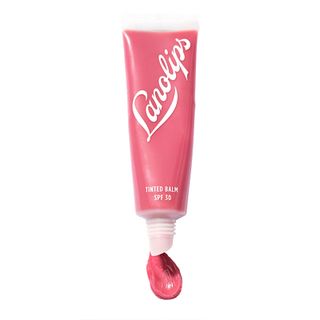
LANO LIPS + HANDS + ALLOVER Lanolips Tinted Balm SPF30
Works for
2 of 2 advertised claims delivered
Sun protectionSPF 30 · 5 UV filtersBroad spectrum
This product offers a good level of protection against both UVB and UVA rays.
This sunscreen uses organic (so-called "chemical") sunscreen filters. Organic, or "chemical" filters usually provide reliable sun protection and rarely leave a white cast. Sunscreens with organic filters can sting eyes.
MoisturizingLanolin, Cera alba + 10 moreStrong evidence
“Lanolips Tinted Balm SPF 30. Creates soft, hydrated & pretty lips. Creates soft, hydrated & pretty lips.”
This product can help soften the skin and reduce its moisture loss with emollients and occlusives: beeswax, butyrospermum parkii butter.
Keep in mind that this product does not contain effective ingredients to attract water to the upper layer of the skin. This is why an additional product with humectants like glycerin or hyaluronic acid can be helpful (apply it before this product for the best results).
The following ingredients in this product are especially good for supporting the skin barrier and helping with the hydration level: lanolin
Anti-agingNot advertised by the brand · Butyrospermum parkii butter, Prunus amygdalus dulcis oil + 1 moreStrong evidence
This product can help prevent early signs of skin aging because it offers a good level of broad spectrum sun protection. Sun damage is the main cause of premature skin aging, and protecting your skin from the sun is the best anti-aging strategy.
Can it cause trouble?
Irritancy3 strong irritants: Benzophenone-3, Aroma + 1 more — patch-test recommendedHigh risk
Comedogenic8 ingredients rated 2 or more on the 0–5 pore-clogging scale8 flagged

User reviews
Be the first — your take helps the next person decide.
Ingredients
Filter by role to see what each ingredient is doing.
Lanolin~26–32%
- Irritation risk
- Low
Sebum of wool-bearing animals (most commonly sheep). Helps soften the upper layer of the skin and reduce the skin water loss. In rare cases could be an allergen. Not suitable for vegans
More about LanolinTheobroma cacao seed butter~7.4–9.1%
- Irritation risk
- Low
- Comedogenicity
- 3/5
Helps soften the upper layer of the skin and can be helpful in restoring the skin barrier function. Might have some anti-oxidant effect
More about Theobroma cacao seed butterBeeswax~6.6–8.1%
- Irritation risk
- Low
Forms a protective barrier that holds water and keeps dry skin hydrated. Keeps an emulsion from separating into its oil and liquid components, and increases the thickness of a product. Can be an allergen
More about BeeswaxRicinus communis seed oil~5.2–6.3%
- Irritation risk
- Medium
A plant oil that can help soften the skin. It might be helpful in calming down inflammation, but solid research is lacking. Is often used in lip products to create the needed product consistency
More about Ricinus communis seed oilTitanium dioxide~4.5–5.5%
- Irritation risk
- Low
Works as a UV filter when used in high concentrations. It is photostable and is effective mostly against the UVB light, with some protection in the UVA range. In small concentrations, used for its ability to improve the color of cosmetic products. Is usually well tolerated by the skin
More about Titanium dioxideCera alba~3.6–4.4%
- Irritation risk
- Medium
Forms a protective barrier that holds water and keeps dry skin hydrated. Keeps an emulsion from separating into its oil and liquid components, and increases the thickness of a product. Can be an allergen
More about Cera albaBeeswax~2.6–3.2%
- Irritation risk
- Low
Forms a protective barrier that holds water and keeps dry skin hydrated. Keeps an emulsion from separating into its oil and liquid components, and increases the thickness of a product. Can be an allergen
More about BeeswaxEthylhexyl methoxycinnamate~2.5–3.1%
- Irritation risk
- High
Octinoxate. When used in higher concentrations, works as a sunscreen protecting the skin from UVB rays. When used in lower concentration, helps to preserve the product formulation. Is shown to be harmful to coral reefs - consider avoiding bathing in coral reef areas when wearing a product with this ingredient. It can be irritating
More about Ethylhexyl methoxycinnamateBenzophenone-3~2.1–2.6%
- Irritation risk
- High
Same as oxybenzone. Protects in the UVB and short UVA range. In small concentrations, used to stabilize product formulation. Can be irritating. Is shown to be harmful to coral reefs - consider avoiding bathing in coral reef areas when wearing a product with this ingredient. It can penetrate the skin and get absorbed into bloodstream faster than other popular filters available in the US. The study that produced this finding did not address any potential health effects of the absorption
More about Benzophenone-3Butyl methoxydibenzoylmethane~1.9–2.3%
- Irritation risk
- Medium
Avobenzone. An organic, or so-called "chemical" UV filter. Protects against both UVA and UVB rays. Needs to be combined with other filters in a formulation to be stable.
More about Butyl methoxydibenzoylmethaneButyrospermum parkii butter~1.3–1.6%
- Irritation risk
- Low
- Comedogenicity
- 3/5
A great moisturising ingredient that softens the skin and reduces water loss from its upper layer. It also can be helpful in protecting skin from free radicals
More about Butyrospermum parkii butterOctocrylene~1.3–1.6%
- Irritation risk
- Medium
A weak sunscreen that protects against the sun rays that cause sunburn (UVB) and is somewhat effective against the UVA rays. It is quite stable and can help stabilize other, more vulnerable, sunscreen ingredients like Avobenzone. It is an organic, or so called "chemical" sunscreen
More about OctocryleneVitis vinifera seed oil~1.1–1.3%
- Irritation risk
- Medium
A great emollient that can also have anti-oxidant properties
More about Vitis vinifera seed oilTocopherol~0.95–1.15%
- Irritation risk
- Low
Pure form of vitamin E. Can help moisturise and protect the skin from free radicals. Often used to help stabilise other ingredients or the formula itself
More about TocopherolAroma~0.95–1.15%
Prunus amygdalus dulcis oil~1–1.3%
- Irritation risk
- Low
An emollient that softens the skin
More about Prunus amygdalus dulcis oilCocos nucifera oil~0.95–1.15%
- Irritation risk
- Low
- Comedogenicity
- 3/5
An emollient. Found to be as effective as a moisturizer for dry skin as mineral oil. Could be comedogenic
More about Cocos nucifera oilHydrogenated polydecene~0.9–1.1%
- Irritation risk
- Low
Helps to soften the upper layer of the skin and create a nice product texture
More about Hydrogenated polydeceneHydroxystearic acid~1.1–1.3%
Mica~0.8–1.2%
- Irritation risk
- Low
Creates an illusion of smoother and more radiant skin tone. Adds shimmer to the skin by reflecting light
More about MicaTitanium dioxide~0.95–1.15%
- Irritation risk
- Low
Works as a UV filter when used in high concentrations. It is photostable and is effective mostly against the UVB light, with some protection in the UVA range. In small concentrations, used for its ability to improve the color of cosmetic products. Is usually well tolerated by the skin
More about Titanium dioxideCi 77891~0.7–1.05%
- Irritation risk
- Low
Ci 45410~0.7–1.05%
Ci 17200~0.7–1.05%
Ci 19140~0.7–1.05%
Ci 15850~0.7–1.05%
Iron oxides~0.7–1.05%
- Irritation risk
- Low
An umbrella term for the following three colorants: CI 77491, CI 77492, CI 77499. They might be able to offer some protection against visible light, but the degree of the protection is not clear
More about Iron oxidesCi 77491~0.7–1.05%
- Irritation risk
- Low
A red colorant made of iron oxide. Typically is not irritating
More about Ci 77491Lanolin~0.9–1.1%
- Irritation risk
- Low
Sebum of wool-bearing animals (most commonly sheep). Helps soften the upper layer of the skin and reduce the skin water loss. In rare cases could be an allergen. Not suitable for vegans
More about LanolinTheobroma cacao seed butter~0.75–1.15%
- Irritation risk
- Low
- Comedogenicity
- 3/5
Helps soften the upper layer of the skin and can be helpful in restoring the skin barrier function. Might have some anti-oxidant effect
More about Theobroma cacao seed butterBeeswax~0.9–1.1%
- Irritation risk
- Low
Forms a protective barrier that holds water and keeps dry skin hydrated. Keeps an emulsion from separating into its oil and liquid components, and increases the thickness of a product. Can be an allergen
More about BeeswaxEthylhexyl methoxycinnamate~1–1.2%
- Irritation risk
- High
Octinoxate. When used in higher concentrations, works as a sunscreen protecting the skin from UVB rays. When used in lower concentration, helps to preserve the product formulation. Is shown to be harmful to coral reefs - consider avoiding bathing in coral reef areas when wearing a product with this ingredient. It can be irritating
More about Ethylhexyl methoxycinnamateBenzophenone-3~1–1.2%
- Irritation risk
- High
Same as oxybenzone. Protects in the UVB and short UVA range. In small concentrations, used to stabilize product formulation. Can be irritating. Is shown to be harmful to coral reefs - consider avoiding bathing in coral reef areas when wearing a product with this ingredient. It can penetrate the skin and get absorbed into bloodstream faster than other popular filters available in the US. The study that produced this finding did not address any potential health effects of the absorption
More about Benzophenone-3Butyl methoxydibenzoylmethane~1–1.2%
- Irritation risk
- Medium
Avobenzone. An organic, or so-called "chemical" UV filter. Protects against both UVA and UVB rays. Needs to be combined with other filters in a formulation to be stable.
More about Butyl methoxydibenzoylmethaneButyrospermum parkii butter~0.8–1.2%
- Irritation risk
- Low
- Comedogenicity
- 3/5
A great moisturising ingredient that softens the skin and reduces water loss from its upper layer. It also can be helpful in protecting skin from free radicals
More about Butyrospermum parkii butterOctocrylene~1–1.2%
- Irritation risk
- Medium
A weak sunscreen that protects against the sun rays that cause sunburn (UVB) and is somewhat effective against the UVA rays. It is quite stable and can help stabilize other, more vulnerable, sunscreen ingredients like Avobenzone. It is an organic, or so called "chemical" sunscreen
More about OctocryleneVitis vinifera seed oil~0.8–1.15%
- Irritation risk
- Medium
A great emollient that can also have anti-oxidant properties
More about Vitis vinifera seed oilTocopherol~0.7–1.05%
- Irritation risk
- Low
Pure form of vitamin E. Can help moisturise and protect the skin from free radicals. Often used to help stabilise other ingredients or the formula itself
More about TocopherolAroma~0.7–1.05%
Parfum~0.65–1%
- Irritation risk
- High
An aromatic blend of unspecified and possibly irritating ingredients
More about ParfumPrunus amygdalus dulcis seed~0.7–1.05%
- Irritation risk
- Low
Helps soften the upper layer of the skin
More about Prunus amygdalus dulcis seedCocos nucifera oil~0.7–1.05%
- Irritation risk
- Low
- Comedogenicity
- 3/5
An emollient. Found to be as effective as a moisturizer for dry skin as mineral oil. Could be comedogenic
More about Cocos nucifera oilTitanium dioxide~0.9–1.1%
- Irritation risk
- Low
Works as a UV filter when used in high concentrations. It is photostable and is effective mostly against the UVB light, with some protection in the UVA range. In small concentrations, used for its ability to improve the color of cosmetic products. Is usually well tolerated by the skin
More about Titanium dioxideMica~0.75–1.1%
- Irritation risk
- Low
Creates an illusion of smoother and more radiant skin tone. Adds shimmer to the skin by reflecting light
More about MicaCi 17200~0.6–0.85%
Ci 45410~0.55–0.85%
Ci 19140~0.4–0.6%
Hydrogenated polydecene~0.45–0.65%
- Irritation risk
- Low
Helps to soften the upper layer of the skin and create a nice product texture
More about Hydrogenated polydeceneCi 15850~0.3–0.55%
Hydroxystearic acid~0.55–0.8%
Ricinus communis seed oil~0.35–0.6%
- Irritation risk
- Medium
A plant oil that can help soften the skin. It might be helpful in calming down inflammation, but solid research is lacking. Is often used in lip products to create the needed product consistency
More about Ricinus communis seed oilIron oxides~0.25–0.4%
- Irritation risk
- Low
An umbrella term for the following three colorants: CI 77491, CI 77492, CI 77499. They might be able to offer some protection against visible light, but the degree of the protection is not clear
More about Iron oxidesIngredient list view
Lanolin, Theobroma cacao seed butter, Beeswax, Ricinus communis seed oil, Titanium dioxide, Cera alba, Beeswax, Ethylhexyl methoxycinnamate, Benzophenone-3, Butyl methoxydibenzoylmethane, Butyrospermum parkii butter, Octocrylene, Vitis vinifera seed oil, Tocopherol, Aroma, Unknown, Prunus amygdalus dulcis oil, Cocos nucifera oil, Hydrogenated polydecene, Hydroxystearic acid, Mica, Titanium dioxide, Ci 77891, Ci 45410, Ci 17200, Ci 19140, Ci 15850, Iron oxides, Ci 77491, Lanolin, Theobroma cacao seed butter, Beeswax, Ethylhexyl methoxycinnamate, Benzophenone-3, Butyl methoxydibenzoylmethane, Butyrospermum parkii butter, Octocrylene, Vitis vinifera seed oil, Tocopherol, Aroma, Parfum, Prunus amygdalus dulcis seed, Cocos nucifera oil, Titanium dioxide, Mica, Ci 17200, Ci 45410, Ci 19140, Hydrogenated polydecene, Ci 15850, Hydroxystearic acid, Ricinus communis seed oil, Iron oxides
Compare prices
Retailers ranked by price — lowest first.

Affiliate links · prices updated regularly
Worth comparing, line by line.
Match % combines shared ingredients, the first five ingredients, shared actives and hero ingredients, irritancy (lower counts in the alternative's favour), texture and body area. Only products in the same routine step are compared.
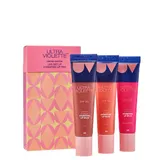
| LANO LIPS + HANDS + ALLOVERLanolips Tinted Balm SPF30YOUR PRODUCT | LanolipsLip Ointment SPF30 - Rose | Ultra VioletteLips Got Lit | Skin In Motion LtdPlump IT SPF30 Tinted Lip Balm Sheer Berry | |
|---|---|---|---|---|
| Match | — | 70% | 60% | 50% |
| Price | $10.79 | $10.50 | $25.40+$14.61 | $22.73+$11.94 |
| Shared key ingredients | — | 13 of 15 | 9 of 15 | 5 of 15 |
| Key difference | — | — | Helianthus Annuus Hybrid Oil | Mineral Oil |
| Irritancy | High | Medium | Medium | Medium |
| SPF | SPF 30 | SPF 30 | SPF 50 | SPF 30 |
| Drying alcohol | — | — | — | — |
| View product | Shop | Shop | Shop |


Product summary
Based on the ingredient list, we assess that "LANO LIPS + HANDS + ALLOVER - Lanolips Tinted Balm SPF30" can provide reliable sun protection. It can protect from both UVA and UVB rays. This is great news because not all sunscreens with SPF ratings give UVA protection. (UVA rays do not cause sunburn, but still damage our skin and lead to early aging).
Sunscreen filters
This is a "mixed" sunscreen in the sense that it uses both mineral and organic (so-called "chemical") sun filters. Here are the organic filters this product uses: oxybenzone, avobenzone, octinoxate and octocrylene. As for the mineral filters, this sunscreen uses titanium dioxide.
Irritation risk
There are quite a few common irritants in this product, including ingredients without particular skin benefits. We would not recommend it for sensitive skin. We assess the overall irritancy of it to be high. For a detailed overview of all potential irritants: click here
You can see the detailed formula review with the breakdown of all actives in the product and the full ingredient list with estimated concentrations in the tables below.
Price
The product retails for 10.79$ in the United States and for 8.99£ in the United Kingdom.
For a detailed price comparison: click here.
Sources cited in this review
Every concentration estimate and effectiveness label is anchored to one of these 15 studies and safety reviews.
- 1
- 2
- 3
- 4
- 5
- 6

Affiliate links · As an Amazon Associate, WIMJ earns from qualifying purchases.