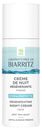
Laboratoires de Biarritz HYDRA-PROTECT + Regenerating Night Cream Face Organic
Works for
1 of 1 advertised claim delivered
Moisturizing20 ingredients credited for this claimStrong support
“HYDRA-PROTECT + Regenerating Night Cream Face Organic”
This product can help improve hydration of the skin with the two types of ingredients.
The first type is called “humectants”:
these ingredients help attract water.
When humectants are on the surface of the skin, they “pull in” the moisture from the outside environment, or from
within deeper layers of the skin. The following ingredients in this product do the job:
anhydroxylitol, glycerin.
This product also contains ingredients called “occlusives”. They help reduce the speed with which our skin loses moisture to the outside environment. These ingredients also help soften the upper layer of the skin, so it feels less tight and nicer to the touch. The following ingredients in this product do the job: butyrospermum parkii butter, helianthus annuus seed oil.
The following ingredients in this product are especially good for supporting the skin barrier and helping with the hydration level: linoleic acid
Can it cause trouble?
Irritancy2 strong irritants: Parfum, Sodium anisateMedium risk
Comedogenic2 ingredients rated 2 or more on the 0–5 pore-clogging scale2 flagged


User reviews
Be the first — your take helps the next person decide.
Ingredients
Filter by role to see what each ingredient is doing.
Water~45–55%
Glycerin~4.9–5.9%
- Irritation risk
- Low
One of the best moisturizing ingredients. Naturally present in skin. It attracts water to the upper layer of the skin working as a humectant
More about GlycerinButyrospermum parkii butter~4.2–5.2%
- Irritation risk
- Low
- Comedogenicity
- 3/5
A great moisturising ingredient that softens the skin and reduces water loss from its upper layer. It also can be helpful in protecting skin from free radicals
More about Butyrospermum parkii butterOlus oil~3.1–3.8%
- Irritation risk
- Low
An oil from a mixture of different vegetables. Helps soften the upper layer of the skin
More about Olus oilSqualane~2.4–2.9%
- Irritation risk
- Low
An oil naturally present in skin. Works as an emollient to soften the skin and form a protective layer on its surface without a greasy feeling.
More about SqualaneCetearyl alcohol~1.9–2.3%
- Irritation risk
- Low
- Comedogenicity
- 2/5
A non-drying alcohol. Works as an emollient. Helps water and oil mix together and creates a nice product texture
More about Cetearyl alcoholHydrogenated castor oil~1.6–2%
- Irritation risk
- Medium
A plant oil that can help soften the skin. It might be helpful in calming down inflammation, but solid research is lacking. Is often used in lip products to create the needed product consistency
More about Hydrogenated castor oilMyristyl alcohol~1.4–1.7%
- Irritation risk
- High
Helps to stabilize the product formulation while softening the upper layer of the skin. Can be irritating
More about Myristyl alcoholXylitylglucoside~1.1–1.4%
- Irritation risk
- Low
Helps attract water to the upper layer of the skin and repair the skin barrier function
More about XylitylglucosideCetearyl glucoside~0.9–1.1%
- Irritation risk
- Medium
Helps water and oil in the product mix well together and improves product texture
More about Cetearyl glucosideGelidium sesquipedale extract~0.65–1%
- Irritation risk
- Low
Aloe barbadensis leaf juice powder~0.55–0.8%
- Irritation risk
- Medium
Traditionally used to treat sunburns, dermatitis and inflammation, but evidence for its effectiveness is lacking. The extract can contain humectants that help attract water into the skin
More about Aloe barbadensis leaf juice powderAnhydroxylitol~0.5–0.75%
- Irritation risk
- Low
Helps attract water to the upper layer of the skin and repair the skin barrir function
More about AnhydroxylitolXylitol~0.45–0.65%
- Irritation risk
- Low
Helps attract water to the upper layer of the skin and repair the skin barrier function
More about XylitolSodium hyaluronate~0.4–0.6%
- Irritation risk
- Low
One of the best moisturizing ingredients. Attracts water into the upper layer of the skin
More about Sodium hyaluronateBisabolol~0.3–0.6%
- Irritation risk
- Low
An active component of chamomile plant that historically has been used to calm down irritated skin. A recent study shows that bisabolol indeed can have some anti-inflammatory effect on skin, even though conclusive data is lacking. Bisabolol has a sweet floral scent and can be added to products for its aromatic properties
More about BisabololParfum~0.3–0.6%
- Irritation risk
- High
An aromatic blend of unspecified and possibly irritating ingredients
More about ParfumLinoleic acid~0.5–0.7%
- Irritation risk
- Low
An excellent emollient. Helps soften the skin, restore its barrier function, and can help to calm down inflammation. It can be helpful to prevent blemishes and clogged pores
More about Linoleic acidSodium levulinate~0.3–0.5%
Myristyl glucoside~0.35–0.6%
- Irritation risk
- Low
Propanediol~0.3–0.5%
- Irritation risk
- Low
Acts as a solvent for other ingredients. Speeds up the absorption of other ingredients into the skin
More about PropanediolXanthan gum~0.25–0.45%
- Irritation risk
- Low
Used to create a thicker product consistency
More about Xanthan gumGlyceryl caprylate~0.25–0.5%
- Irritation risk
- Low
An emollient that can also help water and oil mix together, as well as prevent bacteria growth in products
More about Glyceryl caprylateSodium anisate~0.2–0.4%
Polyglyceryl-4 caprate~0.25–0.4%
Oleic acid~0.25–0.45%
- Irritation risk
- Medium
Helps soften the upper layer of the skin. At the same time, it can weaken the skin's barrier enhancing penetration of other ingredients and increasing the risk of skin dryness
More about Oleic acidTocopherol~0.2–0.35%
- Irritation risk
- Low
Pure form of vitamin E. Can help moisturise and protect the skin from free radicals. Often used to help stabilise other ingredients or the formula itself
More about TocopherolCitric acid~0.2–0.35%
- Irritation risk
- Medium
Can work as an exfoliant but is typically used to adjust the product pH
More about Citric acidHelianthus annuus seed oil~0.2–0.35%
- Irritation risk
- Low
A great emollient due to its high linoleic acid content. One of the most effective plant oils in helping skin hydration and repairing skin barrier function
More about Helianthus annuus seed oilPalmitic acid~0.2–0.35%
- Irritation risk
- Low
An emollient that is naturally present in skin and helps soften it
More about Palmitic acidStearic acid~0.2–0.4%
- Irritation risk
- Low
Helps oil and water mix together and works as an emollient
More about Stearic acidPhenethyl alcohol~0.1–0.2%
Saccharide isomerate~0.05–0.1%
- Irritation risk
- Low
Helps attract water to the upper layer of the skin
More about Saccharide isomerateLinolenic acid~0.15–0.3%
- Irritation risk
- Medium
An emollient that helps soften the skin and calm down inflammation
More about Linolenic acidIngredient list view
Water, Glycerin, Butyrospermum parkii butter, Olus oil, Squalane, Cetearyl alcohol, Hydrogenated castor oil, Myristyl alcohol, Xylitylglucoside, Cetearyl glucoside, Gelidium sesquipedale extract, Aloe barbadensis leaf juice powder, Anhydroxylitol, Xylitol, Sodium hyaluronate, Bisabolol, Parfum, Linoleic acid, Sodium levulinate, Myristyl glucoside, Propanediol, Xanthan gum, Glyceryl caprylate, Sodium anisate, Polyglyceryl-4 caprate, Oleic acid, Tocopherol, Citric acid, Helianthus annuus seed oil, Palmitic acid, Stearic acid, Phenethyl alcohol, Saccharide isomerate, Linolenic acid
Compare prices
Retailers ranked by price — lowest first.

Worth comparing, line by line.
Match % combines shared ingredients, the first five ingredients, shared actives and hero ingredients, irritancy (lower counts in the alternative's favour), texture and body area. Only products in the same routine step are compared.
| Laboratoires de BiarritzHYDRA-PROTECT + Regenerating Night Cream Face OrganicYOUR PRODUCT | Dermarche LabsSMARTSYNC Probiotic Science Balancing Gel-Cream | BiossanceSqualane + Omega Repair Cream Jumbo | UltraceuticalsLIMITED EDITION SIZE Ultra Moisturiser Cream | |
|---|---|---|---|---|
| Match | — | 55% | 52% | 50% |
| Price | $29.51 | $21.99−$7.52 | $64.77+$35.26 | $144.00+$114.49 |
| Shared key ingredients | — | 7 of 12 | 7 of 12 | 6 of 12 |
| Key difference | — | Niacinamide | Ceramide Np | Urea |
| Irritancy | Medium | Medium | Low | Low |
| Drying alcohol | — | — | — | — |
| View product | Shop | Shop | Shop |


Product summary
Based on the ingredient list, "Laboratoires de Biarritz - HYDRA-PROTECT + Regenerating Night Cream Face Organic" can work well for skin moisturization. To work well, any moisturizer needs to include a combination of water-binding and emollient ingredients. Laboratoires de Biarritz - HYDRA-PROTECT + Regenerating Night Cream Face Organic ticks this box. Anhydroxylitol, glycerin, sodium hyaluronate and xylitylglucoside in this product (humectants) attract water molecules to the upper layer of the skin (the water comes from the outside air or from the deeper layers of the skin if the air is dry). Emollients in this formulation (linoleic acid, linolenic acid, butyrospermum parkii butter, helianthus annuus seed oil and squalane) help to reduce the moisture loss from the skin. They also soften the skin surface and relieve the feeling of dryness and tightness.
This product contains ingredients that could be beneficial, but their concentrations are too low in this formulation: saccharide isomerate, stearic acid and vitamin eIrritation risk
We assess the overall irritancy of this moisturizer to be medium. For a detailed overview of all potential irritants: click here
You can see the detailed formula review with the breakdown of all actives in the product and the full ingredient list with estimated concentrations in the tables below.
Price
The product retails from 19.54£ up to 22.32£ in the United Kingdom.
For a detailed price comparison: click here.
Sources cited in this review
Every concentration estimate and effectiveness label is anchored to one of these 21 studies and safety reviews.
- 1
- 2
- 3
- 4
- 5Cosmetic allergy from myristyl alcoholncbi.nlm.nih.gov
- 6

Affiliate links · As an Amazon Associate, WIMJ earns from qualifying purchases.