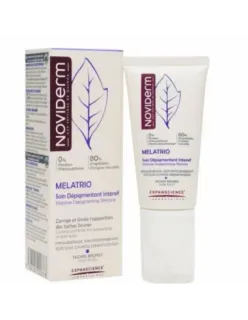
Laboratoire ACM Noviderm Melatrio Soin Dépigmentant Intensif
Works for
Evens skin toneAscorbyl glucoside, Undecylenoyl phenylalanine + 1 moreWorks well
This product can help reduce hypepigmentation and even out the skin tone because it contains the following effective ingredients: undecylenoyl phenylalanine
The following ingredient (ingredients) in this product might be helpful, but there is no evidence to confirm that it actually can help even out the skin tone: ascorbyl glucoside.
Keep in mind that you would need to apply any topical skincare targetted at hypigmentation consistently for a couple of months to get a result. No topical skincare product can help get rid of hyperpigmentation (including post-acne marks and age spots) instantly.
Anti-agingSide benefit · Ascorbyl glucoside, Lactic acidMay help
This product contains ascorbyl glucoside. There is some human evidence that this ingredient helps reduce and prevent fine lines and wrinkles and improve skin elasticity and firmness, though it is smaller or less consistent than the evidence for the best anti-aging ingredients.
Anti-oxidationSide benefit · Ascorbyl glucoside, Tocopheryl acetateMay help
This product contains antioxidants (ascorbyl glucoside) that can help neutralize free radicals in skin to lessen the damage it gets from the UV light (sun). There is some human evidence for this effect in skin, though it is smaller or less consistent than the evidence for the best antioxidants.
MoisturizingSide benefit · Glycerin, Cetearyl alcohol + 7 moreWorks
This product can help improve hydration of the skin with the two types of ingredients.
The first type is called “humectants”:
these ingredients help attract water.
When humectants are on the surface of the skin, they “pull in” the moisture from the outside environment, or from
within deeper layers of the skin. The following ingredients in this product do the job:
arginine, glycerin.
This product also contains ingredients called “occlusives”. They help reduce the speed with which our skin loses moisture to the outside environment. These ingredients also help soften the upper layer of the skin, so it feels less tight and nicer to the touch. The following ingredients in this product do the job: arginine, cetearyl alcohol.
Can it cause trouble?
Irritancy1 strong irritant: ParfumMedium risk
Comedogenic3 ingredients rated 2 or more on the 0–5 pore-clogging scale3 flagged
User reviews
Be the first — your take helps the next person decide.
Ingredients
Filter by role to see what each ingredient is doing.
Water~40–60%
Glycerin~4.2–6.3%
- Irritation risk
- Low
One of the best moisturizing ingredients. Naturally present in skin. It attracts water to the upper layer of the skin working as a humectant
More about GlycerinDi-c12-13 alkyl malate~3.7–5.5%
- Irritation risk
- Low
Helps soften the upper layer of the skin
More about Di-c12-13 alkyl malateGlyceryl stearate~2.5–3.7%
- Irritation risk
- Low
An emollient that softens the skin and forms a protective layer on its surface. Helps water and oil mix together
More about Glyceryl stearateDicaprylyl carbonate~2.1–3.1%
- Irritation risk
- Low
Helps products spread more easily and works as an emollient to soften skin
More about Dicaprylyl carbonateTromethamine~1.7–2.5%
Hydrogenated coco-glycerides~1.4–2.2%
- Irritation risk
- Medium
Helps oil and water mix together while creating a nice finish on the skin
More about Hydrogenated coco-glyceridesSorbitan stearate~1.3–1.9%
Ceteareth-20~1.1–1.6%
- Irritation risk
- Medium
- Comedogenicity
- 2/5
Helps oil and water mix together. Has some emollient properties
More about Ceteareth-20Ascorbyl glucoside~0.85–1.25%
- Irritation risk
- Medium
A vitamin C derivative that is more stable but less potent than pure form of vitamin C. Has a potential to boost collagen production, nutralise free radicals and reduce hyperpigmentation, but the required concentration is likely to be much higher than for the pure form of vitamin C, limiting the ingredient's effectiveness in products
More about Ascorbyl glucosideUndecylenoyl phenylalanine~0.5–1.2%
- Irritation risk
- High
An amino-acid based compound that is effective in reducing hyperpigmentation. It can help lighten sun spots and support more even skin tone.
More about Undecylenoyl phenylalanineLactic acid~0.45–1%
- Irritation risk
- Medium
An exfoliating and moisturizing alpha-hydroxy acid (AHA). Typically causes less irritation than other AHAs, for example, glycolic acid. At high concentrations (about 15%), lactic acid can help reduce lines and wrinkles. Recent studies show that lactic acid can support the "good" bacteria living on skin's surface (healthy skin microbiome)
More about Lactic acidHexanediol~0.4–0.9%
Laureth-23~0.4–0.95%
- Irritation risk
- Medium
- Comedogenicity
- 2/5
Helps oil and water mix together
More about Laureth-23Cetearyl alcohol~0.35–0.8%
- Irritation risk
- Low
- Comedogenicity
- 2/5
A non-drying alcohol. Works as an emollient. Helps water and oil mix together and creates a nice product texture
More about Cetearyl alcoholCeteareth-12~0.15–0.65%
Parfum~0.15–0.5%
- Irritation risk
- High
An aromatic blend of unspecified and possibly irritating ingredients
More about ParfumXanthan gum~0.1–0.5%
- Irritation risk
- Low
Used to create a thicker product consistency
More about Xanthan gumTocopheryl acetate~0.1–0.4%
- Irritation risk
- Medium
A more stable but less bio-available form of vitamin E compared to Tocopherol. Might help moisturize and protect the skin from free radicals, but mostly used in low concentrations to stabilize other ingredients.
More about Tocopheryl acetateArginine~0.05–0.3%
- Irritation risk
- Low
An amino acid that is naturally present in skin and helps keep it hydrated. When used together with AHAs, it can reduce their irritating effect on the skin
More about ArginineCetyl palmitate~0.1–0.35%
- Irritation risk
- Low
An emollient that helps soften the skin and is used to improve product texture and stability
More about Cetyl palmitateCocoglycerides~0.1–0.3%
- Irritation risk
- High
Help soften the upper layer of the skin and make it easier for oil and water mix together. Recently, a rising number of allergic reactions to cocoglycerides and other coconut-derived surfactants has been reported. As there is a significant overlap between frequent irritants and allergens, we flag this ingredient for attention of those with very sensitive, reactive skin
More about CocoglyceridesMaltodextrin~0.05–0.2%
- Irritation risk
- Low
Used to stabilize the product formulation and can help absorb oil
More about MaltodextrinIngredient list view
Water, Glycerin, Di-c12-13 alkyl malate, Glyceryl stearate, Dicaprylyl carbonate, Tromethamine, Hydrogenated coco-glycerides, Sorbitan stearate, Ceteareth-20, Ascorbyl glucoside, Undecylenoyl phenylalanine, Lactic acid, Hexanediol, Laureth-23, Cetearyl alcohol, Ceteareth-12, Parfum, Xanthan gum, Tocopheryl acetate, Arginine, Cetyl palmitate, Cocoglycerides, Maltodextrin
Compare prices
Retailers ranked by price — lowest first.
Worth comparing, line by line.
Match % combines shared ingredients, the first five ingredients, shared actives and hero ingredients, irritancy (lower counts in the alternative's favour), texture and body area. Only products in the same routine step are compared.
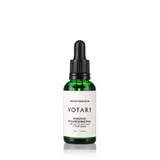
| Laboratoire ACMNoviderm Melatrio Soin Dépigmentant IntensifYOUR PRODUCT | Flash DealDaily Deal: OSKIA Liquid Mask | VotarySensitive Resurfacing Peel | OSKIALiquid Mask | |
|---|---|---|---|---|
| Match | — | 55% | 55% | 55% |
| Price | — | — | $92.60 | $89.94 |
| Shared key ingredients | — | 3 of 5 | 3 of 5 | 3 of 5 |
| Key difference | — | Niacinamide | Salicylic Acid | Niacinamide |
| Irritancy | Medium | Low | Low | Low |
| Drying alcohol | — | — | — | — |
| View product | Shop | Shop | Shop |


More alternatives: Profka Сыворотка для лица ANTI-ACNE LACTIC SERUMBoost Lab AHA Glow Resurfacing Serum
Product summary
"ACM - Noviderm Melatrio Soin Dépigmentant Intensif" is effective for: Evens skin tone
This product could be helpful for: Moisturizing, but its actives are not the most effective or are not well-studied.
Ingredient callouts
- This product contains acids (lactic acid 0.45% - 1.00%). Their concentration is low, and they will not have a strong exfoliating effect. Instead, they work to support the skin natural acid mantle and to attract water (as humectants). Lactic acid is particularly good in attracting water to the upper layer of the skin and improving the skin barrier.
- Humectants (glycerin 4.20% - 6.30%). These ingredients help attract water to the upper layer of the skin and improve the skin hydration.
Sources cited in this review
Every concentration estimate and effectiveness label is anchored to one of these 7 studies and safety reviews.
- 1
- 2Safety Assessment of Tromethamine as Used in Cosmeticscir-safety.org
- 3The Roles of Vitamin C in Skin Healthncbi.nlm.nih.gov
- 4
- 5
- 6Epidermal and dermal effects of topical lactic acidncbi.nlm.nih.gov

Affiliate links · As an Amazon Associate, WIMJ earns from qualifying purchases.