Works for:
based on ingredients and %- Exfoliation
- Cleansing
Can it cause trouble?
- Irritation risk: high
- Comedogenic risk ingredients: 3
Key actives
Works for
Exfoliation
What does the product description say?
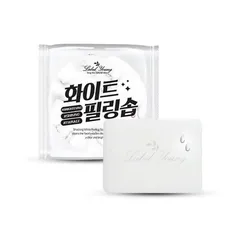
Buy Label Young Shocking White Peeling Soap Renewed in Australia - Korean Skincare
Source: Lila Beauty
This product can help exfoliate the skin. In other words, it helps break down the bonds between dead cells on the surface of the skin and speed up the skin turnover. Skin often appears softer and brighter after exfoliation, but overdoing it can result in disrupted skin barrier. The following ingredient is doing the exfoliating job in this product: hydroxyethyl urea.
A derivative of urea, a compound that is naturally present in skin. Attracts water to the upper layer of the skin. Can enhance penetration of other ingredients
A plant extract that can help neutralize free radicals in skin. It contains a compound salicin that can theoretically be converted into salicylic acid that, in turn, helps reduce inflammation in skin, but the evidence of effectiveness in skin is lacking and the extract is usually not used in a concentration that would enable an exfoliating effect
Cleansing
What does the product description say?
Buy Label Young Shocking White Peeling Soap Renewed in Australia - Korean Skincare
Source: Lila Beauty
This product works by removing dirt and oil from the surface of the skin.
It contains the following cleansing agents that tend to be harsh on the skin: sodium laureth sulfate.
The following cleansing agents are typically mild, but still can cause an irritation or allergy for some people cocamidopropyl betaine.
Keep in mind that cleansing can disrupt the skin barrier, and most people do not need to cleanse their skin more than once per day.
Helps water and oil mix together. Used as a cleansing ingredient. Could be an allergen
Helps to retain moisture by creating a protective barrier on the skin. Rich in fatty acids. Improves product texture and helps with the penetration of other ingredients.
Helps oil and water mix together
Helps oils and water mix together and works as a cleansing agent
Works as a foaming cleansing agent
Used to create a thicker product consistency
How honest is this product?
| Promise | Can it deliver? |
|---|---|
| Exfoliation | |
| Cleansing |
Total Promises Fulfilled score: 87/100.
We receive a small commission for purchases made through these links at no cost for you. Thank you for your support! Learn more
Affiliate link · supports WIMJ at no cost to you
Potential irritants
Comedogenic ingredients
User reviews (0)
Averages from community submissions.
No reviews yet for this product.
Be the first to share your experience!
Tried this product?
Help capture what the ingredient list can't—texture, finish, pilling, scent, and more. Answer what you can, skip the rest.
Takes ~30 seconds.
Reviews are shown in aggregate. No personal details.
Key Actives
One of the best moisturizing ingredients. Attracts water into the upper layer of the skin. Naturally present in skin. Typically has large molecule size unless advertised otherwise on the product label. Helps support skin's barrier function and may help to reduce inflammation
An emollient that helps soften the skin
A derivative of urea, a compound that is naturally present in skin. Attracts water to the upper layer of the skin. Can enhance penetration of other ingredients
Works as a foaming cleansing agent
Helps water and oil mix together. Used as a cleansing ingredient. Could be an allergen
Helps oils and water mix together and works as a cleansing agent
One of the best moisturizing ingredients. Naturally present in skin. It attracts water to the upper layer of the skin working as a humectant
Used to create a thicker product consistency
One of the best moisturizing ingredients. Attracts water into the upper layer of the skin
Red algae extract that helps attract water to the upper layer of the skin and create a nicer product consistency
One of the best moisturizing ingredients. Attracts water into the upper layer of the skin. A version of it is naturally present in skin
Attracts water into the upper layer of the skin
Attracts water into the upper layer of the skin
Helps oil and water mix together
Helps to attract water to the upper layer of the skin
Helps to retain moisture by creating a protective barrier on the skin. Rich in fatty acids. Improves product texture and helps with the penetration of other ingredients.
Potential irritants
Works as a foaming cleansing agent
Helps water and oil mix together. Used as a cleansing ingredient. Could be an allergen
A plant extract that can help neutralize free radicals in skin. It contains a compound salicin that can theoretically be converted into salicylic acid that, in turn, helps reduce inflammation in skin, but the evidence of effectiveness in skin is lacking and the extract is usually not used in a concentration that would enable an exfoliating effect
A plant extract. Can have an anti-oxidant effect, but can also contain irritants
A plant extract that might contain a compound baicalin that could be helpful in neutralizing free radicals and reducing inflammation in skin. The baicalin concentration in skincare products is often too low for an effective action. Can be used for its fragrant properties
An aromatic blend of unspecified and possibly irritating ingredients
Used to stabilize product formulation, help create an even product layer over skin (for example, in sunscreen) and create a thicker product consistency
Helps oils and water mix together and works as a cleansing agent
Might have some anti-inflammatory properties but research is lacking
A plant extract that might help neutralize free radicals in skin
Plant extract that might help calm down inflammation and have some anti-oxidant properties
A plant extract that has some anti-oxidant activity, but solid research is lacking. Can help attract water to the upper layer of the skin
Attracts water into the upper layer of the skin
Helps preserve products and creates a nice product texture
Used to thicken the product's consistency
A more stable but less bio-available form of vitamin E compared to Tocopherol. Might help moisturize and protect the skin from free radicals, but mostly used in low concentrations to stabilize other ingredients.
Can work as an exfoliant but is typically used to adjust the product pH
Comedogenic ingredients
Works as a foaming cleansing agent
Red algae extract that helps attract water to the upper layer of the skin and create a nicer product consistency
Used to thicken the product's consistency
All ingredients
Works as a foaming cleansing agent
Helps water and oil mix together. Used as a cleansing ingredient. Could be an allergen
Used to stabilize mixtures of oil and water, and create thicker, gel-like product textures
Used to stabilize product formulation, help create an even product layer over skin (for example, in sunscreen) and create a thicker product consistency
Used to create a nice product texture and help delivery of other ingredients. Might be somewhat helpful in attracting water to the upper layer of the skin
Helps oils and water mix together and works as a cleansing agent
One of the best moisturizing ingredients. Naturally present in skin. It attracts water to the upper layer of the skin working as a humectant
Might have some anti-inflammatory properties but research is lacking
A plant extract that might help neutralize free radicals in skin
Plant extract that might help calm down inflammation and have some anti-oxidant properties
A fermentation product created by bacteria Lactobacillus out of soybean. The fermented product helps to attract water to the upper layer of the skin and has anti-bacterial properties. It might be helpful in calming down inflammation and could be helpful in evening out skin tone, but studies are lacking
A plant extract that can help neutralize free radicals in skin. It contains a compound salicin that can theoretically be converted into salicylic acid that, in turn, helps reduce inflammation in skin, but the evidence of effectiveness in skin is lacking and the extract is usually not used in a concentration that would enable an exfoliating effect
A plant extract. Can have an anti-oxidant effect, but can also contain irritants
A plant extract that might contain a compound baicalin that could be helpful in neutralizing free radicals and reducing inflammation in skin. The baicalin concentration in skincare products is often too low for an effective action. Can be used for its fragrant properties
A plant extract that has some anti-oxidant activity, but solid research is lacking. Can help attract water to the upper layer of the skin
Helps attract water to the upper layer of the skin. Could be helpful in restoring the skin barrier function
One of the best moisturizing ingredients. Attracts water into the upper layer of the skin
Red algae extract that helps attract water to the upper layer of the skin and create a nicer product consistency
One of the best moisturizing ingredients. Attracts water into the upper layer of the skin. A version of it is naturally present in skin
One of the best moisturizing ingredients. Attracts water into the upper layer of the skin. Naturally present in skin. Typically has large molecule size unless advertised otherwise on the product label. Helps support skin's barrier function and may help to reduce inflammation
Attracts water into the upper layer of the skin
Attracts water into the upper layer of the skin
Helps preserve products and creates a nice product texture
A derivative of urea, a compound that is naturally present in skin. Attracts water to the upper layer of the skin. Can enhance penetration of other ingredients
Used to thicken the product's consistency
Helps to retain moisture by creating a protective barrier on the skin. Rich in fatty acids. Improves product texture and helps with the penetration of other ingredients.
A more stable but less bio-available form of vitamin E compared to Tocopherol. Might help moisturize and protect the skin from free radicals, but mostly used in low concentrations to stabilize other ingredients.
Can work as an exfoliant but is typically used to adjust the product pH
A preservative. It helps prevent bacterial growth in cosmetic products
An aromatic blend of unspecified and possibly irritating ingredients
Ingredient list view
Water, Sodium laureth sulfate, Cocamidopropyl betaine, Sodium chloride, Acrylates copolymer, Butylene glycol, Cocamide mea, Peg-7 glyceryl cocoate, Prunus armeniaca kernel oil, Prunus armeniaca juice, Prunus armeniaca bud extract, Glycerin, 1,2-hexanediol, Brassica oleracea italica extract, Medicago sativa extract, Brassica oleracea capitata leaf extract, Triticum vulgare sprout extract, Brassica campestris extract, Raphanus sativus seed extract, Lactobacillus/soybean ferment extract, Salix alba bark extract, Cinnamomum cassia bark extract, Chamaecyparis obtusa leaf extract, Origanum vulgare leaf extract, Scutellaria baicalensis root extract, Portulaca oleracea extract, Xanthan gum, Glucose, Sodium hyaluronate, Chondrus crispus extract, Hydroxypropyltrimonium hyaluronate, Hydrolyzed hyaluronic acid, Unknown, Hyaluronic acid, Sodium hyaluronate crosspolymer, Hydrolyzed sodium hyaluronate, Potassium hyaluronate, Caprylyl glycol, Hydroxyethyl urea, Peg-120 methyl glucose dioleate, Peg-60 hydrogenated castor oil, Trideceth-10, Zea mays starch, Mannitol, Microcrystalline cellulose, Ci 77491, Hydrogenated lecithin, Tocopheryl acetate, Shellac, Unknown, Disodium edta, Citric acid, Potassium hydroxide, Phenoxyethanol, Peg-2 phenyl ether, Ci 19140, Parfum
- Surfactants and experimental irritant contact dermatitis
- Final Report on the Safety Assessment of Acrylates Copolymer and 33 Related Cosmetic Ingredients
- Amended Safety Assessment of Acrylates Copolymers as Used in Cosmetics
- Glycerol and the skin: holistic approach to its origin and functions
- The influence of alkane chain length on the skin irritation potential of 1,2-alkanediols
- Antioxidant Activity and Cytotoxicity of Medicago sativa L. Seeds and Herb Extract on Skin Cells
- Anti-inflammatory Effects of Brassica oleracea Var. capitata L. (Cabbage) Methanol Extract in Mice with Contact Dermatitis
- Effect of Brassica oleracea in rats skin wound healing
- Efficacy and Safety of White Willow Bark (Salix alba) Extract
- An evaluation of the effect of a topical product containing salicin on the visible signs of human skin aging
- Scutellaria baicalensis, the golden herb from the garden of Chinese medicinal plants
- Flavonoids in Treating Psoriasis
- Improvement of skin barrier dysfunction by Scutellaria baicalensis GEOGI extracts through lactic acid fermentation
- Safety Assessment of Scutellaria baicalensis-Derived Ingredients as Used in Cosmetics
- Portulaca oleracea (purslane)
- Topical Glucose Induces Claudin-1 and Filaggrin Expression in a Mouse Model of Atopic Dermatitis and in Keratinocyte Culture, Exerting Anti-inflammatory Effects by Repairing Skin Barrier Function
- Hyaluronic acid: A key molecule in skin aging
- Hyaluronan (Hyaluronic Acid): a natural moisturizer for skin care
- Efficacy of a New Topical Nano-hyaluronic Acid in Humans
- Physiochemical properties and application of hyaluronic acid: a systematic review
- Safety Assessment of Hydroxyethyl Urea As Used in Cosmetics
- Analysis of Dyes in Cosmetics: Challenges and Recent Developments