Works for:
based on ingredients and %- Moisturizing
- Anti-aging
- Anti-oxidation
Can it cause trouble?
- Irritation risk: high
- Comedogenic risk ingredients: 5
Key actives

Works for
Anti-oxidation
This product contains antioxidants (asiaticoside) that can help neutralize free radicals in skin. By doing so, they can lessen the damage the skin gets from the UV light (sun).
The following ingredients - camellia sinensis leaf extract, punica granatum extract also can have an antioxidant effect, but there is less evidence to confirm their effectiveness in skin.
An active compound of Centella Asiatica plant extract. In combination with other active compounds of Centella Asiatica extract (madecasosside, asiatic acid and madecassic acid), asiaticoside has been shown to be helpful in wound-healing, restoring skin barrier function and supporting collagen production in skin. It can, however, itself be irritating
A plant extract that can help neutralize free radicals in skin and even out the skin tone, but is typically used in products in a concentration that is too low to be effective
Can contain potent anti-oxidant compounds (abbreviated ECG, GCG, EGC, and EGCG) that might help protect the skin from free radicals. Can help calm down inflammation and has some anti-bacterial properties. Unfortunately, these antioxidants are unstable and lose their effectiveness very quickly in products. The concentration of the antioxidant compounds in the extract also tends to be low to be effective in topical formulation
Might be helpful in neutralizing free radicals. Can have a dehydration effect that might somewhat decrease the look of puffy eyes
Is claimed to stimulate collagen and elastin production, as well as work as an anti-oxidant. There is however not enough evidence for its effectiveness
Mushroom extract that helps attract water to the upper layer of the skin
Helps soften the upper layer of the skin and can be helpful in restoring the skin barrier function. Might have some anti-oxidant effect
A fermentation product created by bacteria Lactobacillus. The fermented product has anti-bacterial properties and might be helpful in calming down inflammation, but studies are lacking. Helps attract water to the upper layer of the skin. Can be used as a preservative
Helps attract water to the upper layer of the skin and might have some anti-oxidant and skin lightening properties. It can help calm down inflammation in skin
A great moisturising ingredient that softens the skin and reduces water loss from its upper layer. It also can be helpful in protecting skin from free radicals
Can be helpful in reducing inflammation in skin, including inflamed acne. It can be irritating
Moisturizing
What does the product description say?
Key Benefits Suitable for most skin typesIdeal for dry, dehydrated and tired skinProvides generous moisturePromotes a smoother appearanceBoosts radianceFormulated with botanicals and peptides UK200032585
Source: SpaceNK US
This product can help improve hydration of the skin with the two types of ingredients.
The first type is called “humectants”:
these ingredients help attract water.
When humectants are on the surface of the skin, they “pull in” the moisture from the outside environment, or from
within deeper layers of the skin. The following ingredients in this product do the job:
ahnfeltia concinna extract, dextran.
This product also contains ingredients called “occlusives”. They help reduce the speed with which our skin loses moisture to the outside environment. These ingredients also help soften the upper layer of the skin, so it feels less tight and nicer to the touch. The following ingredients in this product do the job: squalane, cocos nucifera fruit extract.
The following ingredients in this product are especially good for supporting the skin barrier and helping with the hydration level: caprooyl tetrapeptide-3, ceramide np, oligopeptide-24, tripeptide-29
One of the best moisturizing ingredients. Naturally present in skin. It attracts water to the upper layer of the skin working as a humectant
Helps soften the upper layer of the skin and support skin's barrier function while creating a thicker product consistency
A non-living ingredient made by fermentation with the bacteria Lactobacillus. It can help attract water to the upper layer of the skin and might help reduce inflammation
A fermentation product created by bacteria Lactobacillus. The fermented product has anti-bacterial properties and might be helpful in calming down inflammation, but studies are lacking. Helps attract water to the upper layer of the skin. Can be used as a preservative
An oil naturally present in skin. Works as an emollient to soften the skin and form a protective layer on its surface without a greasy feeling.
Helps soften the upper layer of the skin and can be helpful in restoring the skin barrier function. Might have some anti-oxidant effect
Mushroom extract that helps attract water to the upper layer of the skin
An algae extract that helps attract water to the upper layer of the skin. Also used to create a thicker product texture
An active compound of Centella Asiatica plant extract. In combination with other active compounds of Centella Asiatica extract (asiaticoside, madecasosside and madecassic acid) asiatic acid has been shown to be helpful in wound-healing, restoring skin barrier function and supporting collagen production in skin. It can, however, itself be irritating
An active compound of Centella Asiatica plant extract. In combination with other active compounds of Centella Asiatica extract (madecasosside, asiatic acid and madecassic acid), asiaticoside has been shown to be helpful in wound-healing, restoring skin barrier function and supporting collagen production in skin. It can, however, itself be irritating
A product of bacterial fermentation. Can help attract water to the upper layer of the skin
A type of peptide. Peptides are excellent moisturizers and might be able support collagen production reducing fine lines and wrinkles
A type of lipid similar to ceramides naturally present in skin. Helps to soften the upper layer of the skin and supports the skin barrier function to keep it hydrated. Can help to prevent inflammation in skin
An emollient. Found to be as effective as a moisturizer for dry skin as mineral oil. Could be comedogenic
Helps attract water to the most upper layer of the skin. Derived from sugar
Softens the upper layer of the skin and can support skin barrier function
An active compound of Centella Asiatica plant extract. In combination with other active compounds of Centella Asiatica extract (asiaticoside, madecasosside and asiatic acid), madecassic acid has been shown to be helpful in wound-healing, restoring skin barrier function and supporting collagen production in skin. It can, however, itself be irritating
A type of peptide. Peptides are excellent moisturizers and might be able support collagen production reducing fine lines and wrinkles
Lipids that work as an emollient and can be helpful in repairing skin barrier function
Helps soften the upper layer of the skin
A non-drying alcohol. Works as an emollient. Helps water and oil mix together and creates a nice product texture
Helps soften the upper layer of the skin
Helps to soften the upper layer of the skin without creating a greasy texture
An emollient that helps soften the skin
A "broth" with parts of dead cells of lactobacteria. Might be helpful supporting diverse microbiome in skin, but evidence is lacking
Help soften the upper layer of the skin
Is claimed to stimulate collagen and elastin production, as well as work as an anti-oxidant. There is however not enough evidence for its effectiveness
Can contain potent anti-oxidant compounds (abbreviated ECG, GCG, EGC, and EGCG) that might help protect the skin from free radicals. Can help calm down inflammation and has some anti-bacterial properties. Unfortunately, these antioxidants are unstable and lose their effectiveness very quickly in products. The concentration of the antioxidant compounds in the extract also tends to be low to be effective in topical formulation
A good mix of fatty acids that forms a protective layer on the skin. Improves the shelf life of products. Derived from coconut and glycerin
Helps attract water to the upper layer of the skin and might have some anti-oxidant and skin lightening properties. It can help calm down inflammation in skin
A great moisturising ingredient that softens the skin and reduces water loss from its upper layer. It also can be helpful in protecting skin from free radicals
Used mostly for creating emulsions - helping oil and water mix together. Helps soften the upper layer of the skin
Anti-aging
What does the product description say?
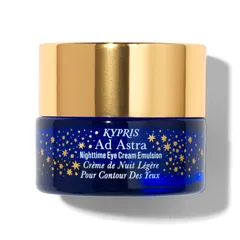
Treat the delicate skin around the eyes while they rest with the Kypris Ad Astra, a nutrient-rich eye cream that infuses the skin with moisture for a smoother, more youthful appearance.
Source: SpaceNK US
This product contains asiaticoside, caprooyl tetrapeptide-3, oligopeptide-24, tripeptide-29. These ingredients might be able to help reduce and prevent fine lines and wrinkles, improve skin elasticity and firmness, but there is not enough evidence that it actually works.
A type of peptide. Peptides are excellent moisturizers and might be able support collagen production reducing fine lines and wrinkles
An active compound of Centella Asiatica plant extract. In combination with other active compounds of Centella Asiatica extract (madecasosside, asiatic acid and madecassic acid), asiaticoside has been shown to be helpful in wound-healing, restoring skin barrier function and supporting collagen production in skin. It can, however, itself be irritating
A type of peptide. Peptides are excellent moisturizers and might be able support collagen production reducing fine lines and wrinkles
Can contain potent anti-oxidant compounds (abbreviated ECG, GCG, EGC, and EGCG) that might help protect the skin from free radicals. Can help calm down inflammation and has some anti-bacterial properties. Unfortunately, these antioxidants are unstable and lose their effectiveness very quickly in products. The concentration of the antioxidant compounds in the extract also tends to be low to be effective in topical formulation
Is claimed to stimulate collagen and elastin production, as well as work as an anti-oxidant. There is however not enough evidence for its effectiveness
A great moisturising ingredient that softens the skin and reduces water loss from its upper layer. It also can be helpful in protecting skin from free radicals
How honest is this product?
| Promise | Can it deliver? |
|---|---|
| Moisturizing | |
| Anti-aging |
Total Promises Fulfilled score: 87/100.
We receive a small commission for purchases made through these links at no cost for you. Thank you for your support! Learn more
Potential irritants
Comedogenic ingredients
User reviews (0)
Averages from community submissions.
No reviews yet for this product.
Be the first to share your experience!
Tried this product?
Help capture what the ingredient list can't—texture, finish, pilling, scent, and more. Answer what you can, skip the rest.
Takes ~30 seconds.
Reviews are shown in aggregate. No personal details.
| Product | Similarity | Price | Irritancy |
|---|---|---|---|
 Kypris Beauty Ad Astra | Current | $225.00 | |
 Kypris Ad Astra Eye Cream Emulsion | 58% | $150.00 |
Key Actives
Can contain potent anti-oxidant compounds (abbreviated ECG, GCG, EGC, and EGCG) that might help protect the skin from free radicals. Can help calm down inflammation and has some anti-bacterial properties. Unfortunately, these antioxidants are unstable and lose their effectiveness very quickly in products. The concentration of the antioxidant compounds in the extract also tends to be low to be effective in topical formulation
Helps attract water to the upper layer of the skin and might have some anti-oxidant and skin lightening properties. It can help calm down inflammation in skin
An active compound of Centella Asiatica plant extract. In combination with other active compounds of Centella Asiatica extract (madecasosside, asiatic acid and madecassic acid), asiaticoside has been shown to be helpful in wound-healing, restoring skin barrier function and supporting collagen production in skin. It can, however, itself be irritating
A fermentation product created by bacteria Lactobacillus. The fermented product has anti-bacterial properties and might be helpful in calming down inflammation, but studies are lacking. Helps attract water to the upper layer of the skin. Can be used as a preservative
Helps soften the upper layer of the skin and can be helpful in restoring the skin barrier function. Might have some anti-oxidant effect
An active compound of Centella Asiatica plant extract. In combination with other active compounds of Centella Asiatica extract (asiaticoside, madecasosside and madecassic acid) asiatic acid has been shown to be helpful in wound-healing, restoring skin barrier function and supporting collagen production in skin. It can, however, itself be irritating
A great moisturising ingredient that softens the skin and reduces water loss from its upper layer. It also can be helpful in protecting skin from free radicals
A type of lipid similar to ceramides naturally present in skin. Helps to soften the upper layer of the skin and supports the skin barrier function to keep it hydrated. Can help to prevent inflammation in skin
Can be helpful in reducing inflammation in skin, including inflamed acne. It can be irritating
Might be helpful in neutralizing free radicals. Can have a dehydration effect that might somewhat decrease the look of puffy eyes
A type of peptide. Peptides are excellent moisturizers and might be able support collagen production reducing fine lines and wrinkles
An active compound of Centella Asiatica plant extract. In combination with other active compounds of Centella Asiatica extract (asiaticoside, madecasosside and asiatic acid), madecassic acid has been shown to be helpful in wound-healing, restoring skin barrier function and supporting collagen production in skin. It can, however, itself be irritating
A type of peptide. Peptides are excellent moisturizers and might be able support collagen production reducing fine lines and wrinkles
A plant extract that can help neutralize free radicals in skin and even out the skin tone, but is typically used in products in a concentration that is too low to be effective
Mushroom extract that helps attract water to the upper layer of the skin
One of the best moisturizing ingredients. Naturally present in skin. It attracts water to the upper layer of the skin working as a humectant
A non-living ingredient made by fermentation with the bacteria Lactobacillus. It can help attract water to the upper layer of the skin and might help reduce inflammation
Helps soften the upper layer of the skin and support skin's barrier function while creating a thicker product consistency
An oil naturally present in skin. Works as an emollient to soften the skin and form a protective layer on its surface without a greasy feeling.
An algae extract that helps attract water to the upper layer of the skin. Also used to create a thicker product texture
A product of bacterial fermentation. Can help attract water to the upper layer of the skin
A good mix of fatty acids that forms a protective layer on the skin. Improves the shelf life of products. Derived from coconut and glycerin
An emollient. Found to be as effective as a moisturizer for dry skin as mineral oil. Could be comedogenic
Helps attract water to the most upper layer of the skin. Derived from sugar
Softens the upper layer of the skin and can support skin barrier function
Lipids that work as an emollient and can be helpful in repairing skin barrier function
Potential irritants
Plant extract that can have healing and anti-inflammatory properties. It is a potential allergen and can be irritating
Can be helpful in reducing inflammation in skin, including inflamed acne. It can be irritating
Can be drying and contribute to skin irritation. Used in formulars to dissolve other ingredients, create a thinner product consistency or for its antibacterial properties
A preservative that comes from radishes fermented by a bacteria. New research suggests that the preservation properties in the ingredient come from an ammonium salt that is not present naturally in radish root but used in its cultivation. Is problematic because the exact amount of the preservative agents is difficult to determine
An active compound of Centella Asiatica plant extract. In combination with other active compounds of Centella Asiatica extract (asiaticoside, madecasosside and madecassic acid) asiatic acid has been shown to be helpful in wound-healing, restoring skin barrier function and supporting collagen production in skin. It can, however, itself be irritating
An active compound of Centella Asiatica plant extract. In combination with other active compounds of Centella Asiatica extract (madecasosside, asiatic acid and madecassic acid), asiaticoside has been shown to be helpful in wound-healing, restoring skin barrier function and supporting collagen production in skin. It can, however, itself be irritating
Might be helpful in neutralizing free radicals. Can have a dehydration effect that might somewhat decrease the look of puffy eyes
A good mix of fatty acids that forms a protective layer on the skin. Improves the shelf life of products. Derived from coconut and glycerin
Helps water and oil in the product mix well together and improves product texture
An active compound of Centella Asiatica plant extract. In combination with other active compounds of Centella Asiatica extract (asiaticoside, madecasosside and asiatic acid), madecassic acid has been shown to be helpful in wound-healing, restoring skin barrier function and supporting collagen production in skin. It can, however, itself be irritating
Lipids that work as an emollient and can be helpful in repairing skin barrier function
A plant extract that can help neutralize free radicals in skin and even out the skin tone, but is typically used in products in a concentration that is too low to be effective
Can work as an exfoliant but is typically used to adjust the product pH
Comedogenic ingredients
Helps soften the upper layer of the skin and can be helpful in restoring the skin barrier function. Might have some anti-oxidant effect
A non-drying alcohol. Works as an emollient. Helps water and oil mix together and creates a nice product texture
A great moisturising ingredient that softens the skin and reduces water loss from its upper layer. It also can be helpful in protecting skin from free radicals
An emollient. Found to be as effective as a moisturizer for dry skin as mineral oil. Could be comedogenic
All ingredients
One of the best moisturizing ingredients. Naturally present in skin. It attracts water to the upper layer of the skin working as a humectant
Helps soften the upper layer of the skin and can be helpful in restoring the skin barrier function. Might have some anti-oxidant effect
A non-living ingredient made by fermentation with the bacteria Lactobacillus. It can help attract water to the upper layer of the skin and might help reduce inflammation
Helps soften the upper layer of the skin and support skin's barrier function while creating a thicker product consistency
Helps to retain moisture by creating a protective barrier on the skin. Rich in fatty acids. Improves product texture and helps with the penetration of other ingredients.
A non-drying alcohol. Works as an emollient. Helps water and oil mix together and creates a nice product texture
An oil naturally present in skin. Works as an emollient to soften the skin and form a protective layer on its surface without a greasy feeling.
A preservative that comes from radishes fermented by a bacteria. New research suggests that the preservation properties in the ingredient come from an ammonium salt that is not present naturally in radish root but used in its cultivation. Is problematic because the exact amount of the preservative agents is difficult to determine
Is claimed to stimulate collagen and elastin production, as well as work as an anti-oxidant. There is however not enough evidence for its effectiveness
An algae extract that helps attract water to the upper layer of the skin. Also used to create a thicker product texture
An active compound of Centella Asiatica plant extract. In combination with other active compounds of Centella Asiatica extract (asiaticoside, madecasosside and madecassic acid) asiatic acid has been shown to be helpful in wound-healing, restoring skin barrier function and supporting collagen production in skin. It can, however, itself be irritating
An active compound of Centella Asiatica plant extract. In combination with other active compounds of Centella Asiatica extract (madecasosside, asiatic acid and madecassic acid), asiaticoside has been shown to be helpful in wound-healing, restoring skin barrier function and supporting collagen production in skin. It can, however, itself be irritating
A product of bacterial fermentation. Can help attract water to the upper layer of the skin
A great moisturising ingredient that softens the skin and reduces water loss from its upper layer. It also can be helpful in protecting skin from free radicals
Might be helpful in neutralizing free radicals. Can have a dehydration effect that might somewhat decrease the look of puffy eyes
Can contain potent anti-oxidant compounds (abbreviated ECG, GCG, EGC, and EGCG) that might help protect the skin from free radicals. Can help calm down inflammation and has some anti-bacterial properties. Unfortunately, these antioxidants are unstable and lose their effectiveness very quickly in products. The concentration of the antioxidant compounds in the extract also tends to be low to be effective in topical formulation
A type of peptide. Peptides are excellent moisturizers and might be able support collagen production reducing fine lines and wrinkles
A good mix of fatty acids that forms a protective layer on the skin. Improves the shelf life of products. Derived from coconut and glycerin
A type of lipid similar to ceramides naturally present in skin. Helps to soften the upper layer of the skin and supports the skin barrier function to keep it hydrated. Can help to prevent inflammation in skin
Helps water and oil in the product mix well together and improves product texture
Plant extract that can have healing and anti-inflammatory properties. It is a potential allergen and can be irritating
Helps to soften the upper layer of the skin without creating a greasy texture
An emollient. Found to be as effective as a moisturizer for dry skin as mineral oil. Could be comedogenic
Helps attract water to the most upper layer of the skin. Derived from sugar
Softens the upper layer of the skin and can support skin barrier function
A fermentation product created by bacteria Lactobacillus. The fermented product has anti-bacterial properties and might be helpful in calming down inflammation, but studies are lacking. Helps attract water to the upper layer of the skin. Can be used as a preservative
A "broth" with parts of dead cells of lactobacteria. Might be helpful supporting diverse microbiome in skin, but evidence is lacking
Used mostly for creating emulsions - helping oil and water mix together. Helps soften the upper layer of the skin
An active compound of Centella Asiatica plant extract. In combination with other active compounds of Centella Asiatica extract (asiaticoside, madecasosside and asiatic acid), madecassic acid has been shown to be helpful in wound-healing, restoring skin barrier function and supporting collagen production in skin. It can, however, itself be irritating
A type of peptide. Peptides are excellent moisturizers and might be able support collagen production reducing fine lines and wrinkles
Lipids that work as an emollient and can be helpful in repairing skin barrier function
A plant extract that can help neutralize free radicals in skin and even out the skin tone, but is typically used in products in a concentration that is too low to be effective
Can be helpful in reducing inflammation in skin, including inflamed acne. It can be irritating
Mushroom extract that helps attract water to the upper layer of the skin
Helps attract water to the upper layer of the skin and might have some anti-oxidant and skin lightening properties. It can help calm down inflammation in skin
Can be drying and contribute to skin irritation. Used in formulars to dissolve other ingredients, create a thinner product consistency or for its antibacterial properties
Can work as an exfoliant but is typically used to adjust the product pH
Ingredient list view
Water, Glycerin, Theobroma cacao seed butter, Coconut alkanes, Lactobacillus, Helianthus annuus seed wax, Hydrogenated lecithin, Tripeptide-29, Cetearyl alcohol, Squalane, Olea europaea oil unsaponifiables, Leuconostoc/radish root ferment filtrate, Adansonia digitata seed oil, Dipalmitoyl hydroxyproline, Oxidized glutathione, Ahnfeltia concinna extract, Asiatic acid, Asiaticoside, Bacillus ferment, Butyrospermum parkii butter, Caffeine, Camellia sinensis leaf extract, Caprooyl tetrapeptide-3, Caprylic/capric triglyceride, Ceramide np, Cetearyl glucoside, Chamomilla recutita flower extract, Coco-caprylate/caprate, Cocos nucifera fruit extract, Dextran, Ectoin, Jania rubens extract, Lactobacillus ferment, Lactobacillus ferment lysate, Lecithin, Madecassic acid, Oligopeptide-24, Phytosterols, Punica granatum extract, Rhus succedanea fruit wax, Rosmarinus officinalis leaf extract, Shea butter ethyl esters, Shorea robusta resin, Tremella fuciformis sporocarp extract, Yeast extract, Alcohol, Sodium anisate, Sodium levulinate, Citric acid
- Glycerol and the skin: holistic approach to its origin and functions
- Cocoa polyphenols and their influence on parameters involved in ex vivo skin restructuring
- Effect of Olive and Sunflower Seed Oil on the Adult Skin Barrier: Implications for Neonatal Skin Care
- Contact dermatitis due to Madecassol
- Centella asiatica in Dermatology: An Overview
- Centella asiatica in cosmetology
- Contact dermatitis due to Madecassol
- Centella asiatica in Dermatology: An Overview
- Skin hydration is significantly increased by a cream formulated to mimic the skin’s own natural moisturizing systems
- Topically Applied Ceramides Interact with the Stratum Corneum Lipid Matrix in Compromised Ex Vivo Skin
- Safety Assessment of Alkyl Esters as Used in Cosmetics
- The effect of probiotics on immune regulation, acne, and photoaging
- Comparison of clinical and histological effects between lactobacillus-fermented Chamaecyparis obtusa and tea tree oil for the treatment of acne: an eight-week double-blind randomized controlled split-face study
- Use of Probiotics for Dermal Applications
- Extract of Punica granatum inhibits skin photoaging induced by UVB irradiation
- Topical microemulsion containing Punica granatum extract: its control over skin erythema and melanin in healthy Asian subjects
- Safety Assessment of Punica granatum -Derived Ingredients as Used in Cosmetics
- Allergic contact dermatitis induced by rosemary leaf extract in a cleansing gel
- Safety Assessment of Rosmarinus officinalis (Rosemary)-Derived Ingredients as Used in Cosmetics
- Rosmarinus officinalis Extract Suppresses Propionibacterium acnes–Induced Inflammatory Responses
- Carboxymethylation of polysaccharides from Tremella fuciformis for antioxidant and moisture-preserving activities
- The natural yeast extract isolated by ethanol precipitation inhibits melanin synthesis by modulating tyrosinase activity and downregulating melanosome transfer
- Evaluation of dermatological effects of cosmetic formulations containing Saccharomyces cerevisiae extract and vitamins