Works for:
based on ingredients and %- Moisturizing
- Evens skin tone
- Anti-blemish
Can it cause trouble?
- Irritation risk: high
- Comedogenic risk ingredients: 3
Key actives


Works for
Anti-blemish
This product might be able to help reduce blemishes and clogged pores because it contains ethyl linoleate.
Helps reduce acne and blemishes. Helps to soften the upper layer of the skin and reduce inflammation. Might be helpful in reducing hyperpigmentation and evening out the skin tone, but evidence of effectiveness in skin are lacking
Used for skin exfoliation. It has an anti-inflammatory and anti-bacterial effect, helps to unclog pores, prevent blemishes and speed up healing of the existing ones. Sometimes referred to as a BHA (beta-hydroxy acid)
Evens skin tone
What does the product description say?
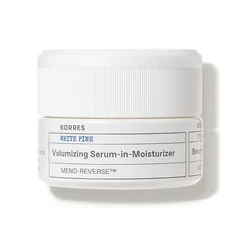
Made to improve skin volume to boost firmer, plumper-looking skin, this unique serum and moisturizer combines Meno-Reverse Technology, white pine and abyssinia oil to restore skin's look and feel, promote elasticity to minimize the look of sagging skin and improve the look of deep wrinkles and age spots.
Source: Dermstore
The following ingredient (ingredients) in this product might be helpful, but there is no evidence to confirm that it actually works: ethyl linoleate, pancratium maritimum extract.
A plant extract that might help neutralize free radicals in skin. It might help reduce hyperpigmentation
Helps reduce acne and blemishes. Helps to soften the upper layer of the skin and reduce inflammation. Might be helpful in reducing hyperpigmentation and evening out the skin tone, but evidence of effectiveness in skin are lacking
An exfoliating and moisturizing alpha-hydroxy acid (AHA). Typically causes less irritation than other AHAs, for example, glycolic acid. At high concentrations (about 15%), lactic acid can help reduce lines and wrinkles. Recent studies show that lactic acid can support the "good" bacteria living on skin's surface (healthy skin microbiome)
Used for skin exfoliation. It has an anti-inflammatory and anti-bacterial effect, helps to unclog pores, prevent blemishes and speed up healing of the existing ones. Sometimes referred to as a BHA (beta-hydroxy acid)
Moisturizing
What does the product description say?
A plumping 2-in-1 post menopausal skincare treatment and moisturizer that targets the extreme loss of collagen and dryness in post-menopausal skin, improving skin's volume for ultra-hydration and firmer looking skin.
Source: Dermstore
This product can help improve hydration of the skin with the two types of ingredients.
The first type is called “humectants”:
these ingredients help attract water.
When humectants are on the surface of the skin, they “pull in” the moisture from the outside environment, or from
within deeper layers of the skin. The following ingredients in this product do the job:
glycerin, sodium hyaluronate.
This product also contains ingredients called “occlusives”. They help reduce the speed with which our skin loses moisture to the outside environment. These ingredients also help soften the upper layer of the skin, so it feels less tight and nicer to the touch. The following ingredients in this product do the job: caprylic/capric triglyceride, helianthus annuus seed oil.
A good mix of fatty acids that forms a protective layer on the skin. Improves the shelf life of products. Derived from coconut and glycerin
A great emollient due to its high linoleic acid content. One of the most effective plant oils in helping skin hydration and repairing skin barrier function
One of the best moisturizing ingredients. Naturally present in skin. It attracts water to the upper layer of the skin working as a humectant
Helps reduce acne and blemishes. Helps to soften the upper layer of the skin and reduce inflammation. Might be helpful in reducing hyperpigmentation and evening out the skin tone, but evidence of effectiveness in skin are lacking
Plant oil that due to its high content of linoleic acid can help support skin's barrier function improving its hydration
One of the best moisturizing ingredients. Attracts water into the upper layer of the skin
An oil naturally present in skin. Works as an emollient to soften the skin and form a protective layer on its surface without a greasy feeling.
An oil from a mixture of different vegetables. Helps soften the upper layer of the skin
Helps soften the upper layer of the skin
A non-drying alcohol. Works as an emollient. Helps water and oil mix together and creates a nice product texture
Helps soften the upper layer of the skin
Helps to soften the upper layer of the skin and creates a nice product finish on the skin
Helps soften the upper layer of the skin
Help soften the upper layer of the skin
An emollient that can also help water and oil mix together, as well as prevent bacteria growth in products
An oil from a mixture of different vegetables. Helps soften the upper layer of the skin
A plant oil that can help soften the upper layer of the skin. Contains essential oil that can be irritating
Helps oil and water mix together while softening the upper layer of the skin
An emollient that softens the skin and forms a protective layer on its surface. Helps water and oil mix together
Ethyl oleate is a long-chain fatty acid ethyl ester resulting from the formal condensation of the carboxy group of oleic acid with the hydroxy group of ethanol. It derives from an oleic acid. In skincare, it is used to soften the upper layer of the skin, improve the product texture and smell
Helps create a nice product feeling on the skin and help soften its upper layer
An exfoliating and moisturizing alpha-hydroxy acid (AHA). Typically causes less irritation than other AHAs, for example, glycolic acid. At high concentrations (about 15%), lactic acid can help reduce lines and wrinkles. Recent studies show that lactic acid can support the "good" bacteria living on skin's surface (healthy skin microbiome)
A great moisturising ingredient that softens the skin and reduces water loss from its upper layer. It also can be helpful in protecting skin from free radicals
An emollient that helps soften the upper layer of the skin. Might have some weak anti-oxidant properties
An emollient that helps soften the skin
Used mostly for creating emulsions - helping oil and water mix together. Helps soften the upper layer of the skin
Pure form of vitamin E. Can help moisturise and protect the skin from free radicals. Often used to help stabilise other ingredients or the formula itself
How honest is this product?
| Promise | Can it deliver? |
|---|---|
| Moisturizing |
Total Promises Fulfilled score: 75/100.
We receive a small commission for purchases made through these links at no cost for you. Thank you for your support! Learn more
Potential irritants
Comedogenic ingredients
User reviews (0)
Averages from community submissions.
No reviews yet for this product.
Be the first to share your experience!
Tried this product?
Help capture what the ingredient list can't—texture, finish, pilling, scent, and more. Answer what you can, skip the rest.
Takes ~30 seconds.
Reviews are shown in aggregate. No personal details.
| Product | Similarity | Price | Irritancy |
|---|---|---|---|
 KORRES White Pine Volumizing Serum-In-Moisturizer | Current | $58.00 | |
The INKEY List CA 360° Acne Clearing Serum | 87% | $18.00 | |
Vichy Aqualia Thermal Rehydrating Face Serum with Hyaluronic Acid | 87% | $36.00 | |
 Dr Dennis Gross Advanced Retinol + Ferulic Texture Renewal Serum | 86% | $20.00 | |
 Obagi SUPER ANTIOXIDANT SERUM | 86% | - | |
 Facetheory Regenacalm Serum S1 Pro | 85% | - |
Key Actives
Used for skin exfoliation. It has an anti-inflammatory and anti-bacterial effect, helps to unclog pores, prevent blemishes and speed up healing of the existing ones. Sometimes referred to as a BHA (beta-hydroxy acid)
Helps reduce acne and blemishes. Helps to soften the upper layer of the skin and reduce inflammation. Might be helpful in reducing hyperpigmentation and evening out the skin tone, but evidence of effectiveness in skin are lacking
Pure form of vitamin E. Can help moisturise and protect the skin from free radicals. Often used to help stabilise other ingredients or the formula itself
A great moisturising ingredient that softens the skin and reduces water loss from its upper layer. It also can be helpful in protecting skin from free radicals
An emollient that helps soften the upper layer of the skin. Might have some weak anti-oxidant properties
A plant extract that might help neutralize free radicals in skin. It might help reduce hyperpigmentation
An emollient that helps soften the skin
One of the best moisturizing ingredients. Naturally present in skin. It attracts water to the upper layer of the skin working as a humectant
A good mix of fatty acids that forms a protective layer on the skin. Improves the shelf life of products. Derived from coconut and glycerin
An oil naturally present in skin. Works as an emollient to soften the skin and form a protective layer on its surface without a greasy feeling.
A great emollient due to its high linoleic acid content. One of the most effective plant oils in helping skin hydration and repairing skin barrier function
Plant oil that due to its high content of linoleic acid can help support skin's barrier function improving its hydration
One of the best moisturizing ingredients. Attracts water into the upper layer of the skin
Plant extract that might hep calm down inflammation in skin
Potential irritants
A plant oil that can help soften the upper layer of the skin. Contains essential oil that can be irritating
A plant extract that might have some anti-oxidant properties. It might be irritating
A plant extract that might help neutralize free radicals in skin. It might help reduce hyperpigmentation
Plant extract that might hep calm down inflammation in skin
A preservative. Can be used to mask unpleasant smell. Can be irritating
Used for skin exfoliation. It has an anti-inflammatory and anti-bacterial effect, helps to unclog pores, prevent blemishes and speed up healing of the existing ones. Sometimes referred to as a BHA (beta-hydroxy acid)
A fragrance. Potential allergen and can be irritating
An aromatic blend of unspecified and possibly irritating ingredients
A good mix of fatty acids that forms a protective layer on the skin. Improves the shelf life of products. Derived from coconut and glycerin
An emollient that helps soften the upper layer of the skin. Might have some weak anti-oxidant properties
Being a lipid soluble form of vitamin C, it is more stable and can penetrate the skin better than L-Ascorbic acid. It is effective in protecting the skin from free radicals, as well as evening the skin tone, but is less effective in stimulating collagen production compared to L-Ascorbic acid.
Can work as an exfoliant but is typically used to adjust the product pH
Helps reduce acne and blemishes. Helps to soften the upper layer of the skin and reduce inflammation. Might be helpful in reducing hyperpigmentation and evening out the skin tone, but evidence of effectiveness in skin are lacking
Ethyl oleate is a long-chain fatty acid ethyl ester resulting from the formal condensation of the carboxy group of oleic acid with the hydroxy group of ethanol. It derives from an oleic acid. In skincare, it is used to soften the upper layer of the skin, improve the product texture and smell
Helps create a nice product feeling on the skin and help soften its upper layer
An exfoliating and moisturizing alpha-hydroxy acid (AHA). Typically causes less irritation than other AHAs, for example, glycolic acid. At high concentrations (about 15%), lactic acid can help reduce lines and wrinkles. Recent studies show that lactic acid can support the "good" bacteria living on skin's surface (healthy skin microbiome)
A more stable but less bio-available form of vitamin E compared to Tocopherol. Might help moisturize and protect the skin from free radicals, but mostly used in low concentrations to stabilize other ingredients.
Comedogenic ingredients
A non-drying alcohol. Works as an emollient. Helps water and oil mix together and creates a nice product texture
A great moisturising ingredient that softens the skin and reduces water loss from its upper layer. It also can be helpful in protecting skin from free radicals
An oil from a mixture of different vegetables. Helps soften the upper layer of the skin
All ingredients
One of the best moisturizing ingredients. Naturally present in skin. It attracts water to the upper layer of the skin working as a humectant
A good mix of fatty acids that forms a protective layer on the skin. Improves the shelf life of products. Derived from coconut and glycerin
An oil from a mixture of different vegetables. Helps soften the upper layer of the skin
A non-drying alcohol. Works as an emollient. Helps water and oil mix together and creates a nice product texture
Helps oil and water mix together while softening the upper layer of the skin
Helps to soften the upper layer of the skin and creates a nice product finish on the skin
A plant oil that can help soften the upper layer of the skin. Contains essential oil that can be irritating
Acts as a solvent for other ingredients. Speeds up the absorption of other ingredients into the skin
An oil naturally present in skin. Works as an emollient to soften the skin and form a protective layer on its surface without a greasy feeling.
Increases thickness of a product. Texture enhancer for oil-in-water emulsions
An emollient that helps soften the upper layer of the skin. Might have some weak anti-oxidant properties
Being a lipid soluble form of vitamin C, it is more stable and can penetrate the skin better than L-Ascorbic acid. It is effective in protecting the skin from free radicals, as well as evening the skin tone, but is less effective in stimulating collagen production compared to L-Ascorbic acid.
A great moisturising ingredient that softens the skin and reduces water loss from its upper layer. It also can be helpful in protecting skin from free radicals
Helps soften the upper layer of the skin
Can work as an exfoliant but is typically used to adjust the product pH
A plant extract that might have some anti-oxidant properties. It might be irritating
Used to dissolve other ingredients in a product and can enhance their ability to penetrate the skin
Helps reduce acne and blemishes. Helps to soften the upper layer of the skin and reduce inflammation. Might be helpful in reducing hyperpigmentation and evening out the skin tone, but evidence of effectiveness in skin are lacking
Ethyl oleate is a long-chain fatty acid ethyl ester resulting from the formal condensation of the carboxy group of oleic acid with the hydroxy group of ethanol. It derives from an oleic acid. In skincare, it is used to soften the upper layer of the skin, improve the product texture and smell
An emollient that can also help water and oil mix together, as well as prevent bacteria growth in products
An emollient that softens the skin and forms a protective layer on its surface. Helps water and oil mix together
A great emollient due to its high linoleic acid content. One of the most effective plant oils in helping skin hydration and repairing skin barrier function
Helps create a nice product feeling on the skin and help soften its upper layer
Help soften the upper layer of the skin
An oil from a mixture of different vegetables. Helps soften the upper layer of the skin
An exfoliating and moisturizing alpha-hydroxy acid (AHA). Typically causes less irritation than other AHAs, for example, glycolic acid. At high concentrations (about 15%), lactic acid can help reduce lines and wrinkles. Recent studies show that lactic acid can support the "good" bacteria living on skin's surface (healthy skin microbiome)
Used mostly for creating emulsions - helping oil and water mix together. Helps soften the upper layer of the skin
A plant extract that might help neutralize free radicals in skin. It might help reduce hyperpigmentation
Plant oil that due to its high content of linoleic acid can help support skin's barrier function improving its hydration
Helps thicken the product formulation and create a gel-like texture
One of the best moisturizing ingredients. Attracts water into the upper layer of the skin
Plant extract that might hep calm down inflammation in skin
Pure form of vitamin E. Can help moisturise and protect the skin from free radicals. Often used to help stabilise other ingredients or the formula itself
A more stable but less bio-available form of vitamin E compared to Tocopherol. Might help moisturize and protect the skin from free radicals, but mostly used in low concentrations to stabilize other ingredients.
A preservative. Can be used to mask unpleasant smell. Can be irritating
A preservative. It helps prevent bacterial growth in cosmetic products
Used for skin exfoliation. It has an anti-inflammatory and anti-bacterial effect, helps to unclog pores, prevent blemishes and speed up healing of the existing ones. Sometimes referred to as a BHA (beta-hydroxy acid)
A fragrance. Potential allergen and can be irritating
An aromatic blend of unspecified and possibly irritating ingredients
Ingredient list view
Water, Glycerin, Caprylic/capric triglyceride, Olus oil, Cetearyl alcohol, Glyceryl stearate citrate, Distarch phosphate, Hydrogenated ethylhexyl olivate, Diheptyl succinate, Passiflora incarnata seed oil, Propanediol, Squalane, Ammonium acryloyldimethyltaurate/vp copolymer, Argania spinosa kernel oil, Ascorbyl palmitate, Avena strigosa seed extract, Butyrospermum parkii butter, Euphorbia cerifera wax, Capryloyl glycerin/sebacic acid copolymer, Citric acid, Crambe abyssinica seed oil, Cynara scolymus leaf extract, Dimethyl isosorbide, Ethyl linoleate, Ethyl linolenate, Ethyl oleate, Ethyl palmitate, Ethyl stearate, Ethylhexylglycerin, Glyceryl caprylate, Glyceryl stearate, Helianthus annuus seed oil, Hexyldecyl stearate, Hydrogenated olive oil unsaponifiables, Hydrogenated vegetable oil, Lactic acid, Lecithin, Pancratium maritimum extract, Pinus heldreichii bark extract, Prunus armeniaca kernel oil, Sesamum indicum seed extract, Sodium carboxymethyl beta-glucan, Sodium gluceptate, Sodium hyaluronate, Spilanthes acmella flower extract, Tocopherol, Tocopheryl acetate, Benzyl alcohol, Phenoxyethanol, Potassium sorbate, Salicylic acid, Sodium benzoate, Sorbic acid, Alpha-isomethyl ionone, Benzyl salicylate, Citronellol, Coumarin, Hexyl cinnamal, Linalool, Parfum
- Glycerol and the skin: holistic approach to its origin and functions
- Chemical composition of essential oils of Passiflora edulis f. flavicarpa agroindustrial waste
- Natural vegetable fats in the prevention of irritant contact dermatitis
- Activity enhancement of ferulic acid with dimethyl isosorbride in cosmetic compositions
- Ethyl linoleate inhibits α-MSH-induced melanogenesis through Akt/GSK3β/β-catenin signal pathway
- Double-blind, randomized, placebo-controlled study of a lotion containing triethyl citrate and ethyl linoleate in the treatment of acne vulgaris
- Effect of Olive and Sunflower Seed Oil on the Adult Skin Barrier: Implications for Neonatal Skin Care
- Topically Applied Sunflower Seed Oil Prevents Invasive Bacterial Infections in Preterm Infants in Egypt
- Effect of topically applied lipids on surfactant-irritated skin
- Impact of topical oils on the skin barrier: possible implications for neonatal health in developing countries
- Safety Assessment of Alkyl Esters as Used in Cosmetics
- Epidermal and dermal effects of topical lactic acid
- Dual Effects of Alpha-Hydroxy Acids on the Skin
- Use of Pancratium maritimum extract as cosmetic antioxidizing agent and/or melanogenesis inhibitor in cosmetic composition e.g. to prevent/fight against the signs of skin aging, and for depigmenting of the skin, body hair and/or hair
- Seed oil content and fatty acid composition in East African sesame (Sesamum indicum L.) accessions evaluated over 3 years
- Hyaluronic acid: A key molecule in skin aging
- Hyaluronan (Hyaluronic Acid): a natural moisturizer for skin care
- Transdermal behaviour of the N-alkylamide spilanthol (affinin) from Spilanthes acmella (Compositae) extracts
- Vitamin E in dermatology
- Vitamin E and Skin Health
- Salicylic acid as a peeling agent: a comprehensive review
- Beta Hydroxy Acids
- A review of toxicity from topical salicylic acid preparations
- Glycolic Acid Peels Versus Salicylic–Mandelic Acid Peels in Active Acne Vulgaris and Post‐Acne Scarring and Hyperpigmentation: A Comparative Study