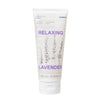
KORRES Overnight Body Milk Relaxing Lavender
Works for
1 of 1 advertised claim delivered
Moisturizing16 ingredients credited for this claimStrong support
“This overnight body milk works to restore your skin’s moisture level whilst adding suppleness.”
This product can help improve hydration of the skin with the two types of ingredients.
The first type is called “humectants”:
these ingredients help attract water.
When humectants are on the surface of the skin, they “pull in” the moisture from the outside environment, or from
within deeper layers of the skin. The following ingredients in this product do the job:
glycerin, magnesium pca.
This product also contains ingredients called “occlusives”. They help reduce the speed with which our skin loses moisture to the outside environment. These ingredients also help soften the upper layer of the skin, so it feels less tight and nicer to the touch. The following ingredients in this product do the job: butyrospermum parkii butter, caprylic/capric triglyceride.
The following ingredients in this product are especially good for supporting the skin barrier and helping with the hydration level: panthenol
Can it cause trouble?
Irritancy8 strong irritants: Parfum, Lavandula angustifolia flower/leaf/stem extract + 6 more — patch-test recommendedHigh risk
Comedogenic2 ingredients rated 2 or more on the 0–5 pore-clogging scale2 flagged
User reviews
Be the first — your take helps the next person decide.
Ingredients
Filter by role to see what each ingredient is doing.
Water~45–55%
Caprylic/capric triglyceride~6.2–7.5%
- Irritation risk
- Medium
A good mix of fatty acids that forms a protective layer on the skin. Improves the shelf life of products. Derived from coconut and glycerin
More about Caprylic/capric triglyceridePrunus amygdalus dulcis oil~4.5–5.5%
- Irritation risk
- Low
An emollient that softens the skin
More about Prunus amygdalus dulcis oilGlycerin~3.1–3.8%
- Irritation risk
- Low
One of the best moisturizing ingredients. Naturally present in skin. It attracts water to the upper layer of the skin working as a humectant
More about GlycerinHydrogenated polydecene~2.3–2.8%
- Irritation risk
- Low
Helps to soften the upper layer of the skin and create a nice product texture
More about Hydrogenated polydeceneGlyceryl stearate citrate~2–2.4%
- Irritation risk
- Low
Helps oil and water mix together while softening the upper layer of the skin
More about Glyceryl stearate citrateAmmonium acryloyldimethyltaurate/vp copolymer~1.7–2%
- Irritation risk
- Low
Increases thickness of a product. Texture enhancer for oil-in-water emulsions
More about Ammonium acryloyldimethyltaurate/vp copolymerButyrospermum parkii butter~1.5–1.9%
- Irritation risk
- Low
- Comedogenicity
- 3/5
A great moisturising ingredient that softens the skin and reduces water loss from its upper layer. It also can be helpful in protecting skin from free radicals
More about Butyrospermum parkii butterDecyl cocoate~1.2–1.5%
- Irritation risk
- Low
Parfum~0.95–1.15%
- Irritation risk
- High
An aromatic blend of unspecified and possibly irritating ingredients
More about ParfumAloe barbadensis leaf juice powder~0.7–1.05%
- Irritation risk
- Medium
Traditionally used to treat sunburns, dermatitis and inflammation, but evidence for its effectiveness is lacking. The extract can contain humectants that help attract water into the skin
More about Aloe barbadensis leaf juice powderAlthaea officinalis root extract~0.6–0.85%
- Irritation risk
- High
A plant extract that can help attract water to the upper layer of the skin and might help to reduce inflammation
More about Althaea officinalis root extractCaprylyl glycol~0.55–0.85%
- Irritation risk
- Medium
Helps preserve products and creates a nice product texture
More about Caprylyl glycolCitric acid~0.5–0.75%
- Irritation risk
- Medium
Can work as an exfoliant but is typically used to adjust the product pH
More about Citric acidDistarch phosphate~0.45–0.7%
- Irritation risk
- Low
Glycine soja oil~0.45–0.7%
- Irritation risk
- Medium
- Comedogenicity
- 2/5
A good emollient that helps soften the skin and helps repair its barrier function. It can clog pores if used in high concentrations.
More about Glycine soja oilLactic acid~0.45–0.65%
- Irritation risk
- Medium
An exfoliating and moisturizing alpha-hydroxy acid (AHA). Typically causes less irritation than other AHAs, for example, glycolic acid. At high concentrations (about 15%), lactic acid can help reduce lines and wrinkles. Recent studies show that lactic acid can support the "good" bacteria living on skin's surface (healthy skin microbiome)
More about Lactic acidLavandula angustifolia flower/leaf/stem extract~0.4–0.6%
Magnesium pca~0.3–0.6%
- Irritation risk
- Low
Helps attract water to the upper layer of the skin
More about Magnesium pcaManganese pca~0.3–0.55%
- Irritation risk
- Low
Helps attract water to the upper layer of the skin. Often used as a part of an ingredient complex Physiogenyl together with Sodium PCA, Magnesium PCA and Zinc PCA. The manufacturer claims that it does more than attracting water, but there is no evidence or studies supporting this claim
More about Manganese pcaPanthenol~0.3–0.55%
- Irritation risk
- Low
Helps attract water to the upper layer of the skin and can help improve skin barrier function
More about PanthenolPropanediol~0.3–0.55%
- Irritation risk
- Low
Acts as a solvent for other ingredients. Speeds up the absorption of other ingredients into the skin
More about PropanediolRosmarinus officinalis leaf extract~0.25–0.45%
- Irritation risk
- High
Can be helpful in reducing inflammation in skin, including inflamed acne. It can be irritating
More about Rosmarinus officinalis leaf extractSodium gluceptate~0.25–0.45%
- Irritation risk
- Low
Sodium pca~0.25–0.45%
- Irritation risk
- Low
Naturally present in skin and helps to attract water to its upper layer
More about Sodium pcaZinc pca~0.2–0.4%
- Irritation risk
- Low
A compound that combines zinc with a hydrating ingredient PCA. Might to be helpful against acne and clogged pores. Can help calm down inflammation in skin. Could be helpful in reducing the formation of free radicals in skin. Might help to reduce fine lines in wrinkles, but solid evidence is missing
More about Zinc pcaPhenoxyethanol~0.2–0.4%
- Irritation risk
- Low
A preservative. It helps prevent bacterial growth in cosmetic products
More about PhenoxyethanolPotassium sorbate~0.2–0.35%
Sodium benzoate~0.15–0.3%
Alpha-isomethyl ionone~0.15–0.25%
- Irritation risk
- High
A fragrance. Potential allergen and can be irritating
More about Alpha-isomethyl iononeCitral~0.15–0.25%
Eugenol~0.1–0.2%
Hexyl cinnamal~0.1–0.15%
Limonene~0.05–0.15%
- Irritation risk
- High
A common frangrance that can easily irritate skin, especially if exposed to air, light or heat
More about LimoneneIngredient list view
Water, Caprylic/capric triglyceride, Prunus amygdalus dulcis oil, Glycerin, Hydrogenated polydecene, Glyceryl stearate citrate, Ammonium acryloyldimethyltaurate/vp copolymer, Butyrospermum parkii butter, Decyl cocoate, Parfum, Aloe barbadensis leaf juice powder, Althaea officinalis root extract, Caprylyl glycol, Citric acid, Distarch phosphate, Glycine soja oil, Lactic acid, Lavandula angustifolia flower/leaf/stem extract, Magnesium pca, Manganese pca, Panthenol, Propanediol, Rosmarinus officinalis leaf extract, Sodium gluceptate, Sodium pca, Zinc pca, Phenoxyethanol, Potassium sorbate, Sodium benzoate, Alpha-isomethyl ionone, Citral, Eugenol, Hexyl cinnamal, Limonene
Compare prices
Retailers ranked by price — lowest first.

Product summary
"KORRES - Overnight Body Milk Relaxing Lavender" is a well-rounded moisturizing product. This moisturizer uses a good combo of humectants and emollients. These both types of ingredients are essentials for improving the skin hydration and keeping the skin barrier healthy. Panthenol, glycerin, magnesium pca, manganese pca and sodium pca in this product (humectants) attract water molecules to the upper layer of the skin (the water comes from the outside air or from the deeper layers of the skin if the air is dry). Glycine soja oil, butyrospermum parkii butter, caprylic/capric triglyceride, prunus amygdalus dulcis oil and caprylyl glycol in this product help decrease the water evoporation from the skin, so that it stays hydrated for longer. These ingredients also soften the skin and take away the feeling of tightness and dryness.
This product contains ingredients that could be beneficial, but their concentrations are too low in this formulation: lactic acidIrritation risk
There are quite a few common irritants in this product, including ingredients without particular skin benefits. We would not recommend it for sensitive skin. We assess the overall irritancy of this moisturizer to be high. For a detailed overview of all potential irritants: click here
You can see the detailed formula review with the breakdown of all actives in the product and the full ingredient list with estimated concentrations in the tables below.
About the brand
According to Cruelty-Free Kitty "KORRES" is cruelty free, but its parent company is not.
Price
The product retails for 18.00£ in the United Kingdom.
For a detailed price comparison: click here.
Sources cited in this review
Every concentration estimate and effectiveness label is anchored to one of these 12 studies and safety reviews.
- 1
- 2
- 3Safety Assessment of Polyene Group as Used in Cosmeticscir-safety.org
- 4Epidermal and dermal effects of topical lactic acidncbi.nlm.nih.gov
- 5Dual Effects of Alpha-Hydroxy Acids on the Skinpdfs.semanticscholar.org
- 6Skin moisturizing effects of panthenol-based formulationspdfs.semanticscholar.org

Affiliate links · As an Amazon Associate, WIMJ earns from qualifying purchases.