Works for
ExfoliationLactic acid ~0.35–0.65%, below the ~2% it needsUnder-dosed
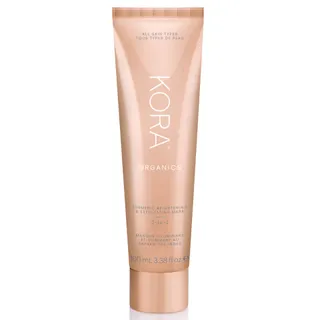
“Body Exfoliator”
This product does not contain effective exfoliating ingredients. It might be able to deliver physical exfoliation, that is scrub off some of the dead cells on the surface of the skin. We do not recommend physical exfoliation, because it is not uniform (some bits of skin can get exfoliated too much while others not at all). It can also traumatize the skin and aggrevate acne and other skin conditions.
MoisturizingSide benefit the brand mentions · Helianthus annuus seed oil, Glycerin + 5 moreWorks
“It provides an energising and invigorating experience.”
This product can help improve hydration of the skin with the two types of ingredients.
The first type is called “humectants”:
these ingredients help attract water.
When humectants are on the surface of the skin, they “pull in” the moisture from the outside environment, or from
within deeper layers of the skin. The following ingredients in this product do the job:
glycerin, aloe barbadensis leaf juice.
This product also contains ingredients called “occlusives”. They help reduce the speed with which our skin loses moisture to the outside environment. These ingredients also help soften the upper layer of the skin, so it feels less tight and nicer to the touch. The following ingredients in this product do the job: helianthus annuus seed oil.
Anti-oxidationSide benefit · Camellia sinensis leaf extract, Camellia sinensis extract + 2 moreMay help
This product contains antioxidants (camellia sinensis extract, camellia sinensis leaf extract) that might be able to help neutralize free radicals in skin to lessen the damage it gets from the UV light (sun). There is not enough evidence to confirm their effectiveness in skin though.
Can it cause trouble?
Irritancy10 strong irritants: Rosa centifolia flower extract, Citrus aurantium dulcis peel oil + 8 more — patch-test recommendedHigh risk
ComedogenicClean of flagged comedogenic ingredientsNone flagged


User reviews
Be the first — your take helps the next person decide.
Ingredients
Filter by role to see what each ingredient is doing.
Aloe barbadensis leaf juice~26–31%
- Irritation risk
- Medium
Traditionally used to treat sunburns, dermatitis and inflammation, but evidence for its effectiveness is lacking. The extract can contain humectants that help attract water into the skin
More about Aloe barbadensis leaf juiceWater~13–16%
Decyl glucoside~6.1–7.5%
- Irritation risk
- High
Helps oil and water mix together. Can be irritating
More about Decyl glucosideDiatomaceous earth~4.1–5%
Glycerin~3–3.7%
- Irritation risk
- Low
One of the best moisturizing ingredients. Naturally present in skin. It attracts water to the upper layer of the skin working as a humectant
More about GlycerinCoco-glucoside~2.2–2.7%
- Irritation risk
- High
Used as a cleansing agent (surfactant) in cleansers. Helps water and oil mix together in lotions. Can be irritating
More about Coco-glucosideSodium cocoyl glutamate~1.6–2%
- Irritation risk
- Medium
Helps oil and water mix together
More about Sodium cocoyl glutamateXanthan gum~1.3–1.6%
- Irritation risk
- Low
Used to create a thicker product consistency
More about Xanthan gumGlyceryl oleate~1.2–1.5%
- Irritation risk
- High
Helps oil and water mix together. Can be irritating
More about Glyceryl oleateBambusa arundinacea stem extract~1.1–1.3%
- Irritation risk
- Low
Morinda citrifolia fruit extract~0.75–1.15%
- Irritation risk
- Low
Rosa centifolia flower extract~0.65–0.95%
- Irritation risk
- High
Contains essential oil. Can be irritating
More about Rosa centifolia flower extractCamellia sinensis leaf extract~0.65–1%
- Irritation risk
- Low
Can contain potent anti-oxidant compounds (abbreviated ECG, GCG, EGC, and EGCG) that might help protect the skin from free radicals. Can help calm down inflammation and has some anti-bacterial properties. Unfortunately, these antioxidants are unstable and lose their effectiveness very quickly in products. The concentration of the antioxidant compounds in the extract also tends to be low to be effective in topical formulation
More about Camellia sinensis leaf extractTocopherol~0.65–0.95%
- Irritation risk
- Low
Pure form of vitamin E. Can help moisturise and protect the skin from free radicals. Often used to help stabilise other ingredients or the formula itself
More about TocopherolLactic acid~0.55–0.85%
- Irritation risk
- Medium
An exfoliating and moisturizing alpha-hydroxy acid (AHA). Typically causes less irritation than other AHAs, for example, glycolic acid. At high concentrations (about 15%), lactic acid can help reduce lines and wrinkles. Recent studies show that lactic acid can support the "good" bacteria living on skin's surface (healthy skin microbiome)
More about Lactic acidCitric acid~0.6–0.85%
- Irritation risk
- Medium
Can work as an exfoliant but is typically used to adjust the product pH
More about Citric acidCitrus aurantium dulcis peel oil~0.55–0.85%
- Irritation risk
- High
An essentil oil from orange peel. Potential allergen and can be irritating
More about Citrus aurantium dulcis peel oilCitrus aurantium bergamia fruit oil~0.5–0.75%
- Irritation risk
- High
A plant oil with a high content of volatile compounds that can irritate the skin and lead to allergic reactions. Can lead to photosensitivity
More about Citrus aurantium bergamia fruit oilCitrus reticulata peel oil~0.5–0.7%
- Irritation risk
- High
An essential oil used for fragrance. Can be an allergen and irritant
More about Citrus reticulata peel oilCymbopogon flexuosus oil~0.5–0.75%
- Irritation risk
- High
Hydrogenated palm glycerides citrate~0.5–0.75%
- Irritation risk
- Low
Helps soften the upper layer of the skin
More about Hydrogenated palm glycerides citrateHelianthus annuus seed oil~0.5–0.75%
- Irritation risk
- Low
A great emollient due to its high linoleic acid content. One of the most effective plant oils in helping skin hydration and repairing skin barrier function
More about Helianthus annuus seed oilLecithin~0.5–0.75%
- Irritation risk
- Low
Used mostly for creating emulsions - helping oil and water mix together. Helps soften the upper layer of the skin
More about LecithinAscorbyl palmitate~0.45–0.7%
- Irritation risk
- Medium
Being a lipid soluble form of vitamin C, it is more stable and can penetrate the skin better than L-Ascorbic acid. It is effective in protecting the skin from free radicals, as well as evening the skin tone, but is less effective in stimulating collagen production compared to L-Ascorbic acid.
More about Ascorbyl palmitateBenzyl alcohol~0.4–0.6%
- Irritation risk
- High
A preservative. Can be used to mask unpleasant smell. Can be irritating
More about Benzyl alcoholDehydroacetic acid~0.3–0.6%
Limonene~0.4–0.6%
- Irritation risk
- High
A common frangrance that can easily irritate skin, especially if exposed to air, light or heat
More about LimoneneLinalool~0.4–0.6%
Citral~0.4–0.6%
Aloe barbadensis leaf juice~0.45–0.65%
- Irritation risk
- Medium
Traditionally used to treat sunburns, dermatitis and inflammation, but evidence for its effectiveness is lacking. The extract can contain humectants that help attract water into the skin
More about Aloe barbadensis leaf juiceDecyl glucoside~0.5–0.8%
- Irritation risk
- High
Helps oil and water mix together. Can be irritating
More about Decyl glucosideRosa centifolia extract~0.4–0.65%
- Irritation risk
- High
Camellia sinensis extract~0.45–0.65%
- Irritation risk
- Low
Tea extract. Might be helpful in neutralizing free radicals in skin
More about Camellia sinensis extractDiatomaceous earth~0.55–0.85%
Coco-glucoside~0.5–0.8%
- Irritation risk
- High
Used as a cleansing agent (surfactant) in cleansers. Helps water and oil mix together in lotions. Can be irritating
More about Coco-glucosideGlycerin~0.45–0.7%
- Irritation risk
- Low
One of the best moisturizing ingredients. Naturally present in skin. It attracts water to the upper layer of the skin working as a humectant
More about GlycerinSodium cocoyl glutamate~0.5–0.8%
- Irritation risk
- Medium
Helps oil and water mix together
More about Sodium cocoyl glutamateGlyceryl oleate~0.45–0.7%
- Irritation risk
- High
Helps oil and water mix together. Can be irritating
More about Glyceryl oleateXanthan gum~0.45–0.65%
- Irritation risk
- Low
Used to create a thicker product consistency
More about Xanthan gumBambusa arundinacea stem extract~0.45–0.65%
- Irritation risk
- Low
Morinda citrifolia fruit extract~0.45–0.65%
- Irritation risk
- Low
Tocopherol~0.45–0.65%
- Irritation risk
- Low
Pure form of vitamin E. Can help moisturise and protect the skin from free radicals. Often used to help stabilise other ingredients or the formula itself
More about TocopherolHelianthus annuus seed oil~0.45–0.7%
- Irritation risk
- Low
A great emollient due to its high linoleic acid content. One of the most effective plant oils in helping skin hydration and repairing skin barrier function
More about Helianthus annuus seed oilLactic acid~0.35–0.65%
- Irritation risk
- Medium
An exfoliating and moisturizing alpha-hydroxy acid (AHA). Typically causes less irritation than other AHAs, for example, glycolic acid. At high concentrations (about 15%), lactic acid can help reduce lines and wrinkles. Recent studies show that lactic acid can support the "good" bacteria living on skin's surface (healthy skin microbiome)
More about Lactic acidCitrus aurantium dulcis peel oil~0.4–0.6%
- Irritation risk
- High
An essentil oil from orange peel. Potential allergen and can be irritating
More about Citrus aurantium dulcis peel oilCitrus aurantium bergamia fruit oil~0.35–0.6%
- Irritation risk
- High
A plant oil with a high content of volatile compounds that can irritate the skin and lead to allergic reactions. Can lead to photosensitivity
More about Citrus aurantium bergamia fruit oilCitrus reticulata extract~0.35–0.65%
- Irritation risk
- High
Cymbopogon flexuosus oil~0.35–0.65%
- Irritation risk
- High
Benzyl alcohol~0.3–0.55%
- Irritation risk
- High
A preservative. Can be used to mask unpleasant smell. Can be irritating
More about Benzyl alcoholDehydroacetic acid~0.35–0.6%
Limonene~0.3–0.55%
- Irritation risk
- High
A common frangrance that can easily irritate skin, especially if exposed to air, light or heat
More about LimoneneLinalool~0.3–0.55%
Citral~0.3–0.5%
Ingredient list view
Aloe barbadensis leaf juice, Water, Decyl glucoside, Diatomaceous earth, Glycerin, Coco-glucoside, Sodium cocoyl glutamate, Xanthan gum, Glyceryl oleate, Bambusa arundinacea stem extract, Morinda citrifolia fruit extract, Rosa centifolia flower extract, Camellia sinensis leaf extract, Tocopherol, Lactic acid, Citric acid, Citrus aurantium dulcis peel oil, Citrus aurantium bergamia fruit oil, Citrus reticulata peel oil, Cymbopogon flexuosus oil, Hydrogenated palm glycerides citrate, Helianthus annuus seed oil, Lecithin, Ascorbyl palmitate, Benzyl alcohol, Dehydroacetic acid, Limonene, Linalool, Citral, Aloe barbadensis leaf juice, Decyl glucoside, Rosa centifolia extract, Camellia sinensis extract, Diatomaceous earth, Coco-glucoside, Glycerin, Sodium cocoyl glutamate, Glyceryl oleate, Xanthan gum, Bambusa arundinacea stem extract, Morinda citrifolia fruit extract, Tocopherol, Helianthus annuus seed oil, Lactic acid, Citrus aurantium dulcis peel oil, Citrus aurantium bergamia fruit oil, Citrus reticulata extract, Cymbopogon flexuosus oil, Benzyl alcohol, Dehydroacetic acid, Limonene, Linalool, Citral
Compare prices
Retailers ranked by price — lowest first.
Affiliate links · As an Amazon Associate, WIMJ earns from qualifying purchases.
Worth comparing, line by line.
Match % combines shared ingredients, the first five ingredients, shared actives and hero ingredients, irritancy (lower counts in the alternative's favour), texture and body area. Only products in the same routine step are compared.
| KORA OrganicsBody ExfoliatorYOUR PRODUCT | Pacifica BeautyGlow Baby Body Peel | OARS + ALPSSuperfoliant Body Scrub | Versed SkinBuff It Out | |
|---|---|---|---|---|
| Match | — | 54% | 53% | 51% |
| Price | — | — | $17.99 | $14.99 |
| Shared key ingredients | — | 3 of 6 | 3 of 6 | 3 of 6 |
| Key difference | — | Salicylic Acid | Niacinamide | Glycolic Acid |
| Irritancy | High | Medium | Medium | Low |
| Drying alcohol | — | — | — | — |
| View product | Shop | Shop | Shop |


More alternatives: Dermadoctor KP Duty Dermatologist Formulated Body ScrubADVANCED CLINICALS 10% Glycolic Acid, Lactic Acid, Exfoliating Body Cream
Product summary
"KORA Organics - Body Exfoliator" could be helpful for: Moisturizing and Anti-oxidation, but its actives are not the most effective or are not well-studied.
Ingredient callouts
- Humectants (glycerin 2.70% - 4.00%). These ingredients help attract water to the upper layer of the skin and improve the skin hydration.
About the brand
According to Cruelty-Free Kitty "KORA Organics" is cruelty free and so is its parent company.
Price
The product retails from 42.40A$ up to 53.00A$ in Australia, for 248.00HK$ in Hong Kong and for 44.00NZ$ in New Zealand.
For a detailed price comparison: click here.
Sources cited in this review
Every concentration estimate and effectiveness label is anchored to one of these 20 studies and safety reviews.
- 1
- 2
- 3
- 4Allergen of the Year—Alkyl Glucosidepracticeupdate.com
- 5
- 6

Affiliate links · As an Amazon Associate, WIMJ earns from qualifying purchases.