Works for:
based on ingredients and %- Moisturizing
- Anti-oxidation
- Anti-aging
Can it cause trouble?
- Irritation risk: medium
- Comedogenic risk ingredients: 0
Key actives

Works for
Anti-oxidation
This product contains antioxidants (ubiquinone) that can help neutralize free radicals in skin. By doing so, they can lessen the damage the skin gets from the UV light (sun).
The following ingredients - rubus idaeus seed oil, vaccinium macrocarpon seed oil also can have an antioxidant effect, but there is less evidence to confirm their effectiveness in skin.
Coenzyme Q10. It helps neutralize free radicals in skin, improves skin hydration and might be helpful agains fine lines and wrinkles. It can be an allergen
A plant oil that can help neutralize free radicals, soften the upper layer of the skin, and support skin's barrier function
A plant oil that might be able to help neutralize free radicals in skin
A great emollient. Contains vitamin E (tocopherol) which may give it some anti-oxidant properties. Can contain volatile compounds and can be irritating
A plant oil that might help neutralize free radicals and have an anti-bacterial effect
Helps soften the upper layer of the skin and can support skin barrier function
An emollient that does not leave a greasy finish
An essential oil. Can be irritating. Can become an allergen with oxidation
A great emollient that can also have anti-oxidant properties
A good emollient. Contains various ingredients including vitamins and fatty acids that could work in the skin to neutralize free radicals and minimize moisture loss - if enough of these compounds is able to penetrate the skin in an active form.
Carrot extract. Might have anti-oxidant properties and be used to add orange color
A berry extract. Might have some anti-oxidant properties
This oil's cmposition is closest to rapeseed oil. It is a very stable oil and serves as an emoillient
Being a lipid soluble form of vitamin C, it is more stable than ascorbic acid, but still degrades quickly and needs to be stabilized in a formulation with another ingredient. It is claimed to penetrate skin better than pure vitamin C and have the the similar benefits, but solid studies of its effectiveness are lacking. Is likely to require a higher concentration in a product than pure vitamin C to be effective. It might be able to help reduce pore clogging.
Pure form of vitamin E. Can help moisturise and protect the skin from free radicals. Often used to help stabilise other ingredients or the formula itself
A more stable but less bio-available form of vitamin E compared to Tocopherol. Might help moisturize and protect the skin from free radicals, but mostly used in low concentrations to stabilize other ingredients.
Anti-aging
This product contains ubiquinone. This ingredient help neutralize free radicals in skin. By doing so, they might be able to prevent early signs of aging (like fine lines and wrinkles), at least to some extent. These ingredients will not be able to "reverse" signs of aging.
Coenzyme Q10. It helps neutralize free radicals in skin, improves skin hydration and might be helpful agains fine lines and wrinkles. It can be an allergen
This oil's cmposition is closest to rapeseed oil. It is a very stable oil and serves as an emoillient
Being a lipid soluble form of vitamin C, it is more stable than ascorbic acid, but still degrades quickly and needs to be stabilized in a formulation with another ingredient. It is claimed to penetrate skin better than pure vitamin C and have the the similar benefits, but solid studies of its effectiveness are lacking. Is likely to require a higher concentration in a product than pure vitamin C to be effective. It might be able to help reduce pore clogging.
Pure form of vitamin E. Can help moisturise and protect the skin from free radicals. Often used to help stabilise other ingredients or the formula itself
Moisturizing
What does the product description say?
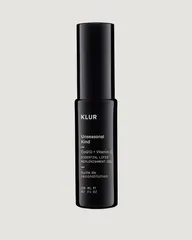
Every application provides an essential lipid-rich environment, for optimal skin nourishment, to help slow skin degradation by preserving and replenishing its existing vitality without having to be used daily for maximum effect.
Source: Klur
This product can help soften the skin and reduce its moisture loss with emollients and occlusives: simmondsia chinensis seed oil, squalane.
Keep in mind that this product does not contain effective ingredients to attract water to the upper layer of the skin. This is why an additional product with humectants like glycerin or hyaluronic acid can be helpful (apply it before this product for the best results).
An emollient that does not leave a greasy finish
Helps soften the upper layer of the skin
A plant oil that helps soften the upper layer of the skin and can support skin's barrier function due to its high content of linoleic acid. It also has anti-microbial properties
A great emollient. Contains vitamin E (tocopherol) which may give it some anti-oxidant properties. Can contain volatile compounds and can be irritating
Softens the upper layer of skin and helps restore the healthy skin barrier. Has shown to help calm down inflammation in skin. It is a stable oil, meaning that it retains its properties even when exposed to air.
An oil naturally present in skin. Works as an emollient to soften the skin and form a protective layer on its surface without a greasy feeling.
Coenzyme Q10. It helps neutralize free radicals in skin, improves skin hydration and might be helpful agains fine lines and wrinkles. It can be an allergen
A plant oil that can help neutralize free radicals, soften the upper layer of the skin, and support skin's barrier function
A great emollient that can also have anti-oxidant properties
Helps soften the upper layer of the skin and can support skin barrier function
This oil's cmposition is closest to rapeseed oil. It is a very stable oil and serves as an emoillient
A good emollient. Contains various ingredients including vitamins and fatty acids that could work in the skin to neutralize free radicals and minimize moisture loss - if enough of these compounds is able to penetrate the skin in an active form.
An emollient that helps soften the skin and could be helpful in repairing its barrier function
Pure form of vitamin E. Can help moisturise and protect the skin from free radicals. Often used to help stabilise other ingredients or the formula itself
How honest is this product?
| Promise | Can it deliver? |
|---|---|
| Moisturizing |
Total Promises Fulfilled score: 75/100.
We receive a small commission for purchases made through these links at no cost for you. Thank you for your support! Learn more
Potential irritants
Comedogenic ingredients
No comedogenic ingredients detected
User reviews (0)
Averages from community submissions.
No reviews yet for this product.
Be the first to share your experience!
Tried this product?
Help capture what the ingredient list can't—texture, finish, pilling, scent, and more. Answer what you can, skip the rest.
Takes ~30 seconds.
Reviews are shown in aggregate. No personal details.
| Product | Similarity | Price | Irritancy |
|---|---|---|---|
 KLUR Unseasonal Kind ™ | Current | $90.00 | |
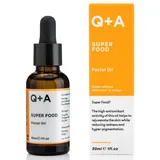 Q+A Super Food Facial Oil | 51% | ≈ $7.43 |
Key Actives
Helps soften the upper layer of the skin and can support skin barrier function
A plant oil that can help neutralize free radicals, soften the upper layer of the skin, and support skin's barrier function
This oil's cmposition is closest to rapeseed oil. It is a very stable oil and serves as an emoillient
Coenzyme Q10. It helps neutralize free radicals in skin, improves skin hydration and might be helpful agains fine lines and wrinkles. It can be an allergen
An emollient that does not leave a greasy finish
A great emollient. Contains vitamin E (tocopherol) which may give it some anti-oxidant properties. Can contain volatile compounds and can be irritating
A good emollient. Contains various ingredients including vitamins and fatty acids that could work in the skin to neutralize free radicals and minimize moisture loss - if enough of these compounds is able to penetrate the skin in an active form.
A great emollient that can also have anti-oxidant properties
An oil naturally present in skin. Works as an emollient to soften the skin and form a protective layer on its surface without a greasy feeling.
Softens the upper layer of skin and helps restore the healthy skin barrier. Has shown to help calm down inflammation in skin. It is a stable oil, meaning that it retains its properties even when exposed to air.
A plant oil that might be able to help neutralize free radicals in skin
Helps soften the upper layer of the skin
A plant oil that helps soften the upper layer of the skin and can support skin's barrier function due to its high content of linoleic acid. It also has anti-microbial properties
An emollient that helps soften the skin and could be helpful in repairing its barrier function
Potential irritants
A good emollient. Contains various ingredients including vitamins and fatty acids that could work in the skin to neutralize free radicals and minimize moisture loss - if enough of these compounds is able to penetrate the skin in an active form.
A berry extract. Might have some anti-oxidant properties
An essential oil. Can be irritating. Can become an allergen with oxidation
Softens the upper layer of skin and helps restore the healthy skin barrier. Has shown to help calm down inflammation in skin. It is a stable oil, meaning that it retains its properties even when exposed to air.
A plant oil that might be able to help neutralize free radicals in skin
An emollient that does not leave a greasy finish
A great emollient. Contains vitamin E (tocopherol) which may give it some anti-oxidant properties. Can contain volatile compounds and can be irritating
Helps soften the upper layer of the skin and can support skin barrier function
A great emollient that can also have anti-oxidant properties
A plant oil that can help neutralize free radicals, soften the upper layer of the skin, and support skin's barrier function
A plant oil that helps soften the upper layer of the skin and can support skin's barrier function due to its high content of linoleic acid. It also has anti-microbial properties
An emollient that helps soften the skin and could be helpful in repairing its barrier function
A more stable but less bio-available form of vitamin E compared to Tocopherol. Might help moisturize and protect the skin from free radicals, but mostly used in low concentrations to stabilize other ingredients.
Being a lipid soluble form of vitamin C, it is more stable than ascorbic acid, but still degrades quickly and needs to be stabilized in a formulation with another ingredient. It is claimed to penetrate skin better than pure vitamin C and have the the similar benefits, but solid studies of its effectiveness are lacking. Is likely to require a higher concentration in a product than pure vitamin C to be effective. It might be able to help reduce pore clogging.
Comedogenic ingredients
We couldn't find any comedogenic ingredients in this product
All ingredients
An oil naturally present in skin. Works as an emollient to soften the skin and form a protective layer on its surface without a greasy feeling.
Softens the upper layer of skin and helps restore the healthy skin barrier. Has shown to help calm down inflammation in skin. It is a stable oil, meaning that it retains its properties even when exposed to air.
A plant oil that might be able to help neutralize free radicals in skin
An emollient that does not leave a greasy finish
A great emollient. Contains vitamin E (tocopherol) which may give it some anti-oxidant properties. Can contain volatile compounds and can be irritating
A good emollient. Contains various ingredients including vitamins and fatty acids that could work in the skin to neutralize free radicals and minimize moisture loss - if enough of these compounds is able to penetrate the skin in an active form.
Helps soften the upper layer of the skin and can support skin barrier function
A great emollient that can also have anti-oxidant properties
A plant oil that might help neutralize free radicals and have an anti-bacterial effect
Carrot extract. Might have anti-oxidant properties and be used to add orange color
A plant oil that can help neutralize free radicals, soften the upper layer of the skin, and support skin's barrier function
A berry extract. Might have some anti-oxidant properties
This oil's cmposition is closest to rapeseed oil. It is a very stable oil and serves as an emoillient
A plant oil that helps soften the upper layer of the skin and can support skin's barrier function due to its high content of linoleic acid. It also has anti-microbial properties
An emollient that helps soften the skin and could be helpful in repairing its barrier function
A more stable but less bio-available form of vitamin E compared to Tocopherol. Might help moisturize and protect the skin from free radicals, but mostly used in low concentrations to stabilize other ingredients.
Pure form of vitamin E. Can help moisturise and protect the skin from free radicals. Often used to help stabilise other ingredients or the formula itself
Coenzyme Q10. It helps neutralize free radicals in skin, improves skin hydration and might be helpful agains fine lines and wrinkles. It can be an allergen
An essential oil. Can be irritating. Can become an allergen with oxidation
Pure form of vitamin E. Can help moisturise and protect the skin from free radicals. Often used to help stabilise other ingredients or the formula itself
Being a lipid soluble form of vitamin C, it is more stable than ascorbic acid, but still degrades quickly and needs to be stabilized in a formulation with another ingredient. It is claimed to penetrate skin better than pure vitamin C and have the the similar benefits, but solid studies of its effectiveness are lacking. Is likely to require a higher concentration in a product than pure vitamin C to be effective. It might be able to help reduce pore clogging.
Ingredient list view
Squalane, Simmondsia chinensis seed oil, Rubus idaeus seed oil, Camellia oleifera seed oil, Rosa canina fruit oil, Rosa canina seed, Hippophae rhamnoides oil, Hippophae rhamnoides kernel extract, Oenothera biennis oil, Oenothera biennis extract, Vitis vinifera seed oil, Vitis vinifera seed, Daucus carota sativa seed oil, Daucus carota sativa root extract, Fragaria ananassa seed oil, Water, Vaccinium macrocarpon seed oil, Vaccinium macrocarpon fruit extract, Limnanthes alba seed oil, Opuntia ficus-indica seed oil, Opuntia ficus-indica extract, Persea gratissima oil, Tocopheryl acetate, Tocopherol, Ubiquinone, Pelargonium graveolens flower oil, Geranium maculatum oil, Tocopherol, Tetrahexyldecyl ascorbate
- New Claims for Wild Carrot (Daucus carota subsp. carota) Essential Oil
- Wound‐healing Properties of the Oils of Vitis vinifera and Vaccinium macrocarpon
- BERRY SEEDS: A SOURCE OF SPECIALTY OILS WITH HIGH CONTENT OF BIOACTIVES AND NUTRITIONAL VALUE
- The Antimicrobial and Wound Healing Potential of Opuntia ficus indica L. inermis Extracted Oil from Tunisia
- Allergic contact dermatitis due to Opuntia ficus‐indica var. saboten
- Vitamin E in dermatology
- Vitamin E and Skin Health
- Fragrance Compound Geraniol Forms Contact Allergens on Air Exposure. Identification and Quantification of Oxidation Products and Effect on Skin Sensitization
- Double-blind, half-face study comparing topical vitamin C and vehicle for rejuvenation of photodamage
- Application of tetra-isopalmitoyl ascorbic acid in cosmetic formulations: Stability studies and in vivo efficacy