Works for:
based on ingredients and %- Cleansing
Can it cause trouble?
- Irritation risk: low
- Comedogenic risk ingredients: 1
Key actives

Works for
Cleansing
What does the product description say?
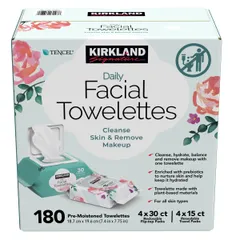
Pamper yourself with this nurturing 3-in-1 product – it cleanses, removes makeup and promotes healthy looking skin with prebiotic ingredients that are infused into the formula.
Source: Costco Wholesale
This product works by removing dirt and oil from the surface of the skin. It uses a combination of mild cleansing agents (decyl glucoside, glyceryl oleate) and should be able to cleanse the skin gently. Still keep in mind that any cleansing can disrupt the skin barrier, and most people do not need to cleanse their skin more than once per day.
Even though this formulation is mild, the following cleansing agents could trigger an irritation or allergy for some people: decyl glucoside, glyceryl oleate
Helps oil and water mix together. Can be irritating
Helps oil and water mix together. Can be irritating
How honest is this product?
| Promise | Can it deliver? |
|---|---|
| Cleansing |
Total Promises Fulfilled score: 100/100.
We receive a small commission for purchases made through these links at no cost for you. Thank you for your support! Learn more
Potential irritants
Comedogenic ingredients
User reviews (0)
Averages from community submissions.
No reviews yet for this product.
Be the first to share your experience!
Tried this product?
Help capture what the ingredient list can't—texture, finish, pilling, scent, and more. Answer what you can, skip the rest.
Takes ~30 seconds.
Reviews are shown in aggregate. No personal details.
Key Actives
Helps attract water to the upper layer of the skin and can help improve skin barrier function
Helps attract water to the upper layer of the skin. Is claimed to support the growth of "good" bacteria in skin (as a "prebiotic"), but the research is lacking
An emollient that helps soften the upper layer of the skin. Might have some weak anti-oxidant properties
A plant oil that can help soften the upper layer of the skin. Might be helpful in calming down inflammation in skin
Helps oil and water mix together. Can be irritating
Helps oil and water mix together. Can be irritating
Helps attract water to the upper layer of the skin
An emollient. Found to be as effective as a moisturizer for dry skin as mineral oil. Could be comedogenic
Softens the upper layer of skin and helps restore the healthy skin barrier. Has shown to help calm down inflammation in skin. It is a stable oil, meaning that it retains its properties even when exposed to air.
An emollient that helps soften the skin and could be helpful in repairing its barrier function
Chia seed oil. Helps to soften the upper layer of the skin and might be helpful in repairing skin barrier
Potential irritants
Can work as an exfoliant but is typically used to adjust the product pH
Helps to control the skin's pH level. Maintains the skin's natural film of amino-lactic acids and oils. Helps to preserve products
A more stable but less bio-available form of vitamin E compared to Tocopherol. Might help moisturize and protect the skin from free radicals, but mostly used in low concentrations to stabilize other ingredients.
An emollient that helps soften the skin but is not effective for restoring its barrier function. Might be helpful to calm down inflammation
An emollient that helps soften the upper layer of the skin. Might have some weak anti-oxidant properties
Softens the upper layer of skin and helps restore the healthy skin barrier. Has shown to help calm down inflammation in skin. It is a stable oil, meaning that it retains its properties even when exposed to air.
An emollient that helps soften the skin and could be helpful in repairing its barrier function
A plant oil that helps soften the upper layer of the skin. Is unlikely to be helpful in restoring skin barrier function due to the low content of linoleic acid
Comedogenic ingredients
An emollient. Found to be as effective as a moisturizer for dry skin as mineral oil. Could be comedogenic
All ingredients
Helps soften the upper layer of the skin while creating a non-greasy feel on the skin. Helps to dissolve other ingredients
Helps attract water to the upper layer of the skin. Is claimed to support the growth of "good" bacteria in skin (as a "prebiotic"), but the research is lacking
Can work as an exfoliant but is typically used to adjust the product pH
Helps to control the skin's pH level. Maintains the skin's natural film of amino-lactic acids and oils. Helps to preserve products
A more stable but less bio-available form of vitamin E compared to Tocopherol. Might help moisturize and protect the skin from free radicals, but mostly used in low concentrations to stabilize other ingredients.
Helps attract water to the upper layer of the skin and can help improve skin barrier function
An emollient. Found to be as effective as a moisturizer for dry skin as mineral oil. Could be comedogenic
An emollient that helps soften the skin but is not effective for restoring its barrier function. Might be helpful to calm down inflammation
An emollient that helps soften the upper layer of the skin. Might have some weak anti-oxidant properties
Softens the upper layer of skin and helps restore the healthy skin barrier. Has shown to help calm down inflammation in skin. It is a stable oil, meaning that it retains its properties even when exposed to air.
An emollient that helps soften the skin and could be helpful in repairing its barrier function
A plant oil that can help soften the upper layer of the skin. Might be helpful in calming down inflammation in skin
A plant oil that helps soften the upper layer of the skin. Is unlikely to be helpful in restoring skin barrier function due to the low content of linoleic acid
Chia seed oil. Helps to soften the upper layer of the skin and might be helpful in repairing skin barrier
A preservative. It helps prevent bacterial growth in cosmetic products
Ingredient list view
Water, Dicaprylyl ether, Decyl glucoside, Glyceryl oleate, Inulin, Tetrasodium glutamate diacetate, Citric acid, Sodium citrate, Fructose, Sodium bicarbonate, Tocopheryl acetate, Panthenol, Unknown, Punica granatum seed oil, Cocos nucifera oil, Olea europaea fruit oil, Argania spinosa kernel oil, Simmondsia chinensis seed oil, Persea gratissima oil, Orbignya oleifera seed oil, Moringa oleifera seed oil, Salvia hispanica seed oil, Crambe abyssinica seed oil, Phenoxyethanol, Benzoic acid, Dehydroacetic acid
- Ecofriendly surfactant is allergen of the year
- Contact Sensitization to Emulsifying Agents: An Underrated Issue?
- Probiotics and prebiotics potential for the care of skin, female urogenital tract, and respiratory tract
- Skin moisturizing effects of panthenol-based formulations
- Safety Assessment of Panthenol, Pantothenic Acid, and Derivatives as Used in Cosmetics
- Use of “natural” oils for moisturization: Review of olive, coconut, and sunflower seed oil
- Natural vegetable fats in the prevention of irritant contact dermatitis
- Anti-Inflammatory Activity of Babassu Oil and Development of a Microemulsion System for Topical Delivery
- Moringa oleifera seed oil: Composition, nutritional aspects and health attributes
- Moringa oleifera Seeds and Oil: Characteristics and Uses for Human Health
- 4 Final Report on the Safety Assessment of Sodium Dehydroacetate and Dehydroacetic Acid