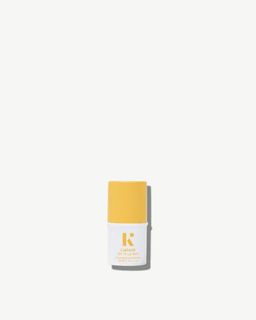
Kinfield Liplock SPF 15 Lip Balm
Works for
0 of 1 advertised claim delivered
Sun protectionSPF 15 · 1 UV filter · Broad spectrumWeak protectionSPF under 30
This product offers broad spectrum sun protection, but it is weak. We recommend to use a broad spectrum sunscreen with at least SPF 30.
This product can be considered "reef safe" because it does not contain the UV filters (oxybenzone and octinoxate) that can be harmful to coral reefs when present in the water in high concentrations.
Anti-oxidationNot advertised by the brand · 6 ingredients credited for this claimModerate support
This product contains antioxidants (rubus idaeus seed oil, squalene) that might be able to help neutralize free radicals in skin to lessen the damage it gets from the UV light (sun). There is not enough evidence to confirm their effectiveness in skin though.
MoisturizingNot advertised by the brand · 9 ingredients credited for this claimGood support
This product can help soften the skin and reduce its moisture loss with emollients and occlusives: butyrospermum parkii butter, cocos nucifera oil.
Keep in mind that this product does not contain effective ingredients to attract water to the upper layer of the skin. This is why an additional product with humectants like glycerin or hyaluronic acid can be helpful (apply it before this product for the best results).
Can it cause trouble?
Irritancy1 strong irritant: ParfumMedium risk
Comedogenic4 ingredients rated 2 or more on the 0–5 pore-clogging scale4 flagged
User reviews
Be the first — your take helps the next person decide.
Ingredients
Filter by role to see what each ingredient is doing.
Sunflower seed oil glyceride~26–39%
Candelilla cera~6.7–10%
- Irritation risk
- Low
Zinc oxide10.5%
- Irritation risk
- Low
A broad spectrum sunblock (protects from both UVA and UVB rays). Is suitable for most sensitive skins. In small concentrations, can be used as a colorant
More about Zinc oxideOryza sativa bran wax~4.9–7.3%
- Irritation risk
- Low
Cocos nucifera oil~3.8–5.7%
- Irritation risk
- Low
- Comedogenicity
- 3/5
An emollient. Found to be as effective as a moisturizer for dry skin as mineral oil. Could be comedogenic
More about Cocos nucifera oilParfum~2.2–3.4%
- Irritation risk
- High
An aromatic blend of unspecified and possibly irritating ingredients
More about ParfumRubus idaeus seed oil~2.4–3.6%
- Irritation risk
- Medium
A plant oil that might be able to help neutralize free radicals in skin
More about Rubus idaeus seed oilButyrospermum parkii butter~2.1–3.1%
- Irritation risk
- Low
- Comedogenicity
- 3/5
A great moisturising ingredient that softens the skin and reduces water loss from its upper layer. It also can be helpful in protecting skin from free radicals
More about Butyrospermum parkii butterPolyhydroxystearic acid~1.4–2.1%
- Irritation risk
- Medium
Used to create a thicker product consistency and stabilize the formulation
More about Polyhydroxystearic acidTheobroma cacao seed butter~1.1–1.7%
- Irritation risk
- Low
- Comedogenicity
- 3/5
Helps soften the upper layer of the skin and can be helpful in restoring the skin barrier function. Might have some anti-oxidant effect
More about Theobroma cacao seed butterCalophyllum inophyllum seed oil~0.8–1.25%
- Irritation risk
- Low
Simmondsia chinensis seed oil~0.55–1.35%
- Irritation risk
- Medium
Softens the upper layer of skin and helps restore the healthy skin barrier. Has shown to help calm down inflammation in skin. It is a stable oil, meaning that it retains its properties even when exposed to air.
More about Simmondsia chinensis seed oilAmmonium glycyrrhizate~0.45–1%
- Irritation risk
- Low
Beta-sitosterol~0.45–1%
- Irritation risk
- Low
A phytosterol that can support skin's barrier function and help the skin stay hydrated
More about Beta-sitosterolSqualene~0.35–0.85%
- Irritation risk
- Low
- Comedogenicity
- 2/5
An oil that is naturally part of skin sebum that helps to soften its upper layer, reduce water loss and neutralize free radicals. It might be comedogenic. Avoid applying large concentrations (or pure oil) before sun exposure as oxidized squalene can clog pores and lead to skin irritation. Today squalene is mostly derived from vegetable oils or synthetized by yeast
More about SqualeneHippophae rhamnoides fruit oil~0.15–0.5%
- Irritation risk
- High
A plant oil that might somewhat help to neutralize free radicals. It could be irritating
More about Hippophae rhamnoides fruit oilMangifera indica seed butter~0.1–0.35%
- Irritation risk
- Low
Helps to soften the upper layer of the skin and might have some anti-oxidant effect
More about Mangifera indica seed butterSqualane~0.15–0.55%
- Irritation risk
- Low
An oil naturally present in skin. Works as an emollient to soften the skin and form a protective layer on its surface without a greasy feeling.
More about SqualaneCitric acid~0.05–0.2%
- Irritation risk
- Medium
Can work as an exfoliant but is typically used to adjust the product pH
More about Citric acidIngredient list view
Unknown, Sunflower seed oil glyceride, Candelilla cera, Zinc oxide, Oryza sativa bran wax, Cocos nucifera oil, Unknown, Parfum, Rubus idaeus seed oil, Butyrospermum parkii butter, Polyhydroxystearic acid, Theobroma cacao seed butter, Calophyllum inophyllum seed oil, Simmondsia chinensis seed oil, Ammonium glycyrrhizate, Beta-sitosterol, Squalene, Hippophae rhamnoides fruit oil, Mangifera indica seed butter, Squalane, Citric acid
Compare prices
Retailers ranked by price — lowest first.

Product summary
"Kinfield - Liplock SPF 15 Lip Balm" "is a broad spectrum lip sunscreen meaning that it protects both from UVB rays (" burning "- they cause sunburn) and UVA rays (" aging "- they don't cause sunburn but lead to premature aging and pigmentation issues). However, this lip sunscreen does not offer enough sun protection. We recommend to use a sunscreen with at least SPF 30 daily.
Sunscreen filters
This lip sunscreen is a mineral sunscreen. It uses zinc oxide for sun protection. Zinc oxide almost never irritates the skin or stings eyes, but it can leave a white cast.
Irritation risk
There are some common irritants in this product, including ingredients that do not have benefits for the skin. We assess the overall irritancy of it to be medium. For a detailed overview of all potential irritants: click here
You can see the detailed formula review with the breakdown of all actives in the product and the full ingredient list with estimated concentrations in the tables below.
Price
The product retails from 16.00$ up to 18.00$ in the United States.
For a detailed price comparison: click here.
Sources cited in this review
Every concentration estimate and effectiveness label is anchored to one of these 14 studies and safety reviews.
- 1A review of inorganic UV filters zinc oxide and titanium dioxideonlinelibrary.wiley.com
- 2
- 3
- 4
- 5
- 6

Affiliate links · As an Amazon Associate, WIMJ earns from qualifying purchases.