
Works for:
based on ingredients and %- Anti-aging
- Moisturizing
- Exfoliation
- Anti-blemish
Doesn't work for:
based on ingredients and %- Evens skin tone
Can it cause trouble?
- Irritation risk: high
- Comedogenic risk ingredients: 5
Key actives

Product Summary
"Kiehl's - Brighten Up & Glow" is effective for: Exfoliation, Anti-aging, Anti-blemish and Moisturizing
Ingredient callouts
- Salicylic acid (1.25% - 2.50%). This is an oil-soluble exfoliating acid. Because of this property, it can work inside pores and help reduce the congestion. It has an anti-inflammatory effect and is used to treat acne. Because it is a quite strong exfoliator, be careful with using this product too often: it could result in over-exfoliation.
- Adenosine 0.30% - 0.60%. It is a chemical present inside our skin cells. A clinical trial confirmed that topical application of Adenosine in a low concentration can reduce dynamic wrinkles (these are the wrinkles that appear with age in a places where our mimic is the most active, for example, in the corners of the eyes or on the forehead).
- Humectants (glycerin 0.40% - 0.60%, glycerin 0.35% - 0.60% and glycerin 2.60% - 3.10%). These ingredients help attract water to the upper layer of the skin and improve the skin hydration.
Anti-aging
What does the product description say?
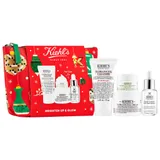
What Else You Need to Know Light up the room with this set of hydrating healthy-skin essentials, including full sizes of Ultra Facial Cream, Powerful-Strength Line-Reducing & Dark Circle-Diminishing Vitamin C Eye Serum, and Clearly Corrective Dark-Spot Corrector This Set Contains , 2.5 oz/ 75 m L Ultra Facial Cleanser , 1.0 oz/ 30 m L Clearly Corrective Dark-Spot Corrector , 1.7 oz/ 50 m L Ultra Facial Cream , 0.5 oz/ 15 m L Powerful-Strength Line-Reducing & Dark Circle-Diminishing Vitamin C Eye Serum Clinical Results In a 12-week clinical test on 104 subjects after using one bottle of Clearly Corrective Dark-Spot Corrector , 97% saw a visible reduction in hyperpigmentation , 97% saw a visible reduction in dark spots , 87% saw a visible reduction in post-acne marks
Source: Sephora CA
This product can help reduce and prevent fine lines and wrinkles, improve skin elasticity and firmness because it contains adenosine.
Keep in mind that it typically takes at least 6 weeks to notice any results because the changes that are needed to improve fine lines and elasticity happen in the deeper layers of the skin. No topical anti-aging product can “erase” wrinkles or fully reverse signs of aging.
Might help improve cell turnover and reduce inflammation in skin. One study shows that the ingredients might be able to help reduce dynamic wrinkles (for example, in the corners of the eyes or on the forehead)
A vitamin C derivative that is more stable but less potent than pure form of vitamin C. Has a potential to boost collagen production, nutralise free radicals and reduce hyperpigmentation, but the required concentration is likely to be much higher than for the pure form of vitamin C, limiting the ingredient's effectiveness in products
Pure form of vitamin E. Can help moisturise and protect the skin from free radicals. Often used to help stabilise other ingredients or the formula itself
A vitamin C derivative that is more stable but less potent than pure form of vitamin C. Can help neutralize free radicals and help reduce hyperpigmentation, but the required concentration is likely to be much higher than for the pure form of vitamin C, limiting the ingredient's effectiveness in products
Anti-blemish
This product can help reduce breakouts and clogged pores because it contains the following ingredient: salicylic acid. This ingredient is used for treating acne and can have a noticeable effect.
Used for skin exfoliation. It has an anti-inflammatory and anti-bacterial effect, helps to unclog pores, prevent blemishes and speed up healing of the existing ones. Sometimes referred to as a BHA (beta-hydroxy acid)
Exfoliation
This product can help exfoliate the skin. In other words, it helps break down the bonds between dead cells on the surface of the skin and speed up the skin turnover. Skin often appears softer and brighter after exfoliation, but overdoing it can result in disrupted skin barrier. The following ingredient is doing the exfoliating job in this product: salicylic acid.
Used for skin exfoliation. It has an anti-inflammatory and anti-bacterial effect, helps to unclog pores, prevent blemishes and speed up healing of the existing ones. Sometimes referred to as a BHA (beta-hydroxy acid)
Moisturizing
What does the product description say?
, Fragmented Hyaluronic Acid Known to help smooth and plump.
Source: Sephora CA
This product can help improve hydration of the skin with the two types of ingredients.
The first type is called “humectants”:
these ingredients help attract water.
When humectants are on the surface of the skin, they “pull in” the moisture from the outside environment, or from
within deeper layers of the skin. The following ingredients in this product do the job:
glycerin, peg/ppg/polybutylene glycol-8/5/3 glycerin.
This product also contains ingredients called “occlusives”. They help reduce the speed with which our skin loses moisture to the outside environment. These ingredients also help soften the upper layer of the skin, so it feels less tight and nicer to the touch. The following ingredients in this product do the job: squalane, glycine soja oil.
The following ingredients in this product are especially good for supporting the skin barrier and helping with the hydration level: hydroxypalmitoyl sphinganine
An oil naturally present in skin. Works as an emollient to soften the skin and form a protective layer on its surface without a greasy feeling.
Helps soften the upper layer of the skin
One of the best moisturizing ingredients. Naturally present in skin. It attracts water to the upper layer of the skin working as a humectant
Helps soften the upper layer of the skin and might have some anti-oxidant properties
A good emollient that helps soften the skin and helps repair its barrier function. It can clog pores if used in high concentrations.
A type of lipid similar to ceramides naturally present in skin. Helps to soften the upper layer of the skin and supports the skin barrier function to keep it hydrated. Can help to prevent inflammation in skin
A sugar-derived compound that helps to attract water to the upper layer of the skin and might be able to stimulate synthesis of skin's own moisturizing factors, but solid research is lacking. It could be irritating
A non-drying alcohol that works to soften the skin and stabilize product formulations helping oil and water mix together
Might help improve cell turnover and reduce inflammation in skin. One study shows that the ingredients might be able to help reduce dynamic wrinkles (for example, in the corners of the eyes or on the forehead)
An emollient that helps soften the skin but is not effective for restoring its barrier function. Might be helpful to calm down inflammation
Helps create a nice product texture and attract water to the upper layer of the skin
A type of silicone that helps soften the upper layer of the skin and create a nice product texture
Helps oil and water mix together and can enhance the penetration of other ingredients into the skin. It can be irritating
An emollient that softens the skin and forms a protective layer on its surface. Helps water and oil mix together
An emollient that is naturally present in skin and helps soften it
Used to preserve products, dissolve other ingredients and create a nice product texture
Non-drying alcohol that helps water and oil mix together. Also serves as an emollient
Used to create a nice product texture and help delivery of other ingredients. Might be somewhat helpful in attracting water to the upper layer of the skin
An emollient that helps soften the skin and could be helpful in repairing its barrier function
An emollient that helps soften the skin
An emollient. Is not recommended for acne-prone skin as it can be comedogenic
Helps oil and water mix together and works as an emollient
Pure form of vitamin E. Can help moisturise and protect the skin from free radicals. Often used to help stabilise other ingredients or the formula itself
A silicone that serves as an emollient. Helps create a nice non-greasy feels
Used to create a nice product consistency while softening the upper layer of the skin
Evens skin tone
What does the product description say?
What it is A collection including three full sizes of Kiehl's bestselling brightening and hydration essentials to correct the look of dark spots and nourish skin.
Source: Sephora CA
This product might help improve the skin tone through exfoliation. In other words, it helps to speed up the shedding of cells from the upper layer of the skin, and this might help reduce hyperpigmentation.
Used for skin exfoliation. It has an anti-inflammatory and anti-bacterial effect, helps to unclog pores, prevent blemishes and speed up healing of the existing ones. Sometimes referred to as a BHA (beta-hydroxy acid)
A vitamin C derivative that is more stable but less potent than pure form of vitamin C. Can help neutralize free radicals and help reduce hyperpigmentation, but the required concentration is likely to be much higher than for the pure form of vitamin C, limiting the ingredient's effectiveness in products
A vitamin C derivative that is more stable but less potent than pure form of vitamin C. Has a potential to boost collagen production, nutralise free radicals and reduce hyperpigmentation, but the required concentration is likely to be much higher than for the pure form of vitamin C, limiting the ingredient's effectiveness in products
How honest is this product?
| Promise | Can it deliver? |
|---|---|
| Anti-aging | |
| Moisturizing | |
| Evens skin tone |
Total Promises Fulfilled score: 83/100.
Potential irritants
Comedogenic ingredients
User reviews (0)
Averages from community submissions.
No reviews yet for this product.
Be the first to share your experience!
Tried this product?
Help capture what the ingredient list can't—texture, finish, pilling, scent, and more. Answer what you can, skip the rest.
Takes ~30 seconds.
Reviews are shown in aggregate. No personal details.
| Product | Similarity | Price | Irritancy |
|---|---|---|---|
 Kiehl's Brighten Up & Glow | Current | - | |
innisfree Gentle Retinol Salicylic Acne Serum | 71% | $34.00 | |
 skinmade Azelaic Acid + Salicylic Acid serum | 70% | - | |
OXY Total care vitamin c serum | 70% | $5.49 | |
 NUDESTIX Nudeskin Blemish Clarifying Gel Moisturizer | 69% | $24.00 | |
 SCINIC Hyaluronic Acid Soothing Stick | 69% | $18.40 |
Key Actives
Used for skin exfoliation. It has an anti-inflammatory and anti-bacterial effect, helps to unclog pores, prevent blemishes and speed up healing of the existing ones. Sometimes referred to as a BHA (beta-hydroxy acid)
Used for skin exfoliation. It has an anti-inflammatory and anti-bacterial effect, helps to unclog pores, prevent blemishes and speed up healing of the existing ones. Sometimes referred to as a BHA (beta-hydroxy acid)
Used for skin exfoliation. It has an anti-inflammatory and anti-bacterial effect, helps to unclog pores, prevent blemishes and speed up healing of the existing ones. Sometimes referred to as a BHA (beta-hydroxy acid)
Pure form of vitamin E. Can help moisturise and protect the skin from free radicals. Often used to help stabilise other ingredients or the formula itself
Pure form of vitamin E. Can help moisturise and protect the skin from free radicals. Often used to help stabilise other ingredients or the formula itself
Pure form of vitamin E. Can help moisturise and protect the skin from free radicals. Often used to help stabilise other ingredients or the formula itself
A vitamin C derivative that is more stable but less potent than pure form of vitamin C. Has a potential to boost collagen production, nutralise free radicals and reduce hyperpigmentation, but the required concentration is likely to be much higher than for the pure form of vitamin C, limiting the ingredient's effectiveness in products
A vitamin C derivative that is more stable but less potent than pure form of vitamin C. Can help neutralize free radicals and help reduce hyperpigmentation, but the required concentration is likely to be much higher than for the pure form of vitamin C, limiting the ingredient's effectiveness in products
Might help improve cell turnover and reduce inflammation in skin. One study shows that the ingredients might be able to help reduce dynamic wrinkles (for example, in the corners of the eyes or on the forehead)
A type of lipid similar to ceramides naturally present in skin. Helps to soften the upper layer of the skin and supports the skin barrier function to keep it hydrated. Can help to prevent inflammation in skin
An emollient that helps soften the skin
An emollient that helps soften the skin
One of the best moisturizing ingredients. Naturally present in skin. It attracts water to the upper layer of the skin working as a humectant
An oil naturally present in skin. Works as an emollient to soften the skin and form a protective layer on its surface without a greasy feeling.
Helps soften the upper layer of the skin
An emollient that helps soften the skin and could be helpful in repairing its barrier function
One of the best moisturizing ingredients. Naturally present in skin. It attracts water to the upper layer of the skin working as a humectant
A sugar-derived compound that helps to attract water to the upper layer of the skin and might be able to stimulate synthesis of skin's own moisturizing factors, but solid research is lacking. It could be irritating
One of the best moisturizing ingredients. Naturally present in skin. It attracts water to the upper layer of the skin working as a humectant
An oil naturally present in skin. Works as an emollient to soften the skin and form a protective layer on its surface without a greasy feeling.
An emollient. Is not recommended for acne-prone skin as it can be comedogenic
An emollient that helps soften the skin and could be helpful in repairing its barrier function
Helps soften the upper layer of the skin and might have some anti-oxidant properties
Helps soften the upper layer of the skin
A good emollient that helps soften the skin and helps repair its barrier function. It can clog pores if used in high concentrations.
Potential irritants
Used for skin exfoliation. It has an anti-inflammatory and anti-bacterial effect, helps to unclog pores, prevent blemishes and speed up healing of the existing ones. Sometimes referred to as a BHA (beta-hydroxy acid)
Works as a foaming cleansing agent
Helps water and oil mix together. Used as a cleansing ingredient. Could be an allergen
Helps oil and water mix together and can enhance the penetration of other ingredients into the skin. It can be irritating
Produces temporary toning effect. Can help dissolve other ingredients or preserve products
A sugar-derived compound that helps to attract water to the upper layer of the skin and might be able to stimulate synthesis of skin's own moisturizing factors, but solid research is lacking. It could be irritating
A vitamin C derivative that is more stable but less potent than pure form of vitamin C. Can help neutralize free radicals and help reduce hyperpigmentation, but the required concentration is likely to be much higher than for the pure form of vitamin C, limiting the ingredient's effectiveness in products
Used for skin exfoliation. It has an anti-inflammatory and anti-bacterial effect, helps to unclog pores, prevent blemishes and speed up healing of the existing ones. Sometimes referred to as a BHA (beta-hydroxy acid)
An essential oil. Potential allergen and can be irritating. It has some anti-bacterial properties
Used for skin exfoliation. It has an anti-inflammatory and anti-bacterial effect, helps to unclog pores, prevent blemishes and speed up healing of the existing ones. Sometimes referred to as a BHA (beta-hydroxy acid)
Helps oil and water mix together and works as a cleansing agent
Used to stabilize product formulation, help create an even product layer over skin (for example, in sunscreen) and create a thicker product consistency
Used to adjust pH of the product and can help improve the product's smell
Used to preserve products, dissolve other ingredients and create a nice product texture
Helps oils and water mix together and works as a cleansing agent
Can work as an exfoliant but is typically used to adjust the product pH
A vitamin C derivative that is more stable but less potent than pure form of vitamin C. Has a potential to boost collagen production, nutralise free radicals and reduce hyperpigmentation, but the required concentration is likely to be much higher than for the pure form of vitamin C, limiting the ingredient's effectiveness in products
An emollient that helps soften the skin and could be helpful in repairing its barrier function
Can work as an exfoliant but is typically used to adjust the product pH
Helps to control the skin's pH level. Maintains the skin's natural film of amino-lactic acids and oils. Helps to preserve products
A more stable but less bio-available form of vitamin E compared to Tocopherol. Might help moisturize and protect the skin from free radicals, but mostly used in low concentrations to stabilize other ingredients.
An emollient. Is not recommended for acne-prone skin as it can be comedogenic
An emollient that helps soften the skin and could be helpful in repairing its barrier function
An emollient that helps soften the skin but is not effective for restoring its barrier function. Might be helpful to calm down inflammation
Maintains the texture of skincare products. Allows the product to spread evenly. Helps oil and water mix together
A good emollient that helps soften the skin and helps repair its barrier function. It can clog pores if used in high concentrations.
Helps oil and water mix together. Could be comedogenic
Can work as an exfoliant but is typically used to adjust the product pH
Comedogenic ingredients
Works as a foaming cleansing agent
An emollient. Is not recommended for acne-prone skin as it can be comedogenic
A good emollient that helps soften the skin and helps repair its barrier function. It can clog pores if used in high concentrations.
Helps oil and water mix together. Could be comedogenic
All ingredients
Used for skin exfoliation. It has an anti-inflammatory and anti-bacterial effect, helps to unclog pores, prevent blemishes and speed up healing of the existing ones. Sometimes referred to as a BHA (beta-hydroxy acid)
Works as a foaming cleansing agent
One of the best moisturizing ingredients. Naturally present in skin. It attracts water to the upper layer of the skin working as a humectant
Helps water and oil mix together. Used as a cleansing ingredient. Could be an allergen
Helps oil and water mix together and works as a cleansing agent
Used to stabilize product formulation, help create an even product layer over skin (for example, in sunscreen) and create a thicker product consistency
Used to adjust pH of the product and can help improve the product's smell
Used to stabilize mixtures of oil and water, and create thicker, gel-like product textures
Used to preserve products, dissolve other ingredients and create a nice product texture
A preservative. It helps prevent bacterial growth in cosmetic products
Helps oils and water mix together and works as a cleansing agent
Can work as an exfoliant but is typically used to adjust the product pH
Non-drying alcohol that helps water and oil mix together. Also serves as an emollient
An oil naturally present in skin. Works as an emollient to soften the skin and form a protective layer on its surface without a greasy feeling.
Pure form of vitamin E. Can help moisturise and protect the skin from free radicals. Often used to help stabilise other ingredients or the formula itself
A vitamin C derivative that is more stable but less potent than pure form of vitamin C. Has a potential to boost collagen production, nutralise free radicals and reduce hyperpigmentation, but the required concentration is likely to be much higher than for the pure form of vitamin C, limiting the ingredient's effectiveness in products
An emollient that helps soften the skin and could be helpful in repairing its barrier function
Helps oil and water mix together and can enhance the penetration of other ingredients into the skin. It can be irritating
One of the best moisturizing ingredients. Naturally present in skin. It attracts water to the upper layer of the skin working as a humectant
Produces temporary toning effect. Can help dissolve other ingredients or preserve products
Helps create a nice product texture and attract water to the upper layer of the skin
A sugar-derived compound that helps to attract water to the upper layer of the skin and might be able to stimulate synthesis of skin's own moisturizing factors, but solid research is lacking. It could be irritating
A vitamin C derivative that is more stable but less potent than pure form of vitamin C. Can help neutralize free radicals and help reduce hyperpigmentation, but the required concentration is likely to be much higher than for the pure form of vitamin C, limiting the ingredient's effectiveness in products
A preservative. It helps prevent bacterial growth in cosmetic products
Used for skin exfoliation. It has an anti-inflammatory and anti-bacterial effect, helps to unclog pores, prevent blemishes and speed up healing of the existing ones. Sometimes referred to as a BHA (beta-hydroxy acid)
Used to thicken product formulations and create gel-like textures
Can work as an exfoliant but is typically used to adjust the product pH
Helps to control the skin's pH level. Maintains the skin's natural film of amino-lactic acids and oils. Helps to preserve products
A more stable but less bio-available form of vitamin E compared to Tocopherol. Might help moisturize and protect the skin from free radicals, but mostly used in low concentrations to stabilize other ingredients.
An essential oil. Potential allergen and can be irritating. It has some anti-bacterial properties
Might help improve cell turnover and reduce inflammation in skin. One study shows that the ingredients might be able to help reduce dynamic wrinkles (for example, in the corners of the eyes or on the forehead)
Used to create a nice product texture and help delivery of other ingredients. Might be somewhat helpful in attracting water to the upper layer of the skin
Pure form of vitamin E. Can help moisturise and protect the skin from free radicals. Often used to help stabilise other ingredients or the formula itself
One of the best moisturizing ingredients. Naturally present in skin. It attracts water to the upper layer of the skin working as a humectant
A silicone that serves as an emollient. Helps create a nice non-greasy feels
An oil naturally present in skin. Works as an emollient to soften the skin and form a protective layer on its surface without a greasy feeling.
A type of silicone that helps soften the upper layer of the skin and create a nice product texture
An emollient. Is not recommended for acne-prone skin as it can be comedogenic
Used to create a nice product consistency while softening the upper layer of the skin
A preservative. It helps prevent bacterial growth in cosmetic products
An emollient that helps soften the skin and could be helpful in repairing its barrier function
An emollient that softens the skin and forms a protective layer on its surface. Helps water and oil mix together
A non-drying alcohol that works to soften the skin and stabilize product formulations helping oil and water mix together
Helps soften the upper layer of the skin and might have some anti-oxidant properties
An emollient that helps soften the skin but is not effective for restoring its barrier function. Might be helpful to calm down inflammation
An emollient that is naturally present in skin and helps soften it
Maintains the texture of skincare products. Allows the product to spread evenly. Helps oil and water mix together
Helps create a thicker or gel-like product texture. It is not a surfactant but can be used in gentle cleansing formulations
Pure form of vitamin E. Can help moisturise and protect the skin from free radicals. Often used to help stabilise other ingredients or the formula itself
A good emollient that helps soften the skin and helps repair its barrier function. It can clog pores if used in high concentrations.
Helps oil and water mix together. Could be comedogenic
A type of lipid similar to ceramides naturally present in skin. Helps to soften the upper layer of the skin and supports the skin barrier function to keep it hydrated. Can help to prevent inflammation in skin
Used for skin exfoliation. It has an anti-inflammatory and anti-bacterial effect, helps to unclog pores, prevent blemishes and speed up healing of the existing ones. Sometimes referred to as a BHA (beta-hydroxy acid)
Can work as an exfoliant but is typically used to adjust the product pH
Ingredient list view
Salicylic acid, Water, Sodium laureth sulfate, Decyl glucoside, Glycerin, Cocamidopropyl betaine, Disodium cocoamphodiacetate, Acrylates copolymer, Lauryl glucoside, Peg-200 hydrogenated glyceryl palmate, Triethanolamine, Sodium chloride, Pentylene glycol, Phenoxyethanol, Peg-7 glyceryl cocoate, Sodium hydroxide, Citric acid, Hexylene glycol, Behenyl alcohol, Distearyl ether, Sodium benzoate, Laureth-2, Squalane, Prunus amygdalus dulcis seed, Prunus armeniaca kernel oil, Tocopherol, Ascorbyl glucoside, Persea gratissima oil, Water, Propylene glycol, Glycerin, Alcohol denat., Peg/ppg/polybutylene glycol-8/5/3 glycerin, Hydroxypropyl tetrahydropyrantriol, 3-o-ethyl ascorbic acid, Ppg-6-decyltetradeceth-30, Phenoxyethanol, Salicylic acid, Xanthan gum, Hydroxyethylcellulose, Potassium hydroxide, Citric acid, Sodium citrate, Tocopheryl acetate, Lavandula angustifolia oil, Disodium edta, Adenosine, Linalool, Butylene glycol, Tocopherol, Citrus aurantium tachibana peel extract, Paeonia suffruticosa root extract, Water, Glycerin, Cyclohexasiloxane, Squalane, Bis-peg-18 methyl ether dimethyl silane, Sucrose stearate, Stearyl alcohol, Peg-8 stearate, Myristyl myristate, Pentaerythrityl tetraethylhexanoate, Prunus armeniaca kernel oil, Phenoxyethanol, Persea gratissima oil, Glyceryl stearate, Cetyl alcohol, Oryza sativa bran oil, Olea europaea fruit oil, Chlorphenesin, Stearic acid, Palmitic acid, Disodium edta, Acrylates/c10-30 alkyl acrylate crosspolymer, Carbomer, Prunus amygdalus dulcis seed, Xanthan gum, Ethylhexylglycerin, Sodium hydroxide, Tocopherol, Glycine soja oil, Pseudoalteromonas ferment extract, Myristic acid, Hydroxypalmitoyl sphinganine, Bht, Salicylic acid, Citric acid
- Salicylic acid as a peeling agent: a comprehensive review
- Beta Hydroxy Acids
- A review of toxicity from topical salicylic acid preparations
- Glycolic Acid Peels Versus Salicylic–Mandelic Acid Peels in Active Acne Vulgaris and Post‐Acne Scarring and Hyperpigmentation: A Comparative Study
- Surfactants and experimental irritant contact dermatitis
- Ecofriendly surfactant is allergen of the year
- Glycerol and the skin: holistic approach to its origin and functions
- Final Report on the Safety Assessment of Acrylates Copolymer and 33 Related Cosmetic Ingredients
- Amended Safety Assessment of Acrylates Copolymers as Used in Cosmetics
- Vitamin E in dermatology
- Vitamin E and Skin Health
- The Roles of Vitamin C in Skin Health
- Stability, transdermal penetration, and cutaneous effects of ascorbic acid and its derivatives
- Propylene Glycol
- Skin-sensitizing and irritant properties of propylene glycol
- A Compensating Skin Care Complex Containing Pro-xylane in Menopausal Women: Results from a Multicentre, Evaluator-blinded, Randomized Study
- Synthesis of Pro-XylaneTM: A new biologically active C-glycoside in aqueous media
- First case of contact dermatitis caused by hydroxypropyl tetrahydropyrantriol used in an anti-ageing cream
- Antioxidant Ability and Stability Studies of 3-O-Ethyl Ascorbic Acid, a Cosmetic Tyrosinase Inhibitor
- Evaluation of anti-wrinkle efficacy of adenosine-containing products using the FOITS technique
- Safety Assessment of PEG Diesters as Used in Cosmetics
- Safety Assessment of Pentaerythrityl Tetraesters as Used in Cosmetics
- Study on the Composition of Rice Bran Oil and Its Higher Free Fatty Acids Value
- Use of “natural” oils for moisturization: Review of olive, coconut, and sunflower seed oil
- The fatty acid profile of the skin surface lipid layer in papulopustular rosacea
- Acceptability and Efficacy of an Emollient Containing Ceramide-Precursor Lipids and Moisturizing Factors for Atopic Dermatitis in Pediatric Patients
- Emollient treatment of atopic dermatitis: latest evidence and clinical considerations