Works for
1 of 1 advertised claim delivered
MoisturizingTheobroma cacao seed butter, Butyrospermum parkii butter + 8 moreGood evidence
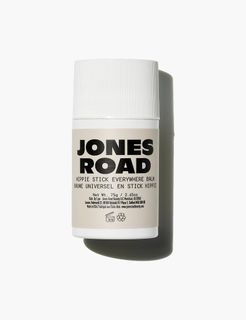
“universal balm that melts onto face, body, hair, and anywhere you need moisture”
This product can help soften the skin and reduce its moisture loss with emollients and occlusives: butyrospermum parkii butter, cera alba.
Keep in mind that this product does not contain effective ingredients to attract water to the upper layer of the skin. This is why an additional product with humectants like glycerin or hyaluronic acid can be helpful (apply it before this product for the best results).
Can it cause trouble?
Irritancy13 strong irritants: Citrus aurantium dulcis peel oil, Mentha viridis leaf oil + 11 more — patch-test recommendedHigh risk
Comedogenic4 ingredients rated 2 or more on the 0–5 pore-clogging scale4 flagged
User reviews
Be the first — your take helps the next person decide.
Ingredients
Filter by role to see what each ingredient is doing.
Helianthus annuus seed oil~22–33%
- Irritation risk
- Low
A great emollient due to its high linoleic acid content. One of the most effective plant oils in helping skin hydration and repairing skin barrier function
More about Helianthus annuus seed oilCera alba~4.6–6.9%
- Irritation risk
- Medium
Forms a protective barrier that holds water and keeps dry skin hydrated. Keeps an emulsion from separating into its oil and liquid components, and increases the thickness of a product. Can be an allergen
More about Cera albaCocos nucifera oil~4.8–7.3%
- Irritation risk
- Low
- Comedogenicity
- 3/5
An emollient. Found to be as effective as a moisturizer for dry skin as mineral oil. Could be comedogenic
More about Cocos nucifera oilRicinus communis seed oil~3.9–5.9%
- Irritation risk
- Medium
A plant oil that can help soften the skin. It might be helpful in calming down inflammation, but solid research is lacking. Is often used in lip products to create the needed product consistency
More about Ricinus communis seed oilCitrus aurantium dulcis peel oil~2.7–4%
- Irritation risk
- High
An essentil oil from orange peel. Potential allergen and can be irritating
More about Citrus aurantium dulcis peel oilLecithin~2.1–3.2%
- Irritation risk
- Low
Used mostly for creating emulsions - helping oil and water mix together. Helps soften the upper layer of the skin
More about LecithinMentha viridis leaf oil~1.6–2.5%
Theobroma cacao seed butter~1.4–2.1%
- Irritation risk
- Low
- Comedogenicity
- 3/5
Helps soften the upper layer of the skin and can be helpful in restoring the skin barrier function. Might have some anti-oxidant effect
More about Theobroma cacao seed butterButyrospermum parkii butter~1.3–1.9%
- Irritation risk
- Low
- Comedogenicity
- 3/5
A great moisturising ingredient that softens the skin and reduces water loss from its upper layer. It also can be helpful in protecting skin from free radicals
More about Butyrospermum parkii butterLavandula hybrida oil~0.9–1.35%
- Irritation risk
- High
Plant extract that can be irritating and is a known allergen
More about Lavandula hybrida oilTocopherol~0.55–1.25%
- Irritation risk
- Low
Pure form of vitamin E. Can help moisturise and protect the skin from free radicals. Often used to help stabilise other ingredients or the formula itself
More about TocopherolBeta-sitosterol~0.5–1.15%
- Irritation risk
- Low
A phytosterol that can support skin's barrier function and help the skin stay hydrated
More about Beta-sitosterolSqualene~0.45–1.1%
- Irritation risk
- Low
- Comedogenicity
- 2/5
An oil that is naturally part of skin sebum that helps to soften its upper layer, reduce water loss and neutralize free radicals. It might be comedogenic. Avoid applying large concentrations (or pure oil) before sun exposure as oxidized squalene can clog pores and lead to skin irritation. Today squalene is mostly derived from vegetable oils or synthetized by yeast
More about SqualeneCitric acid~0.35–0.85%
- Irritation risk
- Medium
Can work as an exfoliant but is typically used to adjust the product pH
More about Citric acidAlpha-terpinene~0.3–0.75%
- Irritation risk
- Low
Beta-caryophyllene~0.3–0.75%
- Irritation risk
- Low
Camphor~0.35–0.75%
- Irritation risk
- High
Carvone~0.2–0.75%
- Irritation risk
- Low
Citral~0.15–0.7%
Citronellol~0.15–0.65%
Citrus aurantium peel oil~0.2–0.75%
- Irritation risk
- Low
Eugenol~0.15–0.6%
Geraniol~0.15–0.55%
Geranyl acetate~0.15–0.55%
- Irritation risk
- Low
Lavandula oil/extract~0.1–0.5%
- Irritation risk
- Low
Limonene~0.15–0.5%
- Irritation risk
- High
A common frangrance that can easily irritate skin, especially if exposed to air, light or heat
More about LimoneneLinalool~0.1–0.5%
Linalyl acetate~0.15–0.5%
- Irritation risk
- Low
Mentha piperita oil~0.1–0.45%
Mentha spicata herb oil~0.1–0.35%
- Irritation risk
- High
Menthol~0.1–0.3%
- Irritation risk
- High
Pinene~0.1–0.35%
- Irritation risk
- Low
Terpineol~0.05–0.25%
- Irritation risk
- Low
Terpinolene~0.05–0.25%
- Irritation risk
- Low
Ingredient list view
Helianthus annuus seed oil, Cera alba, Cocos nucifera oil, Ricinus communis seed oil, Citrus aurantium dulcis peel oil, Lecithin, Mentha viridis leaf oil, Theobroma cacao seed butter, Butyrospermum parkii butter, Lavandula hybrida oil, Tocopherol, Beta-sitosterol, Squalene, Citric acid, Alpha-terpinene, Beta-caryophyllene, Camphor, Carvone, Citral, Citronellol, Citrus aurantium peel oil, Eugenol, Geraniol, Geranyl acetate, Lavandula oil/extract, Limonene, Linalool, Linalyl acetate, Mentha piperita oil, Mentha spicata herb oil, Menthol, Pinene, Terpineol, Terpinolene
Compare prices
Retailers ranked by price — lowest first.

Affiliate links · prices updated regularly
Sources cited in this review
Every concentration estimate and effectiveness label is anchored to one of these 17 studies and safety reviews.
- 1
- 2
- 3Effect of topically applied lipids on surfactant-irritated skinonlinelibrary.wiley.com
- 4
- 5
- 6

Affiliate links · As an Amazon Associate, WIMJ earns from qualifying purchases.