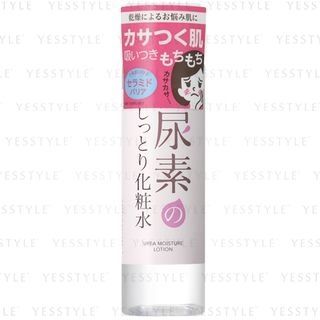
Ishizawa-Lab Sukoyaka Suhada Urea Moisture Lotion
Works for
1 of 1 advertised claim delivered
Moisturizing11 ingredients credited for this claimStrong support
“Sukoyaka Suhada Urea Moisture Lotion”
This product can help improve hydration of the skin with the two types of ingredients.
The first type is called “humectants”:
these ingredients help attract water.
When humectants are on the surface of the skin, they “pull in” the moisture from the outside environment, or from
within deeper layers of the skin. The following ingredients in this product do the job:
glycerin, hydrolyzed hyaluronic acid.
This product also contains ingredients called “occlusives”. They help reduce the speed with which our skin loses moisture to the outside environment. These ingredients also help soften the upper layer of the skin, so it feels less tight and nicer to the touch. The following ingredients in this product do the job: ceramide ng, pentylene glycol.
The following ingredients in this product are especially good for supporting the skin barrier and helping with the hydration level: ceramide ng, urea
ExfoliationNot advertised by the brand · 3 ingredients credited for this claimStrong support
This product can help exfoliate the skin. In other words, it helps break down the bonds between dead cells on the surface of the skin and speed up the skin turnover. Skin often appears softer and brighter after exfoliation, but overdoing it can result in disrupted skin barrier. The following ingredient is doing the exfoliating job in this product: hydroxyethyl urea.
Can it cause trouble?
Irritancy2 strong irritants: Calendula officinalis flower extract, AlcoholMedium risk
ComedogenicClean of flagged comedogenic ingredientsNone flagged
User reviews
Be the first — your take helps the next person decide.
Ingredients
Filter by role to see what each ingredient is doing.
Water~40–60%
Glycerin~5–7.4%
- Irritation risk
- Low
One of the best moisturizing ingredients. Naturally present in skin. It attracts water to the upper layer of the skin working as a humectant
More about GlycerinDipropylene glycol~4.1–6.2%
- Irritation risk
- Low
Helps to dissolve other ingredients in a formulation. Slows down the rate of product drying
More about Dipropylene glycolPentylene glycol~3–4.5%
- Irritation risk
- Medium
Used to preserve products, dissolve other ingredients and create a nice product texture
More about Pentylene glycolUrea~2.2–3.3%
- Irritation risk
- Low
Naturally present in skin (urea makes up about 7% of natural moisturizing factors in skin). Attracts water to the upper layer of the skin. Also has a positive effect on the skin barrier beyond the humectant action. Can enhance penetration of other ingredients. Is an exfoliating ingredient when used in high concentrations
More about UreaCeramide ng~1.8–2.8%
- Irritation risk
- Low
A type of lipid similar to ceramides naturally present in skin. Helps to soften the upper layer of the skin and supports the skin barrier function to keep it hydrated. Can help to prevent inflammation in skin
More about Ceramide ngSodium hyaluronate~1.5–2.2%
- Irritation risk
- Low
One of the best moisturizing ingredients. Attracts water into the upper layer of the skin
More about Sodium hyaluronateSodium acetylated hyaluronate~1.3–2%
- Irritation risk
- Low
A type of hyaluronic acid that works as an excellent moisturizer by attracting water into the upper layer of the skin. Is typically feels less sticky on the skin compared to the usual hyaluronic acid
More about Sodium acetylated hyaluronateHydrolyzed hyaluronic acid~1.1–1.6%
- Irritation risk
- Low
One of the best moisturizing ingredients. Attracts water into the upper layer of the skin. A version of it is naturally present in skin
More about Hydrolyzed hyaluronic acidHydroxyethyl urea~0.85–1.3%
- Irritation risk
- Low
A derivative of urea, a compound that is naturally present in skin. Attracts water to the upper layer of the skin. Can enhance penetration of other ingredients
More about Hydroxyethyl ureaAnthemis nobilis flower extract~0.45–1.1%
- Irritation risk
- High
A plant extract that one one hand, can contain compounds that can help calm down skin irritation, but, on the other hand, its other compounds (especially fragrant ones) can themselves be irritating
More about Anthemis nobilis flower extractChamomilla recutita flower extract~0.4–1%
- Irritation risk
- High
Plant extract that can have healing and anti-inflammatory properties. It is a potential allergen and can be irritating
More about Chamomilla recutita flower extractCalendula officinalis flower extract~0.35–0.8%
- Irritation risk
- High
A plant extract that has some anti-oxidant and anti-bacterial properties. Can be irritating
More about Calendula officinalis flower extractCentaurea cyanus flower extract~0.35–0.8%
- Irritation risk
- High
A plant extract that might have antibacterial effect and help neutralize free radicals
More about Centaurea cyanus flower extractMalus domestica fruit extract~0.3–0.75%
- Irritation risk
- Medium
Helps attract water to the upper layer of the skin
More about Malus domestica fruit extractPrunus persica leaf extract~0.3–0.7%
- Irritation risk
- High
Might be helpful in supporting collagen and ellastin production but solid research is lacking. Could be irritating
More about Prunus persica leaf extractVitis vinifera fruit water~0.15–0.6%
- Irritation risk
- Low
Glycyrrhizic acid~0.15–0.55%
- Irritation risk
- Low
Sodium citrate~0.1–0.45%
- Irritation risk
- Medium
Helps to control the skin's pH level. Maintains the skin's natural film of amino-lactic acids and oils. Helps to preserve products
More about Sodium citrateLactic acid~0.1–0.35%
- Irritation risk
- Medium
An exfoliating and moisturizing alpha-hydroxy acid (AHA). Typically causes less irritation than other AHAs, for example, glycolic acid. At high concentrations (about 15%), lactic acid can help reduce lines and wrinkles. Recent studies show that lactic acid can support the "good" bacteria living on skin's surface (healthy skin microbiome)
More about Lactic acidButylene glycol~0.1–0.35%
- Irritation risk
- Low
Used to create a nice product texture and help delivery of other ingredients. Might be somewhat helpful in attracting water to the upper layer of the skin
More about Butylene glycolPpg-4-ceteth-20~0.1–0.35%
Alcohol~0.05–0.15%
- Irritation risk
- High
Can be drying and contribute to skin irritation. Used in formulars to dissolve other ingredients, create a thinner product consistency or for its antibacterial properties
More about AlcoholPhenoxyethanol~0.05–0.25%
- Irritation risk
- Low
A preservative. It helps prevent bacterial growth in cosmetic products
More about PhenoxyethanolIngredient list view
Water, Glycerin, Dipropylene glycol, Pentylene glycol, Urea, Ceramide ng, Sodium hyaluronate, Sodium acetylated hyaluronate, Hydrolyzed hyaluronic acid, Hydroxyethyl urea, Unknown, Anthemis nobilis flower extract, Unknown, Chamomilla recutita flower extract, Calendula officinalis flower extract, Centaurea cyanus flower extract, Malus domestica fruit extract, Prunus persica leaf extract, Vitis vinifera fruit water, Glycyrrhizic acid, Sodium citrate, Lactic acid, Butylene glycol, Ppg-4-ceteth-20, Alcohol, Phenoxyethanol
Compare prices
Retailers ranked by price — lowest first.

Affiliate links · prices updated regularly
Worth comparing, line by line.
Match % combines shared ingredients, the first five ingredients, shared actives and hero ingredients, irritancy (lower counts in the alternative's favour), texture and body area. Only products in the same routine step are compared.
| Ishizawa-LabSukoyaka Suhada Urea Moisture LotionYOUR PRODUCT | Ishizawa LaboratoriesSUKOYAKA SUHADA Urea Moisture Lotion | |
|---|---|---|
| Match | — | 60% |
| Price | $30.00 | — |
| Shared key ingredients | — | 6 of 8 |
| Key difference | — | Dipotassium Glycyrrhizate |
| Irritancy | Medium | High |
| Drying alcohol | Contains drying alcohol | Contains drying alcohol |
| View product | Shop |

Product summary
Judging from the ingredient list, "Ishizawa-Lab - Sukoyaka Suhada Urea Moisture Lotion" works well for improving skin hydration This moisturizer uses a good combo of humectants and emollients. These both types of ingredients are essentials for improving the skin hydration and keeping the skin barrier healthy. Humectants in this product (urea, glycerin, hydrolyzed hyaluronic acid, hydroxyethyl urea and sodium acetylated hyaluronate) help to increase the water content in the upper layer of the skin. (These ingredients do so by "capturing" water molecules from the outside air or from within the deeper layers of the skin). Ceramide ng and pentylene glycol in this product help decrease the water evoporation from the skin, so that it stays hydrated for longer. These ingredients also soften the skin and take away the feeling of tightness and dryness.
Ingredient callouts
- As a plus, this moisturizer also contains Ceramides (ceramide ng 1.80% - 2.80%). Ceramides are a type of lipids that our skin produces itself. They are a building block of the skin's barrier. Ceramides used in skincare are synthetic or extracted from plants. They work well for softening the skin surface and "patch holes" in the skin's barrier.
Irritation risk
There are some common irritants in this product, including ingredients that do not have benefits for the skin. We assess the overall irritancy of this moisturizer to be medium. For a detailed overview of all potential irritants: click here
You can see the detailed formula review with the breakdown of all actives in the product and the full ingredient list with estimated concentrations in the tables below.
Price
The product retails from 30.00$ up to 48.00$ in the United States.
For a detailed price comparison: click here.
Sources cited in this review
Every concentration estimate and effectiveness label is anchored to one of these 16 studies and safety reviews.
- 1
- 2Topical urea in skincare: A reviewpubmed.ncbi.nlm.nih.gov
- 3
- 4
- 5Hyaluronic acid: A key molecule in skin agingncbi.nlm.nih.gov
- 6

Affiliate links · As an Amazon Associate, WIMJ earns from qualifying purchases.