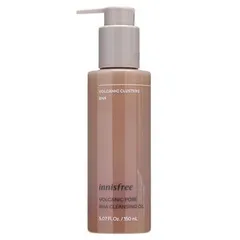
Works for:
based on ingredients and %- Cleansing
Can it cause trouble?
- Irritation risk: high
- Comedogenic risk ingredients: 2
Key actives

Works for
Cleansing
What does the product description say?
Volcanic Pore BHA Cleansing Oil
Source: From product name
This product works by removing dirt and oil from the surface of the skin. It uses a combination of mild cleansing agents (caprylic/capric glycerides, diisostearyl malate, sorbeth-30 tetraoleate) and should be able to cleanse the skin gently. Still keep in mind that any cleansing can disrupt the skin barrier, and most people do not need to cleanse their skin more than once per day.
Help soften the upper layer of the skin
Helps to soften the upper layer of the skin
Helps water and oil mix together
How honest is this product?
| Promise | Can it deliver? |
|---|---|
| Cleansing |
Total Promises Fulfilled score: 100/100.
We receive a small commission for purchases made through these links at no cost for you. Thank you for your support! Learn more
Potential irritants
Comedogenic ingredients
User reviews (0)
Averages from community submissions.
No reviews yet for this product.
Be the first to share your experience!
Tried this product?
Help capture what the ingredient list can't—texture, finish, pilling, scent, and more. Answer what you can, skip the rest.
Takes ~30 seconds.
Reviews are shown in aggregate. No personal details.
| Product | Similarity | Price | Irritancy |
|---|---|---|---|
 innisfree Volcanic Pore BHA Cleansing Oil | Current | $10.50 | |
 Garnier Natural Aloe Extract Cleansing Milk for Normal Skin | 65% | ≈ $2.30 | |
 Sanoflore Aciana Botanica Oil-in-Gel Makeup Remover Organic | 61% | ≈ $19.92 |
Key Actives
Used for skin exfoliation. It has an anti-inflammatory and anti-bacterial effect, helps to unclog pores, prevent blemishes and speed up healing of the existing ones. Sometimes referred to as a BHA (beta-hydroxy acid)
A compound that combines zinc with a hydrating ingredient PCA. Might to be helpful against acne and clogged pores. Can help calm down inflammation in skin. Could be helpful in reducing the formation of free radicals in skin. Might help to reduce fine lines in wrinkles, but solid evidence is missing
An antioxidant that is typically derived from plant Centella Asiatica. It can help neutralize free radicals in skin and support skin barrier function. It could, however, itself be irritating. It is often unstable in formulations
Help soften the upper layer of the skin
Helps to soften the upper layer of the skin
Helps water and oil mix together
An emollient. Found to be as effective as a moisturizer for dry skin as mineral oil. Could be comedogenic
Softens the upper layer of skin and helps restore the healthy skin barrier. Has shown to help calm down inflammation in skin. It is a stable oil, meaning that it retains its properties even when exposed to air.
Sugar extract that helps attract water to the upper layer of the skin
Potential irritants
An aromatic blend of unspecified and possibly irritating ingredients
Used for skin exfoliation. It has an anti-inflammatory and anti-bacterial effect, helps to unclog pores, prevent blemishes and speed up healing of the existing ones. Sometimes referred to as a BHA (beta-hydroxy acid)
A fragrance. Potential allergen and can be irritating
A plant extract that is used as a fragrance. Can be irritating and lead to photosensitivity
Used as a fragrance. Can be irritating and cause photosensitivity
An emollient that helps soften the skin and creates a thicker product texture
Helps soften the upper layer of the skin and create a thicker product consistency
An emollient that helps soften the skin but is not effective for restoring its barrier function. Might be helpful to calm down inflammation
An antioxidant that is typically derived from plant Centella Asiatica. It can help neutralize free radicals in skin and support skin barrier function. It could, however, itself be irritating. It is often unstable in formulations
Softens the upper layer of skin and helps restore the healthy skin barrier. Has shown to help calm down inflammation in skin. It is a stable oil, meaning that it retains its properties even when exposed to air.
A plant extract that might help neutralize free radicals in skin, but research on its efficacy in skin is lacking
A plant extract that contains small percentage of AHAs. Is unlikely to have any skin benefit due the small concentration of the active compounds
Comedogenic ingredients
Helps soften the upper layer of the skin and create a thicker product consistency
An emollient. Found to be as effective as a moisturizer for dry skin as mineral oil. Could be comedogenic
All ingredients
An emollient that helps soften the skin and creates a thicker product texture
Helps soften the upper layer of the skin and create a thicker product consistency
An emollient that helps soften the skin but is not effective for restoring its barrier function. Might be helpful to calm down inflammation
Helps products spread more easily and works as an emollient to soften skin
An emollient. Found to be as effective as a moisturizer for dry skin as mineral oil. Could be comedogenic
An aromatic blend of unspecified and possibly irritating ingredients
Helps to soften the upper layer of the skin without creating a greasy texture
Used for skin exfoliation. It has an anti-inflammatory and anti-bacterial effect, helps to unclog pores, prevent blemishes and speed up healing of the existing ones. Sometimes referred to as a BHA (beta-hydroxy acid)
A fragrance. Potential allergen and can be irritating
An antioxidant that is typically derived from plant Centella Asiatica. It can help neutralize free radicals in skin and support skin barrier function. It could, however, itself be irritating. It is often unstable in formulations
Softens the upper layer of skin and helps restore the healthy skin barrier. Has shown to help calm down inflammation in skin. It is a stable oil, meaning that it retains its properties even when exposed to air.
A compound that combines zinc with a hydrating ingredient PCA. Might to be helpful against acne and clogged pores. Can help calm down inflammation in skin. Could be helpful in reducing the formation of free radicals in skin. Might help to reduce fine lines in wrinkles, but solid evidence is missing
A plant extract that might help neutralize free radicals in skin, but research on its efficacy in skin is lacking
Helps soften the upper layer of the skin and create a nice product finish
Pure form of vitamin E. Can help moisturise and protect the skin from free radicals. Often used to help stabilise other ingredients or the formula itself
Sugar extract that helps attract water to the upper layer of the skin
Acts as a solvent for other ingredients. Speeds up the absorption of other ingredients into the skin
A plant extract that is used as a fragrance. Can be irritating and lead to photosensitivity
Used as a fragrance. Can be irritating and cause photosensitivity
A plant extract that contains small percentage of AHAs. Is unlikely to have any skin benefit due the small concentration of the active compounds
Ingredient list view
Cetyl ethylhexanoate, Isopropyl palmitate, Sorbeth-30 tetraoleate, Caprylic/capric glycerides, Decyl cocoate, Olea europaea fruit oil, Dicaprylyl carbonate, Cocos nucifera oil, Diisostearyl malate, Parfum, Coco-caprylate/caprate, Salicylic acid, Volcanic ash, Silica, Lactic acid/glycolic acid copolymer, Alpha-isomethyl ionone, Linalool, Citronellol, Madecassoside, Simmondsia chinensis seed oil, Zinc pca, Water, Vaccinium myrtillus fruit extract, Polyquaternium-10, Tocopherol, Saccharum officinarum extract, Propanediol, Citrus aurantium dulcis fruit extract, Citrus limon fruit extract, Acer saccharum extract, 1,2-hexanediol, Ethylhexylglycerin, Disodium edta
- Final Report on the Safety Assessment of Isopropyl Isostearate
- Use of “natural” oils for moisturization: Review of olive, coconut, and sunflower seed oil
- Safety Assessment of Alkyl Esters as Used in Cosmetics
- Salicylic acid as a peeling agent: a comprehensive review
- Beta Hydroxy Acids
- A review of toxicity from topical salicylic acid preparations
- Glycolic Acid Peels Versus Salicylic–Mandelic Acid Peels in Active Acne Vulgaris and Post‐Acne Scarring and Hyperpigmentation: A Comparative Study
- Centella asiatica in Dermatology: An Overview
- Protective effect of madecassoside on H2O2-induced oxidative stress and autophagy activation in human melanocytes
- Madecassoside, a triterpenoid saponin isolated from Centella asiatica herbs, protects endothelial cells against oxidative stress
- Madecassoside Inhibits Melanin Synthesis by Blocking Ultraviolet-Induced Inflammation
- Contact dermatitis due to Madecassol
- The Effects of a Standardized Extract of Centella asiatica on Postlaser Resurfacing Wound Healing on the Face: A Split-Face, Double-Blind, Randomized, Placebo-Controlled Trial
- Stability Study of the Active Constituents in the Centella asiatica Extract Formulations
- Zinc L-pyrrolidone carboxylate inhibits the UVA-induced production of matrix metalloproteinase-1 by in vitro cultured skin fibroblasts, whereas it enhances their collagen synthesis
- Zinc Therapy in Dermatology: A Review
- Lonicera caerulea and Vaccinium myrtillus fruit polyphenols protect HaCaT keratinocytes against UVB-induced phototoxic stress and DNA damage
- Herbal Medicine: Biomolecular and Clinical Aspects. 2nd edition.
- Augmentation of sebaceous lipogenesis by an ethanol extract of Grifola frondosa (Maitake mushroom) in hamsters in vivo and in vitro
- Vitamin E in dermatology
- Vitamin E and Skin Health
- Safety Assessment of Citrus Fruit-Derived Ingredients as Used in Cosmetics
- Photosensitivity in children: An approach to diagnosis and management
- Safety Assessment of Citrus-Derived Peel Oils as Used in Cosmetics
- The influence of alkane chain length on the skin irritation potential of 1,2-alkanediols