Works for:
based on ingredients and %- Cleansing
Doesn't work for:
based on ingredients and %- Exfoliation
Can it cause trouble?
- Irritation risk: medium
- Comedogenic risk ingredients: 3
Key actives
Cleansing
What does the product description say?
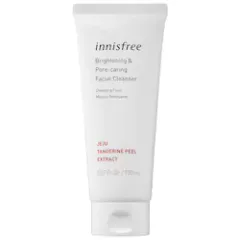
Tangerine Brightening & Pore-Refining Cleanser
Source: From product name
This product works by removing dirt and oil from the surface of the skin. It uses a combination of mild cleansing agents (cocamidopropyl betaine, glyceryl stearate, hydroxypropyl methylcellulose, hydroxypropylcellulose, lauric acid, myristic acid, peg-100 stearate, sodium lauroyl sarcosinate, stearic acid, stearyl alcohol) and should be able to cleanse the skin gently. Still keep in mind that any cleansing can disrupt the skin barrier, and most people do not need to cleanse their skin more than once per day.
Even though this formulation is mild, the following cleansing agents could trigger an irritation or allergy for some people: cocamidopropyl betaine
Helps water and oil mix together. Used as a cleansing ingredient. Could be an allergen
An emollient that softens the skin and forms a protective layer on its surface. Helps water and oil mix together
Used to create a thicker product consistency and stabilize the formulation
Helps water and oil mix together. Has anti-bacterial properties that might be helpful in preventing blemishes
Helps oil and water mix together. Could be comedogenic
Helps oil and water mix togehter and creates a nice product texture
Helps oil and water mix together and works as a cleansing agent
Helps oil and water mix together and works as an emollient
An emollient that helps soften the skin
Exfoliation
What does the product description say?
Papain-infused capsules immediately melt to help gently smooth away dead skin cells and refine look of pores.
Source: Sephora
This product might help exfoliate the skin with papain, but This ingredient is not the most effective.
An enzyme extracted from papaya fruit. Can have an exfoliating effect on the skin. Can be irritating
An exfoliating and moisturizing alpha-hydroxy acid (AHA). Typically causes less irritation than other AHAs, for example, glycolic acid. At high concentrations (about 15%), lactic acid can help reduce lines and wrinkles. Recent studies show that lactic acid can support the "good" bacteria living on skin's surface (healthy skin microbiome)
How honest is this product?
| Promise | Can it deliver? |
|---|---|
| Cleansing | |
| Exfoliation |
Total Promises Fulfilled score: 75/100.
Potential irritants
Comedogenic ingredients
User reviews (0)
Averages from community submissions.
No reviews yet for this product.
Be the first to share your experience!
Tried this product?
Help capture what the ingredient list can't—texture, finish, pilling, scent, and more. Answer what you can, skip the rest.
Takes ~30 seconds.
Reviews are shown in aggregate. No personal details.
Key Actives
Can contain potent anti-oxidant compounds (abbreviated ECG, GCG, EGC, and EGCG) that might help protect the skin from free radicals. Can help calm down inflammation and has some anti-bacterial properties. Unfortunately, these antioxidants are unstable and lose their effectiveness very quickly in products. The concentration of the antioxidant compounds in the extract also tends to be low to be effective in topical formulation
An exfoliating and moisturizing alpha-hydroxy acid (AHA). Typically causes less irritation than other AHAs, for example, glycolic acid. At high concentrations (about 15%), lactic acid can help reduce lines and wrinkles. Recent studies show that lactic acid can support the "good" bacteria living on skin's surface (healthy skin microbiome)
Helps water and oil mix together. Has anti-bacterial properties that might be helpful in preventing blemishes
Helps oil and water mix together and works as an emollient
A type of clay that consists mainly of aluminum silicate. Helps absorb oil and creates a thicker product consistency. Can be used to add a white color
An emollient that softens the skin and forms a protective layer on its surface. Helps water and oil mix together
One of the best moisturizing ingredients. Naturally present in skin. It attracts water to the upper layer of the skin working as a humectant
Helps oil and water mix together. Could be comedogenic
Works as a UV filter when used in high concentrations. It is photostable and is effective mostly against the UVB light, with some protection in the UVA range. In small concentrations, used for its ability to improve the color of cosmetic products. Is usually well tolerated by the skin
Helps water and oil mix together. Used as a cleansing ingredient. Could be an allergen
Helps oil and water mix togehter and creates a nice product texture
Can help attract water to the upper layer of the skin. In crystal form, it can work as a gentle exfoliant, gentler than the salt scrub. Helps stabilize the emulsion
An emollient that helps soften the skin
Helps oil and water mix together and works as a cleansing agent
Used to create a thicker product consistency and stabilize the formulation
Potential irritants
Helps water and oil mix together. Used as a cleansing ingredient. Could be an allergen
An aromatic blend of unspecified and possibly irritating ingredients
A plant extract that might help neutralize free radicals in skin
An enzyme extracted from papaya fruit. Can have an exfoliating effect on the skin. Can be irritating
Helps oil and water mix together. Could be comedogenic
Helps water and oil mix together. Has anti-bacterial properties that might be helpful in preventing blemishes
Used to thicken the product's consistency
A more stable but less bio-available form of vitamin E compared to Tocopherol. Might help moisturize and protect the skin from free radicals, but mostly used in low concentrations to stabilize other ingredients.
An exfoliating and moisturizing alpha-hydroxy acid (AHA). Typically causes less irritation than other AHAs, for example, glycolic acid. At high concentrations (about 15%), lactic acid can help reduce lines and wrinkles. Recent studies show that lactic acid can support the "good" bacteria living on skin's surface (healthy skin microbiome)
A plant extract that might help neutralize free radicals in skin
Helps oil and water mix together and works as a cleansing agent
Used to create a thicker product consistency and stabilize the formulation
Comedogenic ingredients
Helps oil and water mix together. Could be comedogenic
Helps water and oil mix together. Has anti-bacterial properties that might be helpful in preventing blemishes
Used to thicken the product's consistency
All ingredients
One of the best moisturizing ingredients. Naturally present in skin. It attracts water to the upper layer of the skin working as a humectant
Helps oil and water mix together. Could be comedogenic
A type of clay that consists mainly of aluminum silicate. Helps absorb oil and creates a thicker product consistency. Can be used to add a white color
Helps dissolve other ingredients and attract water to the upper layer of the skin
Helps water and oil mix together. Has anti-bacterial properties that might be helpful in preventing blemishes
Works as a UV filter when used in high concentrations. It is photostable and is effective mostly against the UVB light, with some protection in the UVA range. In small concentrations, used for its ability to improve the color of cosmetic products. Is usually well tolerated by the skin
Helps water and oil mix together. Used as a cleansing ingredient. Could be an allergen
An emollient that softens the skin and forms a protective layer on its surface. Helps water and oil mix together
Helps oil and water mix togehter and creates a nice product texture
An aromatic blend of unspecified and possibly irritating ingredients
Used to stabilize mixtures of oil and water, and create thicker, gel-like product textures
Used to thicken the product's consistency
Can help attract water to the upper layer of the skin. In crystal form, it can work as a gentle exfoliant, gentler than the salt scrub. Helps stabilize the emulsion
A more stable but less bio-available form of vitamin E compared to Tocopherol. Might help moisturize and protect the skin from free radicals, but mostly used in low concentrations to stabilize other ingredients.
Is used to enhance product texture and can help to optically mask skin imperfections
An umbrella term for the following three colorants: CI 77491, CI 77492, CI 77499. They might be able to offer some protection against visible light, but the degree of the protection is not clear
An exfoliating and moisturizing alpha-hydroxy acid (AHA). Typically causes less irritation than other AHAs, for example, glycolic acid. At high concentrations (about 15%), lactic acid can help reduce lines and wrinkles. Recent studies show that lactic acid can support the "good" bacteria living on skin's surface (healthy skin microbiome)
Acts as a solvent for other ingredients. Speeds up the absorption of other ingredients into the skin
A plant extract that might help neutralize free radicals in skin
Can contain potent anti-oxidant compounds (abbreviated ECG, GCG, EGC, and EGCG) that might help protect the skin from free radicals. Can help calm down inflammation and has some anti-bacterial properties. Unfortunately, these antioxidants are unstable and lose their effectiveness very quickly in products. The concentration of the antioxidant compounds in the extract also tends to be low to be effective in topical formulation
A plant extract that might help neutralize free radicals in skin
Helps soften the upper layer of the skin and create a nice product finish
An umbrella term for the following three colorants: CI 77491, CI 77492, CI 77499. They might be able to offer some protection against visible light, but the degree of the protection is not clear
Helps oil and water mix together and works as a cleansing agent
Helps create a nice product texture and soften the upper layer of the skin.
Used to create a thicker product consistency and stabilize the formulation
An enzyme extracted from papaya fruit. Can have an exfoliating effect on the skin. Can be irritating
A preservative. It helps prevent bacterial growth in cosmetic products
Ingredient list view
Glycerin, Water, Stearic acid, Myristic acid, Kaolin, Peg-32, Potassium hydroxide, Lauric acid, Titanium dioxide, Ci 77891, Cocamidopropyl betaine, Glyceryl stearate, Peg-100 stearate, Parfum, Sodium chloride, Zea mays starch, Microcrystalline cellulose, Lactose, Sucrose, Disodium edta, Sodium benzoate, Sodium hydroxide, Tocopheryl acetate, Polymethyl methacrylate, Iron oxides, Ci 77491, Lactic acid, Citrus unshiu peel extract, Hydroxypropylcellulose, Styrene/butadiene copolymer, Propanediol, Stearyl alcohol, Camellia japonica leaf extract, Camellia sinensis leaf extract, Opuntia coccinellifera fruit extract, Orchid extract, Shellac, Polyquaternium-6, Iron oxides, Ci 77492, Sodium lauroyl sarcosinate, Peg-75, Hydroxypropyl methylcellulose, Silica, Papain, Phenoxyethanol, Ethylhexylglycerin