Works for
MoisturizingPanthenol, Ceramide np + 17 moreWorks well
“A non-sticky, lightweight toner that deeply hydrates and improve the skin's moisture barrier for a visibly smoother canvas.”
This product can help improve hydration of the skin with the two types of ingredients.
The first type is called “humectants”:
these ingredients help attract water.
When humectants are on the surface of the skin, they “pull in” the moisture from the outside environment, or from
within deeper layers of the skin. The following ingredients in this product do the job:
glycerin, hyaluronic acid.
This product also contains ingredients called “occlusives”. They help reduce the speed with which our skin loses moisture to the outside environment. These ingredients also help soften the upper layer of the skin, so it feels less tight and nicer to the touch. The following ingredients in this product do the job: caprylic/capric triglyceride, squalane.
The following ingredients in this product are especially good for supporting the skin barrier and helping with the hydration level: ceramide np, panthenol
Can it cause trouble?
Irritancy3 strong irritants: Parfum, Linalool + 1 more — patch-test recommendedHigh risk
ComedogenicClean of flagged comedogenic ingredientsNone flagged

User reviews
Be the first — your take helps the next person decide.
Ingredients
Filter by role to see what each ingredient is doing.
Water~40–60%
Butylene glycol~4.8–7.1%
- Irritation risk
- Low
Used to create a nice product texture and help delivery of other ingredients. Might be somewhat helpful in attracting water to the upper layer of the skin
More about Butylene glycolPropanediol~2.9–4.3%
- Irritation risk
- Low
Acts as a solvent for other ingredients. Speeds up the absorption of other ingredients into the skin
More about PropanediolGlycerin~2.3–3.4%
- Irritation risk
- Low
One of the best moisturizing ingredients. Naturally present in skin. It attracts water to the upper layer of the skin working as a humectant
More about Glycerin1,2-hexanediol~0.95–1.4%
Trehalose~1.3–1.9%
- Irritation risk
- Low
A sugar that attracts water to the upper layer of the skin
More about TrehalosePanthenol~0.95–1.45%
- Irritation risk
- Low
Helps attract water to the upper layer of the skin and can help improve skin barrier function
More about PanthenolPolyglycerin-3~1.1–1.7%
- Irritation risk
- Low
Helps to attract water to the upper layer of the skin
More about Polyglycerin-3Ppg-13-decyltetradeceth-24~0.9–1.35%
- Irritation risk
- Medium
Helps oil and water mix together
More about Ppg-13-decyltetradeceth-24Caprylic/capric triglyceride~0.55–1.3%
- Irritation risk
- Medium
A good mix of fatty acids that forms a protective layer on the skin. Improves the shelf life of products. Derived from coconut and glycerin
More about Caprylic/capric triglycerideLactobacillus ferment lysate~0.35–0.85%
- Irritation risk
- Low
A "broth" with parts of dead cells of lactobacteria. Might be helpful supporting diverse microbiome in skin, but evidence is lacking
More about Lactobacillus ferment lysateXanthan gum~0.2–0.75%
- Irritation risk
- Low
Used to create a thicker product consistency
More about Xanthan gumEthylhexylglycerin~0.1–0.5%
Parfum~0.1–0.35%
- Irritation risk
- High
An aromatic blend of unspecified and possibly irritating ingredients
More about ParfumDisodium edta~0.1–0.35%
Cellulose gum~0.1–0.4%
- Irritation risk
- Low
Used to create thicker product consistency and stabilize emulsions
More about Cellulose gumCamellia sinensis leaf extract~0.1–0.4%
- Irritation risk
- Low
Can contain potent anti-oxidant compounds (abbreviated ECG, GCG, EGC, and EGCG) that might help protect the skin from free radicals. Can help calm down inflammation and has some anti-bacterial properties. Unfortunately, these antioxidants are unstable and lose their effectiveness very quickly in products. The concentration of the antioxidant compounds in the extract also tends to be low to be effective in topical formulation
More about Camellia sinensis leaf extractSqualane~0.15–0.55%
- Irritation risk
- Low
An oil naturally present in skin. Works as an emollient to soften the skin and form a protective layer on its surface without a greasy feeling.
More about SqualaneLactic acid~0.1–0.4%
- Irritation risk
- Medium
An exfoliating and moisturizing alpha-hydroxy acid (AHA). Typically causes less irritation than other AHAs, for example, glycolic acid. At high concentrations (about 15%), lactic acid can help reduce lines and wrinkles. Recent studies show that lactic acid can support the "good" bacteria living on skin's surface (healthy skin microbiome)
More about Lactic acidCamellia sinensis seed oil~0.1–0.4%
- Irritation risk
- Low
A plant oil that helps to soften the upper layer of the skin and can help restore the skin barrier. Might have some anti-oxidant effect
More about Camellia sinensis seed oilLinalool~0.05–0.25%
Limonene~0.05–0.2%
- Irritation risk
- High
A common frangrance that can easily irritate skin, especially if exposed to air, light or heat
More about LimoneneSodium hyaluronate~0.05–0.25%
- Irritation risk
- Low
One of the best moisturizing ingredients. Attracts water into the upper layer of the skin
More about Sodium hyaluronateHydrolyzed hyaluronic acid~0.05–0.3%
- Irritation risk
- Low
One of the best moisturizing ingredients. Attracts water into the upper layer of the skin. A version of it is naturally present in skin
More about Hydrolyzed hyaluronic acidSodium hyaluronate crosspolymer~0.05–0.3%
- Irritation risk
- Medium
Attracts water into the upper layer of the skin
More about Sodium hyaluronate crosspolymerHyaluronic acid~0.05–0.25%
- Irritation risk
- Low
One of the best moisturizing ingredients. Attracts water into the upper layer of the skin. Naturally present in skin. Typically has large molecule size unless advertised otherwise on the product label. Helps support skin's barrier function and may help to reduce inflammation
More about Hyaluronic acidAcrylates/stearyl methacrylate copolymer~0.05–0.2%
- Irritation risk
- Low
Tremella fuciformis sporocarp extract~0.05–0.2%
- Irritation risk
- Low
Mushroom extract that helps attract water to the upper layer of the skin
More about Tremella fuciformis sporocarp extractSodium acetylated hyaluronate~0.05–0.15%
- Irritation risk
- Low
A type of hyaluronic acid that works as an excellent moisturizer by attracting water into the upper layer of the skin. Is typically feels less sticky on the skin compared to the usual hyaluronic acid
More about Sodium acetylated hyaluronateTocopherol~0.01–0.1%
- Irritation risk
- Low
Pure form of vitamin E. Can help moisturise and protect the skin from free radicals. Often used to help stabilise other ingredients or the formula itself
More about TocopherolCeramide np~0.05–0.15%
- Irritation risk
- Low
A type of lipid similar to ceramides naturally present in skin. Helps to soften the upper layer of the skin and supports the skin barrier function to keep it hydrated. Can help to prevent inflammation in skin
More about Ceramide npIngredient list view
Water, Butylene glycol, Propanediol, Glycerin, 1,2-hexanediol, Trehalose, Panthenol, Polyglycerin-3, Ppg-13-decyltetradeceth-24, Caprylic/capric triglyceride, Lactobacillus ferment lysate, Xanthan gum, Ethylhexylglycerin, Parfum, Disodium edta, Cellulose gum, Camellia sinensis leaf extract, Squalane, Lactic acid, Camellia sinensis seed oil, Linalool, Limonene, Sodium hyaluronate, Hydrolyzed hyaluronic acid, Sodium hyaluronate crosspolymer, Hyaluronic acid, Acrylates/stearyl methacrylate copolymer, Tremella fuciformis sporocarp extract, Sodium acetylated hyaluronate, Tocopherol, Ceramide np
Compare prices
Retailers ranked by price — lowest first.
Worth comparing, line by line.
Match % combines shared ingredients, the first five ingredients, shared actives and hero ingredients, irritancy (lower counts in the alternative's favour), texture and body area. Only products in the same routine step are compared.
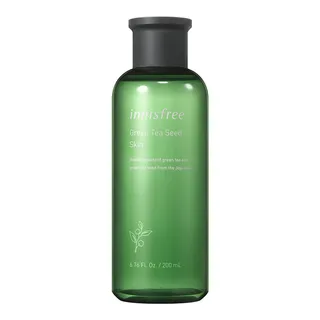
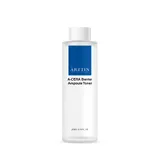
| innisfreeGreen Tea Seed Skin TonerYOUR PRODUCT | Some By MiBeta Panthenol Repair Toner | PYUNKANG YULBlack Tea Deep Infusion Toner | StyleKoreanEtude House SoonJung Cica Relief Toner | |
|---|---|---|---|---|
| Match | — | 67% | 66% | 66% |
| Price | — | $17.15 | $21.99 | — |
| Shared key ingredients | — | 10 of 14 | 10 of 14 | 7 of 14 |
| Key difference | — | Niacinamide | Niacinamide | Madecassoside |
| Irritancy | High | Medium | Medium | Low |
| Drying alcohol | — | — | — | — |
| View product | Shop | Shop | Shop |


More alternatives: Superegg PURE TRANSPARENCY TREATMENT ESSENCETOSOWOONG Ceramide Toner
Product summary
"innisfree - Green Tea Seed Skin Toner" is effective for: Moisturizing
Ingredient callouts
- Ceramides (ceramide np 0.05% - 0.15%). Ceramides are an important part of our natural skin barrier. The Ceramides used in skincare are synthetic or come from plants. They help soften the skin and can help "fill the gaps" in the skin barrier, keeping the skin hydrated and resilient for longer.
- An effective concentration of Panthenol (pro-vitamin B5) - about 0.95% - 1.45%. Panthenol helps strengthen the skin barrier, improve hydration and reduce inflammation in skin.
- Humectants (sodium acetylated hyaluronate 0.05% - 0.15%, tremella fuciformis sporocarp extract 0.05% - 0.20%, hydrolyzed hyaluronic acid 0.05% - 0.30%, sodium hyaluronate 0.05% - 0.25%, polyglycerin-3 1.10% - 1.70%, panthenol 0.95% - 1.45%, trehalose 1.30% - 1.90% and glycerin 2.30% - 3.40%). These ingredients help attract water to the upper layer of the skin and improve the skin hydration.
Price
The product retails for 30.00A$ in Australia and for 34.00NZ$ in New Zealand.
For a detailed price comparison: click here.
Sources cited in this review
Every concentration estimate and effectiveness label is anchored to one of these 17 studies and safety reviews.
- 1
- 2
- 3Skin moisturizing effects of panthenol-based formulationspdfs.semanticscholar.org
- 4
- 5Epidermal and dermal effects of topical lactic acidncbi.nlm.nih.gov
- 6Dual Effects of Alpha-Hydroxy Acids on the Skinpdfs.semanticscholar.org

Affiliate links · As an Amazon Associate, WIMJ earns from qualifying purchases.