Works for
CleansingMyristic acid, Stearic acid + 7 moreCan be harsh
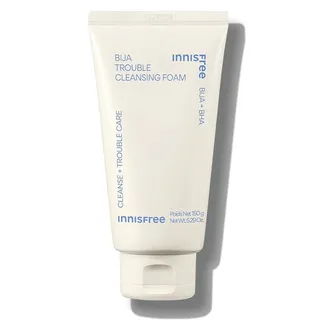
“Bija Trouble Cleansing Foam , Korean Skincare Australia”
This product works by removing dirt and oil from the surface of the skin.
The following cleansing agents are typically mild, but still can cause an irritation or allergy for some people cocamidopropyl betaine, coco-glucoside, decyl glucoside.
Keep in mind that cleansing can disrupt the skin barrier, and most people do not need to cleanse their skin more than once per day.
Anti-blemishSalicylic acid ~0.05–0.15%, below the ~0.5% it needsUnder-dosed
“Salicylic Acid helps to treat blackheads and whiteheads Cleanses pores and helps to relieve skin problems INGREDIENTS HOW TO USE Apply an appropriate amount to hands and create a rich lather.”
Effective ingredients missing or their concentration is too low.
Can it cause trouble?
Irritancy8 strong irritants: Menthol, Limonene + 6 more — patch-test recommendedHigh risk
Comedogenic3 ingredients rated 2 or more on the 0–5 pore-clogging scale3 flagged
User reviews
Be the first — your take helps the next person decide.
Ingredients
Filter by role to see what each ingredient is doing.
Water~40–60%
Glycerin~4.1–6.2%
- Irritation risk
- Low
One of the best moisturizing ingredients. Naturally present in skin. It attracts water to the upper layer of the skin working as a humectant
More about GlycerinMyristic acid~3.7–5.6%
- Irritation risk
- Medium
- Comedogenicity
- 3/5
Helps oil and water mix together. Could be comedogenic
More about Myristic acidStearic acid~2.4–3.7%
- Irritation risk
- Low
Helps oil and water mix together and works as an emollient
More about Stearic acidPeg-32~2–2.9%
- Irritation risk
- Low
Helps dissolve other ingredients and attract water to the upper layer of the skin
More about Peg-32Potassium hydroxide~1.6–2.4%
Palmitic acid~1.4–2%
- Irritation risk
- Low
An emollient that is naturally present in skin and helps soften it
More about Palmitic acidButylene glycol~1.2–1.7%
- Irritation risk
- Low
Used to create a nice product texture and help delivery of other ingredients. Might be somewhat helpful in attracting water to the upper layer of the skin
More about Butylene glycolLauric acid~1–1.5%
- Irritation risk
- Medium
- Comedogenicity
- 3/5
Helps water and oil mix together. Has anti-bacterial properties that might be helpful in preventing blemishes
More about Lauric acidCocamidopropyl betaine~1.2–1.8%
- Irritation risk
- High
Helps water and oil mix together. Used as a cleansing ingredient. Could be an allergen
More about Cocamidopropyl betaineGlyceryl stearate~0.5–1.15%
- Irritation risk
- Low
An emollient that softens the skin and forms a protective layer on its surface. Helps water and oil mix together
More about Glyceryl stearatePeg-100 stearate~0.45–1.05%
- Irritation risk
- Low
Helps oil and water mix togehter and creates a nice product texture
More about Peg-100 stearateSodium chloride~0.4–0.9%
- Irritation risk
- Low
Used to stabilize mixtures of oil and water, and create thicker, gel-like product textures
More about Sodium chlorideCoco-glucoside~0.4–0.9%
- Irritation risk
- High
Used as a cleansing agent (surfactant) in cleansers. Helps water and oil mix together in lotions. Can be irritating
More about Coco-glucosideRicinus communis seed oil~0.2–0.8%
- Irritation risk
- Medium
A plant oil that can help soften the skin. It might be helpful in calming down inflammation, but solid research is lacking. Is often used in lip products to create the needed product consistency
More about Ricinus communis seed oilDecyl glucoside~0.35–0.8%
- Irritation risk
- High
Helps oil and water mix together. Can be irritating
More about Decyl glucosideSalix alba bark extract~0.15–0.65%
- Irritation risk
- High
A plant extract that can help neutralize free radicals in skin. It contains a compound salicin that can theoretically be converted into salicylic acid that, in turn, helps reduce inflammation in skin, but the evidence of effectiveness in skin is lacking and the extract is usually not used in a concentration that would enable an exfoliating effect
More about Salix alba bark extractMenthol~0.15–0.6%
- Irritation risk
- High
Sodium metaphosphate~0.15–0.6%
Torreya nucifera seed oil~0.15–0.6%
- Irritation risk
- Low
Sodium hydroxide~0.15–0.55%
Limonene~0.1–0.45%
- Irritation risk
- High
A common frangrance that can easily irritate skin, especially if exposed to air, light or heat
More about LimoneneJuniperus communis fruit oil~0.1–0.45%
- Irritation risk
- Low
Pinus sylvestris leaf oil~0.15–0.5%
- Irritation risk
- High
An essential oil from pine tree. Can be irritating
More about Pinus sylvestris leaf oilJuniperus virginiana oil~0.1–0.5%
- Irritation risk
- Medium
Cedarwood oil. Used as a fragrance. Can be irritating
More about Juniperus virginiana oilSodium benzoate~0.1–0.45%
Lavandula angustifolia oil~0.1–0.45%
- Irritation risk
- High
An essential oil. Potential allergen and can be irritating. It has some anti-bacterial properties
More about Lavandula angustifolia oilCitrus aurantifolia oil~0.1–0.5%
- Irritation risk
- High
Dextrin~0.1–0.45%
- Irritation risk
- Low
A sugar that is used to stabilize the product formulation. Can help attract water to the upper layer of the skin
More about DextrinTheobroma cacao extract~0.1–0.4%
- Irritation risk
- Low
- Comedogenicity
- 3/5
Linalool~0.1–0.3%
Citrus limon peel oil~0.05–0.3%
Artemisia vulgaris oil~0.05–0.25%
- Irritation risk
- Low
Salicylic acid~0.05–0.15%
- Irritation risk
- High
Used for skin exfoliation. It has an anti-inflammatory and anti-bacterial effect, helps to unclog pores, prevent blemishes and speed up healing of the existing ones. Sometimes referred to as a BHA (beta-hydroxy acid)
More about Salicylic acidPogostemon cablin oil~0.05–0.1%
- Irritation risk
- Low
Rosa centifolia flower extract~0.05–0.1%
- Irritation risk
- High
Contains essential oil. Can be irritating
More about Rosa centifolia flower extractCupressus sempervirens leaf/nut/stem oil~0.05–0.15%
- Irritation risk
- Low
Lactic acid~0.01–0.05%
- Irritation risk
- Medium
An exfoliating and moisturizing alpha-hydroxy acid (AHA). Typically causes less irritation than other AHAs, for example, glycolic acid. At high concentrations (about 15%), lactic acid can help reduce lines and wrinkles. Recent studies show that lactic acid can support the "good" bacteria living on skin's surface (healthy skin microbiome)
More about Lactic acidIngredient list view
Water, Glycerin, Myristic acid, Stearic acid, Peg-32, Potassium hydroxide, Palmitic acid, Butylene glycol, Lauric acid, Cocamidopropyl betaine, Glyceryl stearate, Peg-100 stearate, Sodium chloride, Coco-glucoside, Ricinus communis seed oil, Decyl glucoside, Salix alba bark extract, Menthol, Sodium metaphosphate, Torreya nucifera seed oil, Sodium hydroxide, Limonene, Juniperus communis fruit oil, Pinus sylvestris leaf oil, Juniperus virginiana oil, Sodium benzoate, Lavandula angustifolia oil, Citrus aurantifolia oil, Dextrin, Theobroma cacao extract, Linalool, Citrus limon peel oil, Artemisia vulgaris oil, Salicylic acid, Pogostemon cablin oil, Rosa centifolia flower extract, Cupressus sempervirens leaf/nut/stem oil, Lactic acid
Compare prices
Retailers ranked by price — lowest first.

Worth comparing, line by line.
Match % combines shared ingredients, the first five ingredients, shared actives and hero ingredients, irritancy (lower counts in the alternative's favour), texture and body area. Only products in the same routine step are compared.
| innisfreeBija Trouble Cleansing FoamYOUR PRODUCT | IOPEDerma Trouble Cleanser | VILLAGE 11 FACTORYMoisture Cleansing Foam | MISSHATime Revolution Brightening Care Whipping Foam Cleanser | |
|---|---|---|---|---|
| Match | — | 41% | 40% | 39% |
| Price | — | $20.20 | $14.20 | — |
| Shared key ingredients | — | 7 of 11 | 8 of 11 | 7 of 11 |
| Key difference | — | Salicylic Acid | Phytosphingosine | Niacinamide |
| Irritancy | High | Medium | Medium | Medium |
| Drying alcohol | — | — | — | — |
| View product | Shop | Shop | Shop |



More alternatives: Cetaphil Brightness Creamy Cleanser NiacinamideMizon Deep Cleansing Foam
Sources cited in this review
Every concentration estimate and effectiveness label is anchored to one of these 19 studies and safety reviews.
- 1
- 2
- 3
- 4
- 5Allergen of the Year—Alkyl Glucosidepracticeupdate.com
- 6

Affiliate links · As an Amazon Associate, WIMJ earns from qualifying purchases.