Works for:
based on ingredients and %- Moisturizing
Doesn't work for:
based on ingredients and %- Exfoliation
Can it cause trouble?
- Irritation risk: high
- Comedogenic risk ingredients: 1
Key actives

Moisturizing
This product can help improve hydration of the skin with the two types of ingredients.
The first type is called “humectants”:
these ingredients help attract water.
When humectants are on the surface of the skin, they “pull in” the moisture from the outside environment, or from
within deeper layers of the skin. The following ingredients in this product do the job:
fructooligosaccharides, glycerin.
This product also contains ingredients called “occlusives”. They help reduce the speed with which our skin loses moisture to the outside environment. These ingredients also help soften the upper layer of the skin, so it feels less tight and nicer to the touch. The following ingredients in this product do the job: squalane, pentylene glycol.
The following ingredients in this product are especially good for supporting the skin barrier and helping with the hydration level: panthenol
One of the best moisturizing ingredients. Naturally present in skin. It attracts water to the upper layer of the skin working as a humectant
Helps attract water to the upper layer of the skin and can help improve skin barrier function
Help attract water to the upper layer of the skin
An oil naturally present in skin. Works as an emollient to soften the skin and form a protective layer on its surface without a greasy feeling.
Can help attract water to the upper layer of the skin. In crystal form, it can work as a gentle exfoliant, gentler than the salt scrub. Helps stabilize the emulsion
Used to stabilize the product formulations and works as an emollient
Used to preserve products, dissolve other ingredients and create a nice product texture
Exfoliation
What does the product description say?
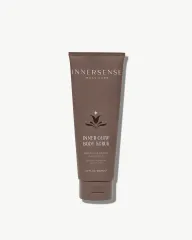
Inner Glow Body Scrub
Source: Credo Beauty
This product might help exfoliate the skin with lactobacillus/punica granatum fruit ferment extract, but This ingredient is not the most effective.
An enzyme-based exfoliant
A plant extract that might contain salicylic acid
How honest is this product?
| Promise | Can it deliver? |
|---|---|
| Exfoliation |
Total Promises Fulfilled score: 50/100.
We receive a small commission for purchases made through these links at no cost for you. Thank you for your support! Learn more
Potential irritants
Comedogenic ingredients
User reviews (0)
Averages from community submissions.
No reviews yet for this product.
Be the first to share your experience!
Tried this product?
Help capture what the ingredient list can't—texture, finish, pilling, scent, and more. Answer what you can, skip the rest.
Takes ~30 seconds.
Reviews are shown in aggregate. No personal details.
Key Actives
Helps attract water to the upper layer of the skin and can help improve skin barrier function
Being a lipid soluble form of vitamin C, it is more stable than ascorbic acid, but still degrades quickly and needs to be stabilized in a formulation with another ingredient. It is claimed to penetrate skin better than pure vitamin C and have the the similar benefits, but solid studies of its effectiveness are lacking. Is likely to require a higher concentration in a product than pure vitamin C to be effective. It might be able to help reduce pore clogging.
Can help attract water to the upper layer of the skin. In crystal form, it can work as a gentle exfoliant, gentler than the salt scrub. Helps stabilize the emulsion
One of the best moisturizing ingredients. Naturally present in skin. It attracts water to the upper layer of the skin working as a humectant
An oil naturally present in skin. Works as an emollient to soften the skin and form a protective layer on its surface without a greasy feeling.
Help attract water to the upper layer of the skin
Potential irritants
An enzyme-based exfoliant
A plant oil with a high content of volatile compounds that can irritate the skin and lead to allergic reactions. Can lead to photosensitivity
An essential oil that can be very irritating. Has some anti-bacterial properties
An essential oil. Potential allergen and can be irritating. It has some anti-bacterial properties
A common frangrance that can easily irritate skin, especially if exposed to air, light or heat
Used as a cleansing agent. Helps water and oil mix together
A plant extract that might contain salicylic acid
Being a lipid soluble form of vitamin C, it is more stable than ascorbic acid, but still degrades quickly and needs to be stabilized in a formulation with another ingredient. It is claimed to penetrate skin better than pure vitamin C and have the the similar benefits, but solid studies of its effectiveness are lacking. Is likely to require a higher concentration in a product than pure vitamin C to be effective. It might be able to help reduce pore clogging.
Used to preserve products, dissolve other ingredients and create a nice product texture
A preservative that comes from radishes fermented by a bacteria. New research suggests that the preservation properties in the ingredient come from an ammonium salt that is not present naturally in radish root but used in its cultivation. Is problematic because the exact amount of the preservative agents is difficult to determine
An alpha-hydroxy acid (AHA), but is mostly used to stabilize product formulations in cosmetics
Comedogenic ingredients
Used to stabilize the product formulations and works as an emollient
All ingredients
Can help attract water to the upper layer of the skin. In crystal form, it can work as a gentle exfoliant, gentler than the salt scrub. Helps stabilize the emulsion
One of the best moisturizing ingredients. Naturally present in skin. It attracts water to the upper layer of the skin working as a humectant
Used to stabilize mixtures of oil and water, and create thicker, gel-like product textures
An oil naturally present in skin. Works as an emollient to soften the skin and form a protective layer on its surface without a greasy feeling.
Used as a cleansing agent. Helps water and oil mix together
A plant extract that might contain salicylic acid
Used to stabilize the product formulations and works as an emollient
Helps attract water to the upper layer of the skin and can help improve skin barrier function
Being a lipid soluble form of vitamin C, it is more stable than ascorbic acid, but still degrades quickly and needs to be stabilized in a formulation with another ingredient. It is claimed to penetrate skin better than pure vitamin C and have the the similar benefits, but solid studies of its effectiveness are lacking. Is likely to require a higher concentration in a product than pure vitamin C to be effective. It might be able to help reduce pore clogging.
An enzyme-based exfoliant
A plant oil with a high content of volatile compounds that can irritate the skin and lead to allergic reactions. Can lead to photosensitivity
An essential oil that can be very irritating. Has some anti-bacterial properties
An essential oil. Potential allergen and can be irritating. It has some anti-bacterial properties
Used to preserve products, dissolve other ingredients and create a nice product texture
A preservative that comes from radishes fermented by a bacteria. New research suggests that the preservation properties in the ingredient come from an ammonium salt that is not present naturally in radish root but used in its cultivation. Is problematic because the exact amount of the preservative agents is difficult to determine
An alpha-hydroxy acid (AHA), but is mostly used to stabilize product formulations in cosmetics
A common frangrance that can easily irritate skin, especially if exposed to air, light or heat
Ingredient list view
Sucrose, Water, Glycerin, Sodium chloride, Silica, Squalane, Cocamidopropyl hydroxysultaine, Salix nigra bark extract, Glyceryl stearate se, Xanthan gum, Carica papaya fruit extract, Panthenol, Tetrahexyldecyl ascorbate, Fructooligosaccharides, Glycoproteins, Bioflavonoids, Lactobacillus/punica granatum fruit ferment extract, Boswellia carterii oil, Citrus aurantium bergamia fruit oil, Eucalyptus globulus leaf oil, Jasminum officinale oil, Juniperus mexicana oil, Lavandula angustifolia oil, Sodium benzoate, Pentylene glycol, Citrus limon peel oil, Potassium sorbate, Sodium levulinate, Sodium gluconate, Leuconostoc/radish root ferment filtrate, Cyamopsis tetragonoloba gum, Phytic acid, Hydroxycitronellal, Triethyl citrate, Limonene, Linalool
- Glycerol and the skin: holistic approach to its origin and functions
- Skin moisturizing effects of panthenol-based formulations
- Safety Assessment of Panthenol, Pantothenic Acid, and Derivatives as Used in Cosmetics
- Double-blind, half-face study comparing topical vitamin C and vehicle for rejuvenation of photodamage
- Application of tetra-isopalmitoyl ascorbic acid in cosmetic formulations: Stability studies and in vivo efficacy
- Safety Assessment of Citrus-Derived Peel Oils as Used in Cosmetics
- Oxidized citrus oil (R-limonene): A frequent skin sensitizer in Europe
- Air oxidation increases skin irritation from fragrance terpenes
- Cosmetic and dermatologic use of alpha hydroxy acids
- Comparative Evaluation of Efficacy and Tolerability of Glycolic Acid, Salicylic Mandelic Acid, and Phytic Acid Combination Peels in Melasma
- Citric Acid, Inorganic Citrate Salts and Alkyl Citrate Esters As Used in Cosmetics