Works for:
based on ingredients and %- Anti-aging
- Moisturizing
- Sun protection
- Anti-oxidation
Can it cause trouble?
- Irritation risk: medium
- Comedogenic risk ingredients: 1
Key actives


Anti-aging
What does the product description say?
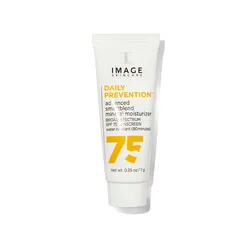
Formulated for compromised or sensitive skin, this mineral SPF 75 moisturizer is a simple addition to your daily routine that provides anti-aging hydration and sun protection in one product.
Source: Image skincare
This product can help prevent early signs of skin aging because it offers a good level of broad spectrum sun protection. Sun damage is the main cause of premature skin aging, and protecting your skin from the sun is the best anti-aging strategy.
These ingredients in the product might also be helpful for reducing and preventing fine lines, wrinkles, and skin elasticity, even though there is no conclusive evidence for their effectiveness: acetyl zingerone.
An active compound sourced from ginger root. It can help neutralize free radicals in skin. It might be able to help reduce fine lines and wrinkles and improve the skin tone. In small concentrations, used as a chelating agent and helps preserve stability of product formulations.
Can contain potent anti-oxidant compounds (abbreviated ECG, GCG, EGC, and EGCG) that might help protect the skin from free radicals. Can help calm down inflammation and has some anti-bacterial properties. Unfortunately, these antioxidants are unstable and lose their effectiveness very quickly in products. The concentration of the antioxidant compounds in the extract also tends to be low to be effective in topical formulation
Being a lipid soluble form of vitamin C, it is more stable than ascorbic acid, but still degrades quickly and needs to be stabilized in a formulation with another ingredient. It is claimed to penetrate skin better than pure vitamin C and have the the similar benefits, but solid studies of its effectiveness are lacking. Is likely to require a higher concentration in a product than pure vitamin C to be effective. It might be able to help reduce pore clogging.
Pure form of vitamin E. Can help moisturise and protect the skin from free radicals. Often used to help stabilise other ingredients or the formula itself
Anti-oxidation
This product contains antioxidants (acetyl zingerone) that can help neutralize free radicals in skin. By doing so, they can lessen the damage the skin gets from the UV light (sun).
The following ingredients - camellia sinensis leaf extract, haematococcus pluvialis extract also can have an antioxidant effect, but there is less evidence to confirm their effectiveness in skin.
An active compound sourced from ginger root. It can help neutralize free radicals in skin. It might be able to help reduce fine lines and wrinkles and improve the skin tone. In small concentrations, used as a chelating agent and helps preserve stability of product formulations.
Can contain potent anti-oxidant compounds (abbreviated ECG, GCG, EGC, and EGCG) that might help protect the skin from free radicals. Can help calm down inflammation and has some anti-bacterial properties. Unfortunately, these antioxidants are unstable and lose their effectiveness very quickly in products. The concentration of the antioxidant compounds in the extract also tends to be low to be effective in topical formulation
Green algae extract that might contain antioxidant astaxanthin
A more stable but less bio-available form of vitamin E compared to Tocopherol. Might help moisturize and protect the skin from free radicals, but mostly used in low concentrations to stabilize other ingredients.
A plant extract that is rich in a fragrance compound eugenol that is a frequent allergen and can be irritating. It might also contain anti-oxidants to help neutralize free radicals
Pure form of vitamin E. Can help moisturise and protect the skin from free radicals. Often used to help stabilise other ingredients or the formula itself
Being a lipid soluble form of vitamin C, it is more stable than ascorbic acid, but still degrades quickly and needs to be stabilized in a formulation with another ingredient. It is claimed to penetrate skin better than pure vitamin C and have the the similar benefits, but solid studies of its effectiveness are lacking. Is likely to require a higher concentration in a product than pure vitamin C to be effective. It might be able to help reduce pore clogging.
Evens skin tone
This product offers broad spectrum sun protection. It means that it can prevent hyperpigmentation and help keep the skin tone even (sun damage is the main factor causing age spots, darkening of post-acne marks and other discolorations).
Can contain potent anti-oxidant compounds (abbreviated ECG, GCG, EGC, and EGCG) that might help protect the skin from free radicals. Can help calm down inflammation and has some anti-bacterial properties. Unfortunately, these antioxidants are unstable and lose their effectiveness very quickly in products. The concentration of the antioxidant compounds in the extract also tends to be low to be effective in topical formulation
Being a lipid soluble form of vitamin C, it is more stable than ascorbic acid, but still degrades quickly and needs to be stabilized in a formulation with another ingredient. It is claimed to penetrate skin better than pure vitamin C and have the the similar benefits, but solid studies of its effectiveness are lacking. Is likely to require a higher concentration in a product than pure vitamin C to be effective. It might be able to help reduce pore clogging.
Moisturizing
What does the product description say?
A color-correcting daily moisturizer with XOSMTM Technology that soothes, neutralizes redness and boosts hydration to reinforce the skin's vital moisture barrier while providing broad-spectrum mineral sunscreen protection for compromised or sensitive skin.
Source: Image skincare
This product can help improve hydration of the skin with the two types of ingredients.
The first type is called “humectants”:
these ingredients help attract water.
When humectants are on the surface of the skin, they “pull in” the moisture from the outside environment, or from
within deeper layers of the skin. The following ingredients in this product do the job:
glycerin, mannitol.
This product also contains ingredients called “occlusives”. They help reduce the speed with which our skin loses moisture to the outside environment. These ingredients also help soften the upper layer of the skin, so it feels less tight and nicer to the touch. The following ingredients in this product do the job: caprylic/capric triglyceride, squalane.
The following ingredients in this product are especially good for supporting the skin barrier and helping with the hydration level: panthenol
Helps attract water to the upper layer of the skin and can help improve skin barrier function
A type of silicone. Helps soften the upper layer of the skin and creates a nice, light product texture
Softens the upper layer of the skin and can support skin barrier function
An oil naturally present in skin. Works as an emollient to soften the skin and form a protective layer on its surface without a greasy feeling.
Helps to attract water to the upper layer of the skin
One of the best moisturizing ingredients. Naturally present in skin. It attracts water to the upper layer of the skin working as a humectant
A good mix of fatty acids that forms a protective layer on the skin. Improves the shelf life of products. Derived from coconut and glycerin
Helps to soften the upper layer of the skin without creating a greasy texture
An emollient that is naturally present in skin and helps soften it
Helps oil and water mix together and works as an emollient
Helps preserve products and creates a nice product texture
Can contain potent anti-oxidant compounds (abbreviated ECG, GCG, EGC, and EGCG) that might help protect the skin from free radicals. Can help calm down inflammation and has some anti-bacterial properties. Unfortunately, these antioxidants are unstable and lose their effectiveness very quickly in products. The concentration of the antioxidant compounds in the extract also tends to be low to be effective in topical formulation
Helps calm down inflammation in skin and can help reduce itching. Helps to repair the skin barrier and keep skin hydrated
Pure form of vitamin E. Can help moisturise and protect the skin from free radicals. Often used to help stabilise other ingredients or the formula itself
Sun protection
What does the product description say?
A color-correcting daily moisturizer with XOSMTM Technology that soothes, neutralizes redness and boosts hydration to reinforce the skin's vital moisture barrier while providing broad-spectrum mineral sunscreen protection for compromised or sensitive skin.
Source: Image skincare
This product offers a good level of protection against both UVB and UVA rays.
This sunscreen uses organic (so-called "chemical") sunscreen filters. Organic, or "chemical" filters usually provide reliable sun protection and rarely leave a white cast. Sunscreens with organic filters can sting eyes.
This product can be considered "reef safe" because it does not contain the UV filters (oxybenzone and octinoxate) that can be harmful to coral reefs when present in the water in high concentrations.
A broad spectrum sunblock (protects from both UVA and UVB rays). Is suitable for most sensitive skins. In small concentrations, can be used as a colorant
Works as a UV filter when used in high concentrations. It is photostable and is effective mostly against the UVB light, with some protection in the UVA range. In small concentrations, used for its ability to improve the color of cosmetic products. Is usually well tolerated by the skin
A synthetic ester of salicylic acid that is used to help disperse pigments and boost effectiveness of sunscreen ingredients. It is able to absorb UV light (working as an organic, or chemical filter), but is not approved as a sunscreen ingredient on its own
How honest is this product?
| Promise | Can it deliver? |
|---|---|
| Sun protection | |
| Anti-aging | |
| Moisturizing |
Total Promises Fulfilled score: 90/100.
We receive a small commission for purchases made through these links at no cost for you. Thank you for your support! Learn more
Potential irritants
Comedogenic ingredients
User reviews (0)
Averages from community submissions.
No reviews yet for this product.
Be the first to share your experience!
Tried this product?
Help capture what the ingredient list can't—texture, finish, pilling, scent, and more. Answer what you can, skip the rest.
Takes ~30 seconds.
Reviews are shown in aggregate. No personal details.
| Product | Similarity | Price | Irritancy |
|---|---|---|---|
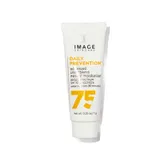 Image skincare DAILY PREVENTION advanced smartblend mineral moisturizer SPF 75 | Current | $67.00 | |
Rodan + Fields REVERSE Brightening Defense Fluid Lotion SPF 50 | 59% | - | |
CeraVe Mineral Sunscreen Lotion, SPF 30 | 59% | $19.99 | |
 The INKEY List CA SPF 30 Daily Sunscreen | 59% | ≈ $7.39 | |
 3LAB Perfect Lite Sunscreen SPF 30 | 58% | $55.00 | |
 FOTOPROTECTOR Fusion Fluid Mineral SPF 50 | 58% | COP 140,300.00 |
Key Actives
Helps calm down inflammation in skin and can help reduce itching. Helps to repair the skin barrier and keep skin hydrated
Can contain potent anti-oxidant compounds (abbreviated ECG, GCG, EGC, and EGCG) that might help protect the skin from free radicals. Can help calm down inflammation and has some anti-bacterial properties. Unfortunately, these antioxidants are unstable and lose their effectiveness very quickly in products. The concentration of the antioxidant compounds in the extract also tends to be low to be effective in topical formulation
Pure form of vitamin E. Can help moisturise and protect the skin from free radicals. Often used to help stabilise other ingredients or the formula itself
Helps attract water to the upper layer of the skin and can help improve skin barrier function
An active compound sourced from ginger root. It can help neutralize free radicals in skin. It might be able to help reduce fine lines and wrinkles and improve the skin tone. In small concentrations, used as a chelating agent and helps preserve stability of product formulations.
Works as a UV filter when used in high concentrations. It is photostable and is effective mostly against the UVB light, with some protection in the UVA range. In small concentrations, used for its ability to improve the color of cosmetic products. Is usually well tolerated by the skin
A broad spectrum sunblock (protects from both UVA and UVB rays). Is suitable for most sensitive skins. In small concentrations, can be used as a colorant
A good mix of fatty acids that forms a protective layer on the skin. Improves the shelf life of products. Derived from coconut and glycerin
A synthetic ester of salicylic acid that is used to help disperse pigments and boost effectiveness of sunscreen ingredients. It is able to absorb UV light (working as an organic, or chemical filter), but is not approved as a sunscreen ingredient on its own
An oil naturally present in skin. Works as an emollient to soften the skin and form a protective layer on its surface without a greasy feeling.
A type of silicone. Helps soften the upper layer of the skin and creates a nice, light product texture
One of the best moisturizing ingredients. Naturally present in skin. It attracts water to the upper layer of the skin working as a humectant
Helps to attract water to the upper layer of the skin
Softens the upper layer of the skin and can support skin barrier function
Green algae extract that might contain antioxidant astaxanthin
Potential irritants
A plant extract used as a fragrance. Can be irritating
A plant extract that is rich in a fragrance compound eugenol that is a frequent allergen and can be irritating. It might also contain anti-oxidants to help neutralize free radicals
Helps mask the smell of other ingredients and helps preserve the product formulation
A good mix of fatty acids that forms a protective layer on the skin. Improves the shelf life of products. Derived from coconut and glycerin
A synthetic ester of salicylic acid that is used to help disperse pigments and boost effectiveness of sunscreen ingredients. It is able to absorb UV light (working as an organic, or chemical filter), but is not approved as a sunscreen ingredient on its own
Used to create a thicker product consistency and stabilize the formulation
A more stable but less bio-available form of vitamin E compared to Tocopherol. Might help moisturize and protect the skin from free radicals, but mostly used in low concentrations to stabilize other ingredients.
An active compound sourced from ginger root. It can help neutralize free radicals in skin. It might be able to help reduce fine lines and wrinkles and improve the skin tone. In small concentrations, used as a chelating agent and helps preserve stability of product formulations.
Helps preserve products and creates a nice product texture
Green algae extract that might contain antioxidant astaxanthin
Being a lipid soluble form of vitamin C, it is more stable than ascorbic acid, but still degrades quickly and needs to be stabilized in a formulation with another ingredient. It is claimed to penetrate skin better than pure vitamin C and have the the similar benefits, but solid studies of its effectiveness are lacking. Is likely to require a higher concentration in a product than pure vitamin C to be effective. It might be able to help reduce pore clogging.
Can work as an exfoliant but is typically used to adjust the product pH
Comedogenic ingredients
All ingredients
Works as a UV filter when used in high concentrations. It is photostable and is effective mostly against the UVB light, with some protection in the UVA range. In small concentrations, used for its ability to improve the color of cosmetic products. Is usually well tolerated by the skin
A broad spectrum sunblock (protects from both UVA and UVB rays). Is suitable for most sensitive skins. In small concentrations, can be used as a colorant
A good mix of fatty acids that forms a protective layer on the skin. Improves the shelf life of products. Derived from coconut and glycerin
A synthetic ester of salicylic acid that is used to help disperse pigments and boost effectiveness of sunscreen ingredients. It is able to absorb UV light (working as an organic, or chemical filter), but is not approved as a sunscreen ingredient on its own
An oil naturally present in skin. Works as an emollient to soften the skin and form a protective layer on its surface without a greasy feeling.
Helps to soften the upper layer of the skin without creating a greasy texture
A type of clay that is used to thicken the product consistency
Used to create a thicker product consistency and stabilize the formulation
A type of silicone. Helps soften the upper layer of the skin and creates a nice, light product texture
One of the best moisturizing ingredients. Naturally present in skin. It attracts water to the upper layer of the skin working as a humectant
A preservative. It helps prevent bacterial growth in cosmetic products
Acts as a solvent for other ingredients. Speeds up the absorption of other ingredients into the skin
Used to create an even product consistency. Can help boost efficiency of sunscreen filters
A more stable but less bio-available form of vitamin E compared to Tocopherol. Might help moisturize and protect the skin from free radicals, but mostly used in low concentrations to stabilize other ingredients.
An active compound sourced from ginger root. It can help neutralize free radicals in skin. It might be able to help reduce fine lines and wrinkles and improve the skin tone. In small concentrations, used as a chelating agent and helps preserve stability of product formulations.
The same compound that is used safely in dental implants and bone cements. In cosmetics, it is used to improve the consistency of products
Helps calm down inflammation in skin and can help reduce itching. Helps to repair the skin barrier and keep skin hydrated
A plant extract used as a fragrance. Can be irritating
A type of silicone that helps oil and water mix well together. Helps to disperse other ingredients, e.g. pigments, evenly in a formulation
Softens the upper layer of the skin and can support skin barrier function
Can contain potent anti-oxidant compounds (abbreviated ECG, GCG, EGC, and EGCG) that might help protect the skin from free radicals. Can help calm down inflammation and has some anti-bacterial properties. Unfortunately, these antioxidants are unstable and lose their effectiveness very quickly in products. The concentration of the antioxidant compounds in the extract also tends to be low to be effective in topical formulation
A plant extract that is rich in a fragrance compound eugenol that is a frequent allergen and can be irritating. It might also contain anti-oxidants to help neutralize free radicals
Helps preserve products and creates a nice product texture
An emollient that is naturally present in skin and helps soften it
Green algae extract that might contain antioxidant astaxanthin
Being a lipid soluble form of vitamin C, it is more stable than ascorbic acid, but still degrades quickly and needs to be stabilized in a formulation with another ingredient. It is claimed to penetrate skin better than pure vitamin C and have the the similar benefits, but solid studies of its effectiveness are lacking. Is likely to require a higher concentration in a product than pure vitamin C to be effective. It might be able to help reduce pore clogging.
Helps attract water to the upper layer of the skin and can help improve skin barrier function
Pure form of vitamin E. Can help moisturise and protect the skin from free radicals. Often used to help stabilise other ingredients or the formula itself
Can work as an exfoliant but is typically used to adjust the product pH
Helps mask the smell of other ingredients and helps preserve the product formulation
Ingredient list view
Titanium dioxide, Zinc oxide, Water, C13-15 alkane, Caprylic/capric triglyceride, Butyloctyl salicylate, Polyglyceryl-3 polyricinoleate, Squalane, Coco-caprylate/caprate, Disteardimonium hectorite, Polyglyceryl-10 dioleate, Polyhydroxystearic acid, Cetyl dimethicone, Glycerin, Phenoxyethanol, Propanediol, Stearic acid, Styrene/acrylates copolymer, Tocopheryl acetate, Acetyl zingerone, Hydrated silica, Alumina, Ethylhexylglycerin, Allantoin, Phosphatidylcholine, Mannitol, Vanilla planifolia fruit extract, Enteromorpha compressa extract, Triethoxycaprylylsilane, Methylpropanediol, Ectoin, Camellia sinensis leaf extract, Silybum marianum fruit extract, Ocimum sanctum leaf extract, Caprylyl glycol, Palmitic acid, Haematococcus pluvialis extract, Sodium benzoate, Potassium sorbate, Tetrahexyldecyl ascorbate, Panthenol, Tocopherol, Citric acid, Phenylpropanol, Magnesium oxide, Ci 77499, Ci 77491, Ci 77492
- A review of inorganic UV filters zinc oxide and titanium dioxide
- Risk assessment of zinc oxide, a cosmetic ingredient used as a UV filter of sunscreens
- Characterization of the UVA protection provided by avobenzone, zinc oxide, and titanium dioxide in broad-spectrum sunscreen products
- Ultraviolet Protection Properties of Commercial Sunscreens and Sunscreens Containing Zno Nanorods
- ZnO nanoparticles and organic chemical UV-filters are equally well tolerated by human immune cells
- Safety assessment of Salicylic Acid, Butyloctyl Salicylate, Calcium Salicylate, C12-15 Alkyl Salicylate, Capryloyl Salicylic Acid, Hexyldodecyl Salicylate, Isocetyl Salicylate, Isodecyl Salicylate, Magnesium Salicylate, MEA-Salicylate, Ethylhexyl Salicylate, Potassium Salicylate, Methyl Salicylate, Myristyl Salicylate, Sodium Salicylate, TEA-Salicylate, and Tridecyl Salicylate
- Safety Assessment of Alkyl Esters as Used in Cosmetics
- Glycerol and the skin: holistic approach to its origin and functions
- Amended Safety Assessment of Acrylates Copolymers as Used in Cosmetics
- Randomized double-blind vehicle controlled study of the effects of topical acetyl zingerone on photoaging
- Safety Assessment of Alumina and Aluminum Hydroxide as Used in Cosmetics
- Profile of wound healing process induced by allantoin
- Effective Inhibition of Skin Cancer, Tyrosinase, and Antioxidative Properties by Astaxanthin and Astaxanthin Esters from the Green Alga Haematococcus pluvialis
- Preliminary Clinical Evaluation of Toxicity and Efficacy of A New Astaxanthin-rich Haematococcus pluvialis Extract
- Astaxanthin in Skin Health, Repair, and Disease: A Comprehensive Review
- Double-blind, half-face study comparing topical vitamin C and vehicle for rejuvenation of photodamage
- Application of tetra-isopalmitoyl ascorbic acid in cosmetic formulations: Stability studies and in vivo efficacy
- Skin moisturizing effects of panthenol-based formulations
- Safety Assessment of Panthenol, Pantothenic Acid, and Derivatives as Used in Cosmetics
- Vitamin E in dermatology
- Vitamin E and Skin Health