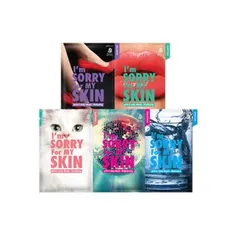
Works for:
based on ingredients and %- Moisturizing
- Anti-oxidation
- Anti-aging
Can it cause trouble?
- Irritation risk: high
- Comedogenic risk ingredients: 3
Key actives

Product Summary
"I'm SORRY For MY SKIN - pH 5.5 Jelly Mask - 5 Types" is effective for: Moisturizing
This product could be helpful for: Anti-aging, but its actives are not the most effective or are not well-studied.
Ingredient callouts
- Panthenol (pro-vitamin B5) at about 1.50% - 1.80% concentration. In this concentration, Panthenol works effectively to improve the skin barrier and reduce inflammation.
- In addition, this product contains Allantoin (4.60% - 5.60%). Allantoin is helpful in wound-healing and can help restore the skin barrier faster. It might also be able to improve scars, but the evidence is not very strong for this.
- Humectants (pantolactone 0.35% - 0.65%, glycerin 0.45% - 0.65%, trehalose 0.40% - 0.60%, hydrolyzed hyaluronic acid 0.35% - 0.65%, sodium acetylated hyaluronate 0.40% - 0.60%, sodium hyaluronate 0.40% - 0.60%, xylitylglucoside 0.50% - 0.75%, panthenol 1.50% - 1.80%, anhydroxylitol 3.20% - 3.90% and allantoin 4.60% - 5.60%). These ingredients help attract water to the upper layer of the skin and improve the skin hydration.
Price
The product retails for 5.11$ in the United States.
For a detailed price comparison: click here.
Works for
Moisturizing
What does the product description say?
The Moisturizing version are infused with three layers of hyaluronic acid to optimize skin’s water-oil balance; the Soothing mask contains calamine and panthenol to relieve irritated skin; the Purifying mask is infused with charcoal and propolis extracts to purify, refine and regulate sebum; the Relaxing version is enriched with chamomile and centella asiatica extracts to de-stress skin; the Brightening mask is formulated with damask rose extract, leaving skin looking more radiant and supple.
Source: Yesstyle
This product can help improve hydration of the skin with the two types of ingredients.
The first type is called “humectants”:
these ingredients help attract water.
When humectants are on the surface of the skin, they “pull in” the moisture from the outside environment, or from
within deeper layers of the skin. The following ingredients in this product do the job:
allantoin, anhydroxylitol.
This product also contains ingredients called “occlusives”. They help reduce the speed with which our skin loses moisture to the outside environment. These ingredients also help soften the upper layer of the skin, so it feels less tight and nicer to the touch. The following ingredients in this product do the job: phenyl trimethicone, glyceryl caprylate.
The following ingredients in this product are especially good for supporting the skin barrier and helping with the hydration level: panthenol
Helps calm down inflammation in skin and can help reduce itching. Helps to repair the skin barrier and keep skin hydrated
A plant extract that has been shown to be able to reduce inflammation in skin, support restoration of skin barrier function, as well as support collagen production. Contains active compounds called centelloids: asiaticoside, madecasosside, asiatic acid and madecassic acid. Might be helpful in preventing stretch marks. It can be itself be irritating though.
Helps attract water to the upper layer of the skin and can help improve skin barrier function
Helps attract water to the upper layer of the skin
A type of silicone that can decrease loss of moisture from the skin surface. It helps create a nice product texture
A type of hyaluronic acid that works as an excellent moisturizer by attracting water into the upper layer of the skin. Is typically feels less sticky on the skin compared to the usual hyaluronic acid
One of the best moisturizing ingredients. Attracts water into the upper layer of the skin
A sugar that attracts water to the upper layer of the skin
A seaweed extract that helps attract water to the upper layer of the skin and might have an anti-oxidant effect
Helps attract water to the upper layer of the skin and repair the skin barrier function
Helps attract water to the upper layer of the skin and repair the skin barrir function
One of the best moisturizing ingredients. Naturally present in skin. It attracts water to the upper layer of the skin working as a humectant
One of the best moisturizing ingredients. Attracts water into the upper layer of the skin. A version of it is naturally present in skin
Seaweed extract that might help to attract water to the upper layer of the skin and have some anti-oxidant properties
Cannot penetrate the skin barrier so is not particularly useful in skincare products
Helps attract water to the upper layer of the skin. Could be helpful in restoring the skin barrier function
Can help attract water to the upper layer of the skin
A complex substance produced by honey bees. Can have anti-bacterial and some anti-oxidant effect. Is an allergen and can be irritating
A plant extract that might contain a compound baicalin that could be helpful in neutralizing free radicals and reducing inflammation in skin. The baicalin concentration in skincare products is often too low for an effective action. Can be used for its fragrant properties
An emollient that can also help water and oil mix together, as well as prevent bacteria growth in products
Used to create a nice product texture and help delivery of other ingredients. Might be somewhat helpful in attracting water to the upper layer of the skin
Might be somewhat helpful in reducing hyperpigmentation and neutralizing free radicals but its typical concentration in a product is too low for having an effect
Can contain potent anti-oxidant compounds (abbreviated ECG, GCG, EGC, and EGCG) that might help protect the skin from free radicals. Can help calm down inflammation and has some anti-bacterial properties. Unfortunately, these antioxidants are unstable and lose their effectiveness very quickly in products. The concentration of the antioxidant compounds in the extract also tends to be low to be effective in topical formulation
Anti-aging
This product contains centella asiatica extract. This ingredient might be able to help reduce and prevent fine lines and wrinkles, improve skin elasticity and firmness, but there is not enough evidence that it actually works.
A plant extract that has been shown to be able to reduce inflammation in skin, support restoration of skin barrier function, as well as support collagen production. Contains active compounds called centelloids: asiaticoside, madecasosside, asiatic acid and madecassic acid. Might be helpful in preventing stretch marks. It can be itself be irritating though.
A derivative of vitamin C that is more stable, but less bioavailable than the pure form of vitamin C. It does not penetrate the skin well, but has been shown to convert to pure vitamin C once in skin. It can be helpful in stimulating collagen production and lightening the skin tone, but the required concentration is likely to be very high
Can contain potent anti-oxidant compounds (abbreviated ECG, GCG, EGC, and EGCG) that might help protect the skin from free radicals. Can help calm down inflammation and has some anti-bacterial properties. Unfortunately, these antioxidants are unstable and lose their effectiveness very quickly in products. The concentration of the antioxidant compounds in the extract also tends to be low to be effective in topical formulation
Anti-oxidation
This product contains antioxidants (centella asiatica extract) that might be able to help neutralize free radicals in skin to lessen the damage it gets from the UV light (sun). There is not enough evidence to confirm their effectiveness in skin though.
A plant extract that has been shown to be able to reduce inflammation in skin, support restoration of skin barrier function, as well as support collagen production. Contains active compounds called centelloids: asiaticoside, madecasosside, asiatic acid and madecassic acid. Might be helpful in preventing stretch marks. It can be itself be irritating though.
A plant extract that might help neutralize free radicals in skin, but research on its effectiveness is lacking
A plant extract that might help neutralize free radicals in skin. Can contain volalite oils and be irritating
A complex substance produced by honey bees. Can have anti-bacterial and some anti-oxidant effect. Is an allergen and can be irritating
A plant extract that can help neutralize free radicals in skin. It contains a compound salicin that can theoretically be converted into salicylic acid that, in turn, helps reduce inflammation in skin, but the evidence of effectiveness in skin is lacking and the extract is usually not used in a concentration that would enable an exfoliating effect
A plant extract that might contain a compound baicalin that could be helpful in neutralizing free radicals and reducing inflammation in skin. The baicalin concentration in skincare products is often too low for an effective action. Can be used for its fragrant properties
A seaweed extract that helps attract water to the upper layer of the skin and might have an anti-oxidant effect
A plant extract that might help neutralize free radicals in skin
Can contain potent anti-oxidant compounds (abbreviated ECG, GCG, EGC, and EGCG) that might help protect the skin from free radicals. Can help calm down inflammation and has some anti-bacterial properties. Unfortunately, these antioxidants are unstable and lose their effectiveness very quickly in products. The concentration of the antioxidant compounds in the extract also tends to be low to be effective in topical formulation
Might be somewhat helpful in reducing hyperpigmentation and neutralizing free radicals but its typical concentration in a product is too low for having an effect
A derivative of vitamin C that is more stable, but less bioavailable than the pure form of vitamin C. It does not penetrate the skin well, but has been shown to convert to pure vitamin C once in skin. It can be helpful in stimulating collagen production and lightening the skin tone, but the required concentration is likely to be very high
How honest is this product?
| Promise | Can it deliver? |
|---|---|
| Moisturizing |
Total Promises Fulfilled score: 100/100.
We receive a small commission for purchases made through these links at no cost for you. Thank you for your support! Learn more
Potential irritants
Comedogenic ingredients
User reviews (0)
Averages from community submissions.
No reviews yet for this product.
Be the first to share your experience!
Tried this product?
Help capture what the ingredient list can't—texture, finish, pilling, scent, and more. Answer what you can, skip the rest.
Takes ~30 seconds.
Reviews are shown in aggregate. No personal details.
| Product | Similarity | Price | Irritancy |
|---|---|---|---|
 I'm SORRY For MY SKIN pH 5.5 Jelly Mask - 5 Types | Current | $5.11 | |
 MEDIHEAL D.N.A Hydrating Protein Sheet Mask | 55% | $9.95 | |
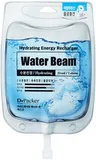 DEARPACKER Water Beam Mask | 55% | - | |
 FOREO UFO Activated Masks - Bulgarian Rose | 55% | $13.99 | |
 Faith in Face Hydrogel Mask - 4 Types | 54% | $4.54 | |
 Dr. Jart+ + Cryo Rubber™ Face Mask with Soothing Allantoin | 54% | ≈ $13.37 |
Key Actives
A plant extract that has been shown to be able to reduce inflammation in skin, support restoration of skin barrier function, as well as support collagen production. Contains active compounds called centelloids: asiaticoside, madecasosside, asiatic acid and madecassic acid. Might be helpful in preventing stretch marks. It can be itself be irritating though.
Helps calm down inflammation in skin and can help reduce itching. Helps to repair the skin barrier and keep skin hydrated
Can contain potent anti-oxidant compounds (abbreviated ECG, GCG, EGC, and EGCG) that might help protect the skin from free radicals. Can help calm down inflammation and has some anti-bacterial properties. Unfortunately, these antioxidants are unstable and lose their effectiveness very quickly in products. The concentration of the antioxidant compounds in the extract also tends to be low to be effective in topical formulation
Helps attract water to the upper layer of the skin and can help improve skin barrier function
A seaweed extract that helps attract water to the upper layer of the skin and might have an anti-oxidant effect
Helps attract water to the upper layer of the skin and repair the skin barrir function
Seaweed extract that might help to attract water to the upper layer of the skin and have some anti-oxidant properties
Helps attract water to the upper layer of the skin and repair the skin barrier function
A type of silicone that can decrease loss of moisture from the skin surface. It helps create a nice product texture
One of the best moisturizing ingredients. Attracts water into the upper layer of the skin
A type of hyaluronic acid that works as an excellent moisturizer by attracting water into the upper layer of the skin. Is typically feels less sticky on the skin compared to the usual hyaluronic acid
One of the best moisturizing ingredients. Attracts water into the upper layer of the skin. A version of it is naturally present in skin
A sugar that attracts water to the upper layer of the skin
One of the best moisturizing ingredients. Naturally present in skin. It attracts water to the upper layer of the skin working as a humectant
Helps attract water to the upper layer of the skin
A plant extract that can help calm down inflammation in skin. Can, however, itself be irritating
Potential irritants
A plant extract that is added for its fragrance. Can be irritating
A plant extract that one one hand, can contain compounds that can help calm down skin irritation, but, on the other hand, its other compounds (especially fragrant ones) can themselves be irritating
Essential oil that can be irritating. Can lead to photosensitivity
A plant extract that might contain a compound baicalin that could be helpful in neutralizing free radicals and reducing inflammation in skin. The baicalin concentration in skincare products is often too low for an effective action. Can be used for its fragrant properties
A complex substance produced by honey bees. Can have anti-bacterial and some anti-oxidant effect. Is an allergen and can be irritating
A plant extract that might help neutralize free radicals in skin. Can contain volalite oils and be irritating
A common frangrance that can easily irritate skin, especially if exposed to air, light or heat
Used for fragrance and contains volatile compounds that can irritate the skin
A plant extract that can help neutralize free radicals in skin. It contains a compound salicin that can theoretically be converted into salicylic acid that, in turn, helps reduce inflammation in skin, but the evidence of effectiveness in skin is lacking and the extract is usually not used in a concentration that would enable an exfoliating effect
A plant extract that might help neutralize free radicals in skin
An essentil oil from orange peel. Potential allergen and can be irritating
A plant extract that can help calm down inflammation in skin. Can, however, itself be irritating
An essential oil with a lemon-like smell that is extracted from a fruit grown in Asia. Used as a fragrance
A plant extract mostly used as a fragrance. Can be irritating
Plant extract that can have healing and anti-inflammatory properties. It is a potential allergen and can be irritating
Might be somewhat helpful in reducing hyperpigmentation and neutralizing free radicals but its typical concentration in a product is too low for having an effect
A derivative of vitamin C that is more stable, but less bioavailable than the pure form of vitamin C. It does not penetrate the skin well, but has been shown to convert to pure vitamin C once in skin. It can be helpful in stimulating collagen production and lightening the skin tone, but the required concentration is likely to be very high
Can work as an exfoliant but is typically used to adjust the product pH
A plant extract that has been shown to be able to reduce inflammation in skin, support restoration of skin barrier function, as well as support collagen production. Contains active compounds called centelloids: asiaticoside, madecasosside, asiatic acid and madecassic acid. Might be helpful in preventing stretch marks. It can be itself be irritating though.
A plant extract that might help neutralize free radicals in skin, but research on its effectiveness is lacking
Comedogenic ingredients
Seaweed extract that might help to attract water to the upper layer of the skin and have some anti-oxidant properties
All ingredients
Helps calm down inflammation in skin and can help reduce itching. Helps to repair the skin barrier and keep skin hydrated
Helps attract water to the upper layer of the skin and repair the skin barrir function
Seaweed extract that might help to attract water to the upper layer of the skin and have some anti-oxidant properties
Helps attract water to the upper layer of the skin and can help improve skin barrier function
Helps attract water to the upper layer of the skin. Could be helpful in restoring the skin barrier function
A plant extract that is added for its fragrance. Can be irritating
Might be somewhat helpful in reducing hyperpigmentation and neutralizing free radicals but its typical concentration in a product is too low for having an effect
A seaweed extract that helps attract water to the upper layer of the skin and might have an anti-oxidant effect
Helps attract water to the upper layer of the skin and repair the skin barrier function
A derivative of vitamin C that is more stable, but less bioavailable than the pure form of vitamin C. It does not penetrate the skin well, but has been shown to convert to pure vitamin C once in skin. It can be helpful in stimulating collagen production and lightening the skin tone, but the required concentration is likely to be very high
Can contain potent anti-oxidant compounds (abbreviated ECG, GCG, EGC, and EGCG) that might help protect the skin from free radicals. Can help calm down inflammation and has some anti-bacterial properties. Unfortunately, these antioxidants are unstable and lose their effectiveness very quickly in products. The concentration of the antioxidant compounds in the extract also tends to be low to be effective in topical formulation
Can work as an exfoliant but is typically used to adjust the product pH
A plant extract that one one hand, can contain compounds that can help calm down skin irritation, but, on the other hand, its other compounds (especially fragrant ones) can themselves be irritating
Essential oil that can be irritating. Can lead to photosensitivity
A plant extract that might contain a compound baicalin that could be helpful in neutralizing free radicals and reducing inflammation in skin. The baicalin concentration in skincare products is often too low for an effective action. Can be used for its fragrant properties
A plant extract that has been shown to be able to reduce inflammation in skin, support restoration of skin barrier function, as well as support collagen production. Contains active compounds called centelloids: asiaticoside, madecasosside, asiatic acid and madecassic acid. Might be helpful in preventing stretch marks. It can be itself be irritating though.
Used to thicken product formulations and create gel-like textures
An emollient that can also help water and oil mix together, as well as prevent bacteria growth in products
A complex substance produced by honey bees. Can have anti-bacterial and some anti-oxidant effect. Is an allergen and can be irritating
A type of silicone that can decrease loss of moisture from the skin surface. It helps create a nice product texture
A plant extract that might help neutralize free radicals in skin. Can contain volalite oils and be irritating
A common frangrance that can easily irritate skin, especially if exposed to air, light or heat
One of the best moisturizing ingredients. Attracts water into the upper layer of the skin
A type of hyaluronic acid that works as an excellent moisturizer by attracting water into the upper layer of the skin. Is typically feels less sticky on the skin compared to the usual hyaluronic acid
Helps to dissolve other ingredients in a formulation. Slows down the rate of product drying
One of the best moisturizing ingredients. Attracts water into the upper layer of the skin. A version of it is naturally present in skin
Used for fragrance and contains volatile compounds that can irritate the skin
One of the best moisturizing ingredients. Naturally present in skin. It attracts water to the upper layer of the skin working as a humectant
A plant extract that might help neutralize free radicals in skin, but research on its effectiveness is lacking
A plant extract that can help neutralize free radicals in skin. It contains a compound salicin that can theoretically be converted into salicylic acid that, in turn, helps reduce inflammation in skin, but the evidence of effectiveness in skin is lacking and the extract is usually not used in a concentration that would enable an exfoliating effect
A plant extract that might help neutralize free radicals in skin
An essentil oil from orange peel. Potential allergen and can be irritating
A plant extract that can help calm down inflammation in skin. Can, however, itself be irritating
An essential oil with a lemon-like smell that is extracted from a fruit grown in Asia. Used as a fragrance
A plant extract mostly used as a fragrance. Can be irritating
Helps attract water to the upper layer of the skin and repair the skin barrier function
Helps create a thicker or gel-like product texture. It is not a surfactant but can be used in gentle cleansing formulations
Used to create a nice product texture and help delivery of other ingredients. Might be somewhat helpful in attracting water to the upper layer of the skin
Cannot penetrate the skin barrier so is not particularly useful in skincare products
Plant extract that can have healing and anti-inflammatory properties. It is a potential allergen and can be irritating
Increases thickness of a product. Texture enhancer for oil-in-water emulsions
Ingredient list view
Water, Spirulina maxima extract, Allantoin, Anhydroxylitol, Myristica fragrans kernel oil, Mentha piperita extract, Laminaria japonica extract, Panthenol, Glucose, Melissa officinalis leaf extract, Mentha arvensis leaf extract, Aloe ferox leaf extract, Polyglyceryl-10 laurate, Cucumis sativus fruit extract, Undaria pinnatifida extract, Xylitylglucoside, Monarda didyma leaf extract, Magnesium ascorbyl phosphate, Camellia sinensis leaf extract, Citric acid, Sodium polyacrylate starch, Anthemis nobilis flower extract, Ethylhexylglycerin, Xanthan gum, Citrus tangerina peel oil, Scutellaria baicalensis root extract, Centella asiatica extract, Hydroxyethylcellulose, Glyceryl caprylate, Propolis extract, Methylpropanediol, Phenyl trimethicone, Lonicera japonica flower extract, Limonene, Diethylhexyl sodium sulfosuccinate, Sodium hyaluronate, Sodium acetylated hyaluronate, Dipropylene glycol, Hydrolyzed hyaluronic acid, Trehalose, Syringa vulgaris extract, Rosmarinus officinalis extract, Lavandula angustifolia extract, Freesia refracta extract, Glycerin, Charcoal powder, Hippophae rhamnoides fruit extract, Enteromorpha compressa extract, Gelidium cartilagineum extract, Salix alba bark extract, Geraniol, Calendula officinalis extract, Citrus aurantium dulcis peel oil, Rosa damascena flower extract, Pantolactone, Hamamelis virginiana extract, Jasminum officinale extract, Litsea cubeba fruit oil, Tabebuia impetiginosa bark extract, Paeonia suffruticosa root extract, Chamomilla recutita flower water, Ocimum basilicum extract, Xylitol, Carbomer, Butylene glycol, Collagen, 1,2-hexanediol, Chamomilla recutita flower extract, Disodium edta, Hydrolyzed silk, Citral, Ammonium acryloyldimethyltaurate/vp copolymer
- Profile of wound healing process induced by allantoin
- Skin moisturizing effects of panthenol-based formulations
- Safety Assessment of Panthenol, Pantothenic Acid, and Derivatives as Used in Cosmetics
- Topical Glucose Induces Claudin-1 and Filaggrin Expression in a Mouse Model of Atopic Dermatitis and in Keratinocyte Culture, Exerting Anti-inflammatory Effects by Repairing Skin Barrier Function
- In Vitro Assessment of Skin Irritation Potential of Surfactant-based Formulations by Using a 3-D Skin Reconstructed Tissue Model and Cytokine Response
- Stability, transdermal penetration, and cutaneous effects of ascorbic acid and its derivatives
- Topical L-ascorbic acid: percutaneous absorption studies
- Biological Activities and Safety of Citrus spp. Essential Oils
- Scutellaria baicalensis, the golden herb from the garden of Chinese medicinal plants
- Flavonoids in Treating Psoriasis
- Improvement of skin barrier dysfunction by Scutellaria baicalensis GEOGI extracts through lactic acid fermentation
- Safety Assessment of Scutellaria baicalensis-Derived Ingredients as Used in Cosmetics
- Anti-Inflammatory Effect of Titrated Extract of Centella asiatica in Phthalic Anhydride-Induced Allergic Dermatitis Animal Model
- Centella asiatica in cosmetology
- Triterpene Composition and Bioactivities of Centella asiatica
- Asiaticoside induction for cell-cycle progression, proliferation and collagen synthesis in human dermal fibroblasts
- Assessment report on Centella asiatica (L.) Urban, herba
- Contact dermatitis due to Madecassol
- The Effects of a Standardized Extract of Centella asiatica on Postlaser Resurfacing Wound Healing on the Face: A Split-Face, Double-Blind, Randomized, Placebo-Controlled Trial
- Propolis: A Wonder Bees Product and Its Pharmacological Potentials
- VOLATILE CONSTITUENTS FROM THE FLOWERS OF TWO SPECIES OF HONEYSUCKLE ( LONICERA JAPONICA AND LONICERA CAPRIFOLIUM )
- Chemical composition of the essential oils from the flower, leaf and stem of Lonicera japonica
- Hyaluronic acid: A key molecule in skin aging
- Hyaluronan (Hyaluronic Acid): a natural moisturizer for skin care
- Acetylated Hyaluronic Acid: Enhanced Bioavailability and Biological Studies
- Efficacy of a New Topical Nano-hyaluronic Acid in Humans
- Physiochemical properties and application of hyaluronic acid: a systematic review
- Glycerol and the skin: holistic approach to its origin and functions
- Abundance of active ingredients in sea-buckthorn oil
- Efficacy and Safety of White Willow Bark (Salix alba) Extract
- An evaluation of the effect of a topical product containing salicin on the visible signs of human skin aging
- Annex I: Clinical evidence regarding sensitisation to individual fragrance chemicals and to natural extracts
- Protective effect of Calendula officinalis extract against UVB-induced oxidative stress in skin: evaluation of reduced glutathione levels and matrix metalloproteinase secretion
- Safety Assessment of Panthenol, Pantothenic Acid, and Derivatives as Used in Cosmetics
- Anti-Inflammatory Efficacy of Topical Preparations with 10% Hamamelis Distillate in a UV Erythema Test
- Anti-inflammatory activity of hamamelis distillate applied topically to the skin
- ASSESSMENT REPORT ON HAMAMELIS VIRGINIANA L., CORTEX HAMAMELIS VIRGINIANA L., FOLIUM HAMAMELIS VIRGINIANA L., FOLIUM ET CORTEX AUT RAMUNCULUS DESTILLATUM
- Ethnopharmacological Properties and Medicinal Uses of Litsea cubeba
- The influence of alkane chain length on the skin irritation potential of 1,2-alkanediols
- Moisturizing efficiency of silk protein hydrolysate: Silk fibroin