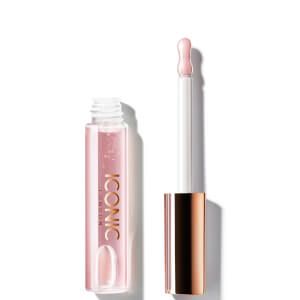
ICONIC LONDON Lustre Lip Oil - Sugar Mama
Works for
1 of 1 advertised claim delivered
MoisturizingSodium hyaluronate, Helianthus annuus seed oil + 9 moreGood evidence
“Vitamin C and Hyaluronic Acid hydrate and nourish, helping pouts to appear supple and velvety-soft.”
This product can help improve hydration of the skin with the two types of ingredients.
The first type is called “humectants”:
these ingredients help attract water.
When humectants are on the surface of the skin, they “pull in” the moisture from the outside environment, or from
within deeper layers of the skin. The following ingredients in this product do the job:
sodium hyaluronate, sucrose.
This product also contains ingredients called “occlusives”. They help reduce the speed with which our skin loses moisture to the outside environment. These ingredients also help soften the upper layer of the skin, so it feels less tight and nicer to the touch. The following ingredients in this product do the job: helianthus annuus seed oil, diisostearyl malate.
Can it cause trouble?
Irritancy2 strong irritants: Aroma, Parfum — patch-test recommendedHigh risk
Comedogenic6 ingredients rated 2 or more on the 0–5 pore-clogging scale6 flagged
User reviews
Be the first — your take helps the next person decide.
Ingredients
Filter by role to see what each ingredient is doing.
Sucrose~29–36%
- Irritation risk
- Low
Can help attract water to the upper layer of the skin. In crystal form, it can work as a gentle exfoliant, gentler than the salt scrub. Helps stabilize the emulsion
More about SucroseHydrogenated polydecene~5.9–7.2%
- Irritation risk
- Low
Helps to soften the upper layer of the skin and create a nice product texture
More about Hydrogenated polydeceneDiisostearyl malate~5.1–6.2%
- Irritation risk
- Medium
Helps to soften the upper layer of the skin
More about Diisostearyl malateHydrogenated styrene/isoprene copolymer~3.7–4.5%
- Irritation risk
- Medium
Helps to create a thicker product consistency
More about Hydrogenated styrene/isoprene copolymerEthylhexyl palmitate~2.7–3.3%
- Irritation risk
- Low
- Comedogenicity
- 3/5
An emollient that helps soften the skin and create a nice product texture
More about Ethylhexyl palmitateAroma~2.2–2.6%
Pentaerythrityl tetra-di-t-butyl hydroxyhydrocinnamate~1.7–2.1%
- Irritation risk
- Low
Used to increase stability of product formulations
More about Pentaerythrityl tetra-di-t-butyl hydroxyhydrocinnamateHelianthus annuus seed oil~1.8–2.2%
- Irritation risk
- Low
A great emollient due to its high linoleic acid content. One of the most effective plant oils in helping skin hydration and repairing skin barrier function
More about Helianthus annuus seed oilTocopherol~1.2–1.5%
- Irritation risk
- Low
Pure form of vitamin E. Can help moisturise and protect the skin from free radicals. Often used to help stabilise other ingredients or the formula itself
More about TocopherolTrihydroxystearin~1–1.2%
- Irritation risk
- Low
Helps soften the upper layer of the skin and improve the product texture
More about TrihydroxystearinLecithin~0.9–1.1%
- Irritation risk
- Low
Used mostly for creating emulsions - helping oil and water mix together. Helps soften the upper layer of the skin
More about LecithinSodium hyaluronate~0.6–0.9%
- Irritation risk
- Low
One of the best moisturizing ingredients. Attracts water into the upper layer of the skin
More about Sodium hyaluronateAscorbyl palmitate~0.55–0.8%
- Irritation risk
- Medium
Being a lipid soluble form of vitamin C, it is more stable and can penetrate the skin better than L-Ascorbic acid. It is effective in protecting the skin from free radicals, as well as evening the skin tone, but is less effective in stimulating collagen production compared to L-Ascorbic acid.
More about Ascorbyl palmitateAlkanna tinctoria root extract~0.5–0.75%
- Irritation risk
- Low
Citric acid~0.5–0.7%
- Irritation risk
- Medium
Can work as an exfoliant but is typically used to adjust the product pH
More about Citric acidGlucomannan~0.5–0.7%
- Irritation risk
- Low
C21-28 alkane~0.55–0.8%
- Irritation risk
- Low
Hydrogenated polydecene~0.5–0.7%
- Irritation risk
- Low
Helps to soften the upper layer of the skin and create a nice product texture
More about Hydrogenated polydeceneDiisostearyl malate~0.45–0.65%
- Irritation risk
- Medium
Helps to soften the upper layer of the skin
More about Diisostearyl malateHydrogenated styrene/isoprene copolymer~0.3–0.55%
- Irritation risk
- Medium
Helps to create a thicker product consistency
More about Hydrogenated styrene/isoprene copolymerEthylhexyl palmitate~0.4–0.6%
- Irritation risk
- Low
- Comedogenicity
- 3/5
An emollient that helps soften the skin and create a nice product texture
More about Ethylhexyl palmitateParfum~0.25–0.5%
- Irritation risk
- High
An aromatic blend of unspecified and possibly irritating ingredients
More about ParfumHelianthus annuus seed oil~0.3–0.6%
- Irritation risk
- Low
A great emollient due to its high linoleic acid content. One of the most effective plant oils in helping skin hydration and repairing skin barrier function
More about Helianthus annuus seed oilTocopherol~0.25–0.5%
- Irritation risk
- Low
Pure form of vitamin E. Can help moisturise and protect the skin from free radicals. Often used to help stabilise other ingredients or the formula itself
More about TocopherolCamellia sinensis leaf extract~0.25–0.5%
- Irritation risk
- Low
Can contain potent anti-oxidant compounds (abbreviated ECG, GCG, EGC, and EGCG) that might help protect the skin from free radicals. Can help calm down inflammation and has some anti-bacterial properties. Unfortunately, these antioxidants are unstable and lose their effectiveness very quickly in products. The concentration of the antioxidant compounds in the extract also tends to be low to be effective in topical formulation
More about Camellia sinensis leaf extractTrihydroxystearin~0.25–0.5%
- Irritation risk
- Low
Helps soften the upper layer of the skin and improve the product texture
More about TrihydroxystearinLecithin~0.35–0.65%
- Irritation risk
- Low
Used mostly for creating emulsions - helping oil and water mix together. Helps soften the upper layer of the skin
More about LecithinAlkanna tinctoria root extract~0.25–0.5%
- Irritation risk
- Low
Sodium hyaluronate~0.25–0.5%
- Irritation risk
- Low
One of the best moisturizing ingredients. Attracts water into the upper layer of the skin
More about Sodium hyaluronateAscorbyl palmitate~0.25–0.45%
- Irritation risk
- Medium
Being a lipid soluble form of vitamin C, it is more stable and can penetrate the skin better than L-Ascorbic acid. It is effective in protecting the skin from free radicals, as well as evening the skin tone, but is less effective in stimulating collagen production compared to L-Ascorbic acid.
More about Ascorbyl palmitateCitric acid~0.25–0.5%
- Irritation risk
- Medium
Can work as an exfoliant but is typically used to adjust the product pH
More about Citric acidGlucomannan~0.25–0.5%
- Irritation risk
- Low
C21-28 alkane~0.35–0.6%
- Irritation risk
- Low
Hydrogenated polydecene~0.3–0.55%
- Irritation risk
- Low
Helps to soften the upper layer of the skin and create a nice product texture
More about Hydrogenated polydeceneDiisostearyl malate~0.35–0.6%
- Irritation risk
- Medium
Helps to soften the upper layer of the skin
More about Diisostearyl malateHydrogenated styrene/isoprene copolymer~0.25–0.5%
- Irritation risk
- Medium
Helps to create a thicker product consistency
More about Hydrogenated styrene/isoprene copolymerHelianthus annuus seed oil~0.3–0.6%
- Irritation risk
- Low
A great emollient due to its high linoleic acid content. One of the most effective plant oils in helping skin hydration and repairing skin barrier function
More about Helianthus annuus seed oilAroma~0.25–0.5%
Ethylhexyl palmitate~0.35–0.6%
- Irritation risk
- Low
- Comedogenicity
- 3/5
An emollient that helps soften the skin and create a nice product texture
More about Ethylhexyl palmitatePentaerythrityl tetra-di-t-butyl hydroxyhydrocinnamate~0.25–0.5%
- Irritation risk
- Low
Used to increase stability of product formulations
More about Pentaerythrityl tetra-di-t-butyl hydroxyhydrocinnamateTocopherol~0.25–0.5%
- Irritation risk
- Low
Pure form of vitamin E. Can help moisturise and protect the skin from free radicals. Often used to help stabilise other ingredients or the formula itself
More about TocopherolAlkanna tinctoria root extract~0.25–0.5%
- Irritation risk
- Low
Trihydroxystearin~0.25–0.5%
- Irritation risk
- Low
Helps soften the upper layer of the skin and improve the product texture
More about TrihydroxystearinLecithin~0.35–0.65%
- Irritation risk
- Low
Used mostly for creating emulsions - helping oil and water mix together. Helps soften the upper layer of the skin
More about LecithinSodium hyaluronate~0.25–0.5%
- Irritation risk
- Low
One of the best moisturizing ingredients. Attracts water into the upper layer of the skin
More about Sodium hyaluronateAscorbyl palmitate~0.25–0.45%
- Irritation risk
- Medium
Being a lipid soluble form of vitamin C, it is more stable and can penetrate the skin better than L-Ascorbic acid. It is effective in protecting the skin from free radicals, as well as evening the skin tone, but is less effective in stimulating collagen production compared to L-Ascorbic acid.
More about Ascorbyl palmitateCitric acid~0.25–0.5%
- Irritation risk
- Medium
Can work as an exfoliant but is typically used to adjust the product pH
More about Citric acidGlucomannan~0.25–0.5%
- Irritation risk
- Low
C21-28 alkane~0.35–0.6%
- Irritation risk
- Low
Hydrogenated polydecene~0.3–0.55%
- Irritation risk
- Low
Helps to soften the upper layer of the skin and create a nice product texture
More about Hydrogenated polydeceneDiisostearyl malate~0.35–0.6%
- Irritation risk
- Medium
Helps to soften the upper layer of the skin
More about Diisostearyl malateHydrogenated styrene/isoprene copolymer~0.25–0.5%
- Irritation risk
- Medium
Helps to create a thicker product consistency
More about Hydrogenated styrene/isoprene copolymerEthylhexyl palmitate~0.35–0.6%
- Irritation risk
- Low
- Comedogenicity
- 3/5
An emollient that helps soften the skin and create a nice product texture
More about Ethylhexyl palmitateParfum~0.25–0.45%
- Irritation risk
- High
An aromatic blend of unspecified and possibly irritating ingredients
More about ParfumPentaerythrityl tetra-di-t-butyl hydroxyhydrocinnamate~0.25–0.5%
- Irritation risk
- Low
Used to increase stability of product formulations
More about Pentaerythrityl tetra-di-t-butyl hydroxyhydrocinnamateTocopherol~0.25–0.5%
- Irritation risk
- Low
Pure form of vitamin E. Can help moisturise and protect the skin from free radicals. Often used to help stabilise other ingredients or the formula itself
More about TocopherolTrihydroxystearin~0.25–0.5%
- Irritation risk
- Low
Helps soften the upper layer of the skin and improve the product texture
More about TrihydroxystearinLecithin~0.35–0.65%
- Irritation risk
- Low
Used mostly for creating emulsions - helping oil and water mix together. Helps soften the upper layer of the skin
More about LecithinSodium hyaluronate~0.25–0.5%
- Irritation risk
- Low
One of the best moisturizing ingredients. Attracts water into the upper layer of the skin
More about Sodium hyaluronateAscorbyl palmitate~0.25–0.45%
- Irritation risk
- Medium
Being a lipid soluble form of vitamin C, it is more stable and can penetrate the skin better than L-Ascorbic acid. It is effective in protecting the skin from free radicals, as well as evening the skin tone, but is less effective in stimulating collagen production compared to L-Ascorbic acid.
More about Ascorbyl palmitateGlucomannan~0.25–0.5%
- Irritation risk
- Low
Citric acid~0.25–0.5%
- Irritation risk
- Medium
Can work as an exfoliant but is typically used to adjust the product pH
More about Citric acidButyrospermum parkii butter~0.35–0.65%
- Irritation risk
- Low
- Comedogenicity
- 3/5
A great moisturising ingredient that softens the skin and reduces water loss from its upper layer. It also can be helpful in protecting skin from free radicals
More about Butyrospermum parkii butterPrunus persica extract~0.3–0.6%
- Irritation risk
- Low
C21-28 alkane~0.35–0.6%
- Irritation risk
- Low
Hydrogenated polydecene~0.3–0.55%
- Irritation risk
- Low
Helps to soften the upper layer of the skin and create a nice product texture
More about Hydrogenated polydeceneDiisostearyl malate~0.35–0.6%
- Irritation risk
- Medium
Helps to soften the upper layer of the skin
More about Diisostearyl malateHydrogenated styrene/isoprene copolymer~0.25–0.5%
- Irritation risk
- Medium
Helps to create a thicker product consistency
More about Hydrogenated styrene/isoprene copolymerHelianthus annuus seed oil~0.3–0.6%
- Irritation risk
- Low
A great emollient due to its high linoleic acid content. One of the most effective plant oils in helping skin hydration and repairing skin barrier function
More about Helianthus annuus seed oilEthylhexyl palmitate~0.3–0.6%
- Irritation risk
- Low
- Comedogenicity
- 3/5
An emollient that helps soften the skin and create a nice product texture
More about Ethylhexyl palmitateAroma~0.25–0.45%
Pentaerythrityl tetra-di-t-butyl hydroxyhydrocinnamate~0.25–0.5%
- Irritation risk
- Low
Used to increase stability of product formulations
More about Pentaerythrityl tetra-di-t-butyl hydroxyhydrocinnamateTocopherol~0.25–0.45%
- Irritation risk
- Low
Pure form of vitamin E. Can help moisturise and protect the skin from free radicals. Often used to help stabilise other ingredients or the formula itself
More about TocopherolTrihydroxystearin~0.25–0.45%
- Irritation risk
- Low
Helps soften the upper layer of the skin and improve the product texture
More about TrihydroxystearinLecithin~0.35–0.6%
- Irritation risk
- Low
Used mostly for creating emulsions - helping oil and water mix together. Helps soften the upper layer of the skin
More about LecithinAlkanna tinctoria root extract~0.2–0.4%
- Irritation risk
- Low
Sodium hyaluronate~0.2–0.35%
- Irritation risk
- Low
One of the best moisturizing ingredients. Attracts water into the upper layer of the skin
More about Sodium hyaluronateAscorbyl palmitate~0.15–0.3%
- Irritation risk
- Medium
Being a lipid soluble form of vitamin C, it is more stable and can penetrate the skin better than L-Ascorbic acid. It is effective in protecting the skin from free radicals, as well as evening the skin tone, but is less effective in stimulating collagen production compared to L-Ascorbic acid.
More about Ascorbyl palmitateSolanum lycopersicum fruit extract~0.2–0.35%
- Irritation risk
- Low
Citric acid~0.1–0.2%
- Irritation risk
- Medium
Can work as an exfoliant but is typically used to adjust the product pH
More about Citric acidGlucomannan~0.15–0.25%
- Irritation risk
- Low
Ingredient list view
Sucrose, Unknown, Hydrogenated polydecene, Diisostearyl malate, Hydrogenated styrene/isoprene copolymer, Ethylhexyl palmitate, Aroma, Pentaerythrityl tetra-di-t-butyl hydroxyhydrocinnamate, Helianthus annuus seed oil, Tocopherol, Trihydroxystearin, Lecithin, Sodium hyaluronate, Ascorbyl palmitate, Alkanna tinctoria root extract, Citric acid, Glucomannan, Unknown, C21-28 alkane, Hydrogenated polydecene, Diisostearyl malate, Hydrogenated styrene/isoprene copolymer, Ethylhexyl palmitate, Parfum, Helianthus annuus seed oil, Unknown, Tocopherol, Camellia sinensis leaf extract, Trihydroxystearin, Lecithin, Alkanna tinctoria root extract, Sodium hyaluronate, Ascorbyl palmitate, Citric acid, Glucomannan, C21-28 alkane, Hydrogenated polydecene, Diisostearyl malate, Hydrogenated styrene/isoprene copolymer, Helianthus annuus seed oil, Aroma, Ethylhexyl palmitate, Pentaerythrityl tetra-di-t-butyl hydroxyhydrocinnamate, Tocopherol, Alkanna tinctoria root extract, Trihydroxystearin, Lecithin, Sodium hyaluronate, Ascorbyl palmitate, Citric acid, Glucomannan, C21-28 alkane, Hydrogenated polydecene, Diisostearyl malate, Hydrogenated styrene/isoprene copolymer, Ethylhexyl palmitate, Parfum, Pentaerythrityl tetra-di-t-butyl hydroxyhydrocinnamate, Tocopherol, Trihydroxystearin, Lecithin, Sodium hyaluronate, Ascorbyl palmitate, Glucomannan, Citric acid, Butyrospermum parkii butter, Prunus persica extract, C21-28 alkane, Hydrogenated polydecene, Diisostearyl malate, Hydrogenated styrene/isoprene copolymer, Helianthus annuus seed oil, Ethylhexyl palmitate, Aroma, Pentaerythrityl tetra-di-t-butyl hydroxyhydrocinnamate, Tocopherol, Trihydroxystearin, Lecithin, Alkanna tinctoria root extract, Sodium hyaluronate, Ascorbyl palmitate, Solanum lycopersicum fruit extract, Citric acid, Glucomannan
Compare prices
Retailers ranked by price — lowest first.
Affiliate links · prices updated regularly · As an Amazon Associate, WIMJ earns from qualifying purchases.
Sources cited in this review
Every concentration estimate and effectiveness label is anchored to one of these 10 studies and safety reviews.
- 1Safety Assessment of Polyene Group as Used in Cosmeticscir-safety.org
- 2
- 3
- 4
- 5Effect of topically applied lipids on surfactant-irritated skinonlinelibrary.wiley.com
- 6

Affiliate links · As an Amazon Associate, WIMJ earns from qualifying purchases.