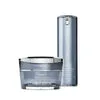
HydroPeptide Peel - Anti-Wrinkle Polish & Plump Peel CLEARANCE

HydroPeptide Peel - Anti-Wrinkle Polish & Plump Peel CLEARANCE

Efficacy43/100IrritancyHigh

Works for

Moisturizing
Acetyl hexapeptide-8, Tripeptide-1 + 14 more
Works well
What the product description says
“Peel 2 contains a blend of 6 potent peptides that provide superior anti-ageing benefits, brightening the complexion, visibly reducing the look of lines and wrinkles, improved skin elasticity and increased hydration.”
Source: Face the future

This product can help improve hydration of the skin with the two types of ingredients.

The first type is called “humectants”:
these ingredients help attract water. When humectants are on the surface of the skin, they “pull in” the moisture from the outside environment, or from within deeper layers of the skin. The following ingredients in this product do the job: glycerin, hydrolyzed soy protein.

This product also contains ingredients called “occlusives”. They help reduce the speed with which our skin loses moisture to the outside environment. These ingredients also help soften the upper layer of the skin, so it feels less tight and nicer to the touch. The following ingredients in this product do the job: tripeptide-1, cetearyl alcohol.

The following ingredients in this product are especially good for supporting the skin barrier and helping with the hydration level: acetyl hexapeptide-8, tripeptide-1, tripeptide-10 citrulline

Acetyl hexapeptide-8Hero· HumectantEffect: HighA type of peptide. Peptides are excellent moisturizers and might be able support collagen production reducing fine lines and wrinkles~0.15–0.5%
Tripeptide-1Hero· EmollientEffect: HighA type of peptide. Peptides are excellent moisturizers and might be able support collagen production reducing fine lines and wrinkles~0.15–0.55%
Tripeptide-10 citrullineHeroEffect: HighA type of peptide. Peptides are excellent moisturizers and might be able support collagen production reducing fine lines and wrinkles~0.1–0.4%
Cetearyl alcoholKey active· EmollientEffect: MediumA non-drying alcohol. Works as an emollient. Helps water and oil mix together and creates a nice product texture~2–3.1%
Cetyl alcoholKey active· EmollientEffect: MediumA non-drying alcohol that works to soften the skin and stabilize product formulations helping oil and water mix together~1.4–2%
Synthetic beeswaxKey activeEffect: HighHelps soften the upper layer of the skin~0.35–0.85%
GlycerinKey active· HumectantEffect: HighOne of the best moisturizing ingredients. Naturally present in skin. It attracts water to the upper layer of the skin working as a humectant~0.15–0.65%
Hydrolyzed soy proteinKey active· HumectantEffect: MediumHelps attract water to the upper layer of the skin. Might have some anti-aging, anti-oxidant, and skin lightening properties, but solid evidence is missing~0.1–0.5%
Hydrolyzed wheat proteinKey active· HumectantEffect: MediumCan help attract water to the upper layer of the skin. Avoid if sensitive to gluten~0.1–0.5%
Peg-8· HumectantEffect: LowUsed to create a nice product consistency~22–34%
Caprylyl glycol· Humectant, EmollientEffect: LowHelps preserve products and creates a nice product texture~0.15–0.6%
Butylene glycol· HumectantEffect: LowUsed to create a nice product texture and help delivery of other ingredients. Might be somewhat helpful in attracting water to the upper layer of the skin~0.1–0.5%
TocopherolEffect: Low, below effective dosePure form of vitamin E. Can help moisturise and protect the skin from free radicals. Often used to help stabilise other ingredients or the formula itself~0.4–0.95%
LecithinEffect: Low, below effective doseUsed mostly for creating emulsions - helping oil and water mix together. Helps soften the upper layer of the skin~0.15–0.65%
Cucumis sativus fruit extractEffect: Low, below effective doseMight be somewhat helpful in reducing hyperpigmentation and neutralizing free radicals but its typical concentration in a product is too low for having an effect~0.1–0.5%
Lactic acidUnder-dosedAn exfoliating and moisturizing alpha-hydroxy acid (AHA). Typically causes less irritation than other AHAs, for example, glycolic acid. At high concentrations (about 15%), lactic acid can help reduce lines and wrinkles. Recent studies show that lactic acid can support the "good" bacteria living on skin's surface (healthy skin microbiome)~0.15–0.6%
Anti-aging
Acetyl hexapeptide-8, Tripeptide-1 + 5 more
May help
What the product description says
“Peel , Anti-Wrinkle Polish & Plump Peel CLEARANCE”
From product name

This product contains acetyl hexapeptide-8, tripeptide-1, tripeptide-10 citrulline. These ingredients might be able to help reduce and prevent fine lines and wrinkles, improve skin elasticity and firmness, but there is not enough evidence that it actually works.

Acetyl hexapeptide-8Key activeEffect: MediumA type of peptide. Peptides are excellent moisturizers and might be able support collagen production reducing fine lines and wrinkles~0.15–0.5%
Tripeptide-1Key activeEffect: MediumA type of peptide. Peptides are excellent moisturizers and might be able support collagen production reducing fine lines and wrinkles~0.15–0.55%
Tripeptide-10 citrullineKey activeEffect: MediumA type of peptide. Peptides are excellent moisturizers and might be able support collagen production reducing fine lines and wrinkles~0.1–0.4%
TocopherolEffect: Low, below effective dosePure form of vitamin E. Can help moisturise and protect the skin from free radicals. Often used to help stabilise other ingredients or the formula itself~0.4–0.95%
Magnesium ascorbyl phosphateEffect: Low, below effective doseA derivative of vitamin C that is more stable, but less bioavailable than the pure form of vitamin C. It does not penetrate the skin well, but has been shown to convert to pure vitamin C once in skin. It can be helpful in stimulating collagen production and lightening the skin tone, but the required concentration is likely to be very high~0.35–0.8%
Retinyl palmitateUnder-dosedThree steps removed from the active form of vitamin A - retinoic acid. To have an effect in the skin, it first needs to be converted twice to become the retinoic acid. This means it is less potent than retinol, but could also be less irritating. Once converted to the retinoic acid in the skin, it helps against all signs of aging, improves skin cell turnover and helps fight blemishes and clogged pores. However, in many cosmetic formulations, it is used in a concentration that is too low to have the full effect~0.2–0.75%
Lactic acidUnder-dosedAn exfoliating and moisturizing alpha-hydroxy acid (AHA). Typically causes less irritation than other AHAs, for example, glycolic acid. At high concentrations (about 15%), lactic acid can help reduce lines and wrinkles. Recent studies show that lactic acid can support the "good" bacteria living on skin's surface (healthy skin microbiome)~0.15–0.6%
Exfoliation
Lactic acid ~0.15–0.6%
Under-dosed
What the product description says
“Peel , Anti-Wrinkle Polish & Plump Peel CLEARANCE”
From product name

This product does not contain effective exfoliating ingredients. It might be able to deliver physical exfoliation, that is scrub off some of the dead cells on the surface of the skin. We do not recommend physical exfoliation, because it is not uniform (some bits of skin can get exfoliated too much while others not at all). It can also traumatize the skin and aggrevate acne and other skin conditions.

Retinyl palmitateEffect: Low, below effective doseThree steps removed from the active form of vitamin A - retinoic acid. To have an effect in the skin, it first needs to be converted twice to become the retinoic acid. This means it is less potent than retinol, but could also be less irritating. Once converted to the retinoic acid in the skin, it helps against all signs of aging, improves skin cell turnover and helps fight blemishes and clogged pores. However, in many cosmetic formulations, it is used in a concentration that is too low to have the full effect~0.2–0.75%
Lactic acidUnder-dosedAn exfoliating and moisturizing alpha-hydroxy acid (AHA). Typically causes less irritation than other AHAs, for example, glycolic acid. At high concentrations (about 15%), lactic acid can help reduce lines and wrinkles. Recent studies show that lactic acid can support the "good" bacteria living on skin's surface (healthy skin microbiome)~0.15–0.6%
Evens skin tone
Retinyl palmitate ~0.2–0.75% + 1 more
Under-dosed
What the product description says
“Peel 2 contains a blend of 6 potent peptides that provide superior anti-ageing benefits, brightening the complexion, visibly reducing the look of lines and wrinkles, improved skin elasticity and increased hydration.”
Source: Face the future

Effective ingredients missing or their concentration is too low

Hydrolyzed soy proteinEffect: LowHelps attract water to the upper layer of the skin. Might have some anti-aging, anti-oxidant, and skin lightening properties, but solid evidence is missing~0.1–0.5%
Magnesium ascorbyl phosphateEffect: Low, below effective doseA derivative of vitamin C that is more stable, but less bioavailable than the pure form of vitamin C. It does not penetrate the skin well, but has been shown to convert to pure vitamin C once in skin. It can be helpful in stimulating collagen production and lightening the skin tone, but the required concentration is likely to be very high~0.35–0.8%
Retinyl palmitateUnder-dosedThree steps removed from the active form of vitamin A - retinoic acid. To have an effect in the skin, it first needs to be converted twice to become the retinoic acid. This means it is less potent than retinol, but could also be less irritating. Once converted to the retinoic acid in the skin, it helps against all signs of aging, improves skin cell turnover and helps fight blemishes and clogged pores. However, in many cosmetic formulations, it is used in a concentration that is too low to have the full effect~0.2–0.75%
Lactic acidUnder-dosedAn exfoliating and moisturizing alpha-hydroxy acid (AHA). Typically causes less irritation than other AHAs, for example, glycolic acid. At high concentrations (about 15%), lactic acid can help reduce lines and wrinkles. Recent studies show that lactic acid can support the "good" bacteria living on skin's surface (healthy skin microbiome)~0.15–0.6%
Anti-oxidation
Side benefit · Camellia oleifera leaf extract, Echinacea angustifolia extract + 5 more
Works well

This product contains antioxidants (camellia oleifera leaf extract) that can help neutralize free radicals in skin. By doing so, they can lessen the damage the skin gets from the UV light (sun).

Camellia oleifera leaf extractKey activeEffect: HighA plant extract that can help neutralize free radicals and reduce inflammation, even though it is not usually used in sufficient concentration in cosmetics~0.1–0.5%
Echinacea angustifolia extractEffect: LowPlant extract that might contain antioxidants, have antibacterial effect and help reduce inflammation, but solid evidence is lacking. Can be irritating~0.15–0.55%
Hydrolyzed soy proteinEffect: LowHelps attract water to the upper layer of the skin. Might have some anti-aging, anti-oxidant, and skin lightening properties, but solid evidence is missing~0.1–0.5%
Magnesium ascorbyl phosphateEffect: Low, below effective doseA derivative of vitamin C that is more stable, but less bioavailable than the pure form of vitamin C. It does not penetrate the skin well, but has been shown to convert to pure vitamin C once in skin. It can be helpful in stimulating collagen production and lightening the skin tone, but the required concentration is likely to be very high~0.35–0.8%
Cucumis sativus fruit extractEffect: Low, below effective doseMight be somewhat helpful in reducing hyperpigmentation and neutralizing free radicals but its typical concentration in a product is too low for having an effect~0.1–0.5%
Rosmarinus officinalis leaf extractEffect: Low, below effective doseCan be helpful in reducing inflammation in skin, including inflamed acne. It can be irritating~0.1–0.45%
TocopherolUnder-dosedPure form of vitamin E. Can help moisturise and protect the skin from free radicals. Often used to help stabilise other ingredients or the formula itself~0.4–0.95%

Can it cause trouble?

Irritancy
6 strong irritants: Parfum, Citrus aurantium dulcis peel oil + 4 more — patch-test recommended
High risk
We flagged 16 ingredients with irritancy potential. Severity depends on your sensitivity threshold; the table lists the worst offenders first.
IngredientFunctionIrritationEst. amount
ParfumAn aromatic blend of unspecified and possibly irritating ingredientsHigh~0.45–1.05%est.
Citrus aurantium dulcis peel oilAn essentil oil from orange peel. Potential allergen and can be irritatingHigh~0.3–0.75%est.
Retinyl palmitateThree steps removed from the active form of vitamin A - retinoic acid. To have an effect in the skin, it first needs to be converted twice to become the retinoic acid. This means it is less potent than retinol, but could also be less irritating. Once converted to the retinoic acid in the skin, it helps against all signs of aging, improves skin cell turnover and helps fight blemishes and clogged pores. However, in many cosmetic formulations, it is used in a concentration that is too low to have the full effectHigh~0.2–0.75%est.
MethylisothiazolinoneA preservative. Is a frequent allergenHigh~0.00075–0.0015%est.
Chamomilla recutita flower extractPlant extract that can have healing and anti-inflammatory properties. It is a potential allergen and can be irritatingHigh~0.1–0.5%est.
Echinacea angustifolia extractPlant extract that might contain antioxidants, have antibacterial effect and help reduce inflammation, but solid evidence is lacking. Can be irritatingHigh~0.15–0.55%est.
Rosmarinus officinalis leaf extractCan be helpful in reducing inflammation in skin, including inflamed acne. It can be irritatingHigh~0.1–0.45%est.
Peg-8Used to create a nice product consistencyMedium~22–34%est.
Polysorbate 60Helps oil and water mix togetherMedium~1.5–2.2%est.
Magnesium ascorbyl phosphateA derivative of vitamin C that is more stable, but less bioavailable than the pure form of vitamin C. It does not penetrate the skin well, but has been shown to convert to pure vitamin C once in skin. It can be helpful in stimulating collagen production and lightening the skin tone, but the required concentration is likely to be very highMedium~0.35–0.8%est.
Lactic acidAn exfoliating and moisturizing alpha-hydroxy acid (AHA). Typically causes less irritation than other AHAs, for example, glycolic acid. At high concentrations (about 15%), lactic acid can help reduce lines and wrinkles. Recent studies show that lactic acid can support the "good" bacteria living on skin's surface (healthy skin microbiome)Medium~0.15–0.6%est.
Hydrolyzed wheat proteinCan help attract water to the upper layer of the skin. Avoid if sensitive to glutenMedium~0.1–0.5%est.
Cucumis sativus fruit extractMight be somewhat helpful in reducing hyperpigmentation and neutralizing free radicals but its typical concentration in a product is too low for having an effectMedium~0.1–0.5%est.
Caprylyl glycolHelps preserve products and creates a nice product textureMedium~0.15–0.6%est.
Potassium sorbateA preservativeMedium~0.15–0.5%est.
TriethanolamineUsed to adjust pH of the product and can help improve the product's smellMedium~0.1–0.45%est.
Comedogenic
1 ingredient rated 2 or more on the 0–5 pore-clogging scale
1 flagged
These ingredients have a comedogenic rating of 2 or more on a 0–5 scale; the table shows each one's rating. In leave-on products they can clog pores in acne-prone skin.
IngredientFunctionRatingEst. amount
Cetearyl alcoholA non-drying alcohol. Works as an emollient. Helps water and oil mix together and creates a nice product texture2/5~2–3.1%est.

User reviews

Would you recommend?
No community reviews yet.

Be the first — your take helps the next person decide.

Ingredients

Filter by role to see what each ingredient is doing.

Peel 1
Not recognized
Peg-8~22–34%
Irritant · medium
Irritation risk
Medium
Works for
Moisturizing

Used to create a nice product consistency

More about Peg-8
Sodium bicarbonate~5–7.5%
Formula
Irritation risk
Low

Helps regulate the product pH

More about Sodium bicarbonate
Glycerin~4.2–6.3%
Key active
Irritation risk
Low
Works for
Moisturizing

One of the best moisturizing ingredients. Naturally present in skin. It attracts water to the upper layer of the skin working as a humectant

More about Glycerin
Polyethylene~3.9–5.9%
Formula
Irritation risk
Low

Used to thicken the product's texture

More about Polyethylene
Butylene glycol~2.6–4%
Formula
Irritation risk
Low
Works for
Moisturizing

Used to create a nice product texture and help delivery of other ingredients. Might be somewhat helpful in attracting water to the upper layer of the skin

More about Butylene glycol
Cetearyl alcohol~2–3.1%
Key activeComedogenic 2/5
Irritation risk
Low
Comedogenicity
2/5
Works for
CleansingMoisturizing

A non-drying alcohol. Works as an emollient. Helps water and oil mix together and creates a nice product texture

More about Cetearyl alcohol
Polysorbate 60~1.5–2.2%
Irritant · medium
Irritation risk
Medium
Works for
Cleansing

Helps oil and water mix together

More about Polysorbate 60
Cetyl alcohol~1.4–2%
Key active
Irritation risk
Low
Works for
CleansingMoisturizing

A non-drying alcohol that works to soften the skin and stabilize product formulations helping oil and water mix together

More about Cetyl alcohol
Zeolite~1.1–1.6%
Formula
Irritation risk
Low

Used to create a thicker product consistency

More about Zeolite
Polysorbate 20~0.8–1.2%
Formula
Irritation risk
Low
Works for
Cleansing

Helps oil and water mix together

More about Polysorbate 20
Parfum~0.45–1.05%
Irritant · high
Irritation risk
High

An aromatic blend of unspecified and possibly irritating ingredients

More about Parfum
Tocopherol~0.4–0.95%
Under-dosed
Irritation risk
Low
Works for
Anti-oxidationMoisturizingAnti-inflammatoryAnti-aging

Pure form of vitamin E. Can help moisturise and protect the skin from free radicals. Often used to help stabilise other ingredients or the formula itself

More about Tocopherol
Synthetic beeswax~0.35–0.85%
Key active
Irritation risk
Low
Works for
Moisturizing

Helps soften the upper layer of the skin

More about Synthetic beeswax
Magnesium ascorbyl phosphate~0.35–0.8%
Irritant · medium
Irritation risk
Medium
Works for
Anti-agingEvens skin toneAnti-oxidation

A derivative of vitamin C that is more stable, but less bioavailable than the pure form of vitamin C. It does not penetrate the skin well, but has been shown to convert to pure vitamin C once in skin. It can be helpful in stimulating collagen production and lightening the skin tone, but the required concentration is likely to be very high

More about Magnesium ascorbyl phosphate
Citrus aurantium dulcis peel oil~0.3–0.75%
Irritant · high
Irritation risk
High

An essentil oil from orange peel. Potential allergen and can be irritating

More about Citrus aurantium dulcis peel oil
Retinyl palmitate~0.2–0.75%
Under-dosedIrritant · high
Irritation risk
High
Works for
Anti-agingEvens skin toneAnti-blemishExfoliation

Three steps removed from the active form of vitamin A - retinoic acid. To have an effect in the skin, it first needs to be converted twice to become the retinoic acid. This means it is less potent than retinol, but could also be less irritating. Once converted to the retinoic acid in the skin, it helps against all signs of aging, improves skin cell turnover and helps fight blemishes and clogged pores. However, in many cosmetic formulations, it is used in a concentration that is too low to have the full effect

More about Retinyl palmitate
Phenoxyethanol~0.3–0.75%
Formula
Irritation risk
Low

A preservative. It helps prevent bacterial growth in cosmetic products

More about Phenoxyethanol
Methylisothiazolinone~0.00075–0.0015%
Irritant · high
Irritation risk
High

A preservative. Is a frequent allergen

More about Methylisothiazolinone
Peel 2
Not recognized
Water~0.15–0.7%
Formula
Irritation risk
Low

Plain old water

More about Water
Lactic acid~0.15–0.6%
Under-dosedIrritant · medium
Irritation risk
Medium
Works for
ExfoliationEvens skin toneMoisturizingAnti-aging

An exfoliating and moisturizing alpha-hydroxy acid (AHA). Typically causes less irritation than other AHAs, for example, glycolic acid. At high concentrations (about 15%), lactic acid can help reduce lines and wrinkles. Recent studies show that lactic acid can support the "good" bacteria living on skin's surface (healthy skin microbiome)

More about Lactic acid
Hydroxyethylcellulose~0.3–0.75%
Formula
Irritation risk
Low

Used to thicken product formulations and create gel-like textures

More about Hydroxyethylcellulose
Glycerin~0.15–0.65%
Key active
Irritation risk
Low
Works for
Moisturizing

One of the best moisturizing ingredients. Naturally present in skin. It attracts water to the upper layer of the skin working as a humectant

More about Glycerin
Butylene glycol~0.1–0.5%
Formula
Irritation risk
Low
Works for
Moisturizing

Used to create a nice product texture and help delivery of other ingredients. Might be somewhat helpful in attracting water to the upper layer of the skin

More about Butylene glycol
Hydrolyzed soy protein~0.1–0.5%
Key active
Irritation risk
Low
Works for
MoisturizingAnti-oxidationAnti-inflammatoryEvens skin tone

Helps attract water to the upper layer of the skin. Might have some anti-aging, anti-oxidant, and skin lightening properties, but solid evidence is missing

More about Hydrolyzed soy protein
Hydrolyzed wheat protein~0.1–0.5%
Key activeIrritant · medium
Irritation risk
Medium
Works for
Moisturizing

Can help attract water to the upper layer of the skin. Avoid if sensitive to gluten

More about Hydrolyzed wheat protein
Arctostaphylos uva-ursi leaf extract~0.1–0.5%
Formula
Camellia oleifera leaf extract~0.1–0.5%
Key active
Irritation risk
Low
Works for
Anti-oxidationAnti-inflammatory

A plant extract that can help neutralize free radicals and reduce inflammation, even though it is not usually used in sufficient concentration in cosmetics

More about Camellia oleifera leaf extract
Chamomilla recutita flower extract~0.1–0.5%
Irritant · high
Irritation risk
High
Works for
Anti-inflammatory

Plant extract that can have healing and anti-inflammatory properties. It is a potential allergen and can be irritating

More about Chamomilla recutita flower extract
Cucumis sativus fruit extract~0.1–0.5%
Irritant · medium
Irritation risk
Medium
Works for
Anti-oxidationMoisturizing

Might be somewhat helpful in reducing hyperpigmentation and neutralizing free radicals but its typical concentration in a product is too low for having an effect

More about Cucumis sativus fruit extract
Echinacea angustifolia extract~0.15–0.55%
Irritant · high
Irritation risk
High
Works for
Anti-oxidation

Plant extract that might contain antioxidants, have antibacterial effect and help reduce inflammation, but solid evidence is lacking. Can be irritating

More about Echinacea angustifolia extract
Rosmarinus officinalis leaf extract~0.1–0.45%
Irritant · high
Irritation risk
High
Works for
Anti-blemishAnti-oxidationAntibacterial

Can be helpful in reducing inflammation in skin, including inflamed acne. It can be irritating

More about Rosmarinus officinalis leaf extract
Acetyl hexapeptide-8~0.15–0.5%
Hero · Moisturizing
Irritation risk
Low
Works for
MoisturizingAnti-aging

A type of peptide. Peptides are excellent moisturizers and might be able support collagen production reducing fine lines and wrinkles

More about Acetyl hexapeptide-8
Caprylyl glycol~0.15–0.6%
Irritant · medium
Irritation risk
Medium
Works for
Moisturizing

Helps preserve products and creates a nice product texture

More about Caprylyl glycol
Carbomer~0.1–0.5%
Formula
Irritation risk
Low
Works for
Cleansing

Helps create a thicker or gel-like product texture. It is not a surfactant but can be used in gentle cleansing formulations

More about Carbomer
Lecithin~0.15–0.65%
Formula
Irritation risk
Low
Works for
CleansingMoisturizing

Used mostly for creating emulsions - helping oil and water mix together. Helps soften the upper layer of the skin

More about Lecithin
Potassium sorbate~0.15–0.5%
Irritant · medium
Irritation risk
Medium

A preservative

More about Potassium sorbate
Pseudoalteromonas ferment extract~0.1–0.45%
Formula
Triethanolamine~0.1–0.45%
Irritant · medium
Irritation risk
Medium
Works for
Cleansing

Used to adjust pH of the product and can help improve the product's smell

More about Triethanolamine
Phenoxyethanol~0.1–0.35%
Formula
Irritation risk
Low

A preservative. It helps prevent bacterial growth in cosmetic products

More about Phenoxyethanol
Polyquaternium-10~0.15–0.65%
Formula
Irritation risk
Low

Helps soften the upper layer of the skin and create a nice product finish

More about Polyquaternium-10
Tripeptide-1~0.15–0.55%
Hero · Moisturizing
Irritation risk
Low
Works for
MoisturizingAnti-aging

A type of peptide. Peptides are excellent moisturizers and might be able support collagen production reducing fine lines and wrinkles

More about Tripeptide-1
Tripeptide-10 citrulline~0.1–0.4%
Hero · Moisturizing
Irritation risk
Low
Works for
MoisturizingAnti-aging

A type of peptide. Peptides are excellent moisturizers and might be able support collagen production reducing fine lines and wrinkles

More about Tripeptide-10 citrulline
Aminomethyl propanol~0.1–0.35%
Formula
Irritation risk
Low

Used to adjust the pH in formulations

More about Aminomethyl propanol
Xanthan gum~0.05–0.25%
Formula
Irritation risk
Low
Works for
Cleansing

Used to create a thicker product consistency

More about Xanthan gum
Methylisothiazolinone~0.00075–0.0015%
Irritant · high
Irritation risk
High

A preservative. Is a frequent allergen

More about Methylisothiazolinone
Ingredient list view

Unknown, Peg-8, Sodium bicarbonate, Glycerin, Polyethylene, Butylene glycol, Cetearyl alcohol, Polysorbate 60, Cetyl alcohol, Zeolite, Polysorbate 20, Parfum, Tocopherol, Synthetic beeswax, Magnesium ascorbyl phosphate, Citrus aurantium dulcis peel oil, Retinyl palmitate, Phenoxyethanol, Methylisothiazolinone, Unknown, Water, Lactic acid, Hydroxyethylcellulose, Glycerin, Butylene glycol, Hydrolyzed soy protein, Hydrolyzed wheat protein, Arctostaphylos uva-ursi leaf extract, Camellia oleifera leaf extract, Chamomilla recutita flower extract, Cucumis sativus fruit extract, Echinacea angustifolia extract, Rosmarinus officinalis leaf extract, Acetyl hexapeptide-8, Caprylyl glycol, Carbomer, Lecithin, Potassium sorbate, Pseudoalteromonas ferment extract, Triethanolamine, Phenoxyethanol, Polyquaternium-10, Tripeptide-1, Tripeptide-10 citrulline, Aminomethyl propanol, Xanthan gum, Methylisothiazolinone

Compare prices

Retailers ranked by price — lowest first.

No pricing data available yet for this product.

Worth comparing, line by line.

Match % combines shared ingredients, the first five ingredients, shared actives and hero ingredients, irritancy (lower counts in the alternative's favour), texture and body area. Only products in the same routine step are compared.

Side-by-side comparison of this product against its closest alternatives
HydroPeptidePeel - Anti-Wrinkle Polish & Plump Peel CLEARANCEYOUR PRODUCTMEDI-PEELHerbal Peel ToxOLICELLCica Peeling PadFarm StayPeptide 9 Baking Powder Pore Scrub
Match—43%42%40%
Price—$23.33$27.50$15.70
Shared key ingredients—3 of 83 of 83 of 8
Key difference—Acetyl Octapeptide-3Nonapeptide-1Lactobionic Acid
Irritancy High High Medium High
Drying alcohol————
View product Shop Shop Shop

More alternatives: Anua Niacinamide 5 TXA Brightening Pad 210ml (60 Pads)Benton Snail Bee High Content Skin

Cheaper alternatives? Browse formulas in the same category.
We compare ingredient profiles across our catalog — pick the closest match for your budget.
Open dupe finder

Product summary

"HydroPeptide - Peel - Anti-Wrinkle Polish & Plump Peel CLEARANCE" is effective for: Moisturizing

This product could be helpful for: Anti-aging, but its actives are not the most effective or are not well-studied.

Ingredient callouts

  • this product includes a form of Retinoids (vitamin A) - retinyl palmitate 0.20% - 0.75%, but this type of vitamin A is not very effective. It could in theory help with fine lines and wrinkles, but the effect is most likely minimal.
  • Peptides (tripeptide-10 citrulline 0.10% - 0.40%, tripeptide-1 0.15% - 0.55% and acetyl hexapeptide-8 0.15% - 0.50%). Peptides are a very big group of ingredients. They all consist of a different combination of aminoacids. Our skin produces Peptides naturally. Some of them work as natural antibiotics, promote wound-healing and production of collagen. The scientists are still studying how effective the topical application of Peptides is, but it is very likely that theynare helpful. Peptides might be able to support skin barrier restoration and even have an anti-aging benefit. At the very least, they certainly help attract water to the skin and support the hydration in this way.
  • Humectants (acetyl hexapeptide-8 0.15% - 0.50%, glycerin 0.15% - 0.65% and glycerin 4.20% - 6.30%). These ingredients help attract water to the upper layer of the skin and improve the skin hydration.

Price

The product retails for 60.00£ in the United Kingdom.

For a detailed price comparison: click here.

Sources cited in this review

Every concentration estimate and effectiveness label is anchored to one of these 18 studies and safety reviews.

  1. 1
  2. 2
    Vitamin E in dermatologyncbi.nlm.nih.gov
  3. 3
    Vitamin E and Skin Healthlpi.oregonstate.edu
  4. 4
  5. 5
  6. 6
HydroPeptide Peel - Anti-Wrinkle Polish & Plump Peel CLEARANCE
HydroPeptidePeel - Anti-Wrinkle Polish & Plump Peel CLEARANCE

Affiliate links · As an Amazon Associate, WIMJ earns from qualifying purchases.

As an Amazon Associate, WIMJ earns from qualifying purchases.