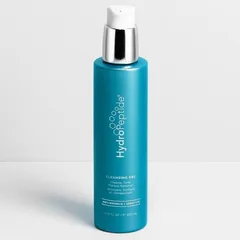
Works for:
based on ingredients and %- Cleansing
Doesn't work for:
based on ingredients and %- Anti-blemish
Can it cause trouble?
- Irritation risk: high
- Comedogenic risk ingredients: 0
Key actives

Cleansing
What does the product description say?
This foaming cleanser effectively removes makeup, dirt and excess oil without causing irritation to even the most sensitive skin.
Source: HydroPeptide
This product works by removing dirt and oil from the surface of the skin. It uses a combination of mild cleansing agents (coco-betaine, lauramidopropyl betaine, polysorbate 20, sodium cocoyl isethionate) and should be able to cleanse the skin gently. Still keep in mind that any cleansing can disrupt the skin barrier, and most people do not need to cleanse their skin more than once per day.
Even though this formulation is mild, the following cleansing agents could trigger an irritation or allergy for some people: coco-betaine
Helps oil and water mix together and works as a cleansing agent. Can be allergenic
Helps oil and water mix together
Helps water and oil mix together. Can be used as a cleansing agent
Anti-blemish
What does the product description say?
Sebacic acid prevents breakouts and hyaluronic acid delivers skin-brightening hydration without a greasy residue.
Source: Dermstore
Effective ingredients missing or their concentration is too low.
Helps calm down inflammation in skin and can help reduce itching. Helps to repair the skin barrier and keep skin hydrated
How honest is this product?
| Promise | Can it deliver? |
|---|---|
| Cleansing | |
| Anti-blemish |
Total Promises Fulfilled score: 50/100.
We receive a small commission for purchases made through these links at no cost for you. Thank you for your support! Learn more
Potential irritants
Comedogenic ingredients
No comedogenic ingredients detected
User reviews (1)
Averages from community submissions.
How stripping does it feel?
How would you describe the foam?
How would you describe the smell?
Tried this product?
Help capture what the ingredient list can't—texture, finish, pilling, scent, and more. Answer what you can, skip the rest.
Takes ~30 seconds.
Reviews are shown in aggregate. No personal details.
| Product | Similarity | Price | Irritancy |
|---|---|---|---|
 HydroPeptide Cleansing Gel | Current | $15.00 | |
 Nivea Lactic Acid Micellar Wash Gel | 43% | $13.95 | |
 Victoria Beckham Beauty Daily Lactic Acid Gel Cleanser Nettoyant | 42% | $76.00 | |
 Olival Amino Gel | 41% | - | |
 Sanex Zero % Sensitive Skin Shower Gel | 39% | ≈ $6.00 | |
 CeraVe Gel Moussant Anti-Imperfections | 39% | - |
Key Actives
Helps calm down inflammation in skin and can help reduce itching. Helps to repair the skin barrier and keep skin hydrated
An exfoliating and moisturizing alpha-hydroxy acid (AHA). Typically causes less irritation than other AHAs, for example, glycolic acid. At high concentrations (about 15%), lactic acid can help reduce lines and wrinkles. Recent studies show that lactic acid can support the "good" bacteria living on skin's surface (healthy skin microbiome)
A type of peptide. Peptides are excellent moisturizers and might be able support collagen production reducing fine lines and wrinkles
A plant extract that can help neutralize free radicals and reduce inflammation, even though it is not usually used in sufficient concentration in cosmetics
Helps oil and water mix together and works as a cleansing agent. Can be allergenic
Helps water and oil mix together. Can be used as a cleansing agent
A good mix of fatty acids that forms a protective layer on the skin. Improves the shelf life of products. Derived from coconut and glycerin
Potential irritants
Helps oil and water mix together and works as a cleansing agent. Can be allergenic
Creates a cooling sensation on the skin. Does not have a skin benefit
A common frangrance that can easily irritate skin, especially if exposed to air, light or heat
A plant extract that has some anti-oxidant and anti-bacterial properties. Can be irritating
Plant extract that can have healing and anti-inflammatory properties. It is a potential allergen and can be irritating
A plant extract that can help calm down inflammation in skin. Can, however, itself be irritating
Helps water and oil mix together. Can be used as a cleansing agent
Helps preserve products and creates a nice product texture
An exfoliating and moisturizing alpha-hydroxy acid (AHA). Typically causes less irritation than other AHAs, for example, glycolic acid. At high concentrations (about 15%), lactic acid can help reduce lines and wrinkles. Recent studies show that lactic acid can support the "good" bacteria living on skin's surface (healthy skin microbiome)
A good mix of fatty acids that forms a protective layer on the skin. Improves the shelf life of products. Derived from coconut and glycerin
A preservative that comes from radishes fermented by a bacteria. New research suggests that the preservation properties in the ingredient come from an ammonium salt that is not present naturally in radish root but used in its cultivation. Is problematic because the exact amount of the preservative agents is difficult to determine
Might be somewhat helpful in reducing hyperpigmentation and neutralizing free radicals but its typical concentration in a product is too low for having an effect
A derivative of vitamin C that is more stable, but less bioavailable than the pure form of vitamin C. It does not penetrate the skin well, but has been shown to convert to pure vitamin C once in skin. It can be helpful in stimulating collagen production and lightening the skin tone, but the required concentration is likely to be very high
Can have some moisturizing properties due to its sugar content
Can work as an exfoliant but is typically used to adjust the product pH
The salt of salicylic acid. Helps exfoliate the upper layer of the skin. Can also work to preserve cosmetic products
Comedogenic ingredients
We couldn't find any comedogenic ingredients in this product
All ingredients
Helps oil and water mix together and works as a cleansing agent. Can be allergenic
Helps water and oil mix together. Can be used as a cleansing agent
Acts as a solvent for other ingredients. Speeds up the absorption of other ingredients into the skin
Helps preserve products and creates a nice product texture
An exfoliating and moisturizing alpha-hydroxy acid (AHA). Typically causes less irritation than other AHAs, for example, glycolic acid. At high concentrations (about 15%), lactic acid can help reduce lines and wrinkles. Recent studies show that lactic acid can support the "good" bacteria living on skin's surface (healthy skin microbiome)
A good mix of fatty acids that forms a protective layer on the skin. Improves the shelf life of products. Derived from coconut and glycerin
A type of peptide. Peptides are excellent moisturizers and might be able support collagen production reducing fine lines and wrinkles
A preservative that comes from radishes fermented by a bacteria. New research suggests that the preservation properties in the ingredient come from an ammonium salt that is not present naturally in radish root but used in its cultivation. Is problematic because the exact amount of the preservative agents is difficult to determine
Might be somewhat helpful in reducing hyperpigmentation and neutralizing free radicals but its typical concentration in a product is too low for having an effect
Creates a cooling sensation on the skin. Does not have a skin benefit
A common frangrance that can easily irritate skin, especially if exposed to air, light or heat
Helps calm down inflammation in skin and can help reduce itching. Helps to repair the skin barrier and keep skin hydrated
A plant extract that has some anti-oxidant and anti-bacterial properties. Can be irritating
A plant extract that can help neutralize free radicals and reduce inflammation, even though it is not usually used in sufficient concentration in cosmetics
Plant extract that can have healing and anti-inflammatory properties. It is a potential allergen and can be irritating
Might be somewhat helpful in reducing hyperpigmentation and neutralizing free radicals but its typical concentration in a product is too low for having an effect
A plant extract that can help calm down inflammation in skin. Can, however, itself be irritating
A derivative of vitamin C that is more stable, but less bioavailable than the pure form of vitamin C. It does not penetrate the skin well, but has been shown to convert to pure vitamin C once in skin. It can be helpful in stimulating collagen production and lightening the skin tone, but the required concentration is likely to be very high
Can have some moisturizing properties due to its sugar content
Can work as an exfoliant but is typically used to adjust the product pH
The salt of salicylic acid. Helps exfoliate the upper layer of the skin. Can also work to preserve cosmetic products
Ingredient list view
Water, Coco-betaine, Sodium cocoyl isethionate, Lauramidopropyl betaine, Propanediol, Phenethyl alcohol, Polysorbate 20, Caprylyl glycol, Lactic acid, Caprylic/capric triglyceride, Arginine/lysine polypeptide, Leuconostoc/radish root ferment filtrate, Cucumis sativus fruit extract, Ethylhexylglycerin, Menthyl ethylamido oxalate, Citrus aurantium dulcis peel extract, Citrus limon peel extract, Limonene, Allantoin, Calendula officinalis flower extract, Camellia oleifera leaf extract, Chamomilla recutita flower extract, Cucumis sativus fruit extract, Geranium maculatum extract, Hamamelis virginiana leaf extract, Magnesium ascorbyl phosphate, Pseudoalteromonas exopolysaccharides, Pyrus malus fruit extract, Sodium cocoyl hydrolyzed amaranth protein, Citric acid, Sebacic acid, Sodium salicylate, Sorbic acid
- Final Report on the Safety Assessment of Sodium Cocoyl Isethionate
- Final Report on the Safety Assessment of Phenethyl Alcohol
- Epidermal and dermal effects of topical lactic acid
- Dual Effects of Alpha-Hydroxy Acids on the Skin
- Profile of wound healing process induced by allantoin
- Topical application of Calendula officinalis (L.): Formulation and evaluation of hydrophilic cream with antioxidant activity
- The seamy side of natural medicines: contact sensitization to arnica (Arnica montana L.) and marigold (Calendula officinalis L.)
- Final report on the safety assessment of Calendula officinalis extract and Calendula officinalis
- Contact dermatitis as an adverse reaction to some topically used European herbal medicinal products – part 1: Achillea millefolium–Curcuma longa
- Stability, transdermal penetration, and cutaneous effects of ascorbic acid and its derivatives
- Topical L-ascorbic acid: percutaneous absorption studies
- Three clinical studies showing the anti-aging benefits of sodium salicylate in human skin