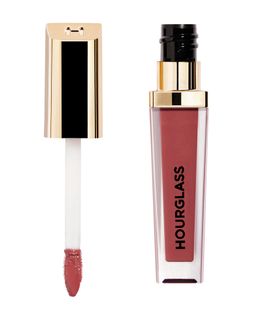
Hourglass Velvet Story Lip Cream Hint
Works for
1 of 1 advertised claim delivered
MoisturizingDimethicone, Bis-diglyceryl polyacyladipate-2 + 9 moreGood evidence
“Velvet Story Lip Cream Hint”
This product can help soften the skin and reduce its moisture loss with emollients and occlusives: bis-diglyceryl polyacyladipate-2, dimethicone.
Keep in mind that this product does not contain effective ingredients to attract water to the upper layer of the skin. This is why an additional product with humectants like glycerin or hyaluronic acid can be helpful (apply it before this product for the best results).
Can it cause trouble?
Irritancy10 flagged ingredientsMedium risk
Comedogenic5 ingredients rated 2 or more on the 0–5 pore-clogging scale5 flagged
User reviews
Be the first — your take helps the next person decide.
Ingredients
Filter by role to see what each ingredient is doing.
Kaolin~23–34%
- Irritation risk
- Low
A type of clay that consists mainly of aluminum silicate. Helps absorb oil and creates a thicker product consistency. Can be used to add a white color
More about KaolinVinyl dimethicone/methicone silsesquioxane crosspolymer~9.4–14%
- Irritation risk
- Low
A type of silicone that create a smooth product finish and can create an optical soft-focus effect on the skin. Helps to thicken the product consistency
More about Vinyl dimethicone/methicone silsesquioxane crosspolymerTitanium dioxide~5.5–8.3%
- Irritation risk
- Low
Works as a UV filter when used in high concentrations. It is photostable and is effective mostly against the UVB light, with some protection in the UVA range. In small concentrations, used for its ability to improve the color of cosmetic products. Is usually well tolerated by the skin
More about Titanium dioxideCi 77891~4.8–7.2%
- Irritation risk
- Low
Iron oxides~3.8–5.7%
- Irritation risk
- Low
An umbrella term for the following three colorants: CI 77491, CI 77492, CI 77499. They might be able to offer some protection against visible light, but the degree of the protection is not clear
More about Iron oxidesCi 77491~2.8–4.2%
- Irritation risk
- Low
A red colorant made of iron oxide. Typically is not irritating
More about Ci 77491Ci 77492~2.4–3.6%
Ci 15850~2.1–3.1%
Blue 1 lake~2–3%
Ci 42090~1.5–2.2%
Dimethicone~1.3–1.9%
- Irritation risk
- Low
A silicone that helps to reduce water loss from the surface of the skin. Can temporarily "fill in" lines and wrinkles, absorb oil, and create a nice product finish
More about DimethiconeBis-diglyceryl polyacyladipate-2~1.2–1.8%
- Irritation risk
- Low
Helps soften the upper layer of the skin and reduce water loss from its surface
More about Bis-diglyceryl polyacyladipate-2Diisostearyl malate~1.1–1.7%
- Irritation risk
- Medium
Helps to soften the upper layer of the skin
More about Diisostearyl malateKaolin~1.3–1.9%
- Irritation risk
- Low
A type of clay that consists mainly of aluminum silicate. Helps absorb oil and creates a thicker product consistency. Can be used to add a white color
More about KaolinVinyl dimethicone/methicone silsesquioxane crosspolymer~1–1.5%
- Irritation risk
- Low
A type of silicone that create a smooth product finish and can create an optical soft-focus effect on the skin. Helps to thicken the product consistency
More about Vinyl dimethicone/methicone silsesquioxane crosspolymerDimethicone crosspolymer~1–1.5%
- Irritation risk
- Low
Used to create a thicker product texture. Helps soften the upper layer of the skin and might be able to prevent moisture loss from its surface
More about Dimethicone crosspolymerHydrogenated polyisobutene~1–1.5%
- Irritation risk
- Low
Used to improve the product consistency and soften the upper layer of the skin
More about Hydrogenated polyisobuteneHdi/trimethylol hexyllactone crosspolymer~0.95–1.45%
- Irritation risk
- Low
Used to create a silky product texture and add volume to products
More about Hdi/trimethylol hexyllactone crosspolymerCoco-caprylate/caprate~0.95–1.45%
- Irritation risk
- Low
Helps to soften the upper layer of the skin without creating a greasy texture
More about Coco-caprylate/caprateSynthetic wax~0.95–1.4%
- Irritation risk
- Low
Used to stabilize product formulations and thicken product consistency
More about Synthetic waxPolyhydroxystearic acid~0.9–1.35%
- Irritation risk
- Medium
Used to create a thicker product consistency and stabilize the formulation
More about Polyhydroxystearic acidEthylhexyl palmitate~0.95–1.4%
- Irritation risk
- Low
- Comedogenicity
- 3/5
An emollient that helps soften the skin and create a nice product texture
More about Ethylhexyl palmitateIsopropyl myristate~0.9–1.35%
- Irritation risk
- Low
- Comedogenicity
- 3/5
An emollient that helps soften the skin. Could be comedogenic
More about Isopropyl myristateIsostearic acid~0.9–1.4%
- Irritation risk
- Low
Used to create a nice product texture
More about Isostearic acidLecithin~0.9–1.35%
- Irritation risk
- Low
Used mostly for creating emulsions - helping oil and water mix together. Helps soften the upper layer of the skin
More about LecithinEthylene/propylene/styrene copolymer~0.85–1.3%
- Irritation risk
- Low
Used to create a thicker product consistency
More about Ethylene/propylene/styrene copolymerPolyglyceryl-3 polyricinoleate~0.9–1.35%
- Irritation risk
- Medium
Helps oil and water mix together
More about Polyglyceryl-3 polyricinoleateSilica~0.95–1.4%
Tocopheryl acetate~0.85–1.3%
- Irritation risk
- Medium
A more stable but less bio-available form of vitamin E compared to Tocopherol. Might help moisturize and protect the skin from free radicals, but mostly used in low concentrations to stabilize other ingredients.
More about Tocopheryl acetateCaprylyl glycol~0.9–1.35%
- Irritation risk
- Medium
Helps preserve products and creates a nice product texture
More about Caprylyl glycolGlyceryl caprylate~0.9–1.4%
- Irritation risk
- Low
An emollient that can also help water and oil mix together, as well as prevent bacteria growth in products
More about Glyceryl caprylateAlumina~0.95–1.45%
- Irritation risk
- Low
The same compound that is used safely in dental implants and bone cements. In cosmetics, it is used to improve the consistency of products
More about AluminaButylene/ethylene/styrene copolymer~0.85–1.3%
- Irritation risk
- Low
Used to create a gel-like product texture
More about Butylene/ethylene/styrene copolymerPentaerythrityl tetra-di-t-butyl hydroxyhydrocinnamate~0.9–1.3%
- Irritation risk
- Low
Used to increase stability of product formulations
More about Pentaerythrityl tetra-di-t-butyl hydroxyhydrocinnamateTitanium dioxide~0.95–1.4%
- Irritation risk
- Low
Works as a UV filter when used in high concentrations. It is photostable and is effective mostly against the UVB light, with some protection in the UVA range. In small concentrations, used for its ability to improve the color of cosmetic products. Is usually well tolerated by the skin
More about Titanium dioxideCi 77891~0.85–1.25%
- Irritation risk
- Low
Iron oxides~0.85–1.25%
- Irritation risk
- Low
An umbrella term for the following three colorants: CI 77491, CI 77492, CI 77499. They might be able to offer some protection against visible light, but the degree of the protection is not clear
More about Iron oxidesCi 77499~0.85–1.3%
Ci 19140~0.85–1.3%
Ci 45410~0.85–1.3%
Ci 15850~0.85–1.3%
Dimethicone~0.9–1.35%
- Irritation risk
- Low
A silicone that helps to reduce water loss from the surface of the skin. Can temporarily "fill in" lines and wrinkles, absorb oil, and create a nice product finish
More about DimethiconeBis-diglyceryl polyacyladipate-2~0.9–1.35%
- Irritation risk
- Low
Helps soften the upper layer of the skin and reduce water loss from its surface
More about Bis-diglyceryl polyacyladipate-2Diisostearyl malate~0.9–1.35%
- Irritation risk
- Medium
Helps to soften the upper layer of the skin
More about Diisostearyl malateKaolin~0.95–1.45%
- Irritation risk
- Low
A type of clay that consists mainly of aluminum silicate. Helps absorb oil and creates a thicker product consistency. Can be used to add a white color
More about KaolinVinyl dimethicone/methicone silsesquioxane crosspolymer~0.85–1.3%
- Irritation risk
- Low
A type of silicone that create a smooth product finish and can create an optical soft-focus effect on the skin. Helps to thicken the product consistency
More about Vinyl dimethicone/methicone silsesquioxane crosspolymerDimethicone crosspolymer~0.85–1.3%
- Irritation risk
- Low
Used to create a thicker product texture. Helps soften the upper layer of the skin and might be able to prevent moisture loss from its surface
More about Dimethicone crosspolymerHydrogenated polyisobutene~0.9–1.3%
- Irritation risk
- Low
Used to improve the product consistency and soften the upper layer of the skin
More about Hydrogenated polyisobuteneHdi/trimethylol hexyllactone crosspolymer~0.85–1.3%
- Irritation risk
- Low
Used to create a silky product texture and add volume to products
More about Hdi/trimethylol hexyllactone crosspolymerCoco-caprylate/caprate~0.9–1.35%
- Irritation risk
- Low
Helps to soften the upper layer of the skin without creating a greasy texture
More about Coco-caprylate/caprateSynthetic wax~0.9–1.35%
- Irritation risk
- Low
Used to stabilize product formulations and thicken product consistency
More about Synthetic waxPolyhydroxystearic acid~0.9–1.35%
- Irritation risk
- Medium
Used to create a thicker product consistency and stabilize the formulation
More about Polyhydroxystearic acidEthylhexyl palmitate~0.9–1.35%
- Irritation risk
- Low
- Comedogenicity
- 3/5
An emollient that helps soften the skin and create a nice product texture
More about Ethylhexyl palmitateIsopropyl myristate~0.9–1.35%
- Irritation risk
- Low
- Comedogenicity
- 3/5
An emollient that helps soften the skin. Could be comedogenic
More about Isopropyl myristateIsostearic acid~0.9–1.4%
- Irritation risk
- Low
Used to create a nice product texture
More about Isostearic acidLecithin~0.9–1.3%
- Irritation risk
- Low
Used mostly for creating emulsions - helping oil and water mix together. Helps soften the upper layer of the skin
More about LecithinEthylene/propylene/styrene copolymer~0.6–1.4%
- Irritation risk
- Low
Used to create a thicker product consistency
More about Ethylene/propylene/styrene copolymerPolyglyceryl-3 polyricinoleate~0.55–1.3%
- Irritation risk
- Medium
Helps oil and water mix together
More about Polyglyceryl-3 polyricinoleateSilica~0.6–1.4%
Tocopheryl acetate~0.55–1.3%
- Irritation risk
- Medium
A more stable but less bio-available form of vitamin E compared to Tocopherol. Might help moisturize and protect the skin from free radicals, but mostly used in low concentrations to stabilize other ingredients.
More about Tocopheryl acetateCaprylyl glycol~0.55–1.3%
- Irritation risk
- Medium
Helps preserve products and creates a nice product texture
More about Caprylyl glycolGlyceryl caprylate~0.6–1.35%
- Irritation risk
- Low
An emollient that can also help water and oil mix together, as well as prevent bacteria growth in products
More about Glyceryl caprylateAlumina~0.8–1.2%
- Irritation risk
- Low
The same compound that is used safely in dental implants and bone cements. In cosmetics, it is used to improve the consistency of products
More about AluminaButylene/ethylene/styrene copolymer~0.5–1.2%
- Irritation risk
- Low
Used to create a gel-like product texture
More about Butylene/ethylene/styrene copolymerPentaerythrityl tetra-di-t-butyl hydroxyhydrocinnamate~0.5–1.15%
- Irritation risk
- Low
Used to increase stability of product formulations
More about Pentaerythrityl tetra-di-t-butyl hydroxyhydrocinnamateTitanium dioxide~0.55–1.25%
- Irritation risk
- Low
Works as a UV filter when used in high concentrations. It is photostable and is effective mostly against the UVB light, with some protection in the UVA range. In small concentrations, used for its ability to improve the color of cosmetic products. Is usually well tolerated by the skin
More about Titanium dioxideCi 77891~0.4–0.95%
- Irritation risk
- Low
Iron oxides~0.3–0.7%
- Irritation risk
- Low
An umbrella term for the following three colorants: CI 77491, CI 77492, CI 77499. They might be able to offer some protection against visible light, but the degree of the protection is not clear
More about Iron oxidesCi 77491~0.3–0.75%
- Irritation risk
- Low
A red colorant made of iron oxide. Typically is not irritating
More about Ci 77491Ci 77492~0.3–0.7%
Ci 15850~0.2–0.75%
Blue 1 lake~0.1–0.45%
Ci 42090~0.1–0.4%
Ingredient list view
Kaolin, Vinyl dimethicone/methicone silsesquioxane crosspolymer, Unknown, Titanium dioxide, Ci 77891, Iron oxides, Ci 77491, Ci 77492, Ci 15850, Blue 1 lake, Ci 42090, Dimethicone, Bis-diglyceryl polyacyladipate-2, Diisostearyl malate, Kaolin, Vinyl dimethicone/methicone silsesquioxane crosspolymer, Dimethicone crosspolymer, Hydrogenated polyisobutene, Hdi/trimethylol hexyllactone crosspolymer, Coco-caprylate/caprate, Synthetic wax, Polyhydroxystearic acid, Ethylhexyl palmitate, Isopropyl myristate, Isostearic acid, Lecithin, Ethylene/propylene/styrene copolymer, Polyglyceryl-3 polyricinoleate, Silica, Tocopheryl acetate, Caprylyl glycol, Glyceryl caprylate, Alumina, Butylene/ethylene/styrene copolymer, Pentaerythrityl tetra-di-t-butyl hydroxyhydrocinnamate, Titanium dioxide, Ci 77891, Iron oxides, Ci 77499, Ci 19140, Ci 45410, Ci 15850, Dimethicone, Bis-diglyceryl polyacyladipate-2, Diisostearyl malate, Kaolin, Vinyl dimethicone/methicone silsesquioxane crosspolymer, Dimethicone crosspolymer, Hydrogenated polyisobutene, Hdi/trimethylol hexyllactone crosspolymer, Coco-caprylate/caprate, Synthetic wax, Polyhydroxystearic acid, Ethylhexyl palmitate, Isopropyl myristate, Isostearic acid, Lecithin, Ethylene/propylene/styrene copolymer, Polyglyceryl-3 polyricinoleate, Silica, Tocopheryl acetate, Caprylyl glycol, Glyceryl caprylate, Alumina, Butylene/ethylene/styrene copolymer, Pentaerythrityl tetra-di-t-butyl hydroxyhydrocinnamate, Titanium dioxide, Ci 77891, Iron oxides, Ci 77491, Ci 77492, Ci 15850, Blue 1 lake, Ci 42090
Compare prices
Retailers ranked by price — lowest first.
Affiliate links · prices updated regularly · As an Amazon Associate, WIMJ earns from qualifying purchases.
Sources cited in this review
Every concentration estimate and effectiveness label is anchored to one of these 11 studies and safety reviews.
- 1
- 2Final Report on the Safety Assessment of Dimethicone Copolyoljournals.sagepub.com
- 3
- 4
- 5
- 6Safety Assessment of Alkyl Esters as Used in Cosmeticscir-safety.org

Affiliate links · As an Amazon Associate, WIMJ earns from qualifying purchases.