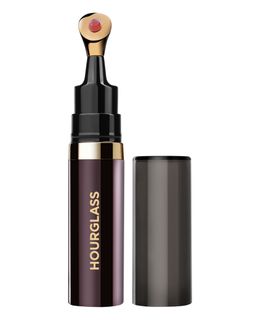
Hourglass Nº 28 Lip Treatment Oil Clear

Hourglass Nº 28 Lip Treatment Oil Clear

Efficacy87/100IrritancyHigh
Edit

Works for

2 of 2 advertised claims delivered

Moisturizing
24 ingredients credited for this claim
Strong support
What the product description says
“The 28 of the title refers to the 28 beneficial ingredients used in the formula there are 14 essential oils (including rose, lavender and lemon oils), 10 lipid-rich plant oils (hazelnut, sweet almond and jojoba oils) and four nourishing vitamins (A, B5, C and E), all of which replenish moisture and soften your lips.”
Source: Cultbeauty

This product can help soften the skin and reduce its moisture loss with emollients and occlusives: caprylic/capric triglyceride, helianthus annuus seed oil.

Keep in mind that this product does not contain effective ingredients to attract water to the upper layer of the skin. This is why an additional product with humectants like glycerin or hyaluronic acid can be helpful (apply it before this product for the best results).

The following ingredients in this product are especially good for supporting the skin barrier and helping with the hydration level: palmitoyl tripeptide-38

Helianthus annuus seed oilKey active· Emollient, OcclusiveEffect: HighA great emollient due to its high linoleic acid content. One of the most effective plant oils in helping skin hydration and repairing skin barrier function~0.2–0.75%
Borago officinalis seed oilKey active· EmollientEffect: HighA plant oil that is effective in reducing irritation in skin, restore the barrier function and support its hydration~0.4–0.95%
Palmitoyl tripeptide-38HeroEffect: HighA type of peptide. Peptides are excellent moisturizers and might be able support collagen production reducing fine lines and wrinkles~0.15–0.6%
Caprylic/capric triglycerideKey active· Emollient, OcclusiveEffect: HighA good mix of fatty acids that forms a protective layer on the skin. Improves the shelf life of products. Derived from coconut and glycerin~2.2–3.3%
Aleurites moluccanus seed oilKey activeEffect: HighHelps soften the upper layer of the skin~0.85–1.25%
Oenothera biennis oilKey active· EmollientEffect: HighHelps soften the upper layer of the skin and can support skin barrier function~0.2–0.8%
Helianthus annuus extractKey active· EmollientEffect: HighHelps soften the upper layer of the skin~0.2–0.75%
Olea europaea fruit oilKey active· EmollientEffect: MediumAn emollient that helps soften the skin but is not effective for restoring its barrier function. Might be helpful to calm down inflammation~0.2–0.7%
Hydroxystearic/linolenic/oleic polyglyceridesKey active· EmollientEffect: Medium~4.3–6.4%
Oleic/linoleic/linolenic polyglyceridesKey active· EmollientEffect: MediumHelps soften the upper layer of the skin~22–34%
Prunus amygdalus dulcis oilKey active· EmollientEffect: MediumAn emollient that softens the skin~3.7–5.6%
Prunus avium seed oilKey active· EmollientEffect: MediumCherry pit oil. Is rich in linoleic and oleic fatty acids and works as an emollient moisturizer~0.2–0.75%
Cetyl ethylhexanoate· EmollientEffect: LowAn emollient that helps soften the skin and creates a thicker product texture~1.6–2.4%
Portulaca pilosa extractEffect: Low~0.15–0.65%
Tridecyl stearate· EmollientEffect: LowUsed to create a thicker product consistency and soften the upper layer of the skin~1.1–1.7%
Isononyl isononanoate· Emollient, OcclusiveEffect: LowForms a protective film on the surface of the skin to prevent moisture loss. Gives a velvety feel to products while reducing tackiness~1.5–2.2%
Octyldodecanol· EmollientEffect: LowAn emollient that helps to soften the skin and create a pleasant product texture and stabilize the formulation~4.5–6.8%
Cetearyl ethylhexanoate· EmollientEffect: LowAn emollient that helps soften the skin~0.35–0.85%
Rosa damascena flower oilEffect: LowUsed as a fragrance. Can be irritating~0.15–0.6%
Simmondsia chinensis seed oilUnder-dosedEffect: HighSoftens the upper layer of skin and helps restore the healthy skin barrier. Has shown to help calm down inflammation in skin. It is a stable oil, meaning that it retains its properties even when exposed to air.~0.3–0.7%
Camellia sinensis seed oilUnder-dosedEffect: HighA plant oil that helps to soften the upper layer of the skin and can help restore the skin barrier. Might have some anti-oxidant effect~0.35–0.85%
PanthenolUnder-dosedEffect: HighHelps attract water to the upper layer of the skin and can help improve skin barrier function~0.15–0.6%
Rosa canina fruit oilUnder-dosedEffect: HighA great emollient. Contains vitamin E (tocopherol) which may give it some anti-oxidant properties. Can contain volatile compounds and can be irritating~0.2–0.75%
TocopherolEffect: Low, below effective dosePure form of vitamin E. Can help moisturise and protect the skin from free radicals. Often used to help stabilise other ingredients or the formula itself~0.15–0.65%
Anti-aging
6 ingredients credited for this claim
Moderate support
What the product description says
“Alongside this conditioning blend, three advanced, potent actives (Saliporine-8, Volulip and Viamerine) work to minimise the appearance of wrinkles and boost volume.”
Source: Cultbeauty

This product contains palmitoyl tripeptide-38. This ingredient might be able to help reduce and prevent fine lines and wrinkles, improve skin elasticity and firmness, but there is not enough evidence that it actually works.

Palmitoyl tripeptide-38Key activeEffect: MediumA type of peptide. Peptides are excellent moisturizers and might be able support collagen production reducing fine lines and wrinkles~0.15–0.6%
Prunus amygdalus dulcis oilEffect: LowAn emollient that softens the skin~3.7–5.6%
Retinyl palmitateUnder-dosedEffect: MediumThree steps removed from the active form of vitamin A - retinoic acid. To have an effect in the skin, it first needs to be converted twice to become the retinoic acid. This means it is less potent than retinol, but could also be less irritating. Once converted to the retinoic acid in the skin, it helps against all signs of aging, improves skin cell turnover and helps fight blemishes and clogged pores. However, in many cosmetic formulations, it is used in a concentration that is too low to have the full effect~0.15–0.55%
Camellia sinensis seed oilEffect: Low, below effective doseA plant oil that helps to soften the upper layer of the skin and can help restore the skin barrier. Might have some anti-oxidant effect~0.35–0.85%
TocopherolEffect: Low, below effective dosePure form of vitamin E. Can help moisturise and protect the skin from free radicals. Often used to help stabilise other ingredients or the formula itself~0.15–0.65%
Ascorbyl palmitateEffect: Low, below effective doseBeing a lipid soluble form of vitamin C, it is more stable and can penetrate the skin better than L-Ascorbic acid. It is effective in protecting the skin from free radicals, as well as evening the skin tone, but is less effective in stimulating collagen production compared to L-Ascorbic acid.~0.4–0.9%

Can it cause trouble?

Irritancy
19 strong irritants: Aniba rosaeodora wood oil, Cananga odorata flower oil + 17 more — patch-test recommended
High risk
We flagged 33 ingredients with irritancy potential. Severity depends on your sensitivity threshold; the table lists the worst offenders first.
IngredientFunctionIrritationEst. amount
Aniba rosaeodora wood oil—High~0.4–0.95%est.
Cananga odorata flower oilAn essential oil. Can be irritatingHigh~0.3–0.75%est.
Citrus aurantium dulcis peel oilAn essentil oil from orange peel. Potential allergen and can be irritatingHigh~0.2–0.8%est.
Citrus limon peel oilA highly irritating fragranceHigh~0.15–0.7%est.
Citrus reticulata leaf oil—High~0.15–0.65%est.
Eucalyptus globulus leaf oilAn essential oil that can be very irritating. Has some anti-bacterial propertiesHigh~0.15–0.6%est.
Eugenia caryophyllus leaf oilAn essential oil. Used as a fragrance. Can be irritating and sensitizingHigh~0.15–0.55%est.
Lavandula angustifolia oilAn essential oil. Potential allergen and can be irritating. It has some anti-bacterial propertiesHigh~0.15–0.6%est.
Pelargonium graveolens flower oilAn essential oil. Can be irritating. Can become an allergen with oxidationHigh~0.15–0.65%est.
Retinyl palmitateThree steps removed from the active form of vitamin A - retinoic acid. To have an effect in the skin, it first needs to be converted twice to become the retinoic acid. This means it is less potent than retinol, but could also be less irritating. Once converted to the retinoic acid in the skin, it helps against all signs of aging, improves skin cell turnover and helps fight blemishes and clogged pores. However, in many cosmetic formulations, it is used in a concentration that is too low to have the full effectHigh~0.15–0.55%est.
Rosa damascena flower oilUsed as a fragrance. Can be irritatingHigh~0.15–0.6%est.
Rosmarinus officinalis leaf extractCan be helpful in reducing inflammation in skin, including inflamed acne. It can be irritatingHigh~0.15–0.55%est.
Rosmarinus officinalis leaf oilA plant oil with high content of volatile compounds that can irritate the skin. Can be used as a fragrance. Has anti-bacterial properties and might help neutralize free radicals on the surface of the skinHigh~0.15–0.6%est.
Vanilla planifolia fruit extractA plant extract used as a fragrance. Can be irritatingHigh~0.15–0.65%est.
CitralA fragrance with a lemon scent. A likely irritantHigh~0.15–0.55%est.
CitronellolA fragrance. Can be irritatingHigh~0.15–0.55%est.
GeraniolA fragrance. Can be irritatingHigh~0.15–0.55%est.
LimoneneA common frangrance that can easily irritate skin, especially if exposed to air, light or heatHigh~0.15–0.5%est.
LinaloolA fragrance. Can be irritatingHigh~0.15–0.5%est.
Ci 73360A red (pink) dyeHigh~0.15–0.5%est.
Ci 19140A yellow dyeHigh~0.05–0.25%est.
Ci 45410A red colorantHigh~0.05–0.25%est.
Pentaerythrityl tetraisostearateUsed to create a thicker product consistencyMedium~2.8–4.2%est.
Caprylic/capric triglycerideA good mix of fatty acids that forms a protective layer on the skin. Improves the shelf life of products. Derived from coconut and glycerinMedium~2.2–3.3%est.
Cetyl ethylhexanoateAn emollient that helps soften the skin and creates a thicker product textureMedium~1.6–2.4%est.
Tridecyl stearateUsed to create a thicker product consistency and soften the upper layer of the skinMedium~1.1–1.7%est.
Ascorbyl palmitateBeing a lipid soluble form of vitamin C, it is more stable and can penetrate the skin better than L-Ascorbic acid. It is effective in protecting the skin from free radicals, as well as evening the skin tone, but is less effective in stimulating collagen production compared to L-Ascorbic acid.Medium~0.4–0.9%est.
Oenothera biennis oilHelps soften the upper layer of the skin and can support skin barrier functionMedium~0.2–0.8%est.
Olea europaea fruit oilAn emollient that helps soften the skin but is not effective for restoring its barrier function. Might be helpful to calm down inflammationMedium~0.2–0.7%est.
Portulaca pilosa extract—Medium~0.15–0.65%est.
Rosa canina fruit oilA great emollient. Contains vitamin E (tocopherol) which may give it some anti-oxidant properties. Can contain volatile compounds and can be irritatingMedium~0.2–0.75%est.
Simmondsia chinensis seed oilSoftens the upper layer of skin and helps restore the healthy skin barrier. Has shown to help calm down inflammation in skin. It is a stable oil, meaning that it retains its properties even when exposed to air.Medium~0.3–0.7%est.
Ci 17200A red colorantMedium~0.15–0.55%est.
Comedogenic
2 ingredients rated 2 or more on the 0–5 pore-clogging scale
2 flagged
These ingredients have a comedogenic rating of 2 or more on a 0–5 scale; the table shows each one's rating. In leave-on products they can clog pores in acne-prone skin.
IngredientFunctionRatingEst. amount
Ci 45410A red colorant3/5~0.05–0.25%est.
Ci 73360A red (pink) dye2/5~0.15–0.5%est.
Edit
Cheaper Alternatives
Similar formulations, better price
No cheaper similar product found.

User reviews

Would you recommend?
No community reviews yet.

Be the first — your take helps the next person decide.

Write a review · ~30s

Ingredients

Filter by role to see what each ingredient is doing.

Oleic/linoleic/linolenic polyglycerides~22–34%
Key active
Irritation risk
Low
Works for
CleansingMoisturizing

Helps soften the upper layer of the skin

More about Oleic/linoleic/linolenic polyglycerides
Hydroxystearic/linolenic/oleic polyglycerides~4.3–6.4%
Key active
Irritation risk
Low
Works for
Moisturizing
More about Hydroxystearic/linolenic/oleic polyglycerides
Octyldodecanol~4.5–6.8%
Formula
Irritation risk
Low
Works for
Moisturizing

An emollient that helps to soften the skin and create a pleasant product texture and stabilize the formulation

More about Octyldodecanol
Prunus amygdalus dulcis oil~3.7–5.6%
Key active
Irritation risk
Low
Works for
MoisturizingAnti-oxidationAnti-aging

An emollient that softens the skin

More about Prunus amygdalus dulcis oil
Pentaerythrityl tetraisostearate~2.8–4.2%
Irritant · medium
Irritation risk
Medium
Works for
Cleansing

Used to create a thicker product consistency

More about Pentaerythrityl tetraisostearate
Caprylic/capric triglyceride~2.2–3.3%
Key activeIrritant · medium
Irritation risk
Medium
Works for
Moisturizing

A good mix of fatty acids that forms a protective layer on the skin. Improves the shelf life of products. Derived from coconut and glycerin

More about Caprylic/capric triglyceride
Cetyl ethylhexanoate~1.6–2.4%
Irritant · medium
Irritation risk
Medium
Works for
Moisturizing

An emollient that helps soften the skin and creates a thicker product texture

More about Cetyl ethylhexanoate
Isononyl isononanoate~1.5–2.2%
Formula
Irritation risk
Low
Works for
Moisturizing

Forms a protective film on the surface of the skin to prevent moisture loss. Gives a velvety feel to products while reducing tackiness

More about Isononyl isononanoate
Tridecyl stearate~1.1–1.7%
Irritant · medium
Irritation risk
Medium
Works for
Moisturizing

Used to create a thicker product consistency and soften the upper layer of the skin

More about Tridecyl stearate
Aleurites moluccanus seed oil~0.85–1.25%
Key active
Irritation risk
Low
Works for
Moisturizing

Helps soften the upper layer of the skin

More about Aleurites moluccanus seed oil
Amyris balsamifera bark oil~0.5–1.15%
Formula
Aniba rosaeodora wood oil~0.4–0.95%
Irritant · high
Ascorbyl palmitate~0.4–0.9%
Irritant · medium
Irritation risk
Medium
Works for
Anti-agingAnti-oxidation

Being a lipid soluble form of vitamin C, it is more stable and can penetrate the skin better than L-Ascorbic acid. It is effective in protecting the skin from free radicals, as well as evening the skin tone, but is less effective in stimulating collagen production compared to L-Ascorbic acid.

More about Ascorbyl palmitate
Borago officinalis seed oil~0.4–0.95%
Key active
Irritation risk
Low
Works for
Reduces irritationAnti-inflammatoryMoisturizingAnti-oxidation

A plant oil that is effective in reducing irritation in skin, restore the barrier function and support its hydration

More about Borago officinalis seed oil
Camellia sinensis seed oil~0.35–0.85%
Under-dosed
Irritation risk
Low
Works for
MoisturizingAnti-oxidationAnti-aging

A plant oil that helps to soften the upper layer of the skin and can help restore the skin barrier. Might have some anti-oxidant effect

More about Camellia sinensis seed oil
Cananga odorata flower oil~0.3–0.75%
Irritant · high
Irritation risk
High

An essential oil. Can be irritating

More about Cananga odorata flower oil
Cetearyl ethylhexanoate~0.35–0.85%
Formula
Irritation risk
Low
Works for
Moisturizing

An emollient that helps soften the skin

More about Cetearyl ethylhexanoate
Citrus aurantium dulcis peel oil~0.2–0.8%
Irritant · high
Irritation risk
High

An essentil oil from orange peel. Potential allergen and can be irritating

More about Citrus aurantium dulcis peel oil
Citrus limon peel oil~0.15–0.7%
Irritant · high
Irritation risk
High

A highly irritating fragrance

More about Citrus limon peel oil
Citrus reticulata leaf oil~0.15–0.65%
Irritant · high
Corylus avellana seed oil~0.15–0.65%
Formula
Eucalyptus globulus leaf oil~0.15–0.6%
Irritant · high
Irritation risk
High
Works for
Antibacterial

An essential oil that can be very irritating. Has some anti-bacterial properties

More about Eucalyptus globulus leaf oil
Eugenia caryophyllus leaf oil~0.15–0.55%
Irritant · high
Irritation risk
High

An essential oil. Used as a fragrance. Can be irritating and sensitizing

More about Eugenia caryophyllus leaf oil
Helianthus annuus extract~0.2–0.75%
Key active
Irritation risk
Low
Works for
Moisturizing

Helps soften the upper layer of the skin

More about Helianthus annuus extract
Helianthus annuus seed oil~0.2–0.75%
Key active
Irritation risk
Low
Works for
Moisturizing

A great emollient due to its high linoleic acid content. One of the most effective plant oils in helping skin hydration and repairing skin barrier function

More about Helianthus annuus seed oil
Lavandula angustifolia oil~0.15–0.6%
Irritant · high
Irritation risk
High

An essential oil. Potential allergen and can be irritating. It has some anti-bacterial properties

More about Lavandula angustifolia oil
Oenothera biennis oil~0.2–0.8%
Key activeIrritant · medium
Irritation risk
Medium
Works for
MoisturizingAnti-blemishAnti-inflammatoryAnti-oxidation

Helps soften the upper layer of the skin and can support skin barrier function

More about Oenothera biennis oil
Olea europaea fruit oil~0.2–0.7%
Key activeIrritant · medium
Irritation risk
Medium
Works for
Moisturizing

An emollient that helps soften the skin but is not effective for restoring its barrier function. Might be helpful to calm down inflammation

More about Olea europaea fruit oil
Oryza sativa bran extract~0.15–0.6%
Formula
Irritation risk
Low

Used to thicken the product consistency

More about Oryza sativa bran extract
Palmitoyl tripeptide-38~0.15–0.6%
Hero · Moisturizing
Irritation risk
Low
Works for
MoisturizingAnti-aging

A type of peptide. Peptides are excellent moisturizers and might be able support collagen production reducing fine lines and wrinkles

More about Palmitoyl tripeptide-38
Panthenol~0.15–0.6%
Under-dosed
Irritation risk
Low
Works for
MoisturizingReduces rednessReduces irritation

Helps attract water to the upper layer of the skin and can help improve skin barrier function

More about Panthenol
Pelargonium graveolens flower oil~0.15–0.65%
Irritant · high
Irritation risk
High
Works for
Anti-oxidation

An essential oil. Can be irritating. Can become an allergen with oxidation

More about Pelargonium graveolens flower oil
Portulaca pilosa extract~0.15–0.65%
Irritant · medium
Irritation risk
Medium
Works for
Anti-oxidationMoisturizing
More about Portulaca pilosa extract
Prunus avium seed oil~0.2–0.75%
Key active
Irritation risk
Low
Works for
Moisturizing

Cherry pit oil. Is rich in linoleic and oleic fatty acids and works as an emollient moisturizer

More about Prunus avium seed oil
Retinyl palmitate~0.15–0.55%
Under-dosedIrritant · high
Irritation risk
High
Works for
Anti-blemishAnti-agingEvens skin toneExfoliation

Three steps removed from the active form of vitamin A - retinoic acid. To have an effect in the skin, it first needs to be converted twice to become the retinoic acid. This means it is less potent than retinol, but could also be less irritating. Once converted to the retinoic acid in the skin, it helps against all signs of aging, improves skin cell turnover and helps fight blemishes and clogged pores. However, in many cosmetic formulations, it is used in a concentration that is too low to have the full effect

More about Retinyl palmitate
Rosa canina fruit oil~0.2–0.75%
Under-dosedIrritant · medium
Irritation risk
Medium
Works for
MoisturizingAnti-oxidation

A great emollient. Contains vitamin E (tocopherol) which may give it some anti-oxidant properties. Can contain volatile compounds and can be irritating

More about Rosa canina fruit oil
Rosa damascena flower oil~0.15–0.6%
Irritant · high
Irritation risk
High
Works for
Moisturizing

Used as a fragrance. Can be irritating

More about Rosa damascena flower oil
Rosmarinus officinalis leaf extract~0.15–0.55%
Irritant · high
Irritation risk
High
Works for
Anti-blemishAnti-oxidationAntibacterial

Can be helpful in reducing inflammation in skin, including inflamed acne. It can be irritating

More about Rosmarinus officinalis leaf extract
Rosmarinus officinalis leaf oil~0.15–0.6%
Irritant · high
Irritation risk
High
Works for
AntibacterialAnti-oxidation

A plant oil with high content of volatile compounds that can irritate the skin. Can be used as a fragrance. Has anti-bacterial properties and might help neutralize free radicals on the surface of the skin

More about Rosmarinus officinalis leaf oil
Salicornia herbacea extract~0.15–0.6%
Formula
Simmondsia chinensis seed oil~0.3–0.7%
Under-dosedIrritant · medium
Irritation risk
Medium
Works for
Moisturizing

Softens the upper layer of skin and helps restore the healthy skin barrier. Has shown to help calm down inflammation in skin. It is a stable oil, meaning that it retains its properties even when exposed to air.

More about Simmondsia chinensis seed oil
Sorbitan isostearate~0.15–0.65%
Formula
Irritation risk
Low
Works for
Cleansing

Helps oil and water mix together

More about Sorbitan isostearate
Styrax benzoin gum~0.35–0.8%
Formula
Sucrose cocoate~0.15–0.65%
Formula
Irritation risk
Low
Works for
Cleansing
More about Sucrose cocoate
Thuja occidentalis leaf oil~0.15–0.55%
Formula
Tocopherol~0.15–0.65%
Formula
Irritation risk
Low
Works for
Anti-oxidationMoisturizingAnti-inflammatoryAnti-aging

Pure form of vitamin E. Can help moisturise and protect the skin from free radicals. Often used to help stabilise other ingredients or the formula itself

More about Tocopherol
Vanilla planifolia fruit extract~0.15–0.65%
Irritant · high
Irritation risk
High

A plant extract used as a fragrance. Can be irritating

More about Vanilla planifolia fruit extract
Citral~0.15–0.55%
Irritant · high
Irritation risk
High

A fragrance with a lemon scent. A likely irritant

More about Citral
Citronellol~0.15–0.55%
Irritant · high
Irritation risk
High

A fragrance. Can be irritating

More about Citronellol
Geraniol~0.15–0.55%
Irritant · high
Irritation risk
High

A fragrance. Can be irritating

More about Geraniol
Limonene~0.15–0.5%
Irritant · high
Irritation risk
High

A common frangrance that can easily irritate skin, especially if exposed to air, light or heat

More about Limonene
Linalool~0.15–0.5%
Irritant · high
Irritation risk
High

A fragrance. Can be irritating

More about Linalool
Ci 17200~0.15–0.55%
Irritant · medium
Irritation risk
Medium

A red colorant

More about Ci 17200
Ci 73360~0.15–0.5%
Comedogenic 2/5Irritant · high
Irritation risk
High
Comedogenicity
2/5

A red (pink) dye

More about Ci 73360
Iron oxides~0.1–0.4%
Formula
Irritation risk
Low
Works for
Sun protection

An umbrella term for the following three colorants: CI 77491, CI 77492, CI 77499. They might be able to offer some protection against visible light, but the degree of the protection is not clear

More about Iron oxides
Ci 77492~0.1–0.4%
Formula
Irritation risk
Low

A colorant. Usually well-tolerated

More about Ci 77492
Ci 77491~0.1–0.4%
Formula
Irritation risk
Low

A red colorant made of iron oxide. Typically is not irritating

More about Ci 77491
Ci 77499~0.1–0.35%
Formula
Irritation risk
Low

An iron oxide. Used as a colorant. Is usually well tolerated

More about Ci 77499
Ci 19140~0.05–0.25%
Irritant · high
Irritation risk
High

A yellow dye

More about Ci 19140
Ci 45410~0.05–0.25%
Comedogenic 3/5Irritant · high
Irritation risk
High
Comedogenicity
3/5

A red colorant

More about Ci 45410
Ingredient list view

Oleic/linoleic/linolenic polyglycerides, Hydroxystearic/linolenic/oleic polyglycerides, Octyldodecanol, Prunus amygdalus dulcis oil, Pentaerythrityl tetraisostearate, Caprylic/capric triglyceride, Cetyl ethylhexanoate, Isononyl isononanoate, Tridecyl stearate, Aleurites moluccanus seed oil, Amyris balsamifera bark oil, Aniba rosaeodora wood oil, Ascorbyl palmitate, Borago officinalis seed oil, Camellia sinensis seed oil, Cananga odorata flower oil, Cetearyl ethylhexanoate, Citrus aurantium dulcis peel oil, Citrus limon peel oil, Citrus reticulata leaf oil, Corylus avellana seed oil, Eucalyptus globulus leaf oil, Eugenia caryophyllus leaf oil, Helianthus annuus extract, Helianthus annuus seed oil, Lavandula angustifolia oil, Oenothera biennis oil, Olea europaea fruit oil, Oryza sativa bran extract, Palmitoyl tripeptide-38, Panthenol, Pelargonium graveolens flower oil, Portulaca pilosa extract, Prunus avium seed oil, Retinyl palmitate, Rosa canina fruit oil, Rosa damascena flower oil, Rosmarinus officinalis leaf extract, Rosmarinus officinalis leaf oil, Salicornia herbacea extract, Simmondsia chinensis seed oil, Sorbitan isostearate, Styrax benzoin gum, Sucrose cocoate, Thuja occidentalis leaf oil, Tocopherol, Vanilla planifolia fruit extract, Citral, Citronellol, Geraniol, Limonene, Linalool, Ci 17200, Ci 73360, Iron oxides, Ci 77492, Ci 77491, Ci 77499, Ci 19140, Ci 45410

Compare prices

Retailers ranked by price — lowest first.

Cultbeauty
≈ $68.75
Buy

Affiliate links · prices updated regularly

Cheaper alternatives? See how this stacks up against similar formulas.
We compare ingredient profiles across our catalog — pick the closest match for your budget.
Open dupe finder

Product summary

"Hourglass - Nº 28 Lip Treatment Oil Clear" is effective for: Anti-inflammatory and Moisturizing

This lip sunscreen could be helpful for: Anti-aging, but its actives are not the most effective or are not well-studied.

Ingredient callouts

  • it includes a form of Retinoids (vitamin A) - retinyl palmitate 0.15% - 0.55%, but this type of vitamin A is not very effective. It could in theory help with fine lines and wrinkles, but the effect is most likely minimal.
  • We like that this moisturizer contains peptides (palmitoyl tripeptide-38 0.15% - 0.60%). There are many different kind of Peptides and they are naturally present in our skin. They all are a combination of aminoacids. Some of them work as natural antibiotics, promote wound-healing and production of collagen. The science is still not settled on how effective Peptides are in skincare, but it is very likely that they have a benefit. Peptides might help restore the skin barrier and fight the signs of aging. At the very least, Peptides work as humectants: they attract water to the upper layer of the skin and improve its hydration.

About the brand

According to Cruelty-Free Kitty "Hourglass" is cruelty free, but its parent company is not.

Price

The product retails for 52.00£ in the United Kingdom.

For a detailed price comparison: click here.

Sources cited in this review

Every concentration estimate and effectiveness label is anchored to one of these 29 studies and safety reviews.

  1. 1
  2. 2
  3. 3
  4. 4
  5. 5
  6. 6
Hourglass Nº 28 Lip Treatment Oil Clear
HourglassNº 28 Lip Treatment Oil Clear

Affiliate links · As an Amazon Associate, WIMJ earns from qualifying purchases.

As an Amazon Associate, WIMJ earns from qualifying purchases.