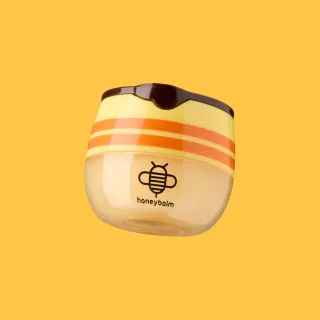
Honeybalm Australia Honeybalm Honey- With real honey | Honeybalm Australia
Works for
MoisturizingEthylhexyl palmitate, Caprylic/capric triglyceride + 8 moreWorks
“Hive-made with bee-loved beeswax, propolis and vitamin E, she leaves lips wrapped in honeyed warmth- nourished, comforted, and kissably soft.”
This product can help soften the skin and reduce its moisture loss with emollients and occlusives: caprylic/capric triglyceride, cera alba.
Keep in mind that this product does not contain effective ingredients to attract water to the upper layer of the skin. This is why an additional product with humectants like glycerin or hyaluronic acid can be helpful (apply it before this product for the best results).
Can it cause trouble?
Irritancy1 strong irritant: ParfumMedium risk
Comedogenic2 ingredients rated 2 or more on the 0–5 pore-clogging scale2 flagged
User reviews
Be the first — your take helps the next person decide.
Ingredients
Filter by role to see what each ingredient is doing.
Ethylhexyl palmitate~23–34%
- Irritation risk
- Low
- Comedogenicity
- 3/5
An emollient that helps soften the skin and create a nice product texture
More about Ethylhexyl palmitateTridecyl trimellitate~7–10.4%
- Irritation risk
- Medium
Used to create a thicker product consistency and soften the upper layer of the skin
More about Tridecyl trimellitateCera alba~3.7–5.6%
- Irritation risk
- Medium
Forms a protective barrier that holds water and keeps dry skin hydrated. Keeps an emulsion from separating into its oil and liquid components, and increases the thickness of a product. Can be an allergen
More about Cera albaCaprylic/capric triglyceride~4–6%
- Irritation risk
- Medium
A good mix of fatty acids that forms a protective layer on the skin. Improves the shelf life of products. Derived from coconut and glycerin
More about Caprylic/capric triglycerideAloe barbadensis leaf extract~3–4.5%
- Irritation risk
- Medium
Traditionally used to treat sunburns, dermatitis and inflammation, but evidence for its effectiveness is lacking. The extract can contain humectants that help attract water into the skin
More about Aloe barbadensis leaf extractCocos nucifera oil~2.4–3.5%
- Irritation risk
- Low
- Comedogenicity
- 3/5
An emollient. Found to be as effective as a moisturizer for dry skin as mineral oil. Could be comedogenic
More about Cocos nucifera oilHydrogenated styrene/isoprene copolymer~1.7–2.5%
- Irritation risk
- Medium
Helps to create a thicker product consistency
More about Hydrogenated styrene/isoprene copolymerOlea europaea fruit oil~1.4–2.1%
- Irritation risk
- Medium
An emollient that helps soften the skin but is not effective for restoring its barrier function. Might be helpful to calm down inflammation
More about Olea europaea fruit oilHydroxystearic acid~1.2–1.8%
Tocopheryl acetate~1–1.5%
- Irritation risk
- Medium
A more stable but less bio-available form of vitamin E compared to Tocopherol. Might help moisturize and protect the skin from free radicals, but mostly used in low concentrations to stabilize other ingredients.
More about Tocopheryl acetateMel~0.9–1.35%
- Irritation risk
- Low
Helps to soften the upper layer of the skin and attract water to it
More about MelPropolis extract~0.55–1.25%
- Irritation risk
- High
A complex substance produced by honey bees. Can have anti-bacterial and some anti-oxidant effect. Is an allergen and can be irritating
More about Propolis extractParfum~0.4–0.95%
- Irritation risk
- High
An aromatic blend of unspecified and possibly irritating ingredients
More about ParfumWater~0.4–0.9%
Butylene glycol~0.15–0.7%
- Irritation risk
- Low
Used to create a nice product texture and help delivery of other ingredients. Might be somewhat helpful in attracting water to the upper layer of the skin
More about Butylene glycolHydroxyacetophenone~0.15–0.55%
Phenoxyethanol~0.1–0.35%
- Irritation risk
- Low
A preservative. It helps prevent bacterial growth in cosmetic products
More about PhenoxyethanolVanillin~0.05–0.25%
- Irritation risk
- Low
Ci 77492~0.05–0.15%
Ingredient list view
Ethylhexyl palmitate, Tridecyl trimellitate, Cera alba, Caprylic/capric triglyceride, Aloe barbadensis leaf extract, Cocos nucifera oil, Hydrogenated styrene/isoprene copolymer, Olea europaea fruit oil, Hydroxystearic acid, Tocopheryl acetate, Mel, Propolis extract, Parfum, Water, Butylene glycol, Hydroxyacetophenone, Phenoxyethanol, Vanillin, Unknown, Ci 77492
Compare prices
Retailers ranked by price — lowest first.

Worth comparing, line by line.
Match % combines shared ingredients, the first five ingredients, shared actives and hero ingredients, irritancy (lower counts in the alternative's favour), texture and body area. Only products in the same routine step are compared.
| Honeybalm AustraliaHoneybalm Honey- With real honey | Honeybalm AustraliaYOUR PRODUCT | PatricksLB1 | Lip Balm | Dr. Barbara SturmLip Balm | DHCLip Cream | |
|---|---|---|---|---|
| Match | — | 42% | 42% | 39% |
| Price | — | $1.65 | $52.91 | $6.32 |
| Shared key ingredients | — | 3 of 3 | 3 of 3 | 2 of 3 |
| Key difference | — | Palmitoyl Tripeptide-1 | Bis-Diglyceryl Polyacyladipate-2 | Lanolin |
| Irritancy | Medium | Low | Low | Low |
| Drying alcohol | — | — | — | — |
| View product | Shop | Shop | Shop |


More alternatives: La Roche-Posay Cicaplast Lips Barrier Repairing Balm 7Dermolin Lip balm
Sources cited in this review
Every concentration estimate and effectiveness label is anchored to one of these 3 studies and safety reviews.
- 1
- 2Use of “natural” oils for moisturization: Review of olive, coconut, and sunflower seed oilonlinelibrary.wiley.com
- 3

Affiliate links · As an Amazon Associate, WIMJ earns from qualifying purchases.