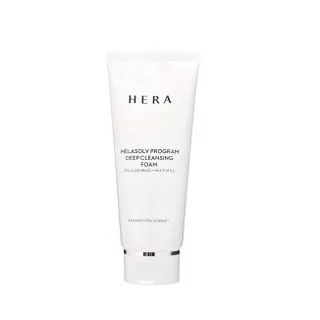
Works for
CleansingMyristic acid, Stearic acid + 6 moreCleanses gently
“Melasolv Program Deep Cleansing Foam”
This product works by removing dirt and oil from the surface of the skin. It uses a combination of mild cleansing agents (cocamidopropyl betaine, glyceryl stearate, lauric acid, myristic acid, olive oil peg-8 esters, palmitic acid, peg-100 stearate, stearic acid) and should be able to cleanse the skin gently. Still keep in mind that any cleansing can disrupt the skin barrier, and most people do not need to cleanse their skin more than once per day.
Even though this formulation is mild, the following cleansing agents could trigger an irritation or allergy for some people: cocamidopropyl betaine
Can it cause trouble?
Irritancy5 strong irritants: Parfum, Limonene + 3 more — patch-test recommendedHigh risk
Comedogenic3 ingredients rated 2 or more on the 0–5 pore-clogging scale3 flagged
User reviews
Be the first — your take helps the next person decide.
Ingredients
Filter by role to see what each ingredient is doing.
Glycerin~23–34%
- Irritation risk
- Low
One of the best moisturizing ingredients. Naturally present in skin. It attracts water to the upper layer of the skin working as a humectant
More about GlycerinWater~11–17%
Myristic acid~3.7–5.5%
- Irritation risk
- Medium
- Comedogenicity
- 3/5
Helps oil and water mix together. Could be comedogenic
More about Myristic acidKaolin~3.5–5.2%
- Irritation risk
- Low
A type of clay that consists mainly of aluminum silicate. Helps absorb oil and creates a thicker product consistency. Can be used to add a white color
More about KaolinStearic acid~2.5–3.8%
- Irritation risk
- Low
Helps oil and water mix together and works as an emollient
More about Stearic acidPeg-32~1.8–2.7%
- Irritation risk
- Low
Helps dissolve other ingredients and attract water to the upper layer of the skin
More about Peg-32Potassium hydroxide~1.5–2.2%
Palmitic acid~1.3–1.9%
- Irritation risk
- Low
An emollient that is naturally present in skin and helps soften it
More about Palmitic acidLauric acid~1.1–1.7%
- Irritation risk
- Medium
- Comedogenicity
- 3/5
Helps water and oil mix together. Has anti-bacterial properties that might be helpful in preventing blemishes
More about Lauric acidCocamidopropyl betaine~1.4–2.1%
- Irritation risk
- High
Helps water and oil mix together. Used as a cleansing ingredient. Could be an allergen
More about Cocamidopropyl betaineGlyceryl stearate~0.55–1.3%
- Irritation risk
- Low
An emollient that softens the skin and forms a protective layer on its surface. Helps water and oil mix together
More about Glyceryl stearatePeg-100 stearate~0.5–1.15%
- Irritation risk
- Low
Helps oil and water mix togehter and creates a nice product texture
More about Peg-100 stearateOlive oil peg-8 esters~0.45–1.05%
Parfum~0.35–0.85%
- Irritation risk
- High
An aromatic blend of unspecified and possibly irritating ingredients
More about ParfumSodium chloride~0.35–0.85%
- Irritation risk
- Low
Used to stabilize mixtures of oil and water, and create thicker, gel-like product textures
More about Sodium chlorideZea mays starch~0.35–0.8%
- Irritation risk
- Medium
- Comedogenicity
- 3/5
Used to thicken the product's consistency
More about Zea mays starchMicrocrystalline cellulose~0.35–0.85%
Lactose~0.2–0.75%
- Irritation risk
- Low
Helps attract water to the upper layer of the skin
More about LactoseSucrose~0.15–0.6%
- Irritation risk
- Low
Can help attract water to the upper layer of the skin. In crystal form, it can work as a gentle exfoliant, gentler than the salt scrub. Helps stabilize the emulsion
More about SucroseDisodium edta~0.15–0.6%
Sodium benzoate~0.25–0.5%
Limonene~0.1–0.45%
- Irritation risk
- High
A common frangrance that can easily irritate skin, especially if exposed to air, light or heat
More about LimoneneLinalool~0.1–0.4%
Titanium dioxide~0.35–0.75%
- Irritation risk
- Low
Works as a UV filter when used in high concentrations. It is photostable and is effective mostly against the UVB light, with some protection in the UVA range. In small concentrations, used for its ability to improve the color of cosmetic products. Is usually well tolerated by the skin
More about Titanium dioxideButylene glycol~0.15–0.7%
- Irritation risk
- Low
Used to create a nice product texture and help delivery of other ingredients. Might be somewhat helpful in attracting water to the upper layer of the skin
More about Butylene glycolButylphenyl methylpropional~0.15–0.6%
- Irritation risk
- High
A fragrance. Can trigger allergic reactions and be irritating
More about Butylphenyl methylpropionalThymol trimethoxycinnamate~0.15–0.65%
- Irritation risk
- Low
Tocopheryl acetate~0.15–0.6%
- Irritation risk
- Medium
A more stable but less bio-available form of vitamin E compared to Tocopherol. Might help moisturize and protect the skin from free radicals, but mostly used in low concentrations to stabilize other ingredients.
More about Tocopheryl acetateIron oxides~0.1–0.5%
- Irritation risk
- Low
An umbrella term for the following three colorants: CI 77491, CI 77492, CI 77499. They might be able to offer some protection against visible light, but the degree of the protection is not clear
More about Iron oxidesLactic acid~0.1–0.4%
- Irritation risk
- Medium
An exfoliating and moisturizing alpha-hydroxy acid (AHA). Typically causes less irritation than other AHAs, for example, glycolic acid. At high concentrations (about 15%), lactic acid can help reduce lines and wrinkles. Recent studies show that lactic acid can support the "good" bacteria living on skin's surface (healthy skin microbiome)
More about Lactic acidAlcohol~0.1–0.35%
- Irritation risk
- High
Can be drying and contribute to skin irritation. Used in formulars to dissolve other ingredients, create a thinner product consistency or for its antibacterial properties
More about AlcoholSilybum marianum fruit extract~0.1–0.35%
- Irritation risk
- Low
Iron oxides~0.05–0.2%
- Irritation risk
- Low
An umbrella term for the following three colorants: CI 77491, CI 77492, CI 77499. They might be able to offer some protection against visible light, but the degree of the protection is not clear
More about Iron oxidesProtease~0.05–0.2%
- Irritation risk
- Low
Phenoxyethanol~0.05–0.2%
- Irritation risk
- Low
A preservative. It helps prevent bacterial growth in cosmetic products
More about PhenoxyethanolIngredient list view
Glycerin, Water, Myristic acid, Kaolin, Stearic acid, Peg-32, Potassium hydroxide, Palmitic acid, Lauric acid, Cocamidopropyl betaine, Glyceryl stearate, Peg-100 stearate, Olive oil peg-8 esters, Parfum, Sodium chloride, Zea mays starch, Microcrystalline cellulose, Lactose, Sucrose, Disodium edta, Sodium benzoate, Limonene, Linalool, Titanium dioxide, Butylene glycol, Butylphenyl methylpropional, Thymol trimethoxycinnamate, Tocopheryl acetate, Iron oxides, Lactic acid, Alcohol, Silybum marianum fruit extract, Iron oxides, Protease, Phenoxyethanol
Compare prices
Retailers ranked by price — lowest first.
Affiliate links · As an Amazon Associate, WIMJ earns from qualifying purchases.
Worth comparing, line by line.
Match % combines shared ingredients, the first five ingredients, shared actives and hero ingredients, irritancy (lower counts in the alternative's favour), texture and body area. Only products in the same routine step are compared.
| HERAMelasolv Program Deep Cleansing FoamYOUR PRODUCT | innisfreeVolcanic BHA Pore Cleansing Foam | LANEIGEWater Bank Blue Hyaluronic Cleansing Foam | ALTHEAContour Cleanser Mini | |
|---|---|---|---|---|
| Match | — | 48% | 48% | 48% |
| Price | $17.90 | $10.31−$7.59 | $21.64+$3.74 | $1.70−$16.20 |
| Shared key ingredients | — | 8 of 12 | 9 of 12 | 8 of 12 |
| Key difference | — | Salicylic Acid | Panthenol | Fructooligosaccharides |
| Irritancy | High | Medium | Medium | Medium |
| Drying alcohol | Contains drying alcohol | — | — | — |
| View product | Shop | Shop | Shop |



More alternatives: Pretty skin Hyaluronic Cream FoamVILLAGE 11 FACTORY Moisture Cleansing Foam
Sources cited in this review
Every concentration estimate and effectiveness label is anchored to one of these 5 studies and safety reviews.
- 1
- 2
- 3
- 4Epidermal and dermal effects of topical lactic acidncbi.nlm.nih.gov
- 5Dual Effects of Alpha-Hydroxy Acids on the Skinpdfs.semanticscholar.org

Affiliate links · As an Amazon Associate, WIMJ earns from qualifying purchases.