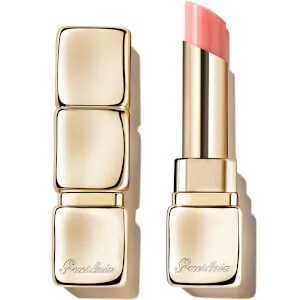
Works for
MoisturizingRicinus communis seed oil, Hydrogenated vegetable oil + 16 moreWorks
“It is the perfect blend of skincare and makeup for 24-hour comfort and hydration².”
This product can help improve hydration of the skin with the two types of ingredients.
The first type is called “humectants”:
these ingredients help attract water.
When humectants are on the surface of the skin, they “pull in” the moisture from the outside environment, or from
within deeper layers of the skin. The following ingredients in this product do the job:
sodium hyaluronate, mel.
This product also contains ingredients called “occlusives”. They help reduce the speed with which our skin loses moisture to the outside environment. These ingredients also help soften the upper layer of the skin, so it feels less tight and nicer to the touch. The following ingredients in this product do the job: butyrospermum parkii butter, caprylic/capric triglyceride.
Can it cause trouble?
Irritancy3 strong irritants: Parfum, Ethyl vanillin + 1 more — patch-test recommendedHigh risk
Comedogenic5 ingredients rated 2 or more on the 0–5 pore-clogging scale5 flagged
User reviews
Be the first — your take helps the next person decide.
Ingredients
Filter by role to see what each ingredient is doing.
Polyglyceryl-2 triisostearate~22–33%
- Irritation risk
- Low
Helps to soften the upper layer of the skin and create a nice product texture
More about Polyglyceryl-2 triisostearateRicinus communis seed oil~5.1–7.6%
- Irritation risk
- Medium
A plant oil that can help soften the skin. It might be helpful in calming down inflammation, but solid research is lacking. Is often used in lip products to create the needed product consistency
More about Ricinus communis seed oilBis-behenyl/isostearyl/phytosteryl dimer dilinoleyl dimer dilinoleate~4.8–7.2%
- Irritation risk
- High
Hydrogenated castor oil dimer dilinoleate~3.5–5.3%
- Irritation risk
- Low
Hydrogenated vegetable oil~2.7–4.1%
- Irritation risk
- Low
- Comedogenicity
- 2/5
An oil from a mixture of different vegetables. Helps soften the upper layer of the skin
More about Hydrogenated vegetable oilMethyl hydrogenated rosinate~2.5–3.8%
- Irritation risk
- Low
Helianthus annuus seed wax~1.7–2.6%
- Irritation risk
- Low
Helps soften the upper layer of the skin and support skin's barrier function while creating a thicker product consistency
More about Helianthus annuus seed waxCera alba~1.9–2.9%
- Irritation risk
- Medium
Forms a protective barrier that holds water and keeps dry skin hydrated. Keeps an emulsion from separating into its oil and liquid components, and increases the thickness of a product. Can be an allergen
More about Cera albaEthylhexyl palmitate~1.2–1.9%
- Irritation risk
- Low
- Comedogenicity
- 3/5
An emollient that helps soften the skin and create a nice product texture
More about Ethylhexyl palmitateButyrospermum parkii butter~1.1–1.6%
- Irritation risk
- Low
- Comedogenicity
- 3/5
A great moisturising ingredient that softens the skin and reduces water loss from its upper layer. It also can be helpful in protecting skin from free radicals
More about Butyrospermum parkii butterOryza sativa bran wax~0.8–1.25%
- Irritation risk
- Low
Helianthus annuus seed oil~0.6–1.35%
- Irritation risk
- Low
A great emollient due to its high linoleic acid content. One of the most effective plant oils in helping skin hydration and repairing skin barrier function
More about Helianthus annuus seed oilButyrospermum parkii butter unsaponifiables~0.5–1.15%
- Irritation risk
- Low
- Comedogenicity
- 2/5
A great moisturizing ingredient that softens the skin and reduces water loss from its upper layer. It also can be helpful in protecting skin from free radicals
More about Butyrospermum parkii butter unsaponifiablesCaprylic/capric triglyceride~0.55–1.3%
- Irritation risk
- Medium
A good mix of fatty acids that forms a protective layer on the skin. Improves the shelf life of products. Derived from coconut and glycerin
More about Caprylic/capric triglyceridePolyhydroxystearic acid~0.45–1.1%
- Irritation risk
- Medium
Used to create a thicker product consistency and stabilize the formulation
More about Polyhydroxystearic acidParfum~0.45–1%
- Irritation risk
- High
An aromatic blend of unspecified and possibly irritating ingredients
More about ParfumPropolis extract~0.45–1.05%
- Irritation risk
- High
A complex substance produced by honey bees. Can have anti-bacterial and some anti-oxidant effect. Is an allergen and can be irritating
More about Propolis extractDiisostearyl malate~0.45–1.1%
- Irritation risk
- Medium
Helps to soften the upper layer of the skin
More about Diisostearyl malateTrimethylolpropane triisostearate~0.45–1.05%
- Irritation risk
- Low
Mel~0.4–0.95%
- Irritation risk
- Low
Helps to soften the upper layer of the skin and attract water to it
More about MelPropanediol~0.35–0.85%
- Irritation risk
- Low
Acts as a solvent for other ingredients. Speeds up the absorption of other ingredients into the skin
More about PropanediolEthyl vanillin~0.3–0.7%
Pentaerythrityl tetra-di-t-butyl hydroxyhydrocinnamate~0.35–0.8%
- Irritation risk
- Low
Used to increase stability of product formulations
More about Pentaerythrityl tetra-di-t-butyl hydroxyhydrocinnamateWater~0.35–0.8%
Tocopherol~0.3–0.75%
- Irritation risk
- Low
Pure form of vitamin E. Can help moisturise and protect the skin from free radicals. Often used to help stabilise other ingredients or the formula itself
More about TocopherolTrihydroxystearin~0.35–0.8%
- Irritation risk
- Low
Helps soften the upper layer of the skin and improve the product texture
More about TrihydroxystearinIsostearic acid~0.5–1.1%
- Irritation risk
- Low
Used to create a nice product texture
More about Isostearic acidAscorbyl palmitate~0.3–0.7%
- Irritation risk
- Medium
Being a lipid soluble form of vitamin C, it is more stable and can penetrate the skin better than L-Ascorbic acid. It is effective in protecting the skin from free radicals, as well as evening the skin tone, but is less effective in stimulating collagen production compared to L-Ascorbic acid.
More about Ascorbyl palmitatePolyglyceryl-3 polyricinoleate~0.35–0.85%
- Irritation risk
- Medium
Helps oil and water mix together
More about Polyglyceryl-3 polyricinoleateLecithin~0.4–0.95%
- Irritation risk
- Low
Used mostly for creating emulsions - helping oil and water mix together. Helps soften the upper layer of the skin
More about LecithinSodium hyaluronate~0.3–0.75%
- Irritation risk
- Low
One of the best moisturizing ingredients. Attracts water into the upper layer of the skin
More about Sodium hyaluronateMontmorillonite~0.35–0.8%
- Irritation risk
- Low
A clay mineral. Can absorb oil from the surface of the skin
More about MontmorilloniteAnthocyanins~0.3–0.75%
- Irritation risk
- Low
Maltodextrin~0.4–0.95%
- Irritation risk
- Low
Used to stabilize the product formulation and can help absorb oil
More about MaltodextrinPropyl gallate~0.2–0.7%
- Irritation risk
- Medium
Helps preserve product formulations and can mask the smell of other ingredients in a product
More about Propyl gallateLavandula angustifolia oil~0.15–0.6%
- Irritation risk
- High
An essential oil. Potential allergen and can be irritating. It has some anti-bacterial properties
More about Lavandula angustifolia oilCitric acid~0.15–0.5%
- Irritation risk
- Medium
Can work as an exfoliant but is typically used to adjust the product pH
More about Citric acidCi 77891~0.1–0.4%
- Irritation risk
- Low
Ci 15985~0.1–0.4%
Ci 45380~0.1–0.4%
Ci 77491~0.1–0.35%
- Irritation risk
- Low
A red colorant made of iron oxide. Typically is not irritating
More about Ci 77491Ci 77499~0.05–0.25%
Ci 15850~0.05–0.25%
Ingredient list view
Polyglyceryl-2 triisostearate, Ricinus communis seed oil, Bis-behenyl/isostearyl/phytosteryl dimer dilinoleyl dimer dilinoleate, Hydrogenated castor oil dimer dilinoleate, Hydrogenated vegetable oil, Methyl hydrogenated rosinate, Helianthus annuus seed wax, Cera alba, Ethylhexyl palmitate, Butyrospermum parkii butter, Oryza sativa bran wax, Helianthus annuus seed oil, Butyrospermum parkii butter unsaponifiables, Caprylic/capric triglyceride, Polyhydroxystearic acid, Parfum, Propolis extract, Diisostearyl malate, Trimethylolpropane triisostearate, Mel, Propanediol, Ethyl vanillin, Pentaerythrityl tetra-di-t-butyl hydroxyhydrocinnamate, Water, Tocopherol, Trihydroxystearin, Isostearic acid, Ascorbyl palmitate, Polyglyceryl-3 polyricinoleate, Lecithin, Sodium hyaluronate, Montmorillonite, Anthocyanins, Maltodextrin, Propyl gallate, Lavandula angustifolia oil, Citric acid, Ci 77891, Ci 15985, Ci 45380, Ci 77491, Ci 77499, Ci 15850
Compare prices
Retailers ranked by price — lowest first.
Affiliate links · As an Amazon Associate, WIMJ earns from qualifying purchases.
Worth comparing, line by line.
Match % combines shared ingredients, the first five ingredients, shared actives and hero ingredients, irritancy (lower counts in the alternative's favour), texture and body area. Only products in the same routine step are compared.
| GUERLAINKisskiss Bee Glow Honey Tint BalmYOUR PRODUCT | ILIALip Care Stick | VichyNaturalblend Nude Lip Balm | CliniqueChubby Stick | |
|---|---|---|---|---|
| Match | — | 39% | 38% | 37% |
| Price | — | $28.00 | $11.47 | $23.36 |
| Shared key ingredients | — | 6 of 9 | 5 of 9 | 6 of 9 |
| Key difference | — | Helianthus Annuus Extract | Cocos Nucifera Oil | Butyrospermum Parkii Butter Extract |
| Irritancy | High | Medium | Medium | Medium |
| Drying alcohol | — | — | — | — |
| View product | Shop | Shop | Shop |


More alternatives: Burt's Bees Strawberry Lip BalmLe Couvent des Minimes Amorem Nourishing Lip Balm
Sources cited in this review
Every concentration estimate and effectiveness label is anchored to one of these 15 studies and safety reviews.
- 1
- 2
- 3
- 4
- 5
- 6

Affiliate links · As an Amazon Associate, WIMJ earns from qualifying purchases.