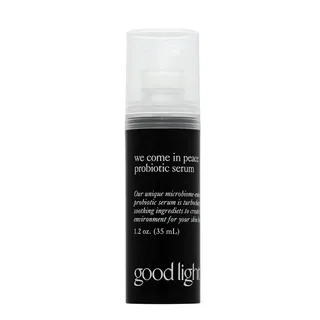
good light world we come in peace probiotics serum

good light world we come in peace probiotics serum

Efficacy75/100IrritancyMedium

Works for

Moisturizing
Caprylic/capric triglyceride, Glycerin + 8 more
Works
What the product description says
“why it sells out Hydrates, protects, calms and makes your skin barrier more robust. Want more?”
Source: Good light

This product can help improve hydration of the skin with the two types of ingredients.

The first type is called “humectants”:
these ingredients help attract water. When humectants are on the surface of the skin, they “pull in” the moisture from the outside environment, or from within deeper layers of the skin. The following ingredients in this product do the job: betaine, glycerin.

This product also contains ingredients called “occlusives”. They help reduce the speed with which our skin loses moisture to the outside environment. These ingredients also help soften the upper layer of the skin, so it feels less tight and nicer to the touch. The following ingredients in this product do the job: caprylic/capric triglyceride, cetearyl alcohol.

Caprylic/capric triglycerideKey active· Emollient, OcclusiveEffect: HighA good mix of fatty acids that forms a protective layer on the skin. Improves the shelf life of products. Derived from coconut and glycerin~3.3–4%
GlycerinKey active· HumectantEffect: HighOne of the best moisturizing ingredients. Naturally present in skin. It attracts water to the upper layer of the skin working as a humectant~2.4–3%
Olea europaea fruit oilKey active· EmollientEffect: MediumAn emollient that helps soften the skin but is not effective for restoring its barrier function. Might be helpful to calm down inflammation~1.6–2%
Lactococcus ferment lysateKey activeEffect: HighConsists of remains of dead bacteria cells. Is likely helpful in attracting water to the upper layer of the skin. Might be helpful in reducing inflammation and neutralizing free radicals in skin~0.7–1.05%
BetaineKey active· HumectantEffect: HighHelps attract water to the upper layer of the skin and improves the product texture~0.5–0.7%
Cetearyl alcoholKey active· EmollientEffect: MediumA non-drying alcohol. Works as an emollient. Helps water and oil mix together and creates a nice product texture~0.2–0.35%
GlucoseKey active· HumectantEffect: MediumHelps attract water to the upper layer of the skin. Could be helpful in restoring the skin barrier function~0.2–0.35%
Moringa oleifera seed oil· EmollientEffect: LowA plant oil that helps soften the upper layer of the skin. Is unlikely to be helpful in restoring skin barrier function due to the low content of linoleic acid~1–1.2%
Tanacetum annuum flower oilEffect: LowAn essential oil that has anti-inflammatory properties but also contains irritating compounds~0.6–0.85%
Glyceryl stearate· EmollientEffect: LowAn emollient that softens the skin and forms a protective layer on its surface. Helps water and oil mix together~0.5–0.75%
Anti-oxidation
Side benefit · Bakuchiol, Daucus carota sativa seed oil + 1 more
Works well

This product contains antioxidants (bakuchiol) that can help neutralize free radicals in skin. By doing so, they can lessen the damage the skin gets from the UV light (sun).

BakuchiolKey activeEffect: HighA plant extract that is, though different in chemical structure, acts similar to retinoids. First studies show that it can help reduce fine lines and wrinkles, improve skin tone, reduce clogged pores and blemishes, and reduce inflammation. There is no conclusive evidence that bakuchiol is as effective as retinol however. The study that directly compared retinol with bakuchiol used bakuchiol applied twice daily compared to once per day for the retinol. According to this study, bakuchiol is less irritating than retinol. Bakuchiol is extracted from seeds of Babchi plant. Other parts of the plant contain coumarins that could cause allergic and irritant reactions. These compounds should be removed in the extraction process when bakuchiol is produced, but it is a good idea to be cautious and stay away from products that include the Babchi plant extracts other than purified bakuchiol to avoid irritation~1.4–1.8%
Daucus carota sativa seed oilEffect: LowA plant oil that might help neutralize free radicals and have an anti-bacterial effect~1.2–1.5%
Lactococcus ferment lysateEffect: LowConsists of remains of dead bacteria cells. Is likely helpful in attracting water to the upper layer of the skin. Might be helpful in reducing inflammation and neutralizing free radicals in skin~0.7–1.05%
Anti-aging
Side benefit · Bakuchiol, Lactococcus ferment lysate
Works well

This product can help reduce and prevent fine lines and wrinkles, improve skin elasticity and firmness because it contains bakuchiol.

Keep in mind that it typically takes at least 6 weeks to notice any results because the changes that are needed to improve fine lines and elasticity happen in the deeper layers of the skin. No topical anti-aging product can “erase” wrinkles or fully reverse signs of aging.

BakuchiolKey activeEffect: HighA plant extract that is, though different in chemical structure, acts similar to retinoids. First studies show that it can help reduce fine lines and wrinkles, improve skin tone, reduce clogged pores and blemishes, and reduce inflammation. There is no conclusive evidence that bakuchiol is as effective as retinol however. The study that directly compared retinol with bakuchiol used bakuchiol applied twice daily compared to once per day for the retinol. According to this study, bakuchiol is less irritating than retinol. Bakuchiol is extracted from seeds of Babchi plant. Other parts of the plant contain coumarins that could cause allergic and irritant reactions. These compounds should be removed in the extraction process when bakuchiol is produced, but it is a good idea to be cautious and stay away from products that include the Babchi plant extracts other than purified bakuchiol to avoid irritation~1.4–1.8%
Lactococcus ferment lysateEffect: LowConsists of remains of dead bacteria cells. Is likely helpful in attracting water to the upper layer of the skin. Might be helpful in reducing inflammation and neutralizing free radicals in skin~0.7–1.05%
Evens skin tone
Side benefit · Bakuchiol
Works well

This product can help reduce hypepigmentation and even out the skin tone because it contains the following effective ingredients: bakuchiol

Keep in mind that you would need to apply any topical skincare targetted at hypigmentation consistently for a couple of months to get a result. No topical skincare product can help get rid of hyperpigmentation (including post-acne marks and age spots) instantly.

BakuchiolKey activeEffect: HighA plant extract that is, though different in chemical structure, acts similar to retinoids. First studies show that it can help reduce fine lines and wrinkles, improve skin tone, reduce clogged pores and blemishes, and reduce inflammation. There is no conclusive evidence that bakuchiol is as effective as retinol however. The study that directly compared retinol with bakuchiol used bakuchiol applied twice daily compared to once per day for the retinol. According to this study, bakuchiol is less irritating than retinol. Bakuchiol is extracted from seeds of Babchi plant. Other parts of the plant contain coumarins that could cause allergic and irritant reactions. These compounds should be removed in the extraction process when bakuchiol is produced, but it is a good idea to be cautious and stay away from products that include the Babchi plant extracts other than purified bakuchiol to avoid irritation~1.4–1.8%
Anti-blemish
Side benefit · Bakuchiol
May help

This product might be able to help reduce blemishes and clogged pores because it contains bakuchiol.

BakuchiolKey activeEffect: HighA plant extract that is, though different in chemical structure, acts similar to retinoids. First studies show that it can help reduce fine lines and wrinkles, improve skin tone, reduce clogged pores and blemishes, and reduce inflammation. There is no conclusive evidence that bakuchiol is as effective as retinol however. The study that directly compared retinol with bakuchiol used bakuchiol applied twice daily compared to once per day for the retinol. According to this study, bakuchiol is less irritating than retinol. Bakuchiol is extracted from seeds of Babchi plant. Other parts of the plant contain coumarins that could cause allergic and irritant reactions. These compounds should be removed in the extraction process when bakuchiol is produced, but it is a good idea to be cautious and stay away from products that include the Babchi plant extracts other than purified bakuchiol to avoid irritation~1.4–1.8%

Can it cause trouble?

Irritancy
1 strong irritant: Tanacetum annuum flower oil
Medium risk
We flagged 12 ingredients with irritancy potential. Severity depends on your sensitivity threshold; the table lists the worst offenders first.
IngredientFunctionIrritationEst. amount
Tanacetum annuum flower oilAn essential oil that has anti-inflammatory properties but also contains irritating compoundsHigh~0.6–0.85%est.
PhenylpropanolHelps mask the smell of other ingredients and helps preserve the product formulationHigh~0.25–0.45%est.
Caprylic/capric triglycerideA good mix of fatty acids that forms a protective layer on the skin. Improves the shelf life of products. Derived from coconut and glycerinMedium~3.3–4%est.
1,2-hexanediolA preservativeMedium~0.7–1.05%est.
Olea europaea fruit oilAn emollient that helps soften the skin but is not effective for restoring its barrier function. Might be helpful to calm down inflammationMedium~1.6–2%est.
BakuchiolA plant extract that is, though different in chemical structure, acts similar to retinoids. First studies show that it can help reduce fine lines and wrinkles, improve skin tone, reduce clogged pores and blemishes, and reduce inflammation. There is no conclusive evidence that bakuchiol is as effective as retinol however. The study that directly compared retinol with bakuchiol used bakuchiol applied twice daily compared to once per day for the retinol. According to this study, bakuchiol is less irritating than retinol. Bakuchiol is extracted from seeds of Babchi plant. Other parts of the plant contain coumarins that could cause allergic and irritant reactions. These compounds should be removed in the extraction process when bakuchiol is produced, but it is a good idea to be cautious and stay away from products that include the Babchi plant extracts other than purified bakuchiol to avoid irritationMedium~1.4–1.8%est.
Moringa oleifera seed oilA plant oil that helps soften the upper layer of the skin. Is unlikely to be helpful in restoring skin barrier function due to the low content of linoleic acidMedium~1–1.2%est.
C12-20 alkyl glucosideHelps water and oil mix togetherMedium~0.35–0.65%est.
Levulinic acidHelps stabilize a product formulationMedium~0.2–0.35%est.
Sodium levulinateA preservativeMedium~0.2–0.4%est.
Acrylates/c10-30 alkyl acrylate crosspolymerMaintains the texture of skincare products. Allows the product to spread evenly. Helps oil and water mix togetherMedium~0.15–0.3%est.
EthylhexylglycerinA preservativeMedium~0.1–0.15%est.
Comedogenic
2 ingredients rated 2 or more on the 0–5 pore-clogging scale
2 flagged
These ingredients have a comedogenic rating of 2 or more on a 0–5 scale; the table shows each one's rating. In leave-on products they can clog pores in acne-prone skin.
IngredientFunctionRatingEst. amount
Cetearyl alcoholA non-drying alcohol. Works as an emollient. Helps water and oil mix together and creates a nice product texture2/5~0.65–0.95%est.
Cetearyl alcoholA non-drying alcohol. Works as an emollient. Helps water and oil mix together and creates a nice product texture2/5~0.2–0.35%est.
Did this help you decide?

User reviews

Would you recommend?
No community reviews yet.

Be the first — your take helps the next person decide.

Ingredients

Filter by role to see what each ingredient is doing.

Water~45–55%
Formula
Irritation risk
Low

Plain old water

More about Water
Dipropylene glycol~7.4–9.1%
Formula
Irritation risk
Low

Helps to dissolve other ingredients in a formulation. Slows down the rate of product drying

More about Dipropylene glycol
Propanediol~4.2–5.2%
Formula
Irritation risk
Low

Acts as a solvent for other ingredients. Speeds up the absorption of other ingredients into the skin

More about Propanediol
Caprylic/capric triglyceride~3.3–4%
Key activeIrritant · medium
Irritation risk
Medium
Works for
Moisturizing

A good mix of fatty acids that forms a protective layer on the skin. Improves the shelf life of products. Derived from coconut and glycerin

More about Caprylic/capric triglyceride
Glycerin~2.4–3%
Key active
Irritation risk
Low
Works for
Moisturizing

One of the best moisturizing ingredients. Naturally present in skin. It attracts water to the upper layer of the skin working as a humectant

More about Glycerin
1,2-hexanediol~0.7–1.05%
Irritant · medium
Irritation risk
Medium

A preservative

More about 1,2-hexanediol
Olea europaea fruit oil~1.6–2%
Key activeIrritant · medium
Irritation risk
Medium
Works for
Moisturizing

An emollient that helps soften the skin but is not effective for restoring its barrier function. Might be helpful to calm down inflammation

More about Olea europaea fruit oil
Bakuchiol~1.4–1.8%
Key activeIrritant · medium
Irritation risk
Medium
Works for
Evens skin toneAnti-inflammatoryAnti-blemishAnti-agingAnti-oxidation

A plant extract that is, though different in chemical structure, acts similar to retinoids. First studies show that it can help reduce fine lines and wrinkles, improve skin tone, reduce clogged pores and blemishes, and reduce inflammation. There is no conclusive evidence that bakuchiol is as effective as retinol however. The study that directly compared retinol with bakuchiol used bakuchiol applied twice daily compared to once per day for the retinol. According to this study, bakuchiol is less irritating than retinol. Bakuchiol is extracted from seeds of Babchi plant. Other parts of the plant contain coumarins that could cause allergic and irritant reactions. These compounds should be removed in the extraction process when bakuchiol is produced, but it is a good idea to be cautious and stay away from products that include the Babchi plant extracts other than purified bakuchiol to avoid irritation

More about Bakuchiol
Daucus carota sativa seed oil~1.2–1.5%
Formula
Irritation risk
Low
Works for
Anti-oxidationAntibacterial

A plant oil that might help neutralize free radicals and have an anti-bacterial effect

More about Daucus carota sativa seed oil
Moringa oleifera seed oil~1–1.2%
Irritant · medium
Irritation risk
Medium
Works for
Moisturizing

A plant oil that helps soften the upper layer of the skin. Is unlikely to be helpful in restoring skin barrier function due to the low content of linoleic acid

More about Moringa oleifera seed oil
Lactococcus ferment lysate~0.7–1.05%
Key active
Irritation risk
Low
Works for
MoisturizingAnti-agingAnti-oxidationAnti-inflammatory

Consists of remains of dead bacteria cells. Is likely helpful in attracting water to the upper layer of the skin. Might be helpful in reducing inflammation and neutralizing free radicals in skin

More about Lactococcus ferment lysate
Tanacetum annuum flower oil~0.6–0.85%
Irritant · high
Irritation risk
High
Works for
MoisturizingAnti-inflammatory

An essential oil that has anti-inflammatory properties but also contains irritating compounds

More about Tanacetum annuum flower oil
Cetearyl alcohol~0.65–0.95%
Key activeComedogenic 2/5
Irritation risk
Low
Comedogenicity
2/5
Works for
CleansingMoisturizing

A non-drying alcohol. Works as an emollient. Helps water and oil mix together and creates a nice product texture

More about Cetearyl alcohol
Betaine~0.5–0.7%
Key active
Irritation risk
Low
Works for
Moisturizing

Helps attract water to the upper layer of the skin and improves the product texture

More about Betaine
C14-22 alcohols~0.45–0.7%
Formula
Irritation risk
Low

A non-drying alcohol that helps stabilize product formulations

More about C14-22 alcohols
Glyceryl stearate~0.5–0.75%
Formula
Irritation risk
Low
Works for
CleansingMoisturizing

An emollient that softens the skin and forms a protective layer on its surface. Helps water and oil mix together

More about Glyceryl stearate
Xanthan gum~0.45–0.65%
Formula
Irritation risk
Low
Works for
Cleansing

Used to create a thicker product consistency

More about Xanthan gum
C12-20 alkyl glucoside~0.35–0.65%
Irritant · medium
Irritation risk
Medium
Works for
Cleansing

Helps water and oil mix together

More about C12-20 alkyl glucoside
Phenylpropanol~0.25–0.45%
Irritant · high
Irritation risk
High

Helps mask the smell of other ingredients and helps preserve the product formulation

More about Phenylpropanol
Tetrasodium iminodisuccinate~0.25–0.45%
Formula
Levulinic acid~0.2–0.35%
Irritant · medium
Irritation risk
Medium

Helps stabilize a product formulation

More about Levulinic acid
Sodium levulinate~0.2–0.4%
Irritant · medium
Irritation risk
Medium

A preservative

More about Sodium levulinate
Glucose~0.2–0.35%
Key active
Irritation risk
Low
Works for
Moisturizing

Helps attract water to the upper layer of the skin. Could be helpful in restoring the skin barrier function

More about Glucose
Acrylates/c10-30 alkyl acrylate crosspolymer~0.15–0.3%
Irritant · medium
Irritation risk
Medium

Maintains the texture of skincare products. Allows the product to spread evenly. Helps oil and water mix together

More about Acrylates/c10-30 alkyl acrylate crosspolymer
Cetearyl alcohol~0.2–0.35%
Key activeComedogenic 2/5
Irritation risk
Low
Comedogenicity
2/5
Works for
CleansingMoisturizing

A non-drying alcohol. Works as an emollient. Helps water and oil mix together and creates a nice product texture

More about Cetearyl alcohol
Tromethamine~0.1–0.2%
Formula
Irritation risk
Low

Helps adjust pH in products

More about Tromethamine
Sodium chloride~0.1–0.2%
Formula
Irritation risk
Low

Used to stabilize mixtures of oil and water, and create thicker, gel-like product textures

More about Sodium chloride
Ethylhexylglycerin~0.1–0.15%
Irritant · medium
Irritation risk
Medium

A preservative

More about Ethylhexylglycerin
Ingredient list view

Water, Dipropylene glycol, Propanediol, Caprylic/capric triglyceride, Glycerin, 1,2-hexanediol, Olea europaea fruit oil, Bakuchiol, Daucus carota sativa seed oil, Moringa oleifera seed oil, Lactococcus ferment lysate, Tanacetum annuum flower oil, Cetearyl alcohol, Betaine, C14-22 alcohols, Glyceryl stearate, Xanthan gum, C12-20 alkyl glucoside, Phenylpropanol, Tetrasodium iminodisuccinate, Levulinic acid, Sodium levulinate, Glucose, Acrylates/c10-30 alkyl acrylate crosspolymer, Cetearyl alcohol, Tromethamine, Sodium chloride, Ethylhexylglycerin

Compare prices

Retailers ranked by price — lowest first.

Good light
$20.95
Buy

Affiliate links · As an Amazon Associate, WIMJ earns from qualifying purchases.

Worth comparing, line by line.

Match % combines shared ingredients, the first five ingredients, shared actives and hero ingredients, irritancy (lower counts in the alternative's favour), texture and body area. Only products in the same routine step are compared.

Side-by-side comparison of this product against its closest alternatives
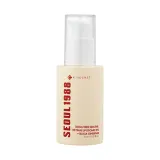
good light worldwe come in peace probiotics serumYOUR PRODUCTGOOD LIGHTWe Come In Peace Microbiome SerumPhilosophyNature in A Jar Skin Reset Serum with BakuchiolK-SECRETSEOUL 1988 Serum : Retinal Liposome 2% + Black Ginseng
Match—100%95%93%
Price$20.95$30.19+$9.24$32.16+$11.21$11.30−$9.65
Shared key ingredients—5 of 53 of 54 of 5
Key difference——AdenosineRetinal
Irritancy Medium Medium Low Medium
Drying alcohol————
View product Shop Shop Shop

More alternatives: Purified Post-Breakout SerumDr Roebuck's Surf Chaser Reverse Aging Serum

Cheaper alternatives? See how this stacks up against similar formulas.
We compare ingredient profiles across our catalog — pick the closest match for your budget.
Open dupe finder

Product summary

"good light world - we come in peace probiotics serum" is effective for: Anti-inflammatory, Anti-aging and Evens skin tone

This product could be helpful for: Anti-blemish and Moisturizing, but its actives are not the most effective or are not well-studied.

Ingredient callouts

  • this product contains Bakuchiol (1.40% - 1.80%). It is a plant extract that is has a similar effect to that of Retinoids but with less irritation. Bakuchiol can help reduce fine lines and wrinkles, improve skin tone, reduce clogged pores and blemishes, and reduce inflammation.
  • Humectants (glycerin 2.40% - 3.00% and betaine 0.50% - 0.70%). These ingredients help attract water to the upper layer of the skin and improve the skin hydration.

Price

The product retails for 20.95$ in the United States.

For a detailed price comparison: click here.

Sources cited in this review

Every concentration estimate and effectiveness label is anchored to one of these 13 studies and safety reviews.

  1. 1
  2. 2
  3. 3
  4. 4
  5. 5
  6. 6
good light world we come in peace probiotics serum
good light worldwe come in peace probiotics serum

Affiliate links · As an Amazon Associate, WIMJ earns from qualifying purchases.

As an Amazon Associate, WIMJ earns from qualifying purchases.