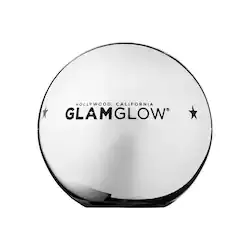
Works for
1 of 2 advertised claims delivered
Moisturizing25 ingredients credited for this claimGood support
“A powerful moisturizing lip treatment for soft, hydrated, and kissable lips.”
This product can help improve hydration of the skin with the two types of ingredients.
The first type is called “humectants”:
these ingredients help attract water.
When humectants are on the surface of the skin, they “pull in” the moisture from the outside environment, or from
within deeper layers of the skin. The following ingredients in this product do the job:
glycerin, sodium hyaluronate.
This product also contains ingredients called “occlusives”. They help reduce the speed with which our skin loses moisture to the outside environment. These ingredients also help soften the upper layer of the skin, so it feels less tight and nicer to the touch. The following ingredients in this product do the job: beeswax, bis-diglyceryl polyacyladipate-2.
ExfoliationNo ingredient credited for this claimNo support
“exfoliate lips with POUTMUDTM Fizzy Lip Exfoliating Treatment then follow with POUTMUD Wet Balm for ultra-soft lips.”
This product does not contain effective exfoliating ingredients. It might be able to deliver physical exfoliation, that is scrub off some of the dead cells on the surface of the skin. We do not recommend physical exfoliation, because it is not uniform (some bits of skin can get exfoliated too much while others not at all). It can also traumatize the skin and aggrevate acne and other skin conditions.
Can it cause trouble?
Irritancy8 strong irritants: Mentha viridis leaf oil, Hibiscus sabdariffa flower extract + 6 more — patch-test recommendedHigh risk
Comedogenic6 ingredients rated 2 or more on the 0–5 pore-clogging scale6 flagged
User reviews
Be the first — your take helps the next person decide.
Ingredients
Filter by role to see what each ingredient is doing.
Polyisobutene~25–30%
Caprylic/capric triglyceride~5.6–6.8%
- Irritation risk
- Medium
A good mix of fatty acids that forms a protective layer on the skin. Improves the shelf life of products. Derived from coconut and glycerin
More about Caprylic/capric triglycerideOlea europaea fruit oil~5.1–6.2%
- Irritation risk
- Medium
An emollient that helps soften the skin but is not effective for restoring its barrier function. Might be helpful to calm down inflammation
More about Olea europaea fruit oilPrunus amygdalus dulcis oil~3.9–4.8%
- Irritation risk
- Low
An emollient that softens the skin
More about Prunus amygdalus dulcis oilSimmondsia chinensis seed oil~3–3.7%
- Irritation risk
- Medium
Softens the upper layer of skin and helps restore the healthy skin barrier. Has shown to help calm down inflammation in skin. It is a stable oil, meaning that it retains its properties even when exposed to air.
More about Simmondsia chinensis seed oilBeeswax~2.4–2.9%
- Irritation risk
- Low
Forms a protective barrier that holds water and keeps dry skin hydrated. Keeps an emulsion from separating into its oil and liquid components, and increases the thickness of a product. Can be an allergen
More about BeeswaxCera alba~2.2–2.7%
- Irritation risk
- Medium
Forms a protective barrier that holds water and keeps dry skin hydrated. Keeps an emulsion from separating into its oil and liquid components, and increases the thickness of a product. Can be an allergen
More about Cera albaBeeswax~1.6–2%
- Irritation risk
- Low
Forms a protective barrier that holds water and keeps dry skin hydrated. Keeps an emulsion from separating into its oil and liquid components, and increases the thickness of a product. Can be an allergen
More about BeeswaxBis-diglyceryl polyacyladipate-2~1.4–1.7%
- Irritation risk
- Low
Helps soften the upper layer of the skin and reduce water loss from its surface
More about Bis-diglyceryl polyacyladipate-2Hydrogenated castor oil~1–1.2%
- Irritation risk
- Medium
A plant oil that can help soften the skin. It might be helpful in calming down inflammation, but solid research is lacking. Is often used in lip products to create the needed product consistency
More about Hydrogenated castor oilRicinus communis seed oil~0.7–1.1%
- Irritation risk
- Medium
A plant oil that can help soften the skin. It might be helpful in calming down inflammation, but solid research is lacking. Is often used in lip products to create the needed product consistency
More about Ricinus communis seed oilEuphorbia cerifera wax~0.8–1.2%
- Irritation risk
- Low
Candelilla cera~0.75–1.1%
- Irritation risk
- Low
Synthetic beeswax~0.45–0.65%
- Irritation risk
- Low
Helps soften the upper layer of the skin
More about Synthetic beeswaxStevia rebaudiana extract~0.4–0.6%
- Irritation risk
- Medium
A plant extract that adds a sweat taste to products (for example, for lip products). Might help to attract water to the upper layer of the skin and have some anti-oxidant effect
More about Stevia rebaudiana extractButylene/ethylene/styrene copolymer~0.4–0.6%
- Irritation risk
- Low
Used to create a gel-like product texture
More about Butylene/ethylene/styrene copolymerHelianthus annuus seed oil~0.45–0.7%
- Irritation risk
- Low
A great emollient due to its high linoleic acid content. One of the most effective plant oils in helping skin hydration and repairing skin barrier function
More about Helianthus annuus seed oilMentha viridis leaf oil~0.3–0.6%
Hdi/trimethylol hexyllactone crosspolymer~0.3–0.55%
- Irritation risk
- Low
Used to create a silky product texture and add volume to products
More about Hdi/trimethylol hexyllactone crosspolymerHoney~0.25–0.5%
- Irritation risk
- Low
Helps attract water to the skin and might have some anti-bacterial properties. Can be an allergen
More about HoneyMel~0.3–0.6%
- Irritation risk
- Low
Helps to soften the upper layer of the skin and attract water to it
More about MelHoney~0.25–0.5%
- Irritation risk
- Low
Helps attract water to the skin and might have some anti-bacterial properties. Can be an allergen
More about HoneyHibiscus sabdariffa flower extract~0.25–0.45%
- Irritation risk
- High
A plant extract that can be irritating. It might contain a compound anthocyanin that could be helpful in neutralizing free radicals
More about Hibiscus sabdariffa flower extractMoroccan lava clay~0.45–0.65%
- Irritation risk
- Low
Helps absorb oil (for the time of application) and creates a thicker product consistency
More about Moroccan lava claySaccharomyces/xylinum/black tea ferment~0.25–0.45%
- Irritation risk
- Low
A fermented sweet black tea. There is no studies on particular benefits of this ingredient in skin. It can help attract water to the upper layer of the skin, and might have some anti-oxidant effect. It is used in skincare for mostly marketing purposes because of the popularity of kombucha drinks
More about Saccharomyces/xylinum/black tea fermentEthylene/propylene/styrene copolymer~0.25–0.45%
- Irritation risk
- Low
Used to create a thicker product consistency
More about Ethylene/propylene/styrene copolymerMalpighia glabra fruit extract~0.25–0.45%
- Irritation risk
- Medium
A plant extract that might help neutralize free radicals in skin, but research on its effectiveness is lacking
More about Malpighia glabra fruit extractPaullinia cupana seed extract~0.25–0.45%
- Irritation risk
- High
Euterpe oleracea fruit extract~0.25–0.45%
- Irritation risk
- Medium
A plant extract that can have some anti-oxidant effect in skin
More about Euterpe oleracea fruit extractButyrospermum parkii butter~0.35–0.6%
- Irritation risk
- Low
- Comedogenicity
- 3/5
A great moisturising ingredient that softens the skin and reduces water loss from its upper layer. It also can be helpful in protecting skin from free radicals
More about Butyrospermum parkii butterPyrus malus fruit extract~0.25–0.45%
- Irritation risk
- Medium
Can have some moisturizing properties due to its sugar content
More about Pyrus malus fruit extractCocos nucifera oil~0.25–0.5%
- Irritation risk
- Low
- Comedogenicity
- 3/5
An emollient. Found to be as effective as a moisturizer for dry skin as mineral oil. Could be comedogenic
More about Cocos nucifera oilOrbignya oleifera seed oil~0.3–0.6%
- Irritation risk
- Low
A plant oil that can help soften the upper layer of the skin. Might be helpful in calming down inflammation in skin
More about Orbignya oleifera seed oilTheobroma grandiflorum seed butter~0.25–0.45%
- Irritation risk
- Medium
Helps soften the upper layer of the skin and might as well help to attract moisture to its upper layer
More about Theobroma grandiflorum seed butterCalophyllum tacamahaca seed oil~0.3–0.6%
Nephelium lappaceum branch/fruit/leaf extract~0.25–0.45%
- Irritation risk
- Low
Annona cherimola fruit extract~0.25–0.45%
- Irritation risk
- Medium
A fruit extract that might have an anti-oxidant effect in skin
More about Annona cherimola fruit extractSodium hyaluronate~0.25–0.45%
- Irritation risk
- Low
One of the best moisturizing ingredients. Attracts water into the upper layer of the skin
More about Sodium hyaluronateAstrocaryum murumuru seed butter~0.3–0.6%
- Irritation risk
- Medium
Helps soften the upper layer of the skin. Could be comedogenic due to the myrisic acid content
More about Astrocaryum murumuru seed butterGardenia taitensis flower extract~0.25–0.45%
Caprylyl glycol~0.3–0.55%
- Irritation risk
- Medium
Helps preserve products and creates a nice product texture
More about Caprylyl glycolPsidium guajava fruit extract~0.25–0.45%
- Irritation risk
- High
A fruit extract that might have some anti-oxidant effect
More about Psidium guajava fruit extractAverrhoa carambola fruit extract~0.25–0.45%
- Irritation risk
- Low
Garcinia mangostana fruit extract~0.25–0.45%
- Irritation risk
- High
A fruit extract that might have some anti-oxidant properties
More about Garcinia mangostana fruit extractEthylhexylglycerin~0.25–0.45%
Litchi chinensis fruit extract~0.25–0.5%
- Irritation risk
- Low
Silica~0.45–0.7%
Water~0.25–0.5%
Glycerin~0.3–0.55%
- Irritation risk
- Low
One of the best moisturizing ingredients. Naturally present in skin. It attracts water to the upper layer of the skin working as a humectant
More about GlycerinMaltodextrin~0.45–0.65%
- Irritation risk
- Low
Used to stabilize the product formulation and can help absorb oil
More about MaltodextrinHexylene glycol~0.25–0.45%
- Irritation risk
- Medium
Helps create a more spreadable product texture
More about Hexylene glycolParfum~0.25–0.45%
- Irritation risk
- High
An aromatic blend of unspecified and possibly irritating ingredients
More about ParfumAroma~0.25–0.5%
Limonene~0.25–0.45%
- Irritation risk
- High
A common frangrance that can easily irritate skin, especially if exposed to air, light or heat
More about LimoneneLinalool~0.25–0.45%
Tetrahexyldecyl ascorbate~0.25–0.5%
- Irritation risk
- Medium
Being a lipid soluble form of vitamin C, it is more stable than ascorbic acid, but still degrades quickly and needs to be stabilized in a formulation with another ingredient. It is claimed to penetrate skin better than pure vitamin C and have the the similar benefits, but solid studies of its effectiveness are lacking. Is likely to require a higher concentration in a product than pure vitamin C to be effective. It might be able to help reduce pore clogging.
More about Tetrahexyldecyl ascorbateCitric acid~0.25–0.5%
- Irritation risk
- Medium
Can work as an exfoliant but is typically used to adjust the product pH
More about Citric acidPhenoxyethanol~0.25–0.5%
- Irritation risk
- Low
A preservative. It helps prevent bacterial growth in cosmetic products
More about PhenoxyethanolMica~0.3–0.6%
- Irritation risk
- Low
Creates an illusion of smoother and more radiant skin tone. Adds shimmer to the skin by reflecting light
More about MicaTitanium dioxide~0.4–0.6%
- Irritation risk
- Low
Works as a UV filter when used in high concentrations. It is photostable and is effective mostly against the UVB light, with some protection in the UVA range. In small concentrations, used for its ability to improve the color of cosmetic products. Is usually well tolerated by the skin
More about Titanium dioxideCi 77891~0.25–0.45%
- Irritation risk
- Low
Iron oxides~0.25–0.45%
- Irritation risk
- Low
An umbrella term for the following three colorants: CI 77491, CI 77492, CI 77499. They might be able to offer some protection against visible light, but the degree of the protection is not clear
More about Iron oxidesCi 77491~0.25–0.5%
- Irritation risk
- Low
A red colorant made of iron oxide. Typically is not irritating
More about Ci 77491Iron oxides~0.25–0.45%
- Irritation risk
- Low
An umbrella term for the following three colorants: CI 77491, CI 77492, CI 77499. They might be able to offer some protection against visible light, but the degree of the protection is not clear
More about Iron oxidesCi 77492~0.25–0.5%
Iron oxides~0.25–0.45%
- Irritation risk
- Low
An umbrella term for the following three colorants: CI 77491, CI 77492, CI 77499. They might be able to offer some protection against visible light, but the degree of the protection is not clear
More about Iron oxidesCi 77499~0.25–0.5%
Ci 77163~0.25–0.5%
Ci 42090~0.25–0.5%
Blue 1 lake~0.25–0.5%
Ci 42090~0.25–0.5%
Bronzite powder~0.3–0.55%
- Irritation risk
- Low
Ci 77400~0.25–0.5%
- Irritation risk
- Low
Ci 77742~0.25–0.5%
Ci 15850~0.25–0.5%
Ci 45380~0.25–0.45%
Ci 15850~0.25–0.45%
Ci 45380~0.25–0.45%
Ci 15850~0.25–0.45%
Ci 45410~0.25–0.4%
Ci 17200~0.2–0.4%
Ci 73360~0.2–0.35%
Ci 17200~0.15–0.3%
Ci 19140~0.15–0.3%
Ci 15985~0.15–0.3%
Ci 19140~0.1–0.2%
Ci 15985~0.1–0.15%
Ingredient list view
Polyisobutene, Caprylic/capric triglyceride, Olea europaea fruit oil, Prunus amygdalus dulcis oil, Simmondsia chinensis seed oil, Beeswax, Cera alba, Beeswax, Bis-diglyceryl polyacyladipate-2, Hydrogenated castor oil, Ricinus communis seed oil, Euphorbia cerifera wax, Candelilla cera, Synthetic beeswax, Stevia rebaudiana extract, Butylene/ethylene/styrene copolymer, Helianthus annuus seed oil, Mentha viridis leaf oil, Hdi/trimethylol hexyllactone crosspolymer, Honey, Mel, Honey, Hibiscus sabdariffa flower extract, Moroccan lava clay, Saccharomyces/xylinum/black tea ferment, Ethylene/propylene/styrene copolymer, Malpighia glabra fruit extract, Paullinia cupana seed extract, Euterpe oleracea fruit extract, Butyrospermum parkii butter, Pyrus malus fruit extract, Cocos nucifera oil, Orbignya oleifera seed oil, Theobroma grandiflorum seed butter, Calophyllum tacamahaca seed oil, Nephelium lappaceum branch/fruit/leaf extract, Annona cherimola fruit extract, Sodium hyaluronate, Astrocaryum murumuru seed butter, Gardenia taitensis flower extract, Caprylyl glycol, Psidium guajava fruit extract, Averrhoa carambola fruit extract, Garcinia mangostana fruit extract, Ethylhexylglycerin, Litchi chinensis fruit extract, Silica, Water, Glycerin, Maltodextrin, Hexylene glycol, Parfum, Aroma, Limonene, Linalool, Tetrahexyldecyl ascorbate, Citric acid, Phenoxyethanol, Mica, Titanium dioxide, Ci 77891, Iron oxides, Ci 77491, Iron oxides, Ci 77492, Iron oxides, Ci 77499, Ci 77163, Ci 42090, Blue 1 lake, Ci 42090, Bronzite powder, Ci 77400, Ci 77742, Ci 15850, Unknown, Ci 45380, Ci 15850, Unknown, Ci 45380, Ci 15850, Ci 45410, Ci 17200, Ci 73360, Ci 17200, Ci 19140, Ci 15985, Ci 19140, Ci 15985
Compare prices
Retailers ranked by price — lowest first.
Affiliate links · prices updated regularly · As an Amazon Associate, WIMJ earns from qualifying purchases.
Sources cited in this review
Every concentration estimate and effectiveness label is anchored to one of these 34 studies and safety reviews.
- 1
- 2Use of “natural” oils for moisturization: Review of olive, coconut, and sunflower seed oilonlinelibrary.wiley.com
- 3
- 4
- 5
- 6

Affiliate links · As an Amazon Associate, WIMJ earns from qualifying purchases.