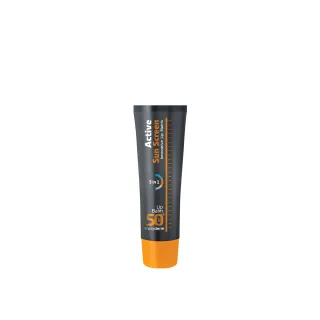
Frezyderm Active Sun Screen Lip Balm SPF50+
Works for
Sun protectionSPF 50 · 6 UV filtersBroad spectrum
This product offers a good level of protection against both UVB and UVA rays.
This sunscreen uses organic (so-called "chemical") sunscreen filters. Organic, or "chemical" filters usually provide reliable sun protection and rarely leave a white cast. Sunscreens with organic filters can sting eyes.
Anti-agingTocopherolWorks well
“The formula is rich and comfortable, creating a nourishing layer that instantly replenishes the lips and protects from premature aging.”
This product can help prevent early signs of skin aging because it offers a good level of broad spectrum sun protection. Sun damage is the main cause of premature skin aging, and protecting your skin from the sun is the best anti-aging strategy.
MoisturizingSide benefit the brand mentions · Caprylic/capric triglyceride, Helianthus annuus seed oil + 13 moreWorks
“Frezyderm Active Sun Screen Lip Balm SPF50+ is a water-resistant sunscreen that hydrates the lips while creating a protective barrier.”
This product can help soften the skin and reduce its moisture loss with emollients and occlusives: caprylic/capric triglyceride, cera alba.
Keep in mind that this product does not contain effective ingredients to attract water to the upper layer of the skin. This is why an additional product with humectants like glycerin or hyaluronic acid can be helpful (apply it before this product for the best results).
Can it cause trouble?
Irritancy3 strong irritants: Isoamyl p-methoxycinnamate, Parfum + 1 more — patch-test recommendedHigh risk
Comedogenic1 ingredient rated 2 or more on the 0–5 pore-clogging scale1 flagged
User reviews
Be the first — your take helps the next person decide.
Ingredients
Filter by role to see what each ingredient is doing.
Caprylic/capric triglyceride~23–34%
- Irritation risk
- Medium
A good mix of fatty acids that forms a protective layer on the skin. Improves the shelf life of products. Derived from coconut and glycerin
More about Caprylic/capric triglycerideDiethylamino hydroxybenzoyl hexyl benzoate~5.1–7.7%
- Irritation risk
- Medium
Uvinul A Plus. A new generation broad spectrum sunscreen that offers an effective protection especially in the UVA range. It is stable in formulations. Unfortunately, is not approved by the FDA (US) yet
More about Diethylamino hydroxybenzoyl hexyl benzoateEthylhexyl methoxycinnamate~4.6–6.9%
- Irritation risk
- High
Octinoxate. When used in higher concentrations, works as a sunscreen protecting the skin from UVB rays. When used in lower concentration, helps to preserve the product formulation. Is shown to be harmful to coral reefs - consider avoiding bathing in coral reef areas when wearing a product with this ingredient. It can be irritating
More about Ethylhexyl methoxycinnamateIsoamyl p-methoxycinnamate~3.9–5.9%
- Irritation risk
- High
Amiloxate or Neo Heliopan E1000. A UV filter. It is effective against UVB and UVA II rays. Not available in the US. It can be irritating
More about Isoamyl p-methoxycinnamatePentaerythrityl stearate/caprate/caprylate/adipate~2.7–4.1%
- Irritation risk
- Low
Helianthus annuus seed oil~2.2–3.2%
- Irritation risk
- Low
A great emollient due to its high linoleic acid content. One of the most effective plant oils in helping skin hydration and repairing skin barrier function
More about Helianthus annuus seed oilTheobroma grandiflorum fruit extract~1.5–2.2%
- Irritation risk
- Low
Hydrogenated polyisobutene~1.4–2.1%
- Irritation risk
- Low
Used to improve the product consistency and soften the upper layer of the skin
More about Hydrogenated polyisobuteneCetyl alcohol~1.1–1.6%
- Irritation risk
- Low
A non-drying alcohol that works to soften the skin and stabilize product formulations helping oil and water mix together
More about Cetyl alcoholTitanium dioxide~1.1–1.7%
- Irritation risk
- Low
Works as a UV filter when used in high concentrations. It is photostable and is effective mostly against the UVB light, with some protection in the UVA range. In small concentrations, used for its ability to improve the color of cosmetic products. Is usually well tolerated by the skin
More about Titanium dioxideC12-15 alkyl benzoate~0.5–1.2%
- Irritation risk
- Low
Enhances the product texture and makes it more spreadable. Helps reduce water loss from the outer layer of skin. Extands the shelf life by preventing bacteria growth
More about C12-15 alkyl benzoateHydrogenated olive oil hexyl esters~0.45–1.05%
- Irritation risk
- Low
Synthetic beeswax~0.35–0.75%
- Irritation risk
- Low
Helps soften the upper layer of the skin
More about Synthetic beeswaxBis-ethylhexyloxyphenol methoxyphenyl triazine~0.4–0.95%
- Irritation risk
- Medium
Tinosorb S. One of the most effective broad spectrum sunscreen ingredients. Protects from both UVA and UVB rays. It is photostable. Approved by the US FDA in 2026 (listed as bemotrizinol on US labels).
More about Bis-ethylhexyloxyphenol methoxyphenyl triazineEthylhexyl triazone~0.35–0.85%
- Irritation risk
- Medium
Uvinul T. A UV filter. Effective against UVB rays. It is photostable. Can increase water resistance properties of the sunscreen. Unfortunately, not approved by the FDA (US) yet
More about Ethylhexyl triazoneGlyceryl oleate~0.3–0.75%
- Irritation risk
- High
Helps oil and water mix together. Can be irritating
More about Glyceryl oleateCera alba~0.4–1%
- Irritation risk
- Medium
Forms a protective barrier that holds water and keeps dry skin hydrated. Keeps an emulsion from separating into its oil and liquid components, and increases the thickness of a product. Can be an allergen
More about Cera albaCocos nucifera oil~0.15–0.65%
- Irritation risk
- Low
- Comedogenicity
- 3/5
An emollient. Found to be as effective as a moisturizer for dry skin as mineral oil. Could be comedogenic
More about Cocos nucifera oilJuglans regia seed extract~0.15–0.55%
- Irritation risk
- Low
Caprylyl glycol~0.15–0.65%
- Irritation risk
- Medium
Helps preserve products and creates a nice product texture
More about Caprylyl glycolParfum~0.1–0.4%
- Irritation risk
- High
An aromatic blend of unspecified and possibly irritating ingredients
More about ParfumBixa orellana seed extract~0.1–0.45%
- Irritation risk
- Low
Crambe maritima extract~0.1–0.4%
- Irritation risk
- Low
Oryza sativa bran oil~0.15–0.6%
- Irritation risk
- Low
Helps soften the upper layer of the skin and might have some anti-oxidant properties
More about Oryza sativa bran oilOryza sativa germ oil~0.15–0.55%
Tocopherol~0.15–0.6%
- Irritation risk
- Low
Pure form of vitamin E. Can help moisturise and protect the skin from free radicals. Often used to help stabilise other ingredients or the formula itself
More about TocopherolTocopheryl acetate~0.15–0.6%
- Irritation risk
- Medium
A more stable but less bio-available form of vitamin E compared to Tocopherol. Might help moisturize and protect the skin from free radicals, but mostly used in low concentrations to stabilize other ingredients.
More about Tocopheryl acetateNeohesperidin dihydrochalcone~0.1–0.45%
- Irritation risk
- Low
Disteardimonium hectorite~0.15–0.5%
- Irritation risk
- Low
A type of clay that is used to thicken the product consistency
More about Disteardimonium hectoritePolyhydroxystearic acid~0.15–0.55%
- Irritation risk
- Medium
Used to create a thicker product consistency and stabilize the formulation
More about Polyhydroxystearic acidCera microcristallina~0.2–0.8%
- Irritation risk
- Low
Helps to soften the upper layer of the skin, reduce water loss from its surface and create a thicker product consistency
More about Cera microcristallinaStearyl stearate~0.15–0.65%
- Irritation risk
- Low
Methicone~0.15–0.6%
- Irritation risk
- Low
A type of silicone that helps soften the upper layer of the skin and reduces the water loss from the skin surface
More about MethiconeAlumina~0.2–0.75%
- Irritation risk
- Low
The same compound that is used safely in dental implants and bone cements. In cosmetics, it is used to improve the consistency of products
More about AluminaPropylene carbonate~0.1–0.35%
- Irritation risk
- Low
Is used to dissolve other ingredients and create nice product texture
More about Propylene carbonatePhenylpropanol~0.05–0.25%
- Irritation risk
- High
Helps mask the smell of other ingredients and helps preserve the product formulation
More about PhenylpropanolLinalool~0.05–0.2%
Ingredient list view
Caprylic/capric triglyceride, Diethylamino hydroxybenzoyl hexyl benzoate, Ethylhexyl methoxycinnamate, Isoamyl p-methoxycinnamate, Pentaerythrityl stearate/caprate/caprylate/adipate, Helianthus annuus seed oil, Theobroma grandiflorum fruit extract, Unknown, Hydrogenated polyisobutene, Cetyl alcohol, Titanium dioxide, C12-15 alkyl benzoate, Hydrogenated olive oil hexyl esters, Synthetic beeswax, Bis-ethylhexyloxyphenol methoxyphenyl triazine, Ethylhexyl triazone, Glyceryl oleate, Cera alba, Cocos nucifera oil, Juglans regia seed extract, Caprylyl glycol, Parfum, Bixa orellana seed extract, Crambe maritima extract, Oryza sativa bran oil, Oryza sativa germ oil, Tocopherol, Tocopheryl acetate, Neohesperidin dihydrochalcone, Disteardimonium hectorite, Polyhydroxystearic acid, Cera microcristallina, Stearyl stearate, Methicone, Alumina, Propylene carbonate, Phenylpropanol, Linalool
Compare prices
Retailers ranked by price — lowest first.

Worth comparing, line by line.
Match % combines shared ingredients, the first five ingredients, shared actives and hero ingredients, irritancy (lower counts in the alternative's favour), texture and body area. Only products in the same routine step are compared.
| FrezydermActive Sun Screen Lip Balm SPF50+YOUR PRODUCT | REVOLUTION SKINCARESPF 30 Lip Balm | UltrasunUltraLip SPF30 | CetaphilPROTECTIVE LIP BALM SPF 50+ | |
|---|---|---|---|---|
| Match | — | 36% | 35% | 34% |
| Price | $16.99 | $7.94−$9.05 | $10.58−$6.41 | — |
| Shared key ingredients | — | 7 of 14 | 4 of 14 | 6 of 14 |
| Key difference | — | Butyrospermum Parkii Butter | Mineral Oil | Vitamin E |
| Irritancy | High | Medium | Medium | Medium |
| SPF | SPF 50 | SPF 30 | SPF 30 | SPF 50 |
| Drying alcohol | — | — | — | — |
| View product | Shop | Shop | Shop |


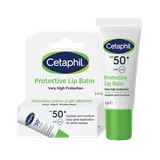
More alternatives: Supergoop! Shine On Lip Screen SPF 40Lanolips Lip Ointment SPF30 - Rhubarb
Product summary
We believe that "Frezyderm - Active Sun Screen Lip Balm SPF50+" can provide reliable sun protection based on the ingredients listed. We love that it can protect from both UVA and UVB rays (not all sunscreens with SPF ratings give UVA protection. UVA rays do not cause sunburn, but still damage our skin and lead to early aging).
Sunscreen filters
This sunscreen uses a mixture of both mineral and organic (so-called "chemical") UV filters. Here are the organic filters this product uses: tinosorb s, uvinul a plus, octinoxate, uvinul t and amiloxate. As for the mineral filters, this sunscreen uses titanium dioxide.
Irritation risk
There are some common irritants in this product, including ingredients that do not have benefits for the skin. We assess the overall irritancy of this lip sunscreen to be high. For a detailed overview of all potential irritants: click here
You can see the detailed formula review with the breakdown of all actives in the product and the full ingredient list with estimated concentrations in the tables below.
Price
The product retails from 10.63$ up to 12.74$ in the United States.
For a detailed price comparison: click here.
Sources cited in this review
Every concentration estimate and effectiveness label is anchored to one of these 12 studies and safety reviews.
- 1
- 2
- 3
- 4Effect of topically applied lipids on surfactant-irritated skinonlinelibrary.wiley.com
- 5
- 6

Affiliate links · As an Amazon Associate, WIMJ earns from qualifying purchases.