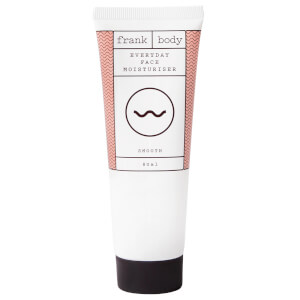
Works for
1 of 2 advertised claims delivered
MoisturizingCocos nucifera oil, Glycerin + 14 moreGood evidence
“Face Moisturiser”
This product can help improve hydration of the skin with the two types of ingredients.
The first type is called “humectants”:
these ingredients help attract water.
When humectants are on the surface of the skin, they “pull in” the moisture from the outside environment, or from
within deeper layers of the skin. The following ingredients in this product do the job:
glycerin, sucrose.
This product also contains ingredients called “occlusives”. They help reduce the speed with which our skin loses moisture to the outside environment. These ingredients also help soften the upper layer of the skin, so it feels less tight and nicer to the touch. The following ingredients in this product do the job: caprylic/capric triglyceride, cocos nucifera oil.
Anti-agingPrunus amygdalus dulcis oil, Butyrospermum parkii butter + 2 moreWeak evidence
“Vitamin E is full of antioxidants to fight dryness and fine lines.”
Effective ingredients missing or their concentration is too low.
Can it cause trouble?
Irritancy1 strong irritant: ParfumMedium risk
Comedogenic8 ingredients rated 2 or more on the 0–5 pore-clogging scale8 flagged
User reviews
Be the first — your take helps the next person decide.
Ingredients
Filter by role to see what each ingredient is doing.
Water~45–55%
Squalane~5.8–7.1%
- Irritation risk
- Low
An oil naturally present in skin. Works as an emollient to soften the skin and form a protective layer on its surface without a greasy feeling.
More about SqualaneOlea europaea fruit oil~4.2–5.1%
- Irritation risk
- Medium
An emollient that helps soften the skin but is not effective for restoring its barrier function. Might be helpful to calm down inflammation
More about Olea europaea fruit oilVitis vinifera seed oil~3.2–4%
- Irritation risk
- Medium
A great emollient that can also have anti-oxidant properties
More about Vitis vinifera seed oilGlycerin~2.6–3.2%
- Irritation risk
- Low
One of the best moisturizing ingredients. Naturally present in skin. It attracts water to the upper layer of the skin working as a humectant
More about GlycerinCetearyl olivate~2.1–2.6%
Caprylic/capric triglyceride~1.8–2.2%
- Irritation risk
- Medium
A good mix of fatty acids that forms a protective layer on the skin. Improves the shelf life of products. Derived from coconut and glycerin
More about Caprylic/capric triglyceridePrunus amygdalus dulcis oil~1.5–1.9%
- Irritation risk
- Low
An emollient that softens the skin
More about Prunus amygdalus dulcis oilSorbitan olivate~1.2–1.5%
Vegetable oil~1–1.3%
- Irritation risk
- Low
An oil from a mixture of different vegetables. Helps soften the upper layer of the skin
More about Vegetable oilCoffea arabica seed oil~0.75–1.1%
- Irritation risk
- Medium
Might be helpful in neutralizing free radicals in skin
More about Coffea arabica seed oilVitis vinifera fruit extract~0.6–0.9%
- Irritation risk
- Medium
A plant extract that helps attract water to the upper layer of the skin. It might be helpful in neutralizing free radicals in skin, but is less potent than the extract from the seeds
More about Vitis vinifera fruit extractCocos nucifera oil~0.55–0.85%
- Irritation risk
- Low
- Comedogenicity
- 3/5
An emollient. Found to be as effective as a moisturizer for dry skin as mineral oil. Could be comedogenic
More about Cocos nucifera oilButyrospermum parkii butter~0.6–0.85%
- Irritation risk
- Low
- Comedogenicity
- 3/5
A great moisturising ingredient that softens the skin and reduces water loss from its upper layer. It also can be helpful in protecting skin from free radicals
More about Butyrospermum parkii butterTheobroma cacao seed butter~0.55–0.8%
- Irritation risk
- Low
- Comedogenicity
- 3/5
Helps soften the upper layer of the skin and can be helpful in restoring the skin barrier function. Might have some anti-oxidant effect
More about Theobroma cacao seed butterTocopherol~0.5–0.75%
- Irritation risk
- Low
Pure form of vitamin E. Can help moisturise and protect the skin from free radicals. Often used to help stabilise other ingredients or the formula itself
More about TocopherolGlycine soja oil~0.5–0.75%
- Irritation risk
- Medium
- Comedogenicity
- 2/5
A good emollient that helps soften the skin and helps repair its barrier function. It can clog pores if used in high concentrations.
More about Glycine soja oilAloe barbadensis leaf juice~0.45–0.7%
- Irritation risk
- Medium
Traditionally used to treat sunburns, dermatitis and inflammation, but evidence for its effectiveness is lacking. The extract can contain humectants that help attract water into the skin
More about Aloe barbadensis leaf juiceGlycyrrhiza glabra root extract~0.4–0.6%
- Irritation risk
- Medium
A plant extract that can help lighten the skin and calm down inflammation. Might be helpful in neutralizing free radicals
More about Glycyrrhiza glabra root extractParfum~0.35–0.6%
- Irritation risk
- High
An aromatic blend of unspecified and possibly irritating ingredients
More about ParfumChondrus crispus~0.35–0.6%
- Irritation risk
- Low
- Comedogenicity
- 3/5
Red algae extract that helps attract water to the upper layer of the skin and create a nicer product consistency
More about Chondrus crispusCarrageenan~0.35–0.65%
- Irritation risk
- Medium
- Comedogenicity
- 3/5
Helps thicken the product formula and create a nice product formulation
More about CarrageenanXanthan gum~0.35–0.65%
- Irritation risk
- Low
Used to create a thicker product consistency
More about Xanthan gumSucrose~0.25–0.5%
- Irritation risk
- Low
Can help attract water to the upper layer of the skin. In crystal form, it can work as a gentle exfoliant, gentler than the salt scrub. Helps stabilize the emulsion
More about SucroseCitric acid~0.25–0.5%
- Irritation risk
- Medium
Can work as an exfoliant but is typically used to adjust the product pH
More about Citric acidZea mays starch~0.25–0.5%
- Irritation risk
- Medium
- Comedogenicity
- 3/5
Used to thicken the product's consistency
More about Zea mays starchPotassium sorbate~0.2–0.4%
Benzyl alcohol~0.1–0.2%
- Irritation risk
- High
A preservative. Can be used to mask unpleasant smell. Can be irritating
More about Benzyl alcoholDehydroacetic acid~0.1–0.2%
Sodium citrate~0.1–0.15%
- Irritation risk
- Medium
Helps to control the skin's pH level. Maintains the skin's natural film of amino-lactic acids and oils. Helps to preserve products
More about Sodium citrateZea mays starch~0.1–0.2%
- Irritation risk
- Medium
- Comedogenicity
- 3/5
Used to thicken the product's consistency
More about Zea mays starchIngredient list view
Water, Squalane, Olea europaea fruit oil, Vitis vinifera seed oil, Glycerin, Cetearyl olivate, Caprylic/capric triglyceride, Prunus amygdalus dulcis oil, Sorbitan olivate, Vegetable oil, Coffea arabica seed oil, Vitis vinifera fruit extract, Cocos nucifera oil, Butyrospermum parkii butter, Theobroma cacao seed butter, Tocopherol, Glycine soja oil, Aloe barbadensis leaf juice, Glycyrrhiza glabra root extract, Parfum, Chondrus crispus, Carrageenan, Xanthan gum, Sucrose, Citric acid, Zea mays starch, Potassium sorbate, Benzyl alcohol, Dehydroacetic acid, Sodium citrate, Zea mays starch, Unknown
Compare prices
Retailers ranked by price — lowest first.

Sources cited in this review
Every concentration estimate and effectiveness label is anchored to one of these 10 studies and safety reviews.
- 1Use of “natural” oils for moisturization: Review of olive, coconut, and sunflower seed oilonlinelibrary.wiley.com
- 2
- 3
- 4
- 5
- 6

Affiliate links · As an Amazon Associate, WIMJ earns from qualifying purchases.