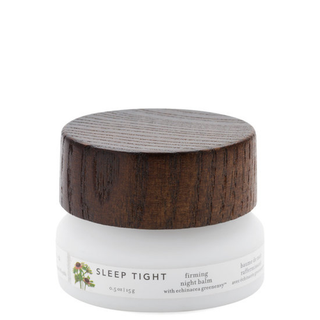
Farmacy Beauty Sleep Tight Firming Night Balm
Works for
1 of 3 advertised claims delivered
MoisturizingCorallina officinalis extract, Glycine soja oil + 17 moreGood evidence
“Dryness, Fine Lines and Wrinkles, and Dullness and Uneven Texture Formulation.”
This product can help soften the skin and reduce its moisture loss with emollients and occlusives: caprylic/capric triglyceride, helianthus annuus seed oil.
Keep in mind that this product does not contain effective ingredients to attract water to the upper layer of the skin. This is why an additional product with humectants like glycerin or hyaluronic acid can be helpful (apply it before this product for the best results).
Evens skin toneTetrahexyldecyl ascorbateWeak evidence
“Dryness, Fine Lines and Wrinkles, and Dullness and Uneven Texture Formulation.”
Effective ingredients missing or their concentration is too low
Anti-agingLimnanthes alba seed oil, Prunus amygdalus dulcis oil + 2 moreWeak evidence
“Powerful, plant-based alternative to retinoids to help reduce the appearance of fine lines and wrinkles, improve skin radiance, and restore firmness.”
Effective ingredients missing or their concentration is too low.
Can it cause trouble?
Irritancy11 strong irritants: Sorbitan sesquioleate, Citrus aurantium dulcis peel oil + 9 more — patch-test recommendedHigh risk
Comedogenic3 ingredients rated 2 or more on the 0–5 pore-clogging scale3 flagged
User reviews
Be the first — your take helps the next person decide.
Ingredients
Filter by role to see what each ingredient is doing.
Prunus amygdalus dulcis oil~25–37%
- Irritation risk
- Low
An emollient that softens the skin
More about Prunus amygdalus dulcis oilCoco-caprylate~4.8–7.3%
- Irritation risk
- Medium
An emollient that softens skin and creates a nice product texture
More about Coco-caprylateDextrin palmitate~3.4–5.2%
- Irritation risk
- Medium
Helps water and oil mix together
More about Dextrin palmitateHelianthus annuus seed oil~3.8–5.7%
- Irritation risk
- Low
A great emollient due to its high linoleic acid content. One of the most effective plant oils in helping skin hydration and repairing skin barrier function
More about Helianthus annuus seed oilSorbitan sesquioleate~2.5–3.7%
- Irritation risk
- High
Used to help oil and water mix together. Can be irritating
More about Sorbitan sesquioleateCaprylic/capric triglyceride~2.2–3.4%
- Irritation risk
- Medium
A good mix of fatty acids that forms a protective layer on the skin. Improves the shelf life of products. Derived from coconut and glycerin
More about Caprylic/capric triglycerideLimnanthes alba seed oil~1.6–2.4%
- Irritation risk
- Low
This oil's cmposition is closest to rapeseed oil. It is a very stable oil and serves as an emoillient
More about Limnanthes alba seed oilOenothera biennis oil~1.4–2.1%
- Irritation risk
- Medium
Helps soften the upper layer of the skin and can support skin barrier function
More about Oenothera biennis oilOryza sativa bran oil~1.2–1.7%
- Irritation risk
- Low
Helps soften the upper layer of the skin and might have some anti-oxidant properties
More about Oryza sativa bran oilSimmondsia chinensis seed oil~0.95–1.45%
- Irritation risk
- Medium
Softens the upper layer of skin and helps restore the healthy skin barrier. Has shown to help calm down inflammation in skin. It is a stable oil, meaning that it retains its properties even when exposed to air.
More about Simmondsia chinensis seed oilVitis vinifera seed oil~0.6–1.35%
- Irritation risk
- Medium
A great emollient that can also have anti-oxidant properties
More about Vitis vinifera seed oilEchinacea purpurea root extract~0.4–1%
- Irritation risk
- Low
Echinacea purpurea extract~0.4–0.9%
- Irritation risk
- High
Plant extract that might have some anti-oxidant properties. Can be irritating
More about Echinacea purpurea extractElaeis guineensis oil~0.4–1%
- Irritation risk
- Low
Helps soften the upper layer of the skin
More about Elaeis guineensis oilGossypium herbaceum seed oil~0.35–0.8%
- Irritation risk
- Low
- Comedogenicity
- 3/5
Cottonseed oil. It is used as an emollient and occlusive in products. It is rich palmitic, oleic acid, and linoleic fatty acids.
More about Gossypium herbaceum seed oilBidens pilosa extract~0.3–0.75%
- Irritation risk
- Low
Linum usitatissimum seed oil~0.2–0.8%
Ribes nigrum seed oil~0.35–0.8%
- Irritation risk
- Medium
An emollient. Can be helpful for restoring skin barrier function.
More about Ribes nigrum seed oilSpilanthes acmella flower extract~0.2–0.7%
- Irritation risk
- High
Plant extract that might hep calm down inflammation in skin
More about Spilanthes acmella flower extractHelianthus annuus seed oil unsaponifiables~0.3–0.75%
- Irritation risk
- Low
A great emollient due to its high linoleic acid content. One of the most effective plant oils in helping skin hydration and repairing skin barrier function
More about Helianthus annuus seed oil unsaponifiablesCardiospermum halicacabum flower/leaf/vine extract~0.15–0.65%
- Irritation risk
- High
A plant extract that might have some anti-inflammatory and anti-oxidant properties but evidence is missing
More about Cardiospermum halicacabum flower/leaf/vine extractMoringa oleifera seed oil~0.2–0.8%
- Irritation risk
- Medium
A plant oil that helps soften the upper layer of the skin. Is unlikely to be helpful in restoring skin barrier function due to the low content of linoleic acid
More about Moringa oleifera seed oilTetrahexyldecyl ascorbate~0.15–0.6%
- Irritation risk
- Medium
Being a lipid soluble form of vitamin C, it is more stable than ascorbic acid, but still degrades quickly and needs to be stabilized in a formulation with another ingredient. It is claimed to penetrate skin better than pure vitamin C and have the the similar benefits, but solid studies of its effectiveness are lacking. Is likely to require a higher concentration in a product than pure vitamin C to be effective. It might be able to help reduce pore clogging.
More about Tetrahexyldecyl ascorbateCrambe abyssinica seed oil~0.15–0.6%
- Irritation risk
- Medium
Helps soften the upper layer of the skin
More about Crambe abyssinica seed oilTocopheryl acetate~0.15–0.65%
- Irritation risk
- Medium
A more stable but less bio-available form of vitamin E compared to Tocopherol. Might help moisturize and protect the skin from free radicals, but mostly used in low concentrations to stabilize other ingredients.
More about Tocopheryl acetateOrmenis multicaulis oil~0.15–0.55%
- Irritation risk
- Low
Citrus aurantium dulcis peel oil~0.15–0.6%
- Irritation risk
- High
An essentil oil from orange peel. Potential allergen and can be irritating
More about Citrus aurantium dulcis peel oilMelia azadirachta leaf extract~0.15–0.6%
- Irritation risk
- High
A plant extract that has anti-bacterial properties. Can be used to preserve the product. Can be irritating
More about Melia azadirachta leaf extractTocopherol~0.15–0.6%
- Irritation risk
- Low
Pure form of vitamin E. Can help moisturise and protect the skin from free radicals. Often used to help stabilise other ingredients or the formula itself
More about TocopherolMelia azadirachta flower extract~0.15–0.6%
- Irritation risk
- Medium
A plant extract that might be helpful to neutralize free radicals in skin
More about Melia azadirachta flower extractCorallina officinalis extract~0.15–0.6%
- Irritation risk
- Low
- Comedogenicity
- 3/5
Red algae extract that helps attract water to the upper layer of the skin and might contain antioxidants
More about Corallina officinalis extractCitrus aurantifolia oil~0.15–0.65%
- Irritation risk
- High
Citrus aurantium bergamia fruit oil~0.15–0.55%
- Irritation risk
- High
A plant oil with a high content of volatile compounds that can irritate the skin and lead to allergic reactions. Can lead to photosensitivity
More about Citrus aurantium bergamia fruit oilWater~0.15–0.6%
Cananga odorata flower oil~0.15–0.55%
Amber powder~0.15–0.6%
Coccinia indica fruit extract~0.15–0.6%
- Irritation risk
- Medium
A plant extract that might have some anti-oxidant effect helping neutralize free radicals in skin
More about Coccinia indica fruit extractSolanum melongena fruit extract~0.15–0.6%
- Irritation risk
- Medium
Eggplant fruit extract. Might have some anti-oxidant effect
More about Solanum melongena fruit extractCurcuma longa root extract~0.15–0.5%
- Irritation risk
- High
A plant extract that can contain an active compound curcumin, that may have some anti-inflammatory properties when applied to the skin, but solid research is lacking and the typical concentration used in skincare products is too low. Can be an irritant
More about Curcuma longa root extractOcimum sanctum leaf extract~0.15–0.55%
- Irritation risk
- High
A plant extract that is rich in a fragrance compound eugenol that is a frequent allergen and can be irritating. It might also contain anti-oxidants to help neutralize free radicals
More about Ocimum sanctum leaf extractZingiber officinale root oil~0.1–0.45%
- Irritation risk
- High
An essential oil that is likely to be irritating and can cause photosensitivity
More about Zingiber officinale root oilRosmarinus officinalis leaf extract~0.1–0.45%
- Irritation risk
- High
Can be helpful in reducing inflammation in skin, including inflamed acne. It can be irritating
More about Rosmarinus officinalis leaf extractGlycine soja oil~0.15–0.65%
- Irritation risk
- Medium
- Comedogenicity
- 2/5
A good emollient that helps soften the skin and helps repair its barrier function. It can clog pores if used in high concentrations.
More about Glycine soja oilSilica silylate~0.15–0.7%
Octyldodecanol~0.15–0.5%
- Irritation risk
- Low
An emollient that helps to soften the skin and create a pleasant product texture and stabilize the formulation
More about OctyldodecanolPhenoxyethanol~0.1–0.45%
- Irritation risk
- Low
A preservative. It helps prevent bacterial growth in cosmetic products
More about PhenoxyethanolCitral~0.1–0.35%
Limonene~0.05–0.2%
- Irritation risk
- High
A common frangrance that can easily irritate skin, especially if exposed to air, light or heat
More about LimoneneLinalool~0.05–0.2%
Ingredient list view
Prunus amygdalus dulcis oil, Coco-caprylate, Dextrin palmitate, Helianthus annuus seed oil, Sorbitan sesquioleate, Caprylic/capric triglyceride, Limnanthes alba seed oil, Oenothera biennis oil, Oryza sativa bran oil, Simmondsia chinensis seed oil, Vitis vinifera seed oil, Echinacea purpurea root extract, Echinacea purpurea extract, Elaeis guineensis oil, Gossypium herbaceum seed oil, Bidens pilosa extract, Linum usitatissimum seed oil, Ribes nigrum seed oil, Spilanthes acmella flower extract, Helianthus annuus seed oil unsaponifiables, Cardiospermum halicacabum flower/leaf/vine extract, Moringa oleifera seed oil, Tetrahexyldecyl ascorbate, Crambe abyssinica seed oil, Tocopheryl acetate, Ormenis multicaulis oil, Citrus aurantium dulcis peel oil, Melia azadirachta leaf extract, Tocopherol, Melia azadirachta flower extract, Corallina officinalis extract, Citrus aurantifolia oil, Citrus aurantium bergamia fruit oil, Water, Cananga odorata flower oil, Amber powder, Coccinia indica fruit extract, Solanum melongena fruit extract, Curcuma longa root extract, Ocimum sanctum leaf extract, Zingiber officinale root oil, Rosmarinus officinalis leaf extract, Glycine soja oil, Silica silylate, Octyldodecanol, Phenoxyethanol, Citral, Limonene, Linalool
Compare prices
Retailers ranked by price — lowest first.

Sources cited in this review
Every concentration estimate and effectiveness label is anchored to one of these 30 studies and safety reviews.
- 1
- 2
- 3
- 4
- 5Effect of topically applied lipids on surfactant-irritated skinonlinelibrary.wiley.com
- 6

Affiliate links · As an Amazon Associate, WIMJ earns from qualifying purchases.