Facetheory Ultraglide Silicone-Free Face Primer P1
Works for
MoisturizingCetyl alcohol, Lauroyl lysine + 7 moreWorks
“A silky, silicone-free primer formulated to minimise the appearance of pores and fine lines while protecting against moisture loss.”
This product contains good ingredients to attract water to the upper layer of the skin. These ingredients are called "humectants": glycerin.
When humectants are on the surface of the skin, they “pull in” the moisture from the outside environment, or from within deeper layers of the skin. If the air is dry, humectants can speed up the moisture loss from the skin. This is why it is a good idea to use another product on top of this one to help "seal in" the moisture (look for ingredients like dimethicone, squalane, oils and butters).
Anti-agingLactic acid ~0.1–0.4%, below the ~2% it needsUnder-dosed
“A silky, silicone-free primer formulated to minimise the appearance of pores and fine lines while protecting against moisture loss.”
Effective ingredients missing or their concentration is too low.
Can it cause trouble?
Irritancy1 strong irritant: Sodium anisateMedium risk
ComedogenicClean of flagged comedogenic ingredientsNone flagged
User reviews
Be the first — your take helps the next person decide.
Ingredients
Filter by role to see what each ingredient is doing.
Water~40–60%
C15-19 alkane~7.2–10.8%
- Irritation risk
- Low
Helps soften the upper layer of the skin and create a nice product texture
More about C15-19 alkaneDilinoleic acid/propanediol copolymer~4–6%
- Irritation risk
- Low
Cetyl alcohol~2.3–3.5%
- Irritation risk
- Low
A non-drying alcohol that works to soften the skin and stabilize product formulations helping oil and water mix together
More about Cetyl alcoholGlyceryl stearate~2.1–3.2%
- Irritation risk
- Low
An emollient that softens the skin and forms a protective layer on its surface. Helps water and oil mix together
More about Glyceryl stearateLauroyl lysine~1.7–2.5%
- Irritation risk
- Low
Helps soften the upper layer of the skin and creates a nice product texture
More about Lauroyl lysineCorn starch modified~1.4–2.1%
Polyglyceryl-6 stearate~1.2–1.8%
- Irritation risk
- Low
Helps soften the upper layer of the skin
More about Polyglyceryl-6 stearateStearic acid~1.1–1.6%
- Irritation risk
- Low
Helps oil and water mix together and works as an emollient
More about Stearic acidBoron nitride~0.85–1.3%
- Irritation risk
- Low
Helps to absord oil and evenly disperse other ingredients (for example, pigment) in product formulation
More about Boron nitrideGlycerin~0.5–1.15%
- Irritation risk
- Low
One of the best moisturizing ingredients. Naturally present in skin. It attracts water to the upper layer of the skin working as a humectant
More about GlycerinSodium anisate~0.4–0.95%
Sodium levulinate~0.35–0.8%
Glyceryl caprylate~0.35–0.8%
- Irritation risk
- Low
An emollient that can also help water and oil mix together, as well as prevent bacteria growth in products
More about Glyceryl caprylatePolyglyceryl-6 behenate~0.15–0.55%
Lactic acid~0.1–0.4%
- Irritation risk
- Medium
An exfoliating and moisturizing alpha-hydroxy acid (AHA). Typically causes less irritation than other AHAs, for example, glycolic acid. At high concentrations (about 15%), lactic acid can help reduce lines and wrinkles. Recent studies show that lactic acid can support the "good" bacteria living on skin's surface (healthy skin microbiome)
More about Lactic acidGellan gum~0.05–0.3%
Hydroxyethylcellulose~0.05–0.25%
- Irritation risk
- Low
Used to thicken product formulations and create gel-like textures
More about HydroxyethylcelluloseSodium phytate~0.05–0.15%
Ingredient list view
Water, C15-19 alkane, Dilinoleic acid/propanediol copolymer, Cetyl alcohol, Glyceryl stearate, Lauroyl lysine, Corn starch modified, Polyglyceryl-6 stearate, Stearic acid, Boron nitride, Glycerin, Sodium anisate, Sodium levulinate, Glyceryl caprylate, Polyglyceryl-6 behenate, Lactic acid, Gellan gum, Hydroxyethylcellulose, Sodium phytate
Worth comparing, line by line.
Match % combines shared ingredients, the first five ingredients, shared actives and hero ingredients, irritancy (lower counts in the alternative's favour), texture and body area. Only products in the same routine step are compared.
| FacetheoryUltraglide Silicone-Free Face Primer P1YOUR PRODUCT | ExaJump Start Smoothing Primer | EssenceHigh Beauty Hydrating Face Primer | ULTAHydrating Face Primer | |
|---|---|---|---|---|
| Match | — | 30% | 29% | 29% |
| Price | — | $34.00 | — | — |
| Shared key ingredients | — | 1 of 1 | 1 of 1 | 1 of 1 |
| Key difference | — | Caprylic/Capric Triglyceride | Arginine | Cocos Nucifera Oil |
| Irritancy | Medium | Medium | Medium | Medium |
| Drying alcohol | — | — | Contains drying alcohol | — |
| View product | Shop | Shop | Shop |


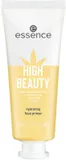

More alternatives: e.l.f. Cosmetics Hydrating Face PrimerGlo Skin Beauty Illuminating Primer
Product summary
"Facetheory - Ultraglide Silicone-Free Face Primer P1" could be helpful for: Moisturizing, but its actives are not the most effective or are not well-studied.
Ingredient callouts
- Humectants (glycerin 0.55% - 1.25%). These ingredients help attract water to the upper layer of the skin and improve the skin hydration.
About the brand
According to Cruelty-Free Kitty "Facetheory" is cruelty free and so is its parent company.
Price
The product retails from 15.00£ up to 21.00£ in the United Kingdom, for 21.00A$ in Australia and for 21.00$ in the United States.
For a detailed price comparison: click here.
Sources cited in this review
Every concentration estimate and effectiveness label is anchored to one of these 4 studies and safety reviews.
- 1Safety Assessment of Boron Nitride as Used in Cosmetics cir-safety.org
- 2
- 3Epidermal and dermal effects of topical lactic acidncbi.nlm.nih.gov
- 4Dual Effects of Alpha-Hydroxy Acids on the Skinpdfs.semanticscholar.org
