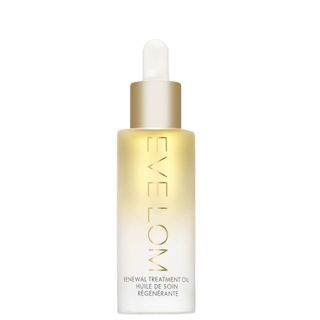
Works for
1 of 3 advertised claims delivered
Moisturizing19 ingredients credited for this claimStrong support
“Together they help to support the skin's moisture barrier, soften the look of fine lines and encourage a more even, radiant-looking complexion without feeling heavy or greasy on the skin.”
This product can help soften the skin and reduce its moisture loss with emollients and occlusives: helianthus annuus seed oil, simmondsia chinensis seed oil.
Keep in mind that this product does not contain effective ingredients to attract water to the upper layer of the skin. This is why an additional product with humectants like glycerin or hyaluronic acid can be helpful (apply it before this product for the best results).
The following ingredients in this product are especially good for supporting the skin barrier and helping with the hydration level: ceramide np
Anti-aging3 ingredients credited for this claimLimited support
“Together they help to support the skin's moisture barrier, soften the look of fine lines and encourage a more even, radiant-looking complexion without feeling heavy or greasy on the skin.”
This product does not contain ingredients that are able to reduce fine lines and wrinkles or help with skin elasticity, but it can improve the look of the skin temporarily through moisturization. Well-moisturized skin might also be able to repair the sun damage better.
This ingredient hexylresorcinol might be able to help neutralize free radicals in skin and help it fight off some of the sun damage.
Evens skin tone2 ingredients credited for this claimLimited support
“Blend of ten botanical oils, ceramides and vitamin C helps to support the skin barrier and promote a brighter, more even-looking complexion”
This product contains ingredients (hexylresorcinol) that could help reduce hyperpigmentation (for example, post-acne marks or age spots) in theory, but there is not enough evidence that they actually work.
Anti-oxidationNot advertised by the brand · 14 ingredients credited for this claimModerate support
This product contains antioxidants (hexylresorcinol) that might be able to help neutralize free radicals in skin to lessen the damage it gets from the UV light (sun). There is not enough evidence to confirm their effectiveness in skin though.
Can it cause trouble?
Irritancy14 strong irritants: Lavandula angustifolia oil, Rosmarinus officinalis leaf extract + 12 more — patch-test recommendedHigh risk
ComedogenicClean of flagged comedogenic ingredientsNone flagged
User reviews
Be the first — your take helps the next person decide.
Ingredients
Filter by role to see what each ingredient is doing.
Coco-caprylate/caprate~22–33%
- Irritation risk
- Low
Helps to soften the upper layer of the skin without creating a greasy texture
More about Coco-caprylate/caprateTriolein~7.6–11.5%
Squalane~4.3–6.5%
- Irritation risk
- Low
An oil naturally present in skin. Works as an emollient to soften the skin and form a protective layer on its surface without a greasy feeling.
More about SqualaneVitis vinifera seed oil~3.7–5.5%
- Irritation risk
- Medium
A great emollient that can also have anti-oxidant properties
More about Vitis vinifera seed oilCrambe abyssinica seed oil~2.7–4.1%
- Irritation risk
- Medium
Helps soften the upper layer of the skin
More about Crambe abyssinica seed oilPassiflora edulis seed oil~2.1–3.2%
- Irritation risk
- High
A good emollient helping to soften the skin. Might have some anti-oxidant properties. Adds a fragrance to the product
More about Passiflora edulis seed oilRosa canina fruit oil~1.6–2.5%
- Irritation risk
- Medium
A great emollient. Contains vitamin E (tocopherol) which may give it some anti-oxidant properties. Can contain volatile compounds and can be irritating
More about Rosa canina fruit oilLimnanthes alba seed oil~1.4–2.1%
- Irritation risk
- Low
This oil's cmposition is closest to rapeseed oil. It is a very stable oil and serves as an emoillient
More about Limnanthes alba seed oilPersea gratissima oil~1.3–1.9%
- Irritation risk
- Medium
An emollient that helps soften the skin and could be helpful in repairing its barrier function
More about Persea gratissima oilSimmondsia chinensis seed oil~1.1–1.6%
- Irritation risk
- Medium
Softens the upper layer of skin and helps restore the healthy skin barrier. Has shown to help calm down inflammation in skin. It is a stable oil, meaning that it retains its properties even when exposed to air.
More about Simmondsia chinensis seed oilArgania spinosa kernel oil~0.9–1.3%
- Irritation risk
- Medium
An emollient that helps soften the upper layer of the skin. Might have some weak anti-oxidant properties
More about Argania spinosa kernel oilAscorbyl tetraisopalmitate~0.55–1.35%
- Irritation risk
- Medium
A vitamin C derivative. Studies show that is might be effective in reducing hyperpigmentation, but there are no studies confirming that it is effectively converted into the bioavailable form of Vitamin C in skin. It is not clear how this derivative compares in effectiveness to the topical application of bioavailable form of vitamin C (L-ascorbic acid)
More about Ascorbyl tetraisopalmitateOleic/linoleic/linolenic polyglycerides~0.55–1.3%
- Irritation risk
- Low
Helps soften the upper layer of the skin
More about Oleic/linoleic/linolenic polyglyceridesAvena sativa kernel extract~0.5–1.2%
- Irritation risk
- Low
An effective moisturizing and skin barrier repair ingredient. Helps calm down inflammation and has some anti-oxidant properties
More about Avena sativa kernel extractBisabolol~0.45–1%
- Irritation risk
- Low
An active component of chamomile plant that historically has been used to calm down irritated skin. A recent study shows that bisabolol indeed can have some anti-inflammatory effect on skin, even though conclusive data is lacking. Bisabolol has a sweet floral scent and can be added to products for its aromatic properties
More about BisabololBorago officinalis seed oil~0.5–1.15%
- Irritation risk
- Low
A plant oil that is effective in reducing irritation in skin, restore the barrier function and support its hydration
More about Borago officinalis seed oilCamelina sativa seed oil~0.45–1.05%
- Irritation risk
- Low
Helps soften the upper layer of the skin
More about Camelina sativa seed oilHexylresorcinol~0.45–1%
- Irritation risk
- Medium
Might be helpful in reducing hyperpigmentation and neutralizing free radicals in skin
More about HexylresorcinolHelianthus annuus seed oil~0.45–1%
- Irritation risk
- Low
A great emollient due to its high linoleic acid content. One of the most effective plant oils in helping skin hydration and repairing skin barrier function
More about Helianthus annuus seed oilCeramide np~0.45–1%
- Irritation risk
- Low
A type of lipid similar to ceramides naturally present in skin. Helps to soften the upper layer of the skin and supports the skin barrier function to keep it hydrated. Can help to prevent inflammation in skin
More about Ceramide npTocopheryl acetate~0.4–0.95%
- Irritation risk
- Medium
A more stable but less bio-available form of vitamin E compared to Tocopherol. Might help moisturize and protect the skin from free radicals, but mostly used in low concentrations to stabilize other ingredients.
More about Tocopheryl acetateLavandula angustifolia oil~0.35–0.85%
- Irritation risk
- High
An essential oil. Potential allergen and can be irritating. It has some anti-bacterial properties
More about Lavandula angustifolia oilRosmarinus officinalis leaf extract~0.35–0.75%
- Irritation risk
- High
Can be helpful in reducing inflammation in skin, including inflamed acne. It can be irritating
More about Rosmarinus officinalis leaf extractCitrus limon peel oil~0.35–0.75%
Coriandrum sativum seed oil~0.4–0.9%
Cymbopogon nardus oil~0.35–0.8%
- Irritation risk
- High
Mentha piperita oil~0.3–0.7%
Tocopherol~0.35–0.8%
- Irritation risk
- Low
Pure form of vitamin E. Can help moisturise and protect the skin from free radicals. Often used to help stabilise other ingredients or the formula itself
More about TocopherolCitrus aurantium amara peel oil~0.3–0.75%
- Irritation risk
- High
Litsea cubeba fruit oil~0.2–0.75%
- Irritation risk
- High
An essential oil with a lemon-like smell that is extracted from a fruit grown in Asia. Used as a fragrance
More about Litsea cubeba fruit oilMentha piperita leaf extract~0.2–0.8%
- Irritation risk
- High
Used as a fragrance and can be irritating
More about Mentha piperita leaf extractPelargonium graveolens flower oil~0.2–0.8%
- Irritation risk
- High
An essential oil. Can be irritating. Can become an allergen with oxidation
More about Pelargonium graveolens flower oilPogostemon cablin oil~0.15–0.6%
- Irritation risk
- Low
Anthemis nobilis flower oil~0.1–0.4%
- Irritation risk
- High
An essential oil that is used as a fragrance and can be irritating. It might have some anti-oxidant effect in skin
More about Anthemis nobilis flower oilBoswellia carterii oil~0.1–0.3%
Linalool~0.05–0.25%
Limonene~0.05–0.15%
- Irritation risk
- High
A common frangrance that can easily irritate skin, especially if exposed to air, light or heat
More about LimoneneCitral~0.05–0.2%
Geraniol~0.05–0.2%
Ingredient list view
Coco-caprylate/caprate, Triolein, Squalane, Vitis vinifera seed oil, Crambe abyssinica seed oil, Passiflora edulis seed oil, Rosa canina fruit oil, Limnanthes alba seed oil, Persea gratissima oil, Simmondsia chinensis seed oil, Argania spinosa kernel oil, Ascorbyl tetraisopalmitate, Oleic/linoleic/linolenic polyglycerides, Avena sativa kernel extract, Bisabolol, Borago officinalis seed oil, Camelina sativa seed oil, Hexylresorcinol, Helianthus annuus seed oil, Ceramide np, Tocopheryl acetate, Lavandula angustifolia oil, Rosmarinus officinalis leaf extract, Citrus limon peel oil, Coriandrum sativum seed oil, Cymbopogon nardus oil, Mentha piperita oil, Tocopherol, Citrus aurantium amara peel oil, Litsea cubeba fruit oil, Mentha piperita leaf extract, Pelargonium graveolens flower oil, Pogostemon cablin oil, Anthemis nobilis flower oil, Boswellia carterii oil, Linalool, Limonene, Citral, Geraniol
Compare prices
Retailers ranked by price — lowest first.

Affiliate links · prices updated regularly
Sources cited in this review
Every concentration estimate and effectiveness label is anchored to one of these 25 studies and safety reviews.
- 1Safety Assessment of Alkyl Esters as Used in Cosmeticscir-safety.org
- 2
- 3
- 4
- 5
- 6

Affiliate links · As an Amazon Associate, WIMJ earns from qualifying purchases.