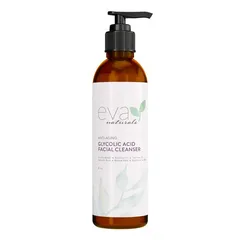
Works for:
based on ingredients and %- Cleansing
- Exfoliation
Can it cause trouble?
- Irritation risk: high
- Comedogenic risk ingredients: 1
Key actives

Works for
Cleansing
What does the product description say?
Glycolic Acid Face Wash & Cleanser
Source: From product name
This product works by removing dirt and oil from the surface of the skin. It uses a combination of mild cleansing agents (cocamide mipa, cocamidopropyl betaine, cocamidopropyl hydroxysultaine, decyl glucoside, disodium laureth sulfosuccinate, disodium lauryl sulfosuccinate) and should be able to cleanse the skin gently. Still keep in mind that any cleansing can disrupt the skin barrier, and most people do not need to cleanse their skin more than once per day.
Even though this formulation is mild, the following cleansing agents could trigger an irritation or allergy for some people: cocamidopropyl betaine, decyl glucoside
Used as a cleansing agent. Helps water and oil mix together
Helps oil and water mix together. Can be irritating
Surfactant - foam booster, viscosity increasing agent - aqueous, emulsifying, emulsion stabilising, foam boosting, surfactant, and viscosity controlling. Comes from coconut acid. Doesn't appear to be a common irritant
Helps water and oil mix together. Used as a cleansing ingredient. Could be an allergen
Used as a cleansing agent. Helps water and oil mix together
Exfoliation
This product can help exfoliate the skin. In other words, it helps break down the bonds between dead cells on the surface of the skin and speed up the skin turnover. Skin often appears softer and brighter after exfoliation, but overdoing it can result in disrupted skin barrier. The following ingredient is doing the exfoliating job in this product: glycolic acid.
An alpha-hydroxy acid (AHA) that helps to remove the dead skin cells on the surface of the skin reveling a more even, smoother complexation. It is also able to stimulate collagen production with long-term use. Could help to reduce pore congestion. It can be irritating to the skin. Apply sunscreen daily if using products with glycolic acid
A plant extract that can help neutralize free radicals in skin. It contains a compound salicin that can theoretically be converted into salicylic acid that, in turn, helps reduce inflammation in skin, but the evidence of effectiveness in skin is lacking and the extract is usually not used in a concentration that would enable an exfoliating effect
How honest is this product?
| Promise | Can it deliver? |
|---|---|
| Cleansing |
Total Promises Fulfilled score: 100/100.
We receive a small commission for purchases made through these links at no cost for you. Thank you for your support! Learn more
Potential irritants
Comedogenic ingredients
User reviews (0)
Averages from community submissions.
No reviews yet for this product.
Be the first to share your experience!
Tried this product?
Help capture what the ingredient list can't—texture, finish, pilling, scent, and more. Answer what you can, skip the rest.
Takes ~30 seconds.
Reviews are shown in aggregate. No personal details.
Key Actives
A plant extract that has been shown to be able to reduce inflammation in skin, support restoration of skin barrier function, as well as support collagen production. Contains active compounds called centelloids: asiaticoside, madecasosside, asiatic acid and madecassic acid. Might be helpful in preventing stretch marks. It can be itself be irritating though.
A plant oil that is effective in reducing irritation in skin, restore the barrier function and support its hydration
Pure form of vitamin E. Can help moisturise and protect the skin from free radicals. Often used to help stabilise other ingredients or the formula itself
An alpha-hydroxy acid (AHA) that helps to remove the dead skin cells on the surface of the skin reveling a more even, smoother complexation. It is also able to stimulate collagen production with long-term use. Could help to reduce pore congestion. It can be irritating to the skin. Apply sunscreen daily if using products with glycolic acid
A great emollient. Contains vitamin E (tocopherol) which may give it some anti-oxidant properties. Can contain volatile compounds and can be irritating
An emollient made of jojoba oil. Helps soften the skin and support its barrier function
Helps oil and water mix together. Can be irritating
Helps water and oil mix together. Used as a cleansing ingredient. Could be an allergen
Used as a cleansing agent. Helps water and oil mix together
Softens the upper layer of skin and helps restore the healthy skin barrier. Has shown to help calm down inflammation in skin. It is a stable oil, meaning that it retains its properties even when exposed to air.
Helps attract water to the upper layer of the skin
Surfactant - foam booster, viscosity increasing agent - aqueous, emulsifying, emulsion stabilising, foam boosting, surfactant, and viscosity controlling. Comes from coconut acid. Doesn't appear to be a common irritant
Used as a cleansing agent. Helps water and oil mix together
Potential irritants
Helps water and oil mix together. Used as a cleansing ingredient. Could be an allergen
An alpha-hydroxy acid (AHA) that helps to remove the dead skin cells on the surface of the skin reveling a more even, smoother complexation. It is also able to stimulate collagen production with long-term use. Could help to reduce pore congestion. It can be irritating to the skin. Apply sunscreen daily if using products with glycolic acid
Plant extract. Has some anti-microbial and anti-oxidant properties. Can be irritating
A plant extract that might help neutralize free radicals in skin
A plant extract that can help neutralize free radicals in skin. It contains a compound salicin that can theoretically be converted into salicylic acid that, in turn, helps reduce inflammation in skin, but the evidence of effectiveness in skin is lacking and the extract is usually not used in a concentration that would enable an exfoliating effect
A plant extract that might have anti-oxidant properties. Can be irritating
A plant extract that might have anti-oxidant and anti-inflammatory properties, but evidence of effectiveness in skin is lacking. Can be an allergen
An essentil oil from orange peel. Potential allergen and can be irritating
An essential oil that can be irritating. Has some anti-bacterial properties
Used for fragrance and contains volatile compounds that can irritate the skin
Can be drying and contribute to skin irritation. Used in formulars to dissolve other ingredients, create a thinner product consistency or for its antibacterial properties
Traditionally used to treat sunburns, dermatitis and inflammation, but evidence for its effectiveness is lacking. The extract can contain humectants that help attract water into the skin
Traditionally used to treat sunburns, dermatitis and inflammation, but evidence for its effectiveness is lacking. The extract can contain humectants that help attract water into the skin
An emollient made of jojoba oil. Helps soften the skin and support its barrier function
Used as a cleansing agent. Helps water and oil mix together
Softens the upper layer of skin and helps restore the healthy skin barrier. Has shown to help calm down inflammation in skin. It is a stable oil, meaning that it retains its properties even when exposed to air.
An emollient that helps soften the skin but is not effective for restoring its barrier function. Might be helpful to calm down inflammation
A great emollient. Contains vitamin E (tocopherol) which may give it some anti-oxidant properties. Can contain volatile compounds and can be irritating
A more stable but less bio-available form of vitamin E compared to Tocopherol. Might help moisturize and protect the skin from free radicals, but mostly used in low concentrations to stabilize other ingredients.
Helps thicken the product formula and create a nice product formulation
Helps attract water to the upper layer of the skin
A plant extract that has been shown to be able to reduce inflammation in skin, support restoration of skin barrier function, as well as support collagen production. Contains active compounds called centelloids: asiaticoside, madecasosside, asiatic acid and madecassic acid. Might be helpful in preventing stretch marks. It can be itself be irritating though.
Used as a cleansing agent. Helps water and oil mix together
Maintains the texture of skincare products. Allows the product to spread evenly. Helps oil and water mix together
Comedogenic ingredients
Helps thicken the product formula and create a nice product formulation
All ingredients
Traditionally used to treat sunburns, dermatitis and inflammation, but evidence for its effectiveness is lacking. The extract can contain humectants that help attract water into the skin
Traditionally used to treat sunburns, dermatitis and inflammation, but evidence for its effectiveness is lacking. The extract can contain humectants that help attract water into the skin
An emollient made of jojoba oil. Helps soften the skin and support its barrier function
Helps water and oil mix together. Used as a cleansing ingredient. Could be an allergen
Used as a cleansing agent. Helps water and oil mix together
Softens the upper layer of skin and helps restore the healthy skin barrier. Has shown to help calm down inflammation in skin. It is a stable oil, meaning that it retains its properties even when exposed to air.
An emollient that helps soften the skin but is not effective for restoring its barrier function. Might be helpful to calm down inflammation
A plant oil that is effective in reducing irritation in skin, restore the barrier function and support its hydration
A great emollient. Contains vitamin E (tocopherol) which may give it some anti-oxidant properties. Can contain volatile compounds and can be irritating
A more stable but less bio-available form of vitamin E compared to Tocopherol. Might help moisturize and protect the skin from free radicals, but mostly used in low concentrations to stabilize other ingredients.
Pure form of vitamin E. Can help moisturise and protect the skin from free radicals. Often used to help stabilise other ingredients or the formula itself
An alpha-hydroxy acid (AHA) that helps to remove the dead skin cells on the surface of the skin reveling a more even, smoother complexation. It is also able to stimulate collagen production with long-term use. Could help to reduce pore congestion. It can be irritating to the skin. Apply sunscreen daily if using products with glycolic acid
Helps thicken the product formula and create a nice product formulation
Helps attract water to the upper layer of the skin
Plant extract. Has some anti-microbial and anti-oxidant properties. Can be irritating
A plant extract that might help neutralize free radicals in skin
A plant extract that can help neutralize free radicals in skin. It contains a compound salicin that can theoretically be converted into salicylic acid that, in turn, helps reduce inflammation in skin, but the evidence of effectiveness in skin is lacking and the extract is usually not used in a concentration that would enable an exfoliating effect
A plant extract that has been shown to be able to reduce inflammation in skin, support restoration of skin barrier function, as well as support collagen production. Contains active compounds called centelloids: asiaticoside, madecasosside, asiatic acid and madecassic acid. Might be helpful in preventing stretch marks. It can be itself be irritating though.
A plant extract that might have anti-oxidant properties. Can be irritating
A plant extract that might have anti-oxidant and anti-inflammatory properties, but evidence of effectiveness in skin is lacking. Can be an allergen
An essentil oil from orange peel. Potential allergen and can be irritating
An essential oil that can be irritating. Has some anti-bacterial properties
Used for fragrance and contains volatile compounds that can irritate the skin
Surfactant - foam booster, viscosity increasing agent - aqueous, emulsifying, emulsion stabilising, foam boosting, surfactant, and viscosity controlling. Comes from coconut acid. Doesn't appear to be a common irritant
Used as a cleansing agent. Helps water and oil mix together
Maintains the texture of skincare products. Allows the product to spread evenly. Helps oil and water mix together
Can be drying and contribute to skin irritation. Used in formulars to dissolve other ingredients, create a thinner product consistency or for its antibacterial properties
A preservative. It helps prevent bacterial growth in cosmetic products
Ingredient list view
Water, Aloe barbadensis leaf juice, Aloe barbadensis extract, Dimethyl sulfone, Jojoba esters, Decyl glucoside, Cocamidopropyl betaine, Cocamidopropyl hydroxysultaine, Simmondsia chinensis seed oil, Olea europaea fruit oil, Borago officinalis seed oil, Rosa canina fruit oil, Rosa canina seed, Tocopheryl acetate, Tocopherol, Glycolic acid, Carrageenan, Cucumis sativus extract, Ganoderma lucidum extract, Arctium lappa root extract, Calendula officinalis extract, Citrus grandis seed extract, Rosmarinus officinalis extract, Salix alba bark extract, Salix alba extract, Trifolium pratense leaf extract, Centella asiatica extract, Equisetum arvense extract, Geranium maculatum extract, Taraxacum officinale extract, Citrus aurantium dulcis peel extract, Citrus aurantium dulcis peel oil, Origanum vulgare extract, Melaleuca alternifolia leaf oil, Lavandula angustifolia water, Lavandula angustifolia extract, Unknown, Cocamide mipa, Disodium laureth sulfosuccinate, Disodium lauryl sulfosuccinate, Acrylates/c10-30 alkyl acrylate crosspolymer, Alcohol, Phenoxyethanol, Ethylhexylglycerin
- Ecofriendly surfactant is allergen of the year
- Use of “natural” oils for moisturization: Review of olive, coconut, and sunflower seed oil
- Dermatology News - Commentary: Borage Seed Oil
- Undershirts coated with borage oil alleviate the symptoms of atopic dermatitis in children
- Vitamin E in dermatology
- Vitamin E and Skin Health
- Photoprotective and antiinflammatory effects of topical glycolic acid
- Glycolic acid peel therapy – a current review
- Dual Effects of Alpha-Hydroxy Acids on the Skin
- Contact dermatitis as an adverse reaction to some topically used European herbal medicinal products – part 1: Achillea millefolium–Curcuma longa
- Protective effect of Calendula officinalis extract against UVB-induced oxidative stress in skin: evaluation of reduced glutathione levels and matrix metalloproteinase secretion
- Efficacy and Safety of White Willow Bark (Salix alba) Extract
- An evaluation of the effect of a topical product containing salicin on the visible signs of human skin aging
- Anti-Inflammatory Effect of Titrated Extract of Centella asiatica in Phthalic Anhydride-Induced Allergic Dermatitis Animal Model
- Centella asiatica in cosmetology
- Triterpene Composition and Bioactivities of Centella asiatica
- Asiaticoside induction for cell-cycle progression, proliferation and collagen synthesis in human dermal fibroblasts
- Assessment report on Centella asiatica (L.) Urban, herba
- Contact dermatitis due to Madecassol
- The Effects of a Standardized Extract of Centella asiatica on Postlaser Resurfacing Wound Healing on the Face: A Split-Face, Double-Blind, Randomized, Placebo-Controlled Trial
- Evidence-Based Systematic Review of Dandelion (Taraxacum officinale)
- Dandelion Extracts Protect Human Skin Fibroblasts from UVB Damage and Cellular Senescence
- Allergic contact dermatitis to plants in a Spanish dermatology department: a 7-year review