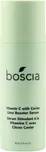
Etude House Vitamin C with Caviar Lime Booster Serum
Works for
Evens skin tone3-o-ethyl ascorbic acidMay help
“Instantly brighten and reduce the appearance of hyperpigmentation with a daily dose of Vitamin C with Caviar Lime Booster Serum for a beaming, evenly-toned complexion.”
The following ingredient (ingredients) in this product might be helpful, but there is no evidence to confirm that it actually works: 3-o-ethyl ascorbic acid.
ExfoliationNo ingredient credited for this claimNot delivered
“A powerful 10% Vitamin C Complex and AHA-rich Caviar Limes helps exfoliate and smooth uneven-textured skin for every day, healthy-looking glow-up.”
This product does not contain effective exfoliating ingredients. It might be able to deliver physical exfoliation, that is scrub off some of the dead cells on the surface of the skin. We do not recommend physical exfoliation, because it is not uniform (some bits of skin can get exfoliated too much while others not at all). It can also traumatize the skin and aggrevate acne and other skin conditions.
MoisturizingNot advertised by the brand · Glycerin, Simmondsia chinensis seed extract + 9 moreWorks
This product can help improve hydration of the skin with the two types of ingredients.
The first type is called “humectants”:
these ingredients help attract water.
When humectants are on the surface of the skin, they “pull in” the moisture from the outside environment, or from
within deeper layers of the skin. The following ingredients in this product do the job:
glycerin, lactobacillus ferment.
This product also contains ingredients called “occlusives”. They help reduce the speed with which our skin loses moisture to the outside environment. These ingredients also help soften the upper layer of the skin, so it feels less tight and nicer to the touch. The following ingredients in this product do the job: simmondsia chinensis seed extract, caprylyl glycol.
Anti-oxidationNot advertised by the brand · 3-o-ethyl ascorbic acid, Haematococcus pluvialis extract + 4 moreMay help
This product contains antioxidants (3-o-ethyl ascorbic acid, epilobium angustifolium flower/leaf/stem extract, haematococcus pluvialis extract) that might be able to help neutralize free radicals in skin to lessen the damage it gets from the UV light (sun). There is not enough evidence to confirm their effectiveness in skin though.
Can it cause trouble?
Irritancy4 strong irritants: Microcitrus australasica fruit extract, Citrus aurantium bergamia fruit oil + 2 more — patch-test recommendedHigh risk
ComedogenicClean of flagged comedogenic ingredientsNone flagged


User reviews
Be the first — your take helps the next person decide.
Ingredients
Filter by role to see what each ingredient is doing.
Water~45–55%
3-o-ethyl ascorbic acid~8–9.8%
- Irritation risk
- High
A vitamin C derivative that is more stable but less potent than pure form of vitamin C. Can help neutralize free radicals and help reduce hyperpigmentation, but the required concentration is likely to be much higher than for the pure form of vitamin C, limiting the ingredient's effectiveness in products
More about 3-o-ethyl ascorbic acidGlycerin~4.2–5.1%
- Irritation risk
- Low
One of the best moisturizing ingredients. Naturally present in skin. It attracts water to the upper layer of the skin working as a humectant
More about GlycerinMicrocitrus australasica fruit extract~3–3.6%
- Irritation risk
- High
Most likely used for its fragrance. Can be irritating and lead to photosensitivity
More about Microcitrus australasica fruit extractCitrus aurantium bergamia fruit oil~2.2–2.7%
- Irritation risk
- High
A plant oil with a high content of volatile compounds that can irritate the skin and lead to allergic reactions. Can lead to photosensitivity
More about Citrus aurantium bergamia fruit oilHaematococcus pluvialis extract~1.9–2.3%
- Irritation risk
- Medium
Green algae extract that might contain antioxidant astaxanthin
More about Haematococcus pluvialis extractCitrus aurantium dulcis peel extract~1.5–1.9%
Citrus sinensis peel extract~1.3–1.6%
- Irritation risk
- High
Tocopherol~1.1–1.3%
- Irritation risk
- Low
Pure form of vitamin E. Can help moisturise and protect the skin from free radicals. Often used to help stabilise other ingredients or the formula itself
More about TocopherolSimmondsia chinensis seed extract~1–1.2%
- Irritation risk
- Low
Plant oil that helps soften the upper layer of the skin
More about Simmondsia chinensis seed extractEpilobium angustifolium flower/leaf/stem extract~0.65–0.95%
- Irritation risk
- High
A plant extract that might contain antioxidants
More about Epilobium angustifolium flower/leaf/stem extractSodium hyaluronate~0.55–0.8%
- Irritation risk
- Low
One of the best moisturizing ingredients. Attracts water into the upper layer of the skin
More about Sodium hyaluronateLactobacillus ferment~0.45–0.7%
- Irritation risk
- Low
A fermentation product created by bacteria Lactobacillus. The fermented product has anti-bacterial properties and might be helpful in calming down inflammation, but studies are lacking. Helps attract water to the upper layer of the skin. Can be used as a preservative
More about Lactobacillus fermentCaprylic/capric triglyceride~0.5–0.75%
- Irritation risk
- Medium
A good mix of fatty acids that forms a protective layer on the skin. Improves the shelf life of products. Derived from coconut and glycerin
More about Caprylic/capric triglyceridePolyglyceryl-10 oleate~0.4–0.6%
- Irritation risk
- Low
Helps soften the upper layer of the skin
More about Polyglyceryl-10 oleateAcrylates/c10-30 alkyl acrylate crosspolymer~0.45–0.65%
- Irritation risk
- Medium
Maintains the texture of skincare products. Allows the product to spread evenly. Helps oil and water mix together
More about Acrylates/c10-30 alkyl acrylate crosspolymerHydroxyacetophenone~0.35–0.6%
1,2-hexanediol~0.3–0.6%
Caprylyl glycol~0.3–0.6%
- Irritation risk
- Medium
Helps preserve products and creates a nice product texture
More about Caprylyl glycolPolyglyceryl-10 laurate~0.25–0.5%
- Irritation risk
- Medium
Helps water and oil mix together
More about Polyglyceryl-10 lauratePolyglyceryl-10 stearate~0.25–0.45%
- Irritation risk
- Medium
Helps water and oil mix together and softens the upper layer of the skin
More about Polyglyceryl-10 stearateButylene glycol~0.2–0.4%
- Irritation risk
- Low
Used to create a nice product texture and help delivery of other ingredients. Might be somewhat helpful in attracting water to the upper layer of the skin
More about Butylene glycolCitric acid~0.2–0.35%
- Irritation risk
- Medium
Can work as an exfoliant but is typically used to adjust the product pH
More about Citric acidSodium citrate~0.15–0.3%
- Irritation risk
- Medium
Helps to control the skin's pH level. Maintains the skin's natural film of amino-lactic acids and oils. Helps to preserve products
More about Sodium citrateTocopheryl acetate~0.15–0.3%
- Irritation risk
- Medium
A more stable but less bio-available form of vitamin E compared to Tocopherol. Might help moisturize and protect the skin from free radicals, but mostly used in low concentrations to stabilize other ingredients.
More about Tocopheryl acetateXanthan gum~0.15–0.25%
- Irritation risk
- Low
Used to create a thicker product consistency
More about Xanthan gumLysolecithin~0.1–0.2%
- Irritation risk
- Low
Lecithin derivative. It helps oil and water mix together and can enhance penetration of other ingredients. It helps soften the upper layer of the skin
More about LysolecithinPotassium hydroxide~0.1–0.2%
Sodium metabisulfite~0.1–0.15%
Ingredient list view
Water, 3-o-ethyl ascorbic acid, Glycerin, Microcitrus australasica fruit extract, Citrus aurantium bergamia fruit oil, Haematococcus pluvialis extract, Citrus aurantium dulcis peel extract, Citrus sinensis peel extract, Tocopherol, Simmondsia chinensis seed extract, Epilobium angustifolium flower/leaf/stem extract, Sodium hyaluronate, Lactobacillus ferment, Caprylic/capric triglyceride, Polyglyceryl-10 oleate, Acrylates/c10-30 alkyl acrylate crosspolymer, Hydroxyacetophenone, 1,2-hexanediol, Caprylyl glycol, Polyglyceryl-10 laurate, Polyglyceryl-10 stearate, Butylene glycol, Citric acid, Sodium citrate, Tocopheryl acetate, Xanthan gum, Lysolecithin, Potassium hydroxide, Sodium metabisulfite
Compare prices
Retailers ranked by price — lowest first.

Worth comparing, line by line.
Match % combines shared ingredients, the first five ingredients, shared actives and hero ingredients, irritancy (lower counts in the alternative's favour), texture and body area. Only products in the same routine step are compared.
| Etude HouseVitamin C with Caviar Lime Booster SerumYOUR PRODUCT | 107 Beauty107 Soseo VINBIOME Vitamin C Serum | DermadoctorKakadu C 20% Vitamin C Serum with Ferulic Acid & Vitamin E | Jin Jung sungOmega Vegan Vita Serum | |
|---|---|---|---|---|
| Match | — | 61% | 61% | 59% |
| Price | $34.00 | $72.00+$38.00 | $38.79+$4.79 | $31.40−$2.60 |
| Shared key ingredients | — | 5 of 9 | 4 of 9 | 4 of 9 |
| Key difference | — | Niacinamide | Ferulic Acid | Niacinamide |
| Irritancy | High | Medium | Medium | Medium |
| Drying alcohol | — | — | Contains drying alcohol | — |
| View product | Shop | Shop | Shop |


More alternatives: The Purest Solutions Youth Radiant Renewal Retinol SerumOptimum Vitamin C Serum
Sources cited in this review
Every concentration estimate and effectiveness label is anchored to one of these 20 studies and safety reviews.
- 1
- 2
- 3
- 4
- 5Air oxidation increases skin irritation from fragrance terpenesonlinelibrary.wiley.com
- 6

Affiliate links · As an Amazon Associate, WIMJ earns from qualifying purchases.