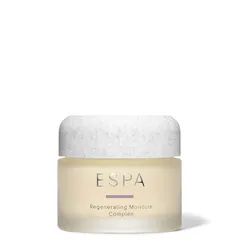
Works for:
based on ingredients and %- Moisturizing
Doesn't work for:
based on ingredients and %- Anti-aging
Can it cause trouble?
- Irritation risk: high
- Comedogenic risk ingredients: 3
Key actives
Moisturizing
What does the product description say?
Regenerating Moisture Complex
Source: From product name
This product can help improve hydration of the skin with the two types of ingredients.
The first type is called “humectants”:
these ingredients help attract water.
When humectants are on the surface of the skin, they “pull in” the moisture from the outside environment, or from
within deeper layers of the skin. The following ingredients in this product do the job:
glycerin.
This product also contains ingredients called “occlusives”. They help reduce the speed with which our skin loses moisture to the outside environment. These ingredients also help soften the upper layer of the skin, so it feels less tight and nicer to the touch. The following ingredients in this product do the job: helianthus annuus seed oil, glycine soja oil.
A great emollient due to its high linoleic acid content. One of the most effective plant oils in helping skin hydration and repairing skin barrier function
Helps to soften the upper layer of the skin and might have some anti-oxidant effect
A good emollient that helps soften the skin and helps repair its barrier function. It can clog pores if used in high concentrations.
One of the best moisturizing ingredients. Naturally present in skin. It attracts water to the upper layer of the skin working as a humectant
Helps soften the upper layer of the skin
Cottonseed oil. It is used as an emollient and occlusive in products. It is rich palmitic, oleic acid, and linoleic fatty acids.
Plant oil from nuts that helps soften the upper layer of the skin. Contains a high concentration of oleic acid that can weaken skin's barrier function and increase water-loss while enhancing penetration of other ingredients
An emollient that softens the skin
A non-drying alcohol. Works as an emollient. Helps water and oil mix together and creates a nice product texture
An emollient that softens the skin and forms a protective layer on its surface. Helps water and oil mix together
Pure form of vitamin E. Can help moisturise and protect the skin from free radicals. Often used to help stabilise other ingredients or the formula itself
Can contain potent anti-oxidant compounds (abbreviated ECG, GCG, EGC, and EGCG) that might help protect the skin from free radicals. Can help calm down inflammation and has some anti-bacterial properties. Unfortunately, these antioxidants are unstable and lose their effectiveness very quickly in products. The concentration of the antioxidant compounds in the extract also tends to be low to be effective in topical formulation
Anti-aging
What does the product description say?
A deeply nourishing, age-defying moisturiser to intensely hydrate and help minimise visible signs of ageing.
Source: Lookfantastic Australia
Effective ingredients missing or their concentration is too low.
An emollient that softens the skin
Can contain potent anti-oxidant compounds (abbreviated ECG, GCG, EGC, and EGCG) that might help protect the skin from free radicals. Can help calm down inflammation and has some anti-bacterial properties. Unfortunately, these antioxidants are unstable and lose their effectiveness very quickly in products. The concentration of the antioxidant compounds in the extract also tends to be low to be effective in topical formulation
Pure form of vitamin E. Can help moisturise and protect the skin from free radicals. Often used to help stabilise other ingredients or the formula itself
How honest is this product?
| Promise | Can it deliver? |
|---|---|
| Moisturizing | |
| Anti-aging |
Total Promises Fulfilled score: 37/100.
We receive a small commission for purchases made through these links at no cost for you. Thank you for your support! Learn more
Affiliate link · supports WIMJ at no cost to you
Potential irritants
Comedogenic ingredients
User reviews (0)
Averages from community submissions.
No reviews yet for this product.
Be the first to share your experience!
Tried this product?
Help capture what the ingredient list can't—texture, finish, pilling, scent, and more. Answer what you can, skip the rest.
Takes ~30 seconds.
Reviews are shown in aggregate. No personal details.
Key Actives
Can contain potent anti-oxidant compounds (abbreviated ECG, GCG, EGC, and EGCG) that might help protect the skin from free radicals. Can help calm down inflammation and has some anti-bacterial properties. Unfortunately, these antioxidants are unstable and lose their effectiveness very quickly in products. The concentration of the antioxidant compounds in the extract also tends to be low to be effective in topical formulation
Pure form of vitamin E. Can help moisturise and protect the skin from free radicals. Often used to help stabilise other ingredients or the formula itself
Helps to soften the upper layer of the skin and might have some anti-oxidant effect
One of the best moisturizing ingredients. Naturally present in skin. It attracts water to the upper layer of the skin working as a humectant
A good emollient that helps soften the skin and helps repair its barrier function. It can clog pores if used in high concentrations.
A great emollient due to its high linoleic acid content. One of the most effective plant oils in helping skin hydration and repairing skin barrier function
Potential irritants
A common frangrance that can easily irritate skin, especially if exposed to air, light or heat
An essential oil. Potential allergen and can be irritating. It has some anti-bacterial properties
An aromatic blend of unspecified and possibly irritating ingredients
Helps preserve products. Can mask unpleasant smell. Could be irritating
An essentil oil from orange peel. Potential allergen and can be irritating
A preservative. Can be used to mask unpleasant smell. Can be irritating
Plant oil from nuts that helps soften the upper layer of the skin. Contains a high concentration of oleic acid that can weaken skin's barrier function and increase water-loss while enhancing penetration of other ingredients
A plant extract that might contain salicylic acid
A good emollient that helps soften the skin and helps repair its barrier function. It can clog pores if used in high concentrations.
An alpha-hydroxy acid (AHA), but is mostly used to stabilize product formulations in cosmetics
Helps to control the skin's pH level. Maintains the skin's natural film of amino-lactic acids and oils. Helps to preserve products
Comedogenic ingredients
A non-drying alcohol. Works as an emollient. Helps water and oil mix together and creates a nice product texture
Cottonseed oil. It is used as an emollient and occlusive in products. It is rich palmitic, oleic acid, and linoleic fatty acids.
A good emollient that helps soften the skin and helps repair its barrier function. It can clog pores if used in high concentrations.
All ingredients
Plant oil from nuts that helps soften the upper layer of the skin. Contains a high concentration of oleic acid that can weaken skin's barrier function and increase water-loss while enhancing penetration of other ingredients
One of the best moisturizing ingredients. Naturally present in skin. It attracts water to the upper layer of the skin working as a humectant
A non-drying alcohol. Works as an emollient. Helps water and oil mix together and creates a nice product texture
An emollient that softens the skin and forms a protective layer on its surface. Helps water and oil mix together
A common frangrance that can easily irritate skin, especially if exposed to air, light or heat
Helps to soften the upper layer of the skin and might have some anti-oxidant effect
An essential oil. Potential allergen and can be irritating. It has some anti-bacterial properties
Cottonseed oil. It is used as an emollient and occlusive in products. It is rich palmitic, oleic acid, and linoleic fatty acids.
An aromatic blend of unspecified and possibly irritating ingredients
A plant extract that might contain salicylic acid
A good emollient that helps soften the skin and helps repair its barrier function. It can clog pores if used in high concentrations.
Helps preserve products. Can mask unpleasant smell. Could be irritating
An alpha-hydroxy acid (AHA), but is mostly used to stabilize product formulations in cosmetics
Pure form of vitamin E. Can help moisturise and protect the skin from free radicals. Often used to help stabilise other ingredients or the formula itself
A great emollient due to its high linoleic acid content. One of the most effective plant oils in helping skin hydration and repairing skin barrier function
An essentil oil from orange peel. Potential allergen and can be irritating
Can contain potent anti-oxidant compounds (abbreviated ECG, GCG, EGC, and EGCG) that might help protect the skin from free radicals. Can help calm down inflammation and has some anti-bacterial properties. Unfortunately, these antioxidants are unstable and lose their effectiveness very quickly in products. The concentration of the antioxidant compounds in the extract also tends to be low to be effective in topical formulation
A preservative. Can be used to mask unpleasant smell. Can be irritating
Helps to control the skin's pH level. Maintains the skin's natural film of amino-lactic acids and oils. Helps to preserve products
Carrot extract. Might have anti-oxidant properties and be used to add orange color
An aromatic blend of unspecified and possibly irritating ingredients
Ingredient list view
Water, Macadamia ternifolia seed oil, Prunus amygdalus dulcis oil, Camellia kissi seed oil, Glycerin, Cetearyl alcohol, Glyceryl stearate, Polyglyceryl-3 stearate, Sodium stearoyl lactylate, Limonene, Mangifera indica seed butter, Citrus aurantium amara leaf/twig oil, Lavandula angustifolia oil, Gossypium herbaceum seed oil, Parfum, Salix nigra bark extract, Xanthan gum, Elaeis guineensis oil, Pelargonium graveolens oil, Linalool, Glycine soja oil, Levulinic acid, Bidens pilosa extract, P-anisic acid, Sodium stearoyl glutamate, Sorbic acid, Linum usitatissimum seed oil, Sclerotium gum, Phytic acid, Sodium levulinate, Tocopherol, Helianthus annuus seed oil, Amyris balsamifera bark oil, Citrus aurantium amara flower oil, Citrus aurantium dulcis peel oil, Santalum album oil, Sodium hydroxide, Geraniol, Pelvetia canaliculata extract, Camellia sinensis leaf extract, Benzyl alcohol, Caramel, Sodium citrate, Citral, Dehydroacetic acid, Beta-carotene, Daucus carota sativa root extract, Parfum
- Fatty acids profile of oil from nine varieties of Macadamia nut
- Anti-Inflammatory and Skin Barrier Repair Effects of Topical Application of Some Plant Oils
- Glycerol and the skin: holistic approach to its origin and functions
- Extraction and Characteristics of Seed Kernel Oil from Mango
- Promising features of mango (Mangifera indica L.) kernel oil: a review
- Evaluation of the fatty acid composition of the seeds of Mangifera indica L. and their application
- Genetic Architecture of Palm Oil Fatty Acid Composition in Cultivated Oil Palm (Elaeis guineensis Jacq.) Compared to Its Wild Relative E. oleifera (H.B.K) Cortés
- Nutrient composition of Nigerian palm kernel from the dura and tenera varieties of the oil palm (Elaeis guineensis)
- Sodium anisate
- Cosmetic and dermatologic use of alpha hydroxy acids
- Comparative Evaluation of Efficacy and Tolerability of Glycolic Acid, Salicylic Mandelic Acid, and Phytic Acid Combination Peels in Melasma
- Vitamin E in dermatology
- Vitamin E and Skin Health
- Effect of Olive and Sunflower Seed Oil on the Adult Skin Barrier: Implications for Neonatal Skin Care
- Topically Applied Sunflower Seed Oil Prevents Invasive Bacterial Infections in Preterm Infants in Egypt
- Effect of topically applied lipids on surfactant-irritated skin
- Impact of topical oils on the skin barrier: possible implications for neonatal health in developing countries
- Biological Activities and Safety of Citrus spp. Essential Oils
- Annex I: Clinical evidence regarding sensitisation to individual fragrance chemicals and to natural extracts
- 4 Final Report on the Safety Assessment of Sodium Dehydroacetate and Dehydroacetic Acid