Works for:
based on ingredients and %- Moisturizing
Can it cause trouble?
- Irritation risk: high
- Comedogenic risk ingredients: 2
Key actives

Product Summary
"ESPA - Nourishing Shower Cream" could be helpful for: Moisturizing, but its actives are not the most effective or are not well-studied.
Ingredient callouts
- Humectants (glycerin 2.00% - 2.50%). These ingredients help attract water to the upper layer of the skin and improve the skin hydration.
Price
The product retails for 46.00$ in the United States.
For a detailed price comparison: click here.
Works for
Moisturizing
What does the product description say?
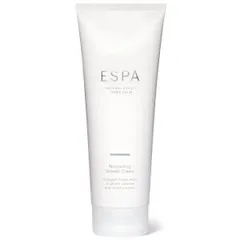
Nourishing Shower Cream
Source: From product name
This product can help improve hydration of the skin with the two types of ingredients.
The first type is called “humectants”:
these ingredients help attract water.
When humectants are on the surface of the skin, they “pull in” the moisture from the outside environment, or from
within deeper layers of the skin. The following ingredients in this product do the job:
glycerin.
This product also contains ingredients called “occlusives”. They help reduce the speed with which our skin loses moisture to the outside environment. These ingredients also help soften the upper layer of the skin, so it feels less tight and nicer to the touch. The following ingredients in this product do the job: butyrospermum parkii butter, cetearyl alcohol.
A great moisturising ingredient that softens the skin and reduces water loss from its upper layer. It also can be helpful in protecting skin from free radicals
One of the best moisturizing ingredients. Naturally present in skin. It attracts water to the upper layer of the skin working as a humectant
Helps soften the upper layer of the skin
A non-drying alcohol. Works as an emollient. Helps water and oil mix together and creates a nice product texture
An emollient that softens the skin and forms a protective layer on its surface. Helps water and oil mix together
How honest is this product?
| Promise | Can it deliver? |
|---|---|
| Moisturizing |
Total Promises Fulfilled score: 75/100.
We receive a small commission for purchases made through these links at no cost for you. Thank you for your support! Learn more
Potential irritants
Comedogenic ingredients
User reviews (0)
Averages from community submissions.
No reviews yet for this product.
Be the first to share your experience!
Tried this product?
Help capture what the ingredient list can't—texture, finish, pilling, scent, and more. Answer what you can, skip the rest.
Takes ~30 seconds.
Reviews are shown in aggregate. No personal details.
Key Actives
A great moisturising ingredient that softens the skin and reduces water loss from its upper layer. It also can be helpful in protecting skin from free radicals
One of the best moisturizing ingredients. Naturally present in skin. It attracts water to the upper layer of the skin working as a humectant
Helps soften the upper layer of the skin
Potential irritants
Used as a cleansing agent (surfactant) in cleansers. Helps water and oil mix together in lotions. Can be irritating
A common frangrance that can easily irritate skin, especially if exposed to air, light or heat
Aromatic plant oil used in cosmetics as a fragrance. A likely irritant
An essentil oil from orange peel. Potential allergen and can be irritating
Used as a fragrance. Can be irritating
Plant extract that can be irritating and is a known allergen
A plant oil with high content of volatile compounds that, especially when exposed to air, can cause allergic reactions and irritate the skin
A plant extract used as a fragrance. Can be irritating
Helps oil and water mix together and works as a cleansing agent
Used to improve the product consistency and stabilize formulations
Can work as an exfoliant but is typically used to adjust the product pH
Comedogenic ingredients
A non-drying alcohol. Works as an emollient. Helps water and oil mix together and creates a nice product texture
A great moisturising ingredient that softens the skin and reduces water loss from its upper layer. It also can be helpful in protecting skin from free radicals
All ingredients
Used as a cleansing agent (surfactant) in cleansers. Helps water and oil mix together in lotions. Can be irritating
An emollient that softens the skin and forms a protective layer on its surface. Helps water and oil mix together
A non-drying alcohol. Works as an emollient. Helps water and oil mix together and creates a nice product texture
One of the best moisturizing ingredients. Naturally present in skin. It attracts water to the upper layer of the skin working as a humectant
Used to stabilize mixtures of oil and water, and create thicker, gel-like product textures
Helps oil and water mix together and works as a cleansing agent
Used to improve the product consistency and stabilize formulations
A great moisturising ingredient that softens the skin and reduces water loss from its upper layer. It also can be helpful in protecting skin from free radicals
A preservative. It helps prevent bacterial growth in cosmetic products
Can work as an exfoliant but is typically used to adjust the product pH
A common frangrance that can easily irritate skin, especially if exposed to air, light or heat
Aromatic plant oil used in cosmetics as a fragrance. A likely irritant
An essentil oil from orange peel. Potential allergen and can be irritating
Used as a fragrance. Can be irritating
Plant extract that can be irritating and is a known allergen
A plant oil with high content of volatile compounds that, especially when exposed to air, can cause allergic reactions and irritate the skin
A plant extract used as a fragrance. Can be irritating
Ingredient list view
Water, Coco-glucoside, Sodium lauryl sulfoacetate, Glyceryl stearate, Cetearyl alcohol, Glycerin, Sodium chloride, Sodium lauroyl sarcosinate, Sodium sulfate, Butyrospermum parkii butter, Prunus amygdalus dulcis seed, Xanthan gum, Sucrose cocoate, Phenoxyethanol, Citric acid, Limonene, Citrus limon peel oil, Benzoic acid, Geraniol, Cymbopogon martini oil, Sodium laurate, Dehydroacetic acid, Citrus aurantium dulcis peel oil, Pelargonium graveolens oil, Citrus aurantium amara flower oil, Lavandula hybrida oil, Citrus nobilis peel oil, Linalool, Ethylhexylglycerin, Pogostemon cablin leaf oil, Cistus ladaniferus resin, Sodium sarcosinate, Vanilla planifolia fruit extract, Cistus ladaniferus oil, Jasminum officinale flower extract, Rosa damascena flower extract
- In Vitro Assessment of Skin Irritation Potential of Surfactant-based Formulations by Using a 3-D Skin Reconstructed Tissue Model and Cytokine Response
- Allergen of the Year—Alkyl Glucoside
- Glycerol and the skin: holistic approach to its origin and functions
- Amended Safety Assessment of Sodium Sulfate as Used in Cosmetics
- Annex I: Clinical evidence regarding sensitisation to individual fragrance chemicals and to natural extracts
- 4 Final Report on the Safety Assessment of Sodium Dehydroacetate and Dehydroacetic Acid
- Biological Activities and Safety of Citrus spp. Essential Oils
- Safety Assessment of Citrus-Derived Peel Oils as Used in Cosmetics
- Oxidized citrus oil (R-limonene): A frequent skin sensitizer in Europe
- Air oxidation increases skin irritation from fragrance terpenes